Pickles and ferments
How to Make SauerkrautLacto-Fermenting Cabbage in a Zip-Top Bag
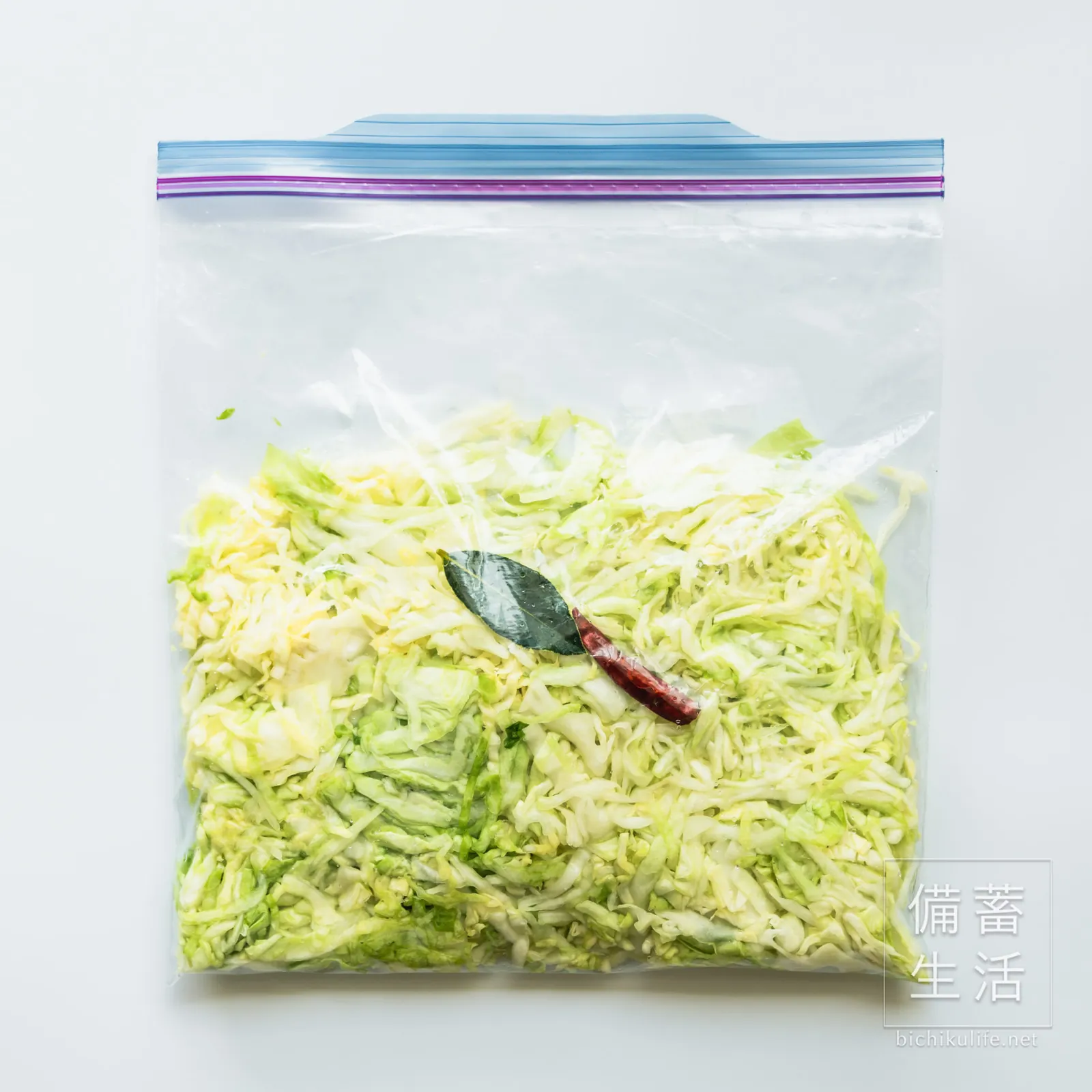
Sauerkraut is a German classic, a traditional pickle of fermented cabbage, familiar as a side for sausages and other meat dishes. The tang and depth from lactic acid fermentation are addictive.
Here’s how we make it at home, in a zip-top bag.
| When to make | Spring and autumn (when cabbage is at its best) |
| Time | About 3 days in summer, about a week in winter |
| Storage | Once done, about 2 weeks in the fridge |
Ingredients and tools

We used half a cabbage.
- 500 g (1 lb 2 oz) cabbage
- 10 g (2 tsp) coarse salt
- 1 bay leaf
- 1 dried red chili
- 2 tbsp water
- 1 large zip-top bag
How to make sauerkraut
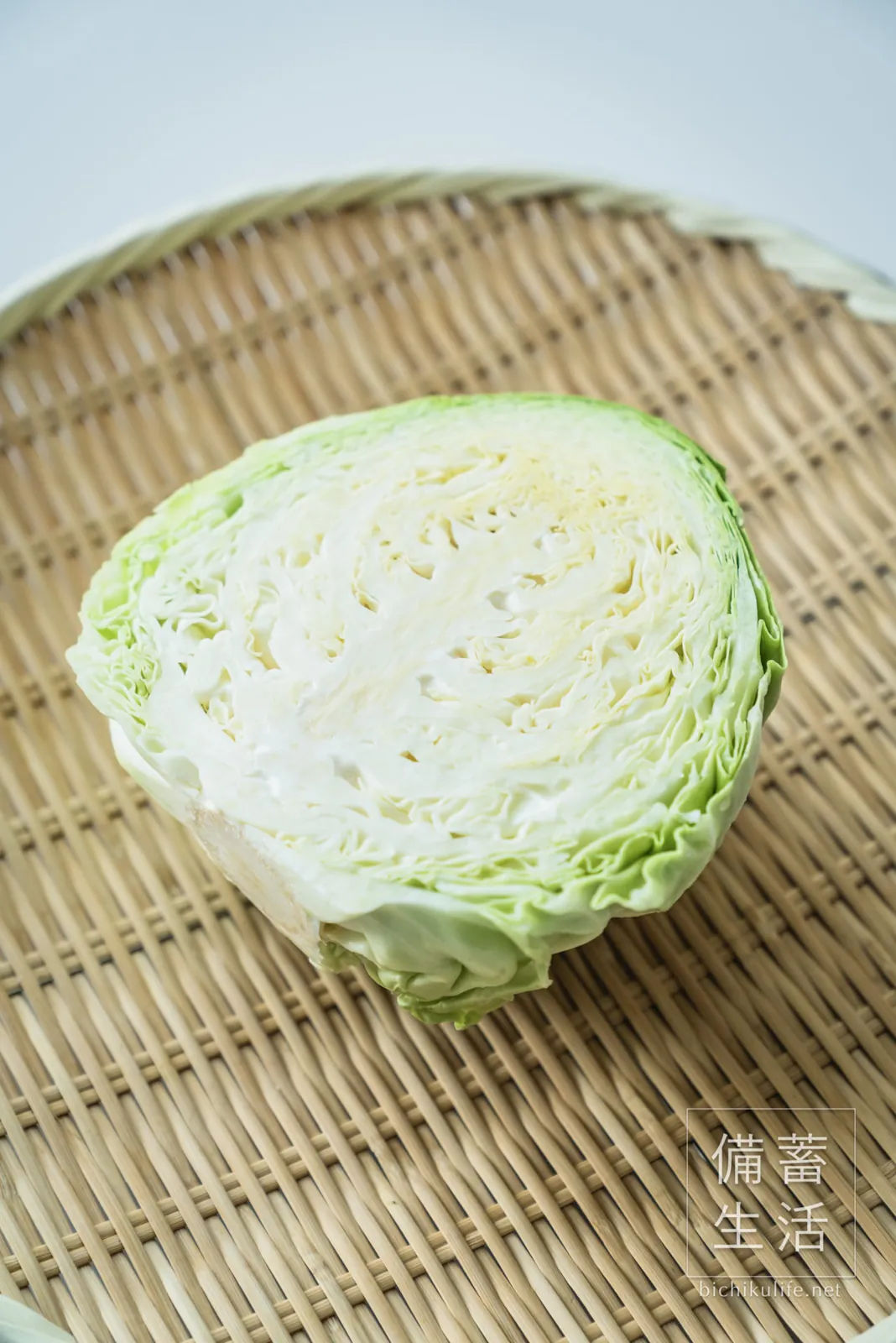
Make sure your cutting board, knife and measuring spoons are clean.
Put everything in the bag
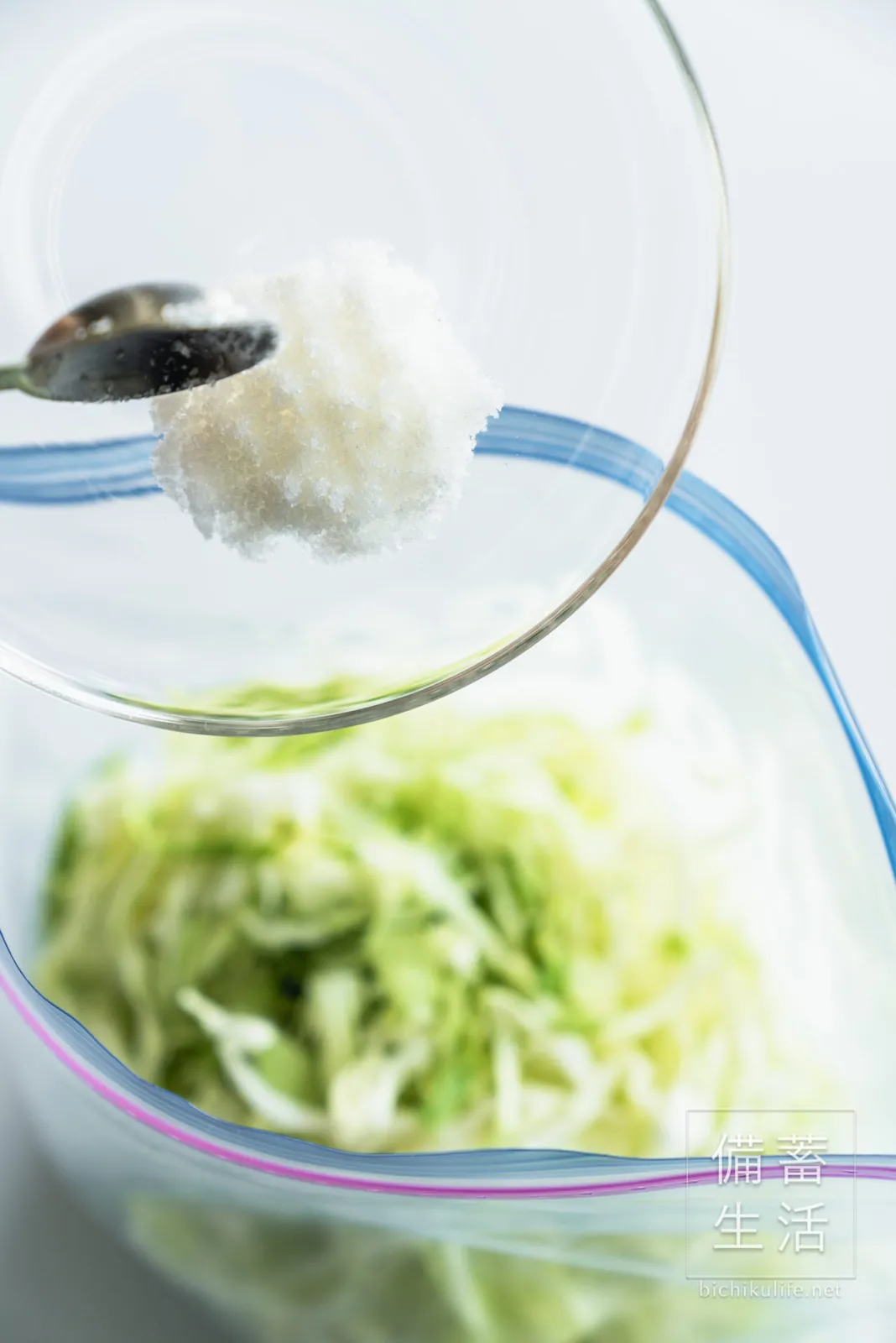
Put the finely shredded cabbage in the zip-top bag and sprinkle the salt evenly over it. Then pour in the 2 tbsp of water.
Massage the bag
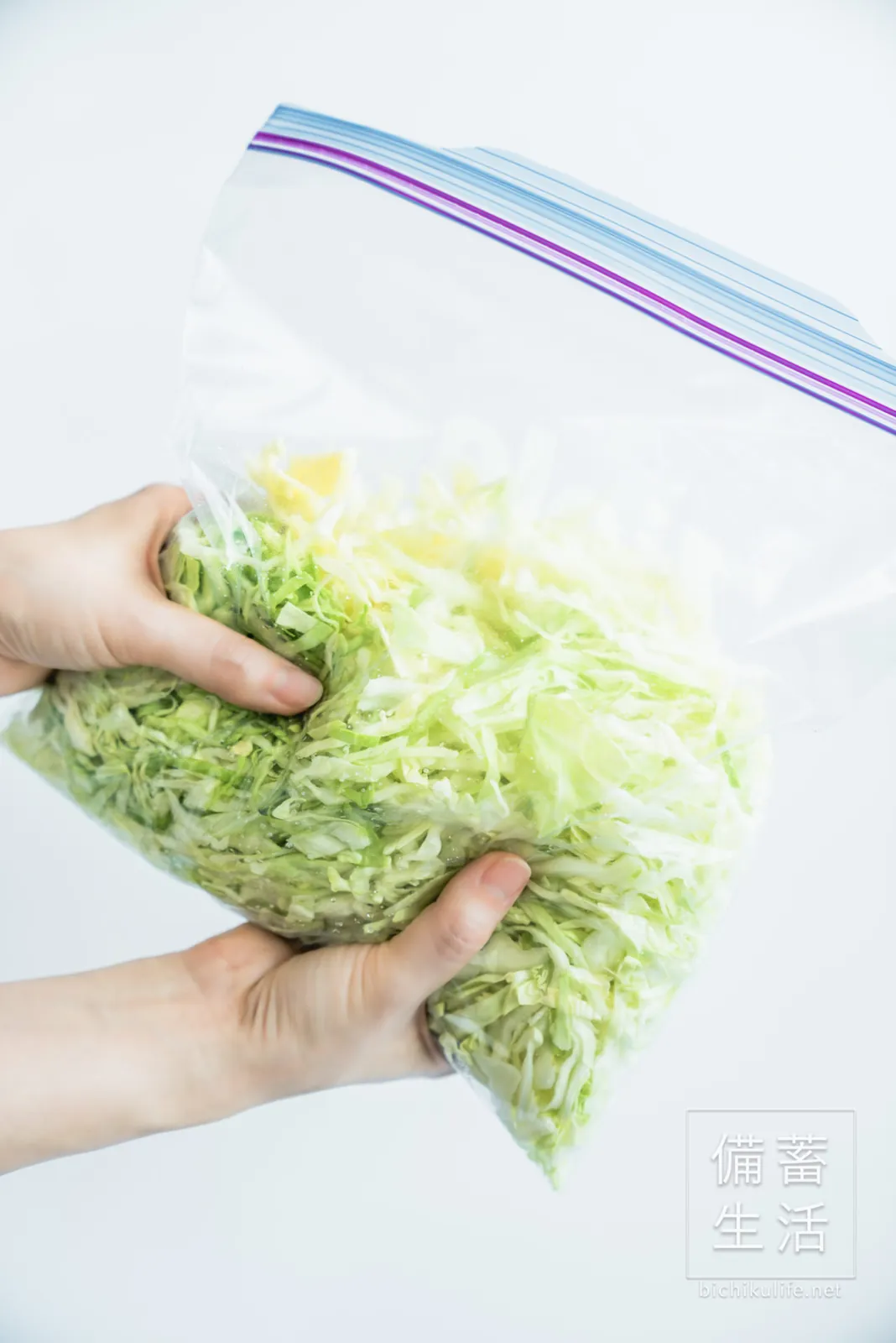
Close the bag loosely and massage it all over so the salt works into the cabbage. It’s ready when the cabbage releases water and goes limp.
Add the spices
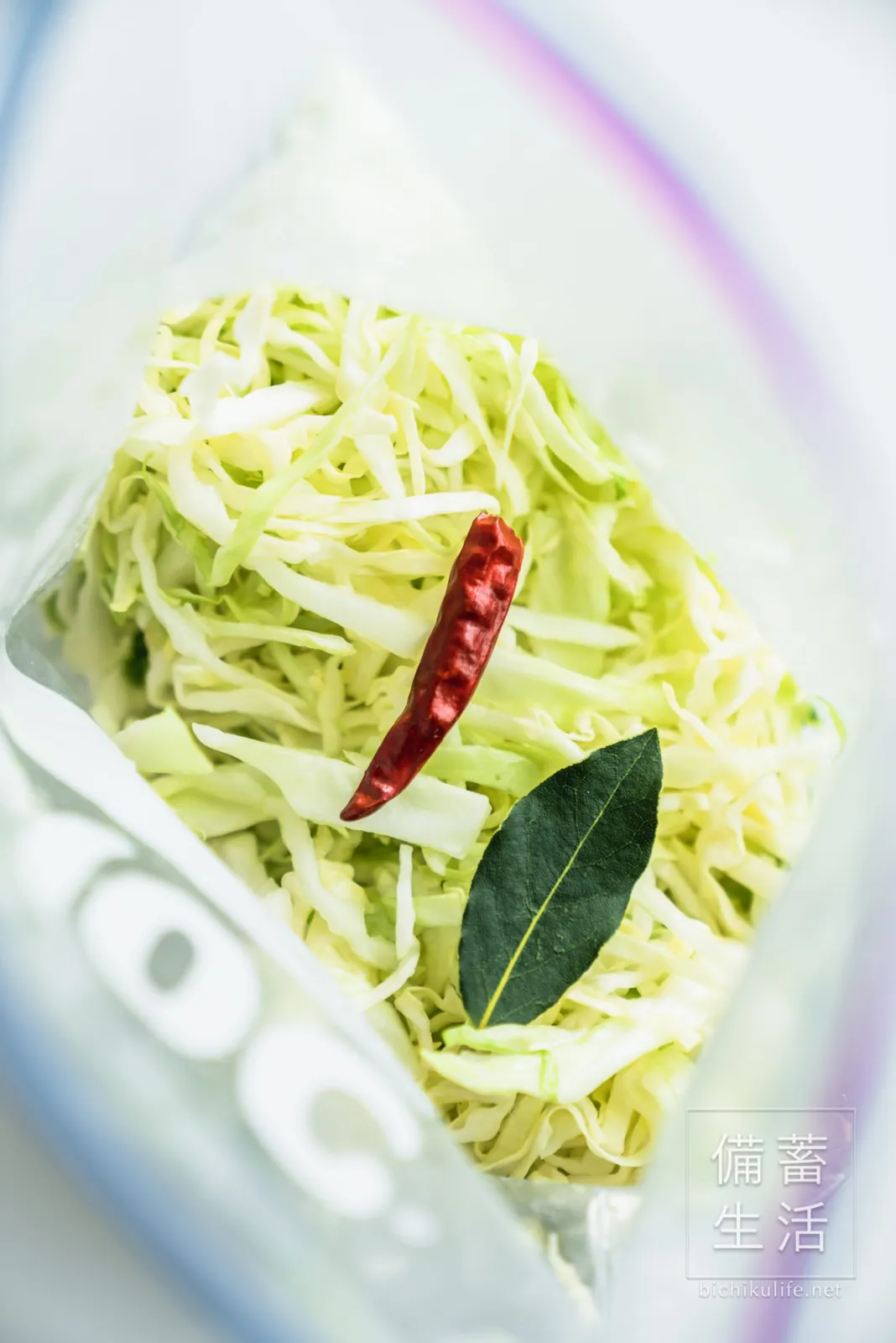
Add the bay leaf and the chili with its seeds removed, and massage the bag again.
Add a weight
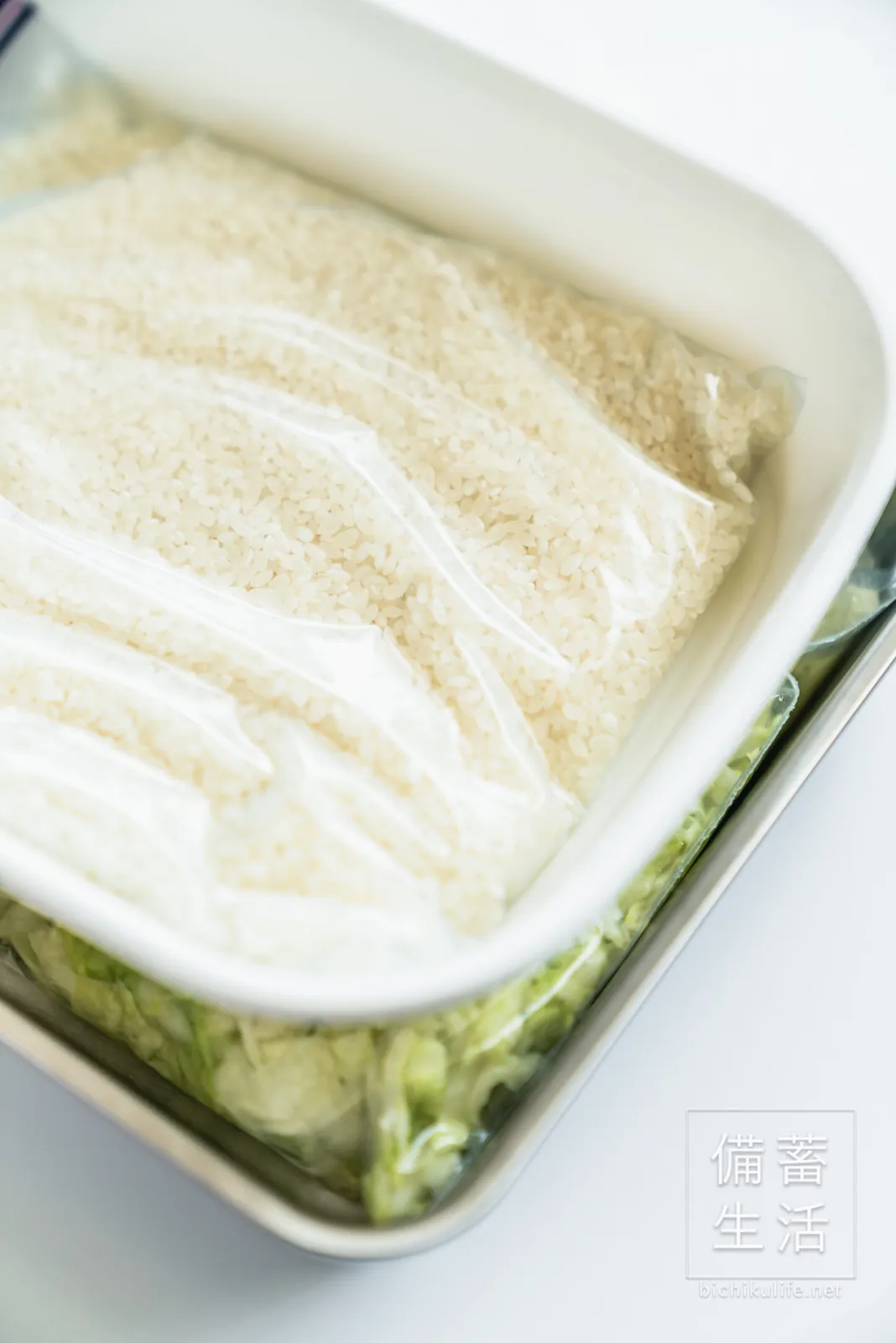
Press out the air, lay the bag flat, and seal it. Put a 1 kg (2 lb) weight on top, such as bottles of water or a bag of salt or rice, and keep in a cool, dark place at room temperature.
That’s it.
Storage and when it’s ready
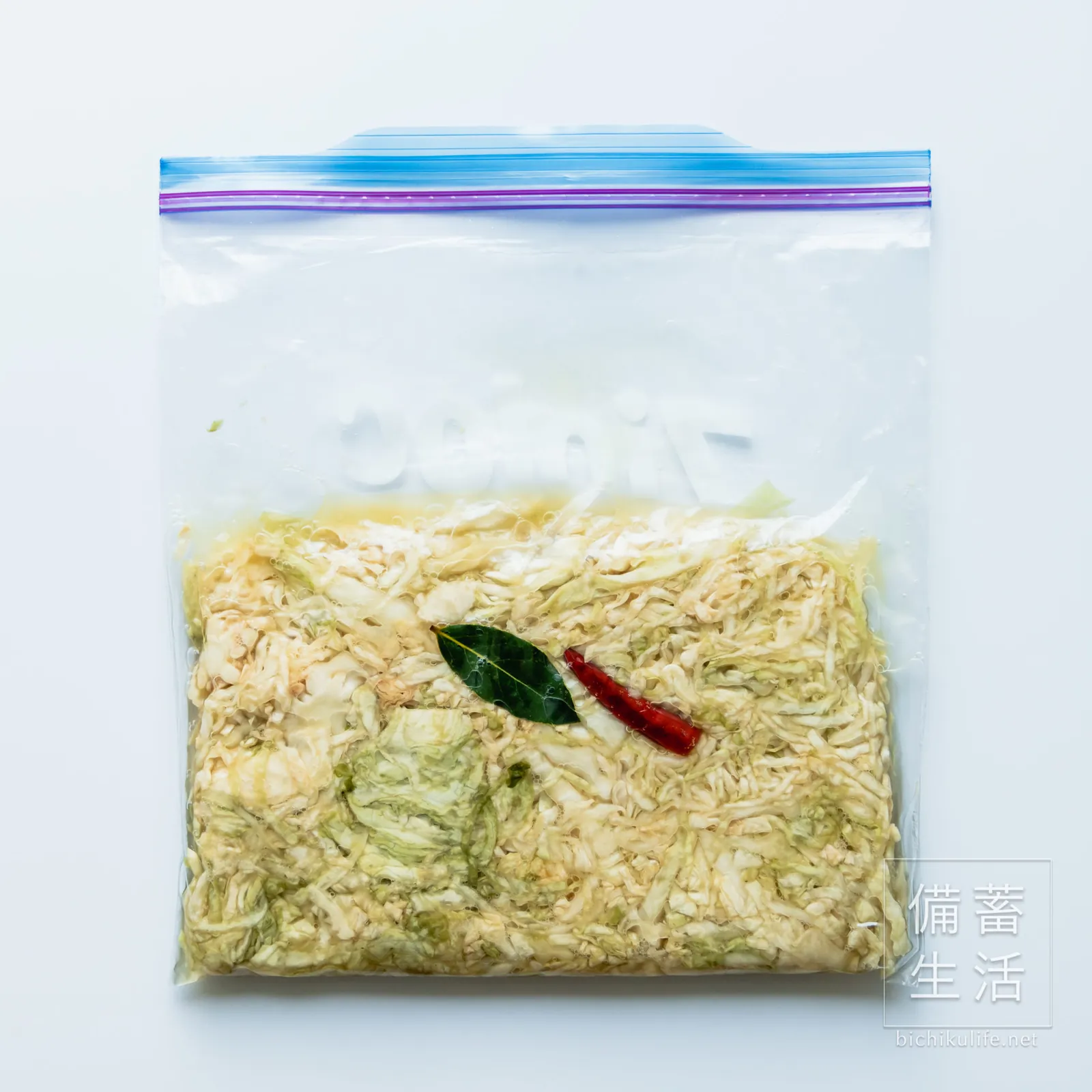
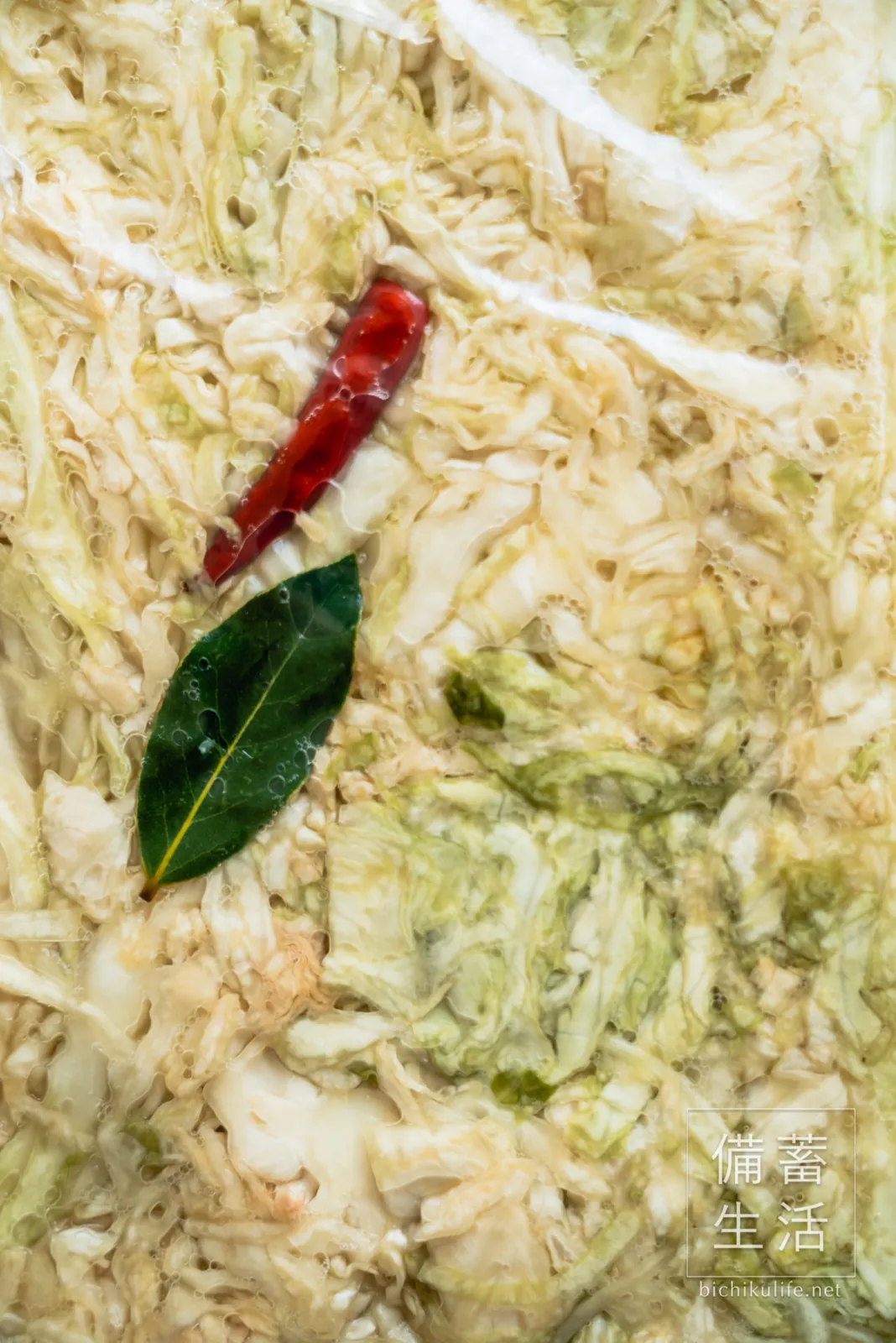
After three days.
The cabbage has turned yellowish, with fine bubbles rising. If it has that distinctive sour smell, it worked.
It takes about 3 days in summer and about a week in winter. Once opened, keep it in the fridge and eat within about 2 weeks.
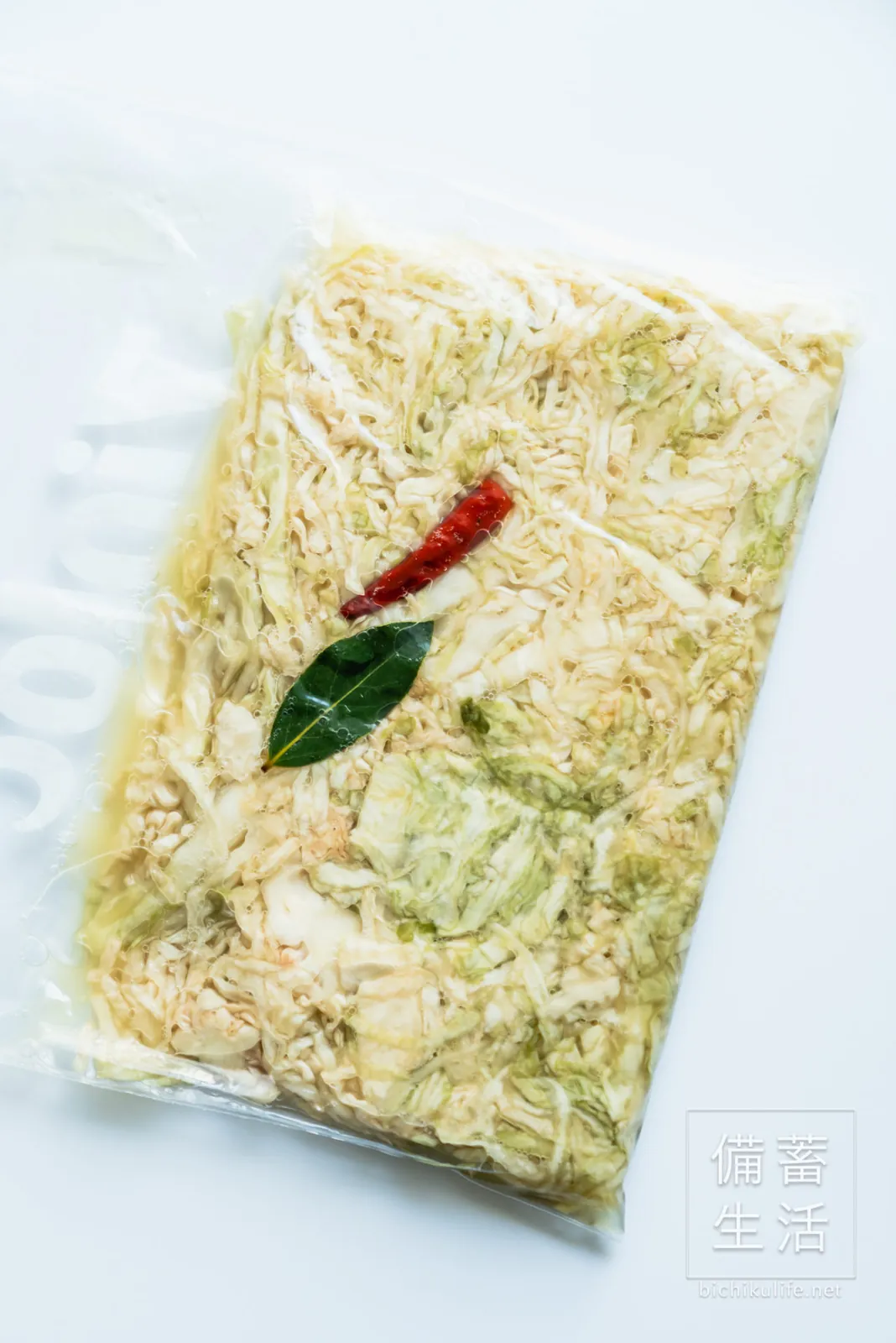
Eat it as is, or add it to soups and stir-fries.