Ume (Japanese plums)
How to Make UmeshuHomemade Japanese Plum Liqueur with Green and Ripe Ume
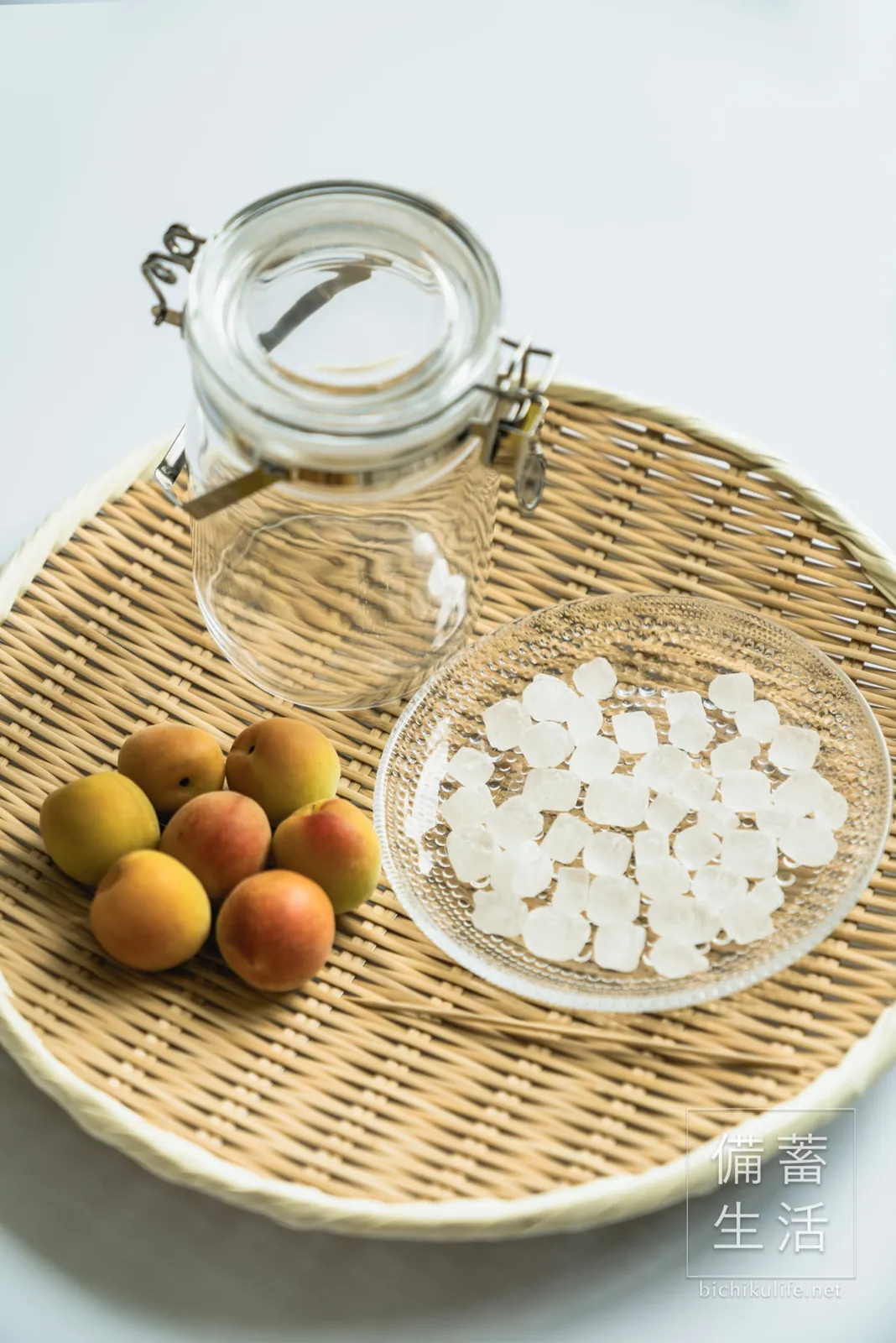
Umeshu is a Japanese liqueur made by steeping ume (Japanese plums) and sugar in liquor. Many Japanese families make a jar every June.
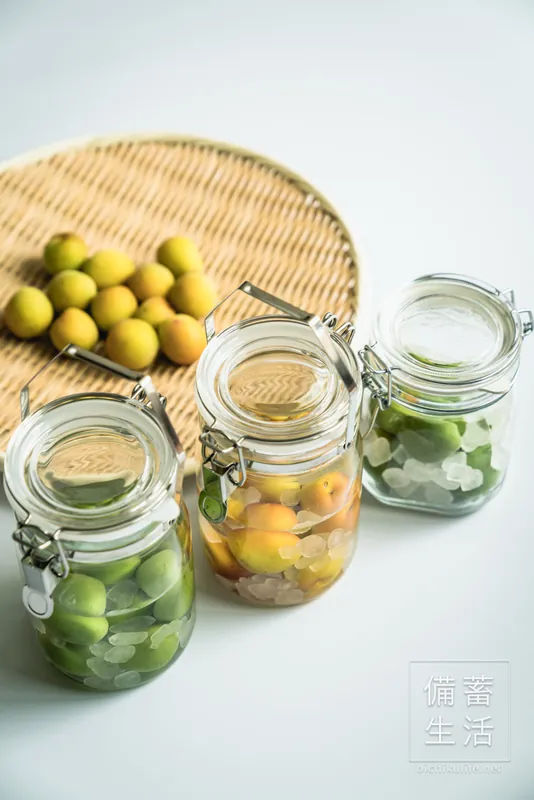
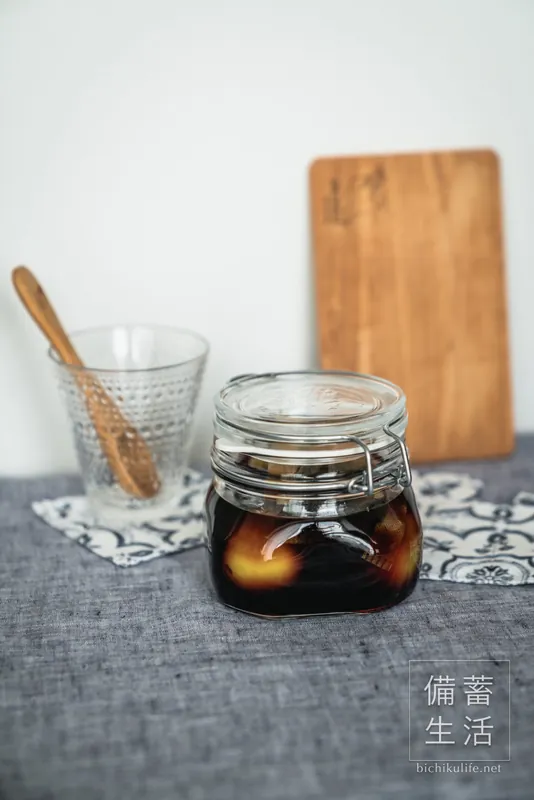
This time we made two kinds: a fresh-tasting umeshu with green ume, and a richly fragrant one with ripe Nanko ume. It takes three months or more for it to turn amber and be ready to drink. Waiting for it to age is the real pleasure of homemade umeshu.
| When to make | June |
| Ready to drink | After 3 months or more |
| Storage | Cool, dark place |
Ingredients and tools
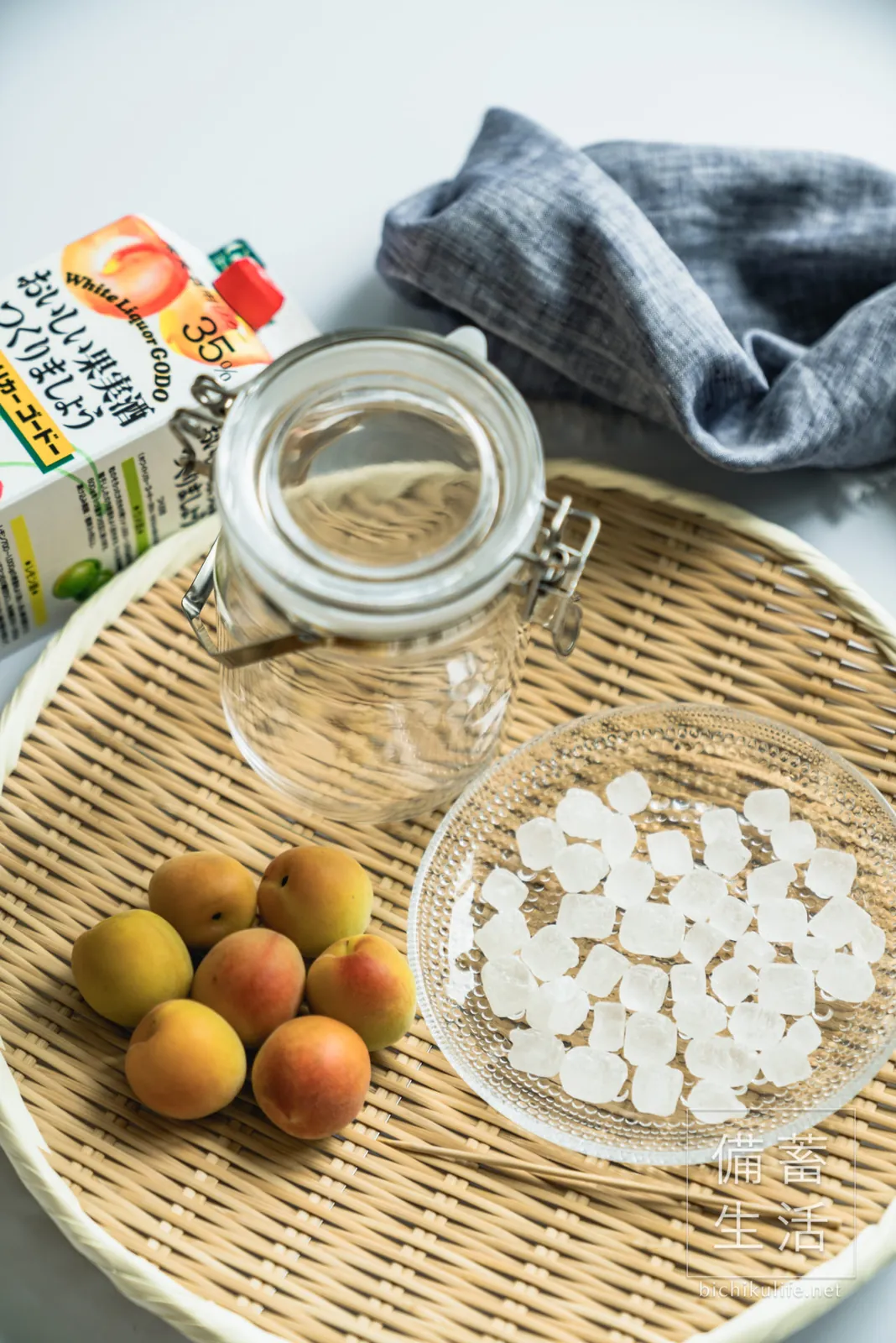
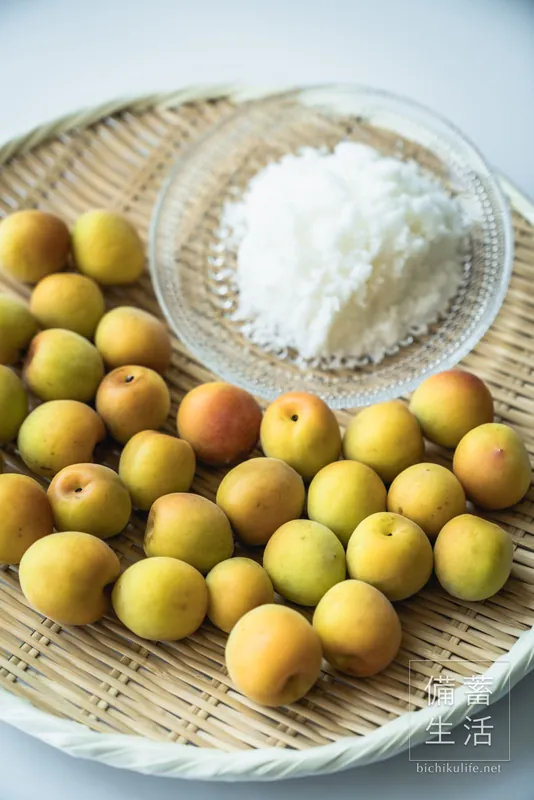
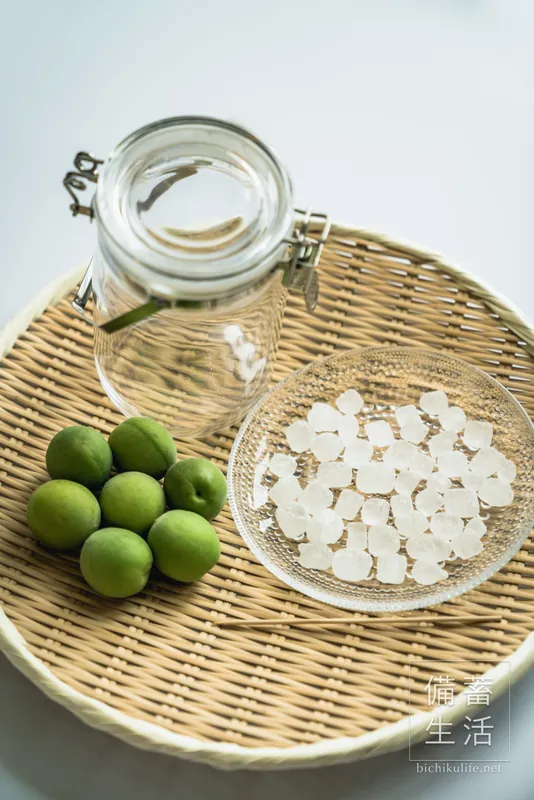
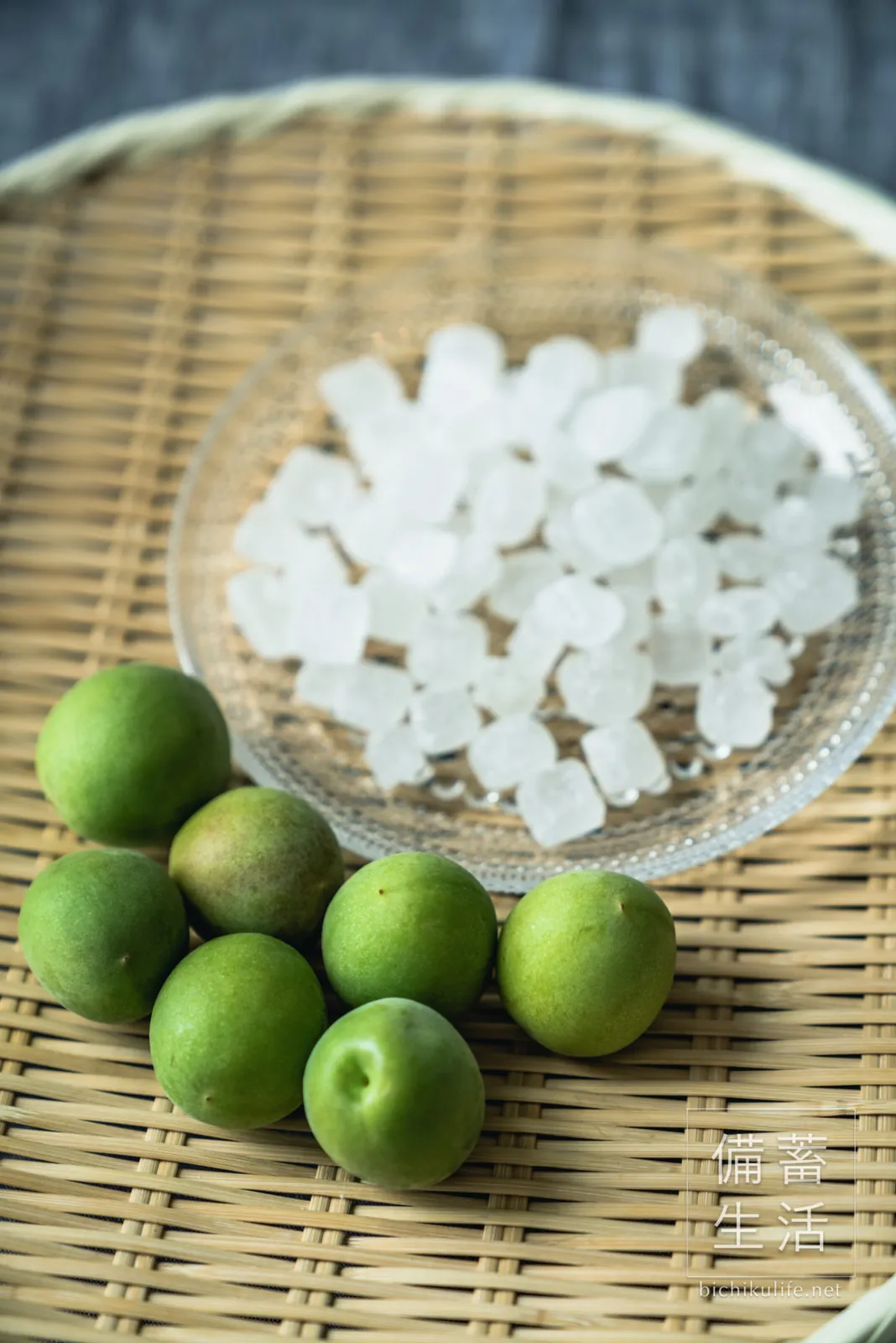
We used 200 g (7 oz) each of green ume and ripe Nanko ume, a small batch so we wouldn’t make too much. The jars are Muji’s 1-liter fruit liquor jars.
You can adjust the rock sugar anywhere from half the weight of the ume to the same weight.
- 200 g (7 oz) green ume
- 200 g (7 oz) ripe Nanko ume (yellow)
- 200 g (7 oz) rock sugar (100 g / 3½ oz per jar)
- 720 ml (about 3 cups) white liquor, 35% alcohol (360 ml / 1½ cups per jar)
- 2 storage jars
- A bamboo skewer
- A colander or tray
- Paper towels
White liquor (howaito rikaa) is a neutral, clear Japanese shochu sold for making fruit liqueurs. Outside Japan, people often use vodka or other neutral spirits. In Japan, liquor used for home umeshu must be at least 20% alcohol (40 proof). Rules on making infused liquor at home differ by country, so follow your local laws.
Fresh ume are hard to find outside Japan. See finding ume outside Japan on the overview page.
Calculate the amounts
In Japan, home umeshu must be made with liquor of at least 20% alcohol (40 proof). Rules on making infused liquor at home differ by country, so follow your local laws.
How to make umeshu
Wash the ume
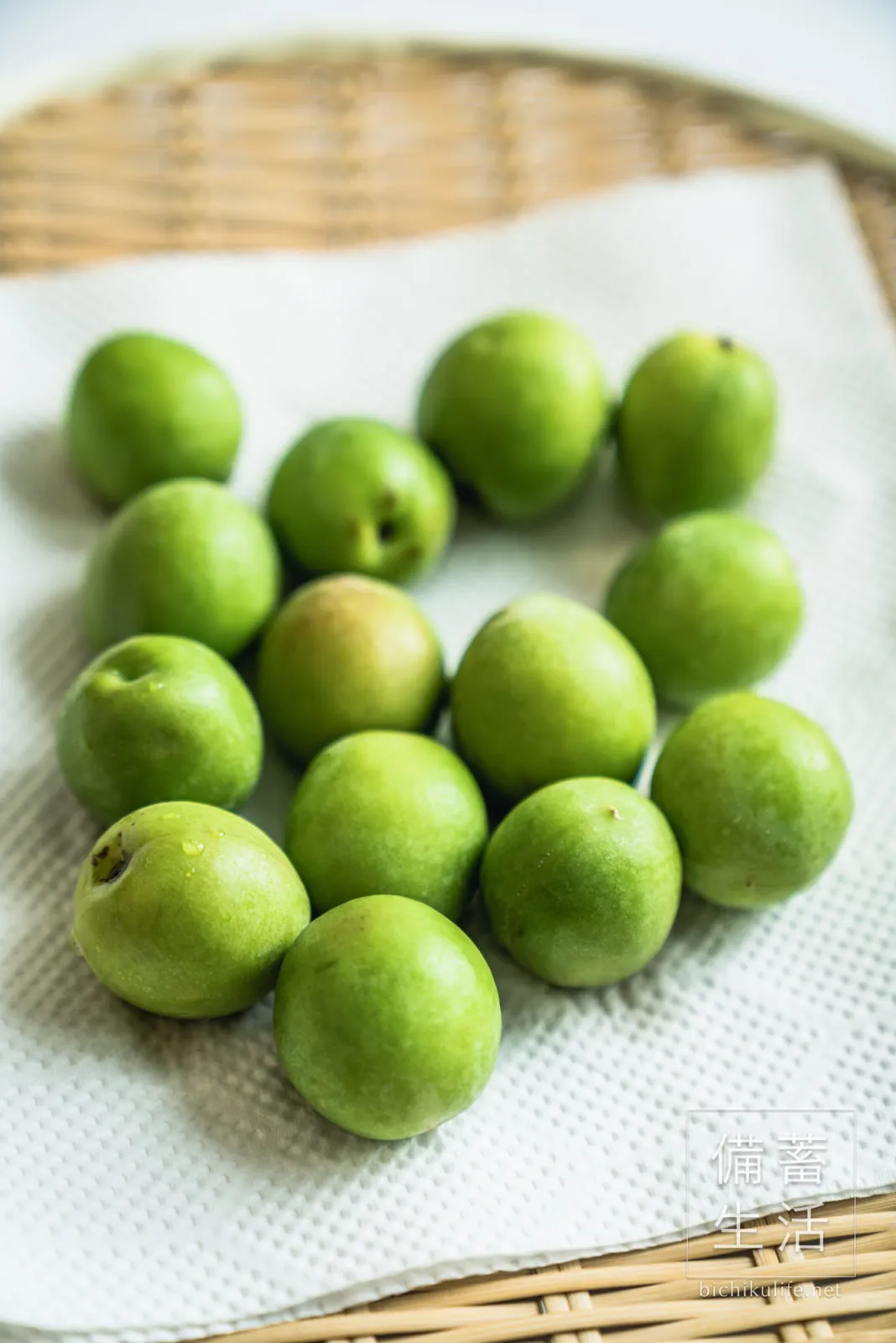
Put the ume in a bowl and gently wash off dust and dirt in plenty of water. Drain and put them in a colander or on a tray.
Dry the ume
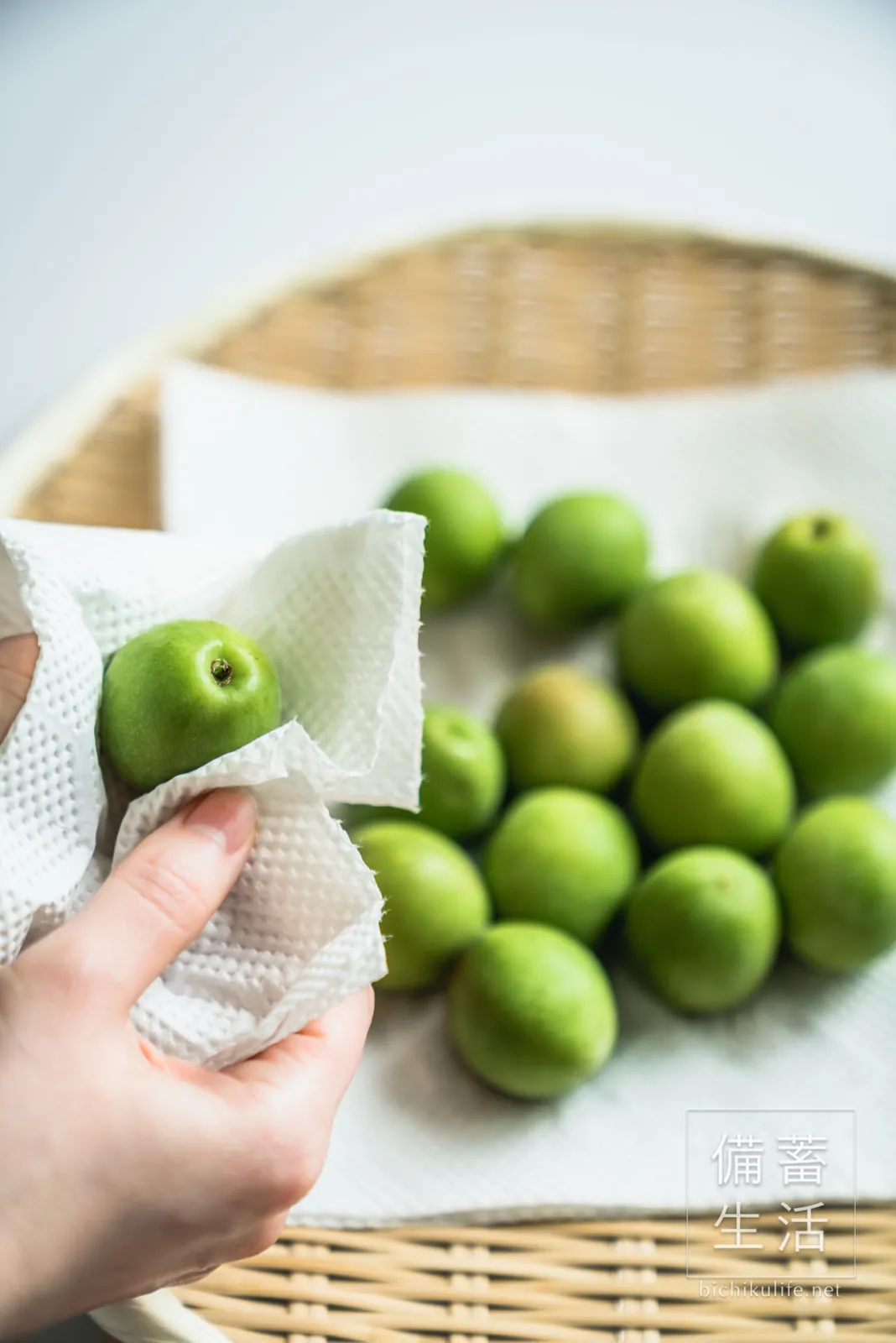
Carefully wipe each ume dry with a paper towel.
Remove the stem ends
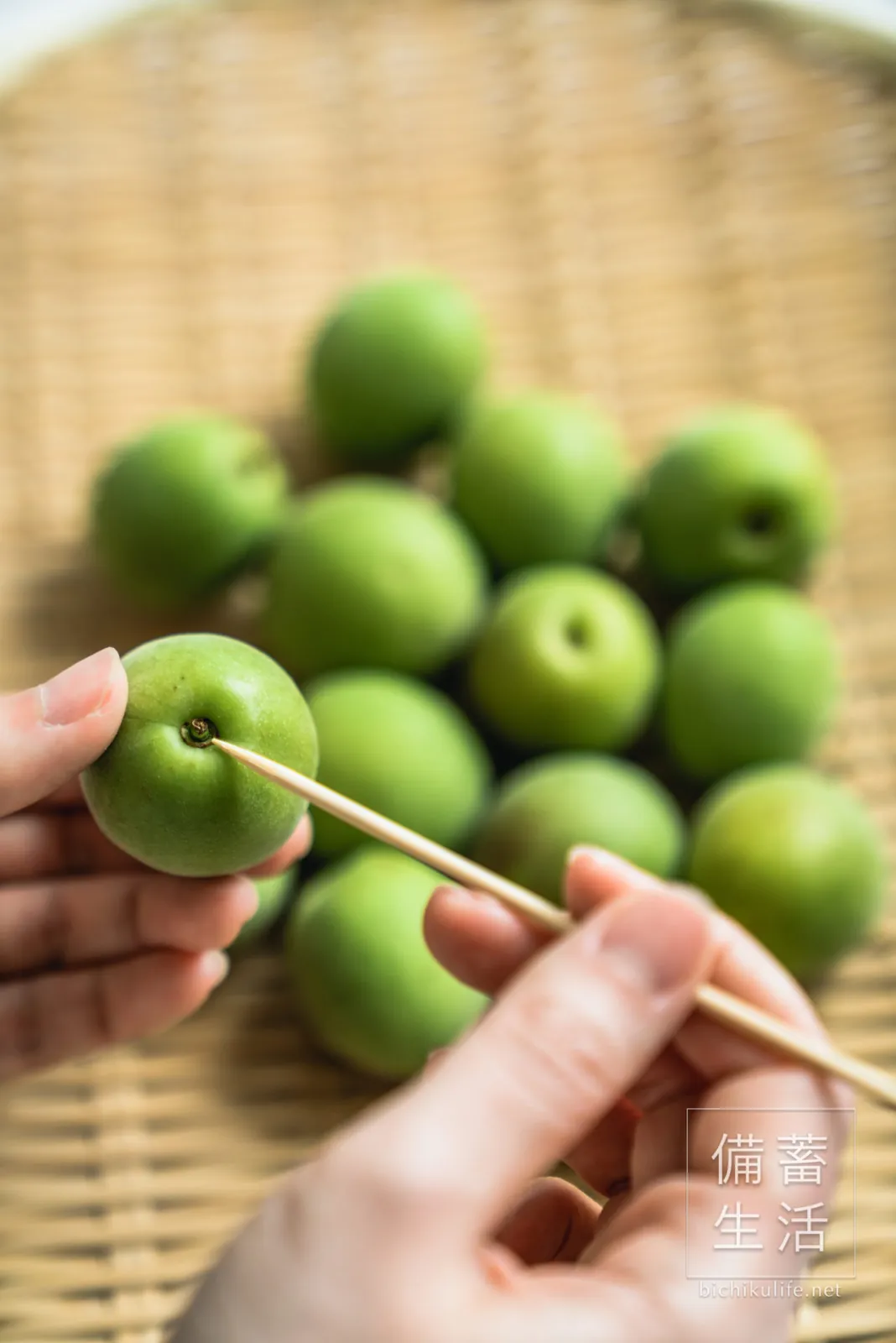
Pick out the little stem ends with a bamboo skewer. Be gentle so the tip of the skewer doesn’t damage the fruit.
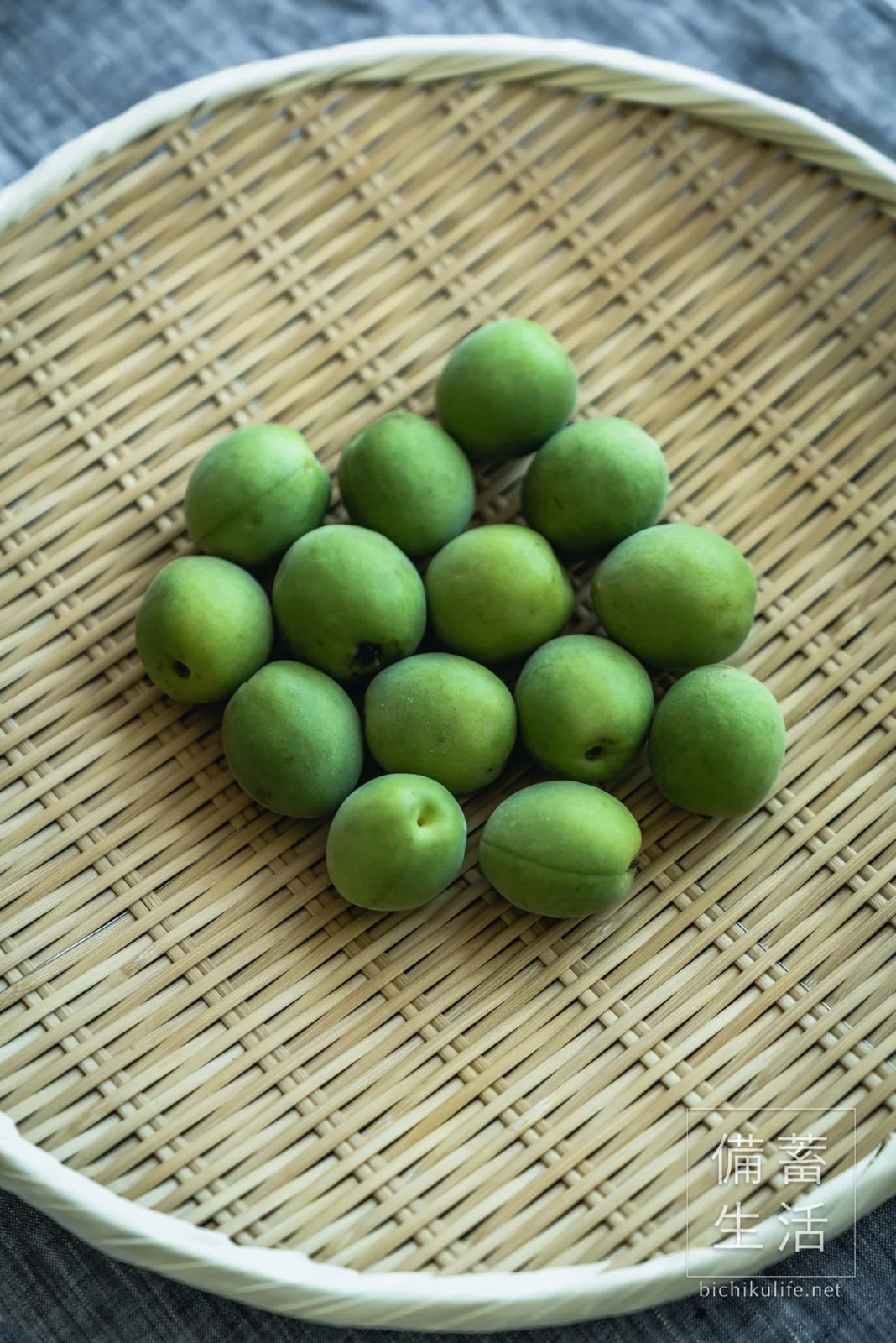
If you have time, let them air-dry further in the shade. (If you wiped them thoroughly, you can skip this.)
Sterilize the jars
Sterilize the jars in boiling water. (Remove rubber seals and metal clips first.) Be careful not to burn yourself.
Put the jars in a large pot with enough water to cover them and heat. When it boils, keep it at a gentle boil for 10 minutes.
Stand the jars upside down on a clean cloth and let them dry completely.
Layer the ume and rock sugar in the jars
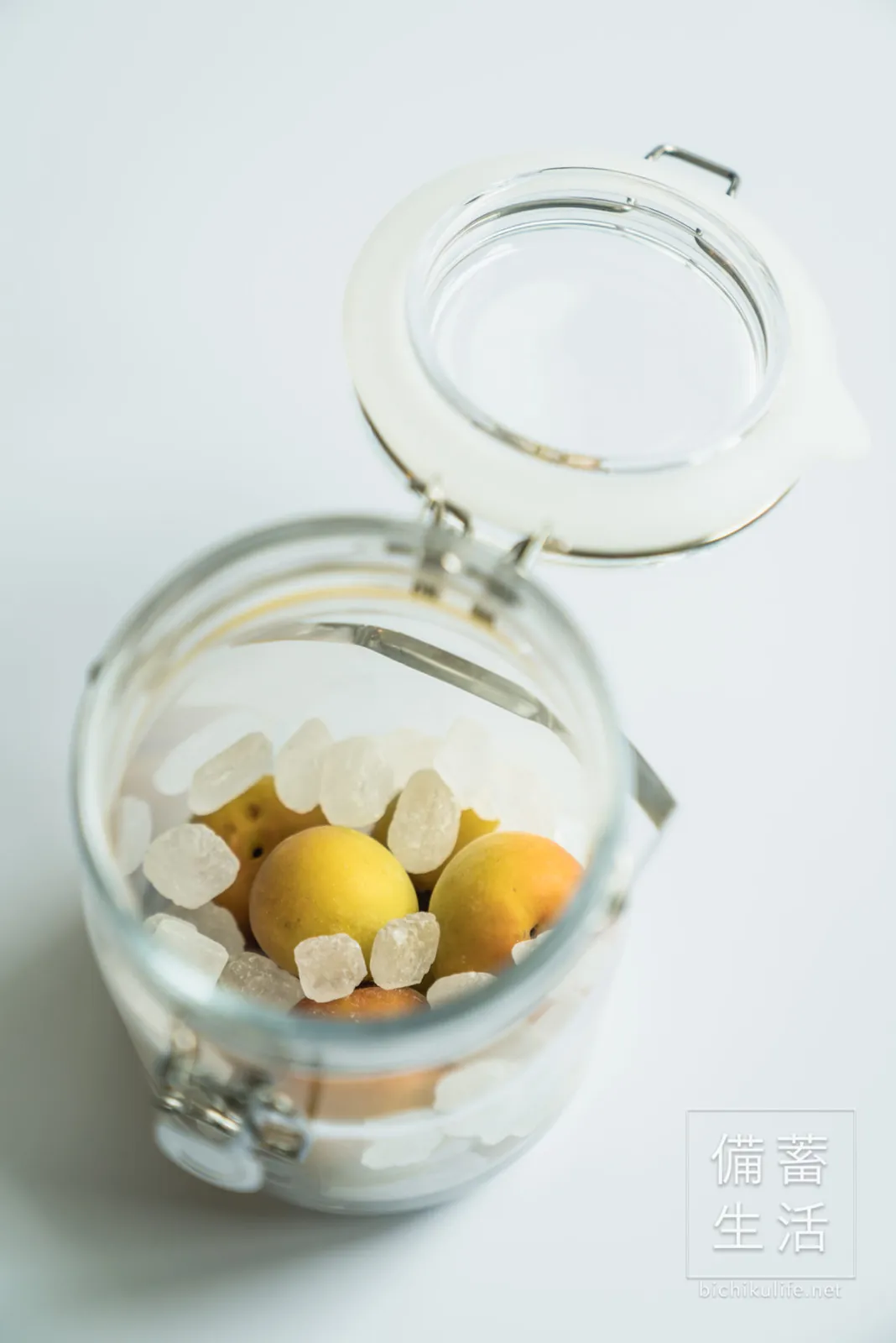
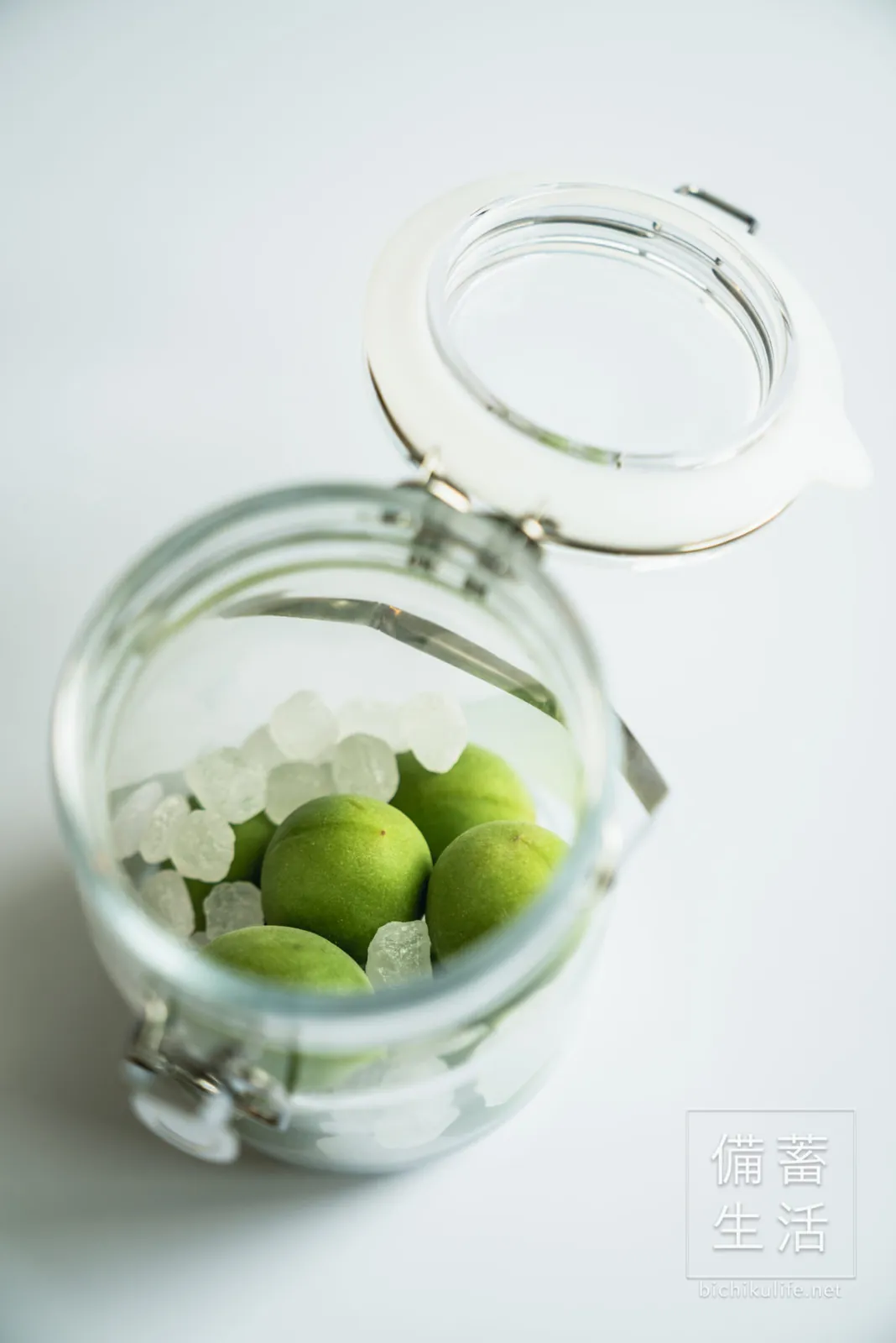
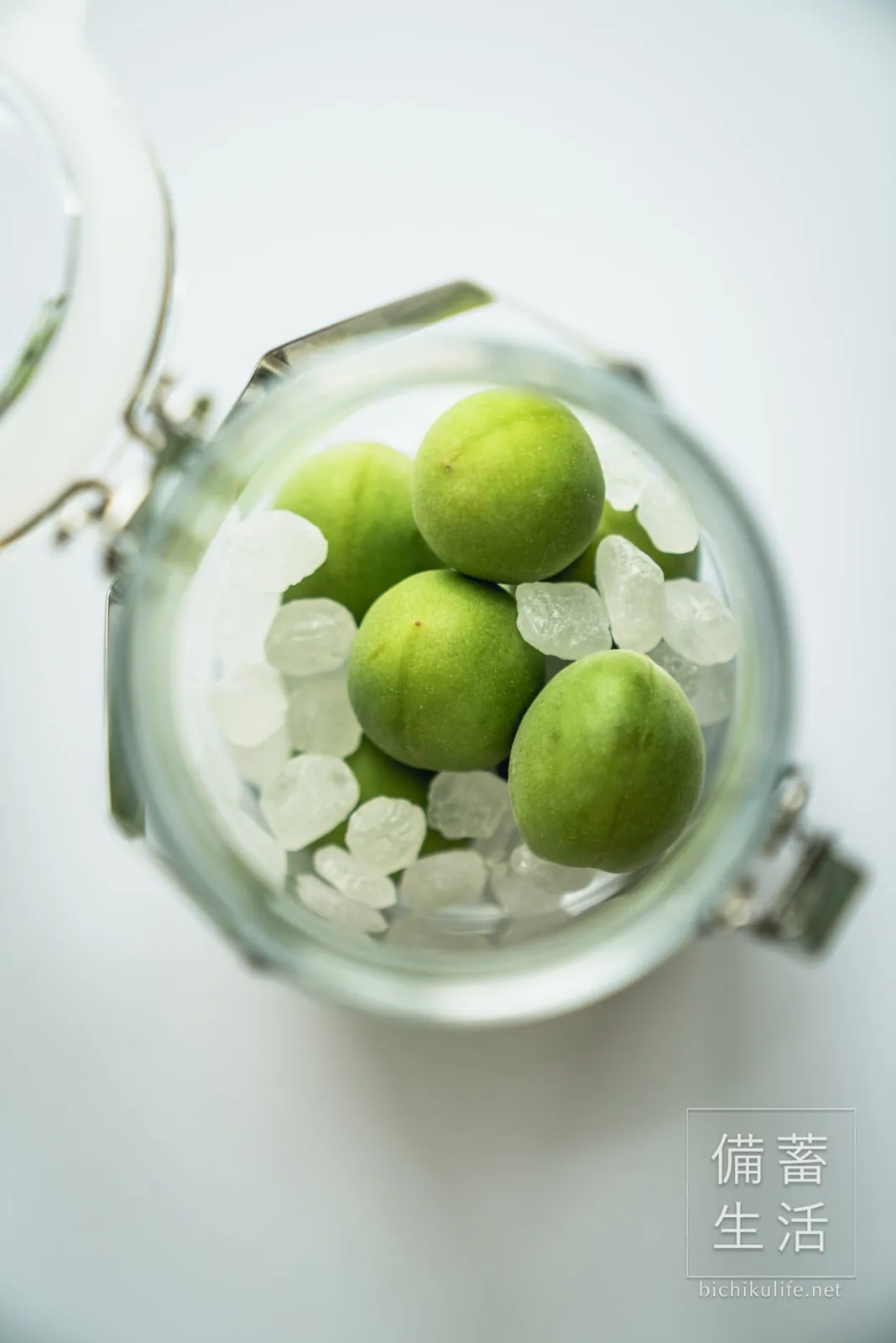
Fill the jars with ume and rock sugar, alternating in 3–4 layers, ume first, then sugar.
Add the liquor
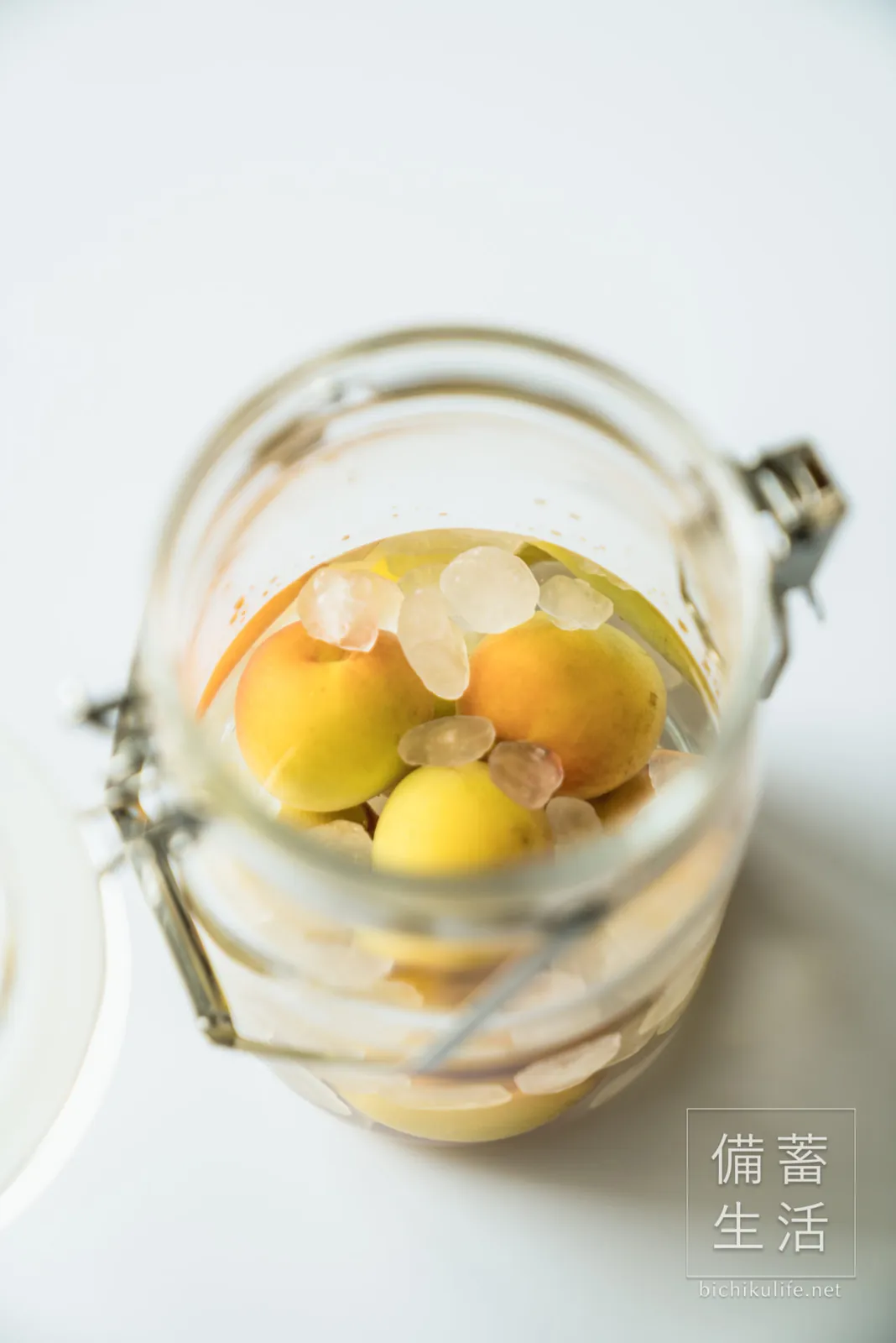
Once the ume and sugar are in, pour in the white liquor.
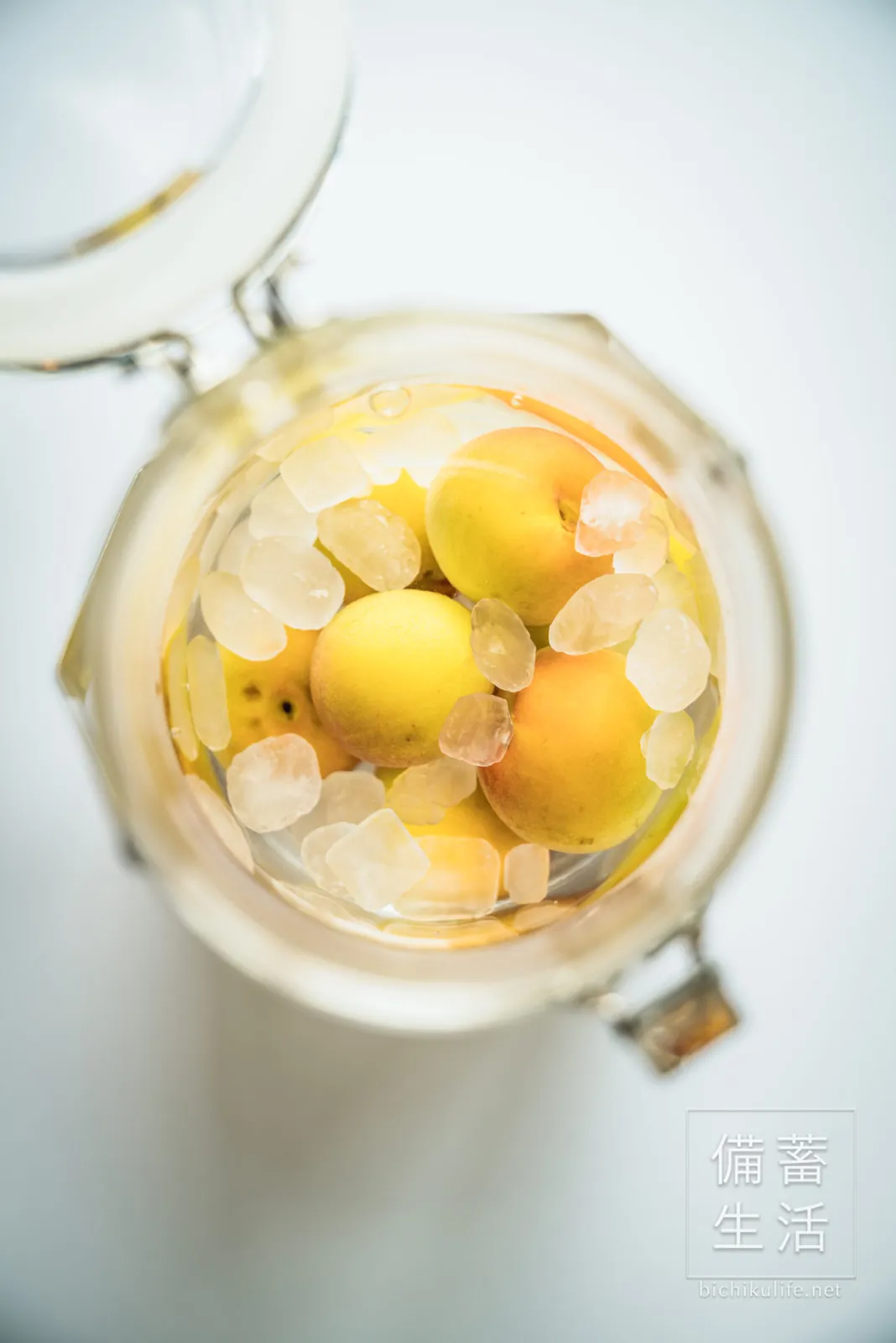
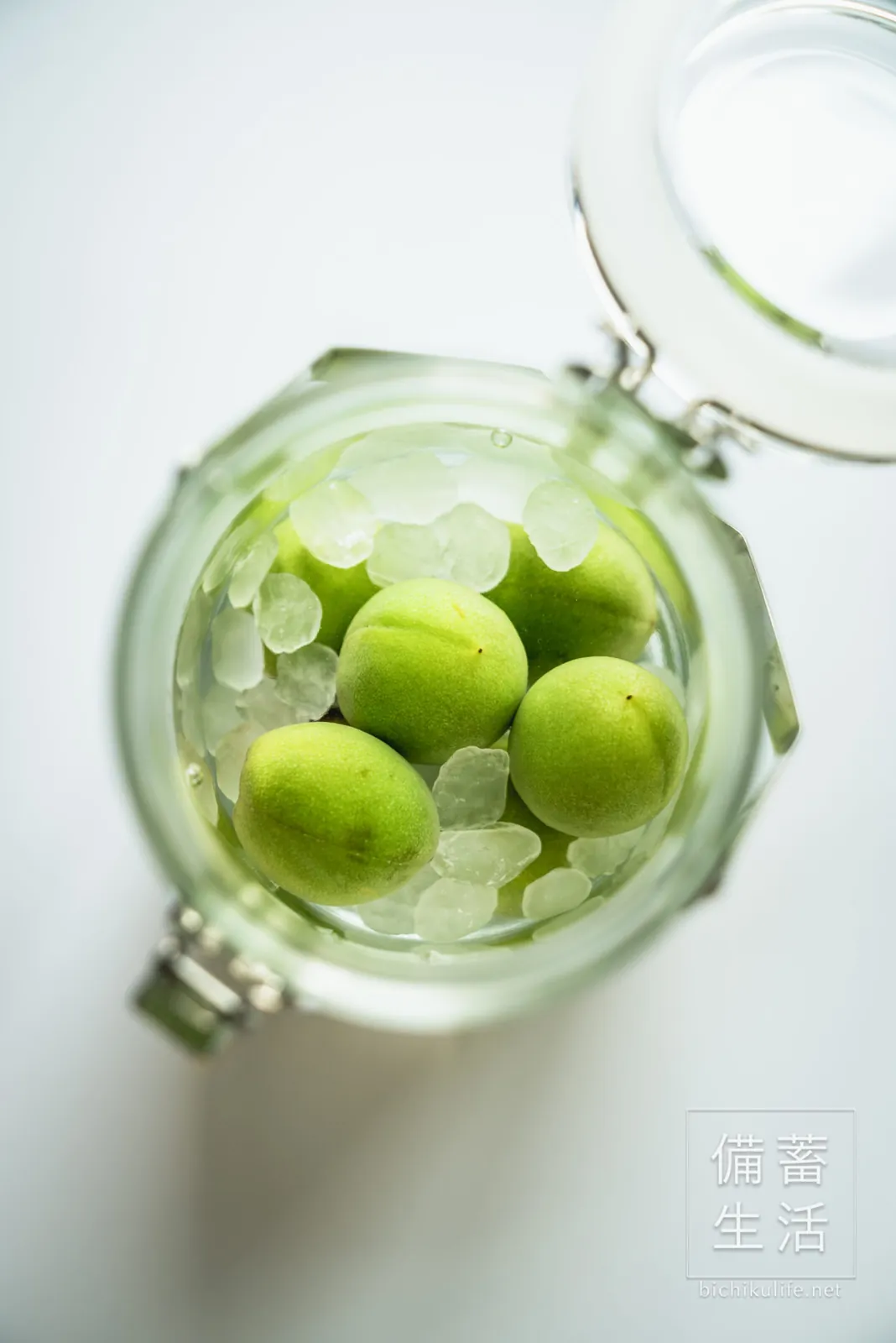
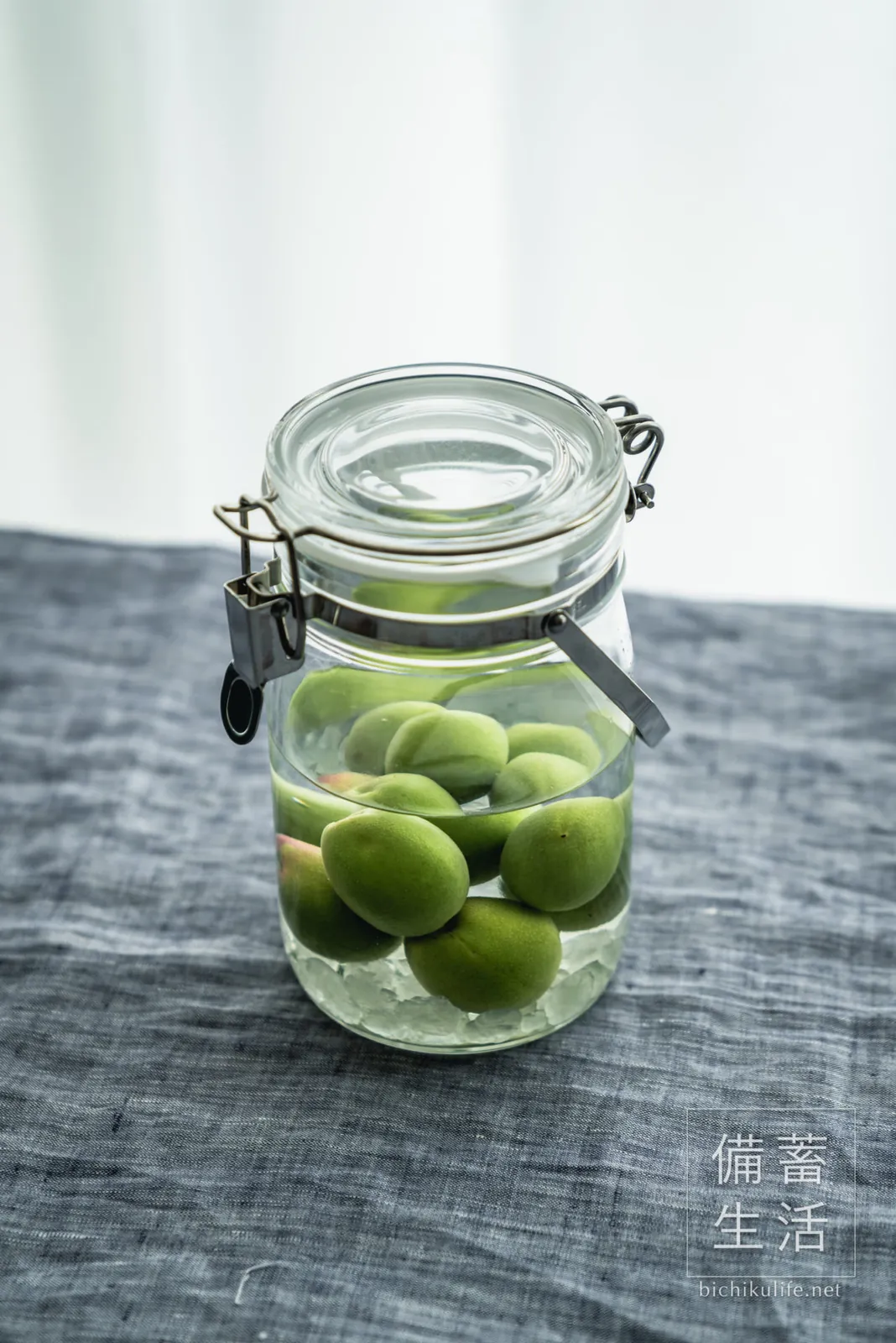
The green ume umeshu, done.
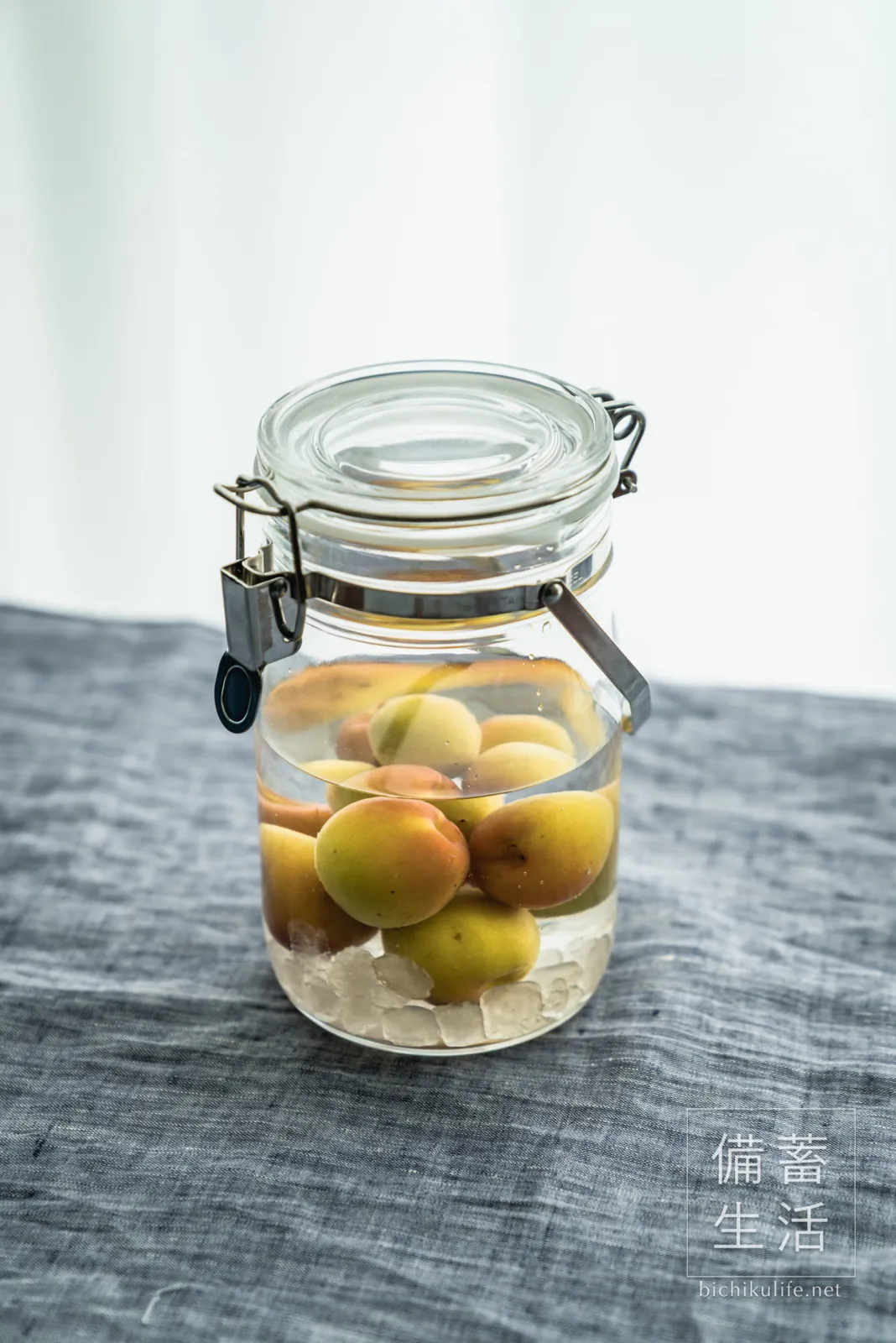
The ripe Nanko ume umeshu, done.
Storage
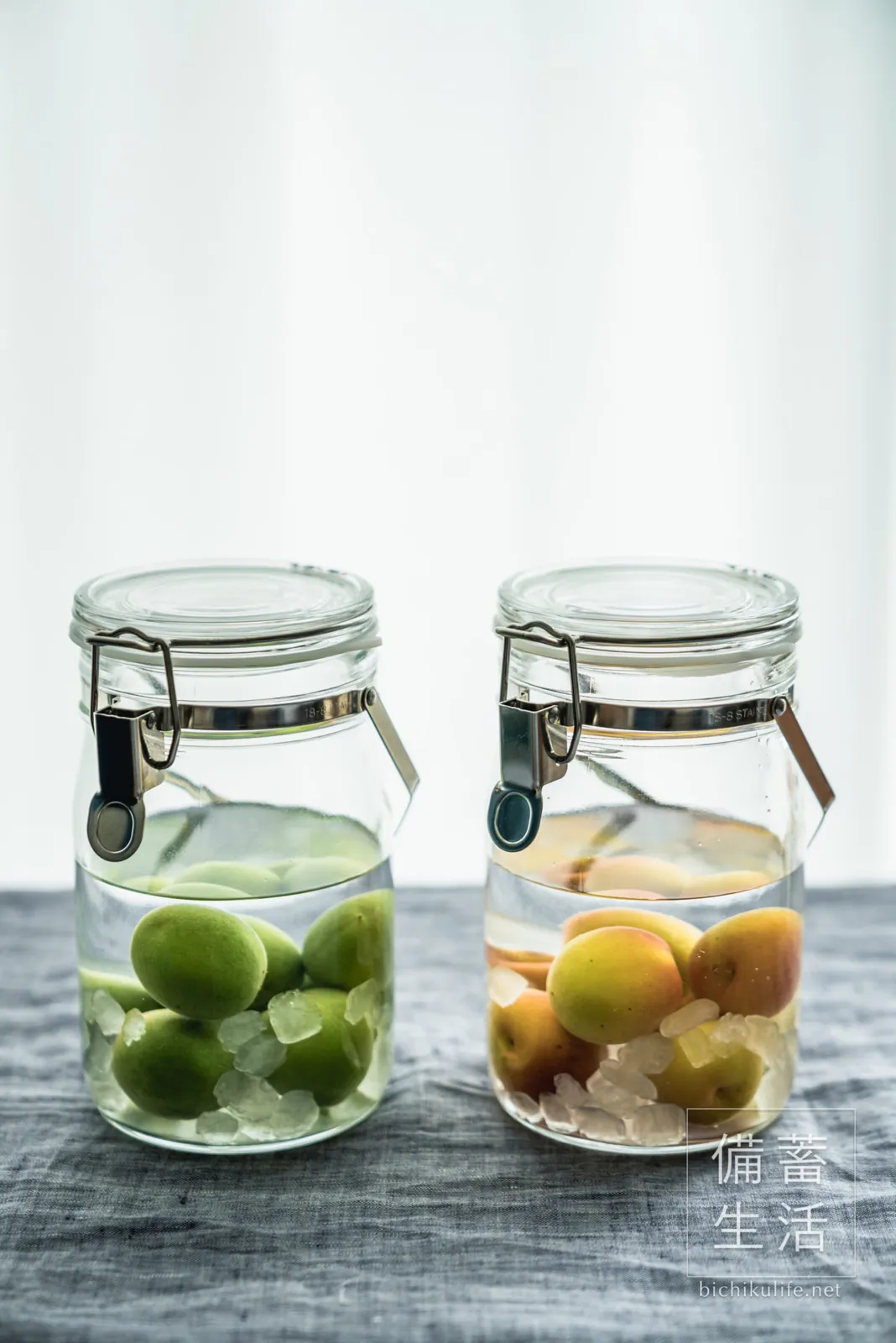
Keep the umeshu in a cool, dark place. Swirl the jar gently now and then to mix. It takes three months or more to turn amber, so be patient and let it age.