Stem vegetables
Asparagus NukazukeBlanched vs. Raw, Side by Side
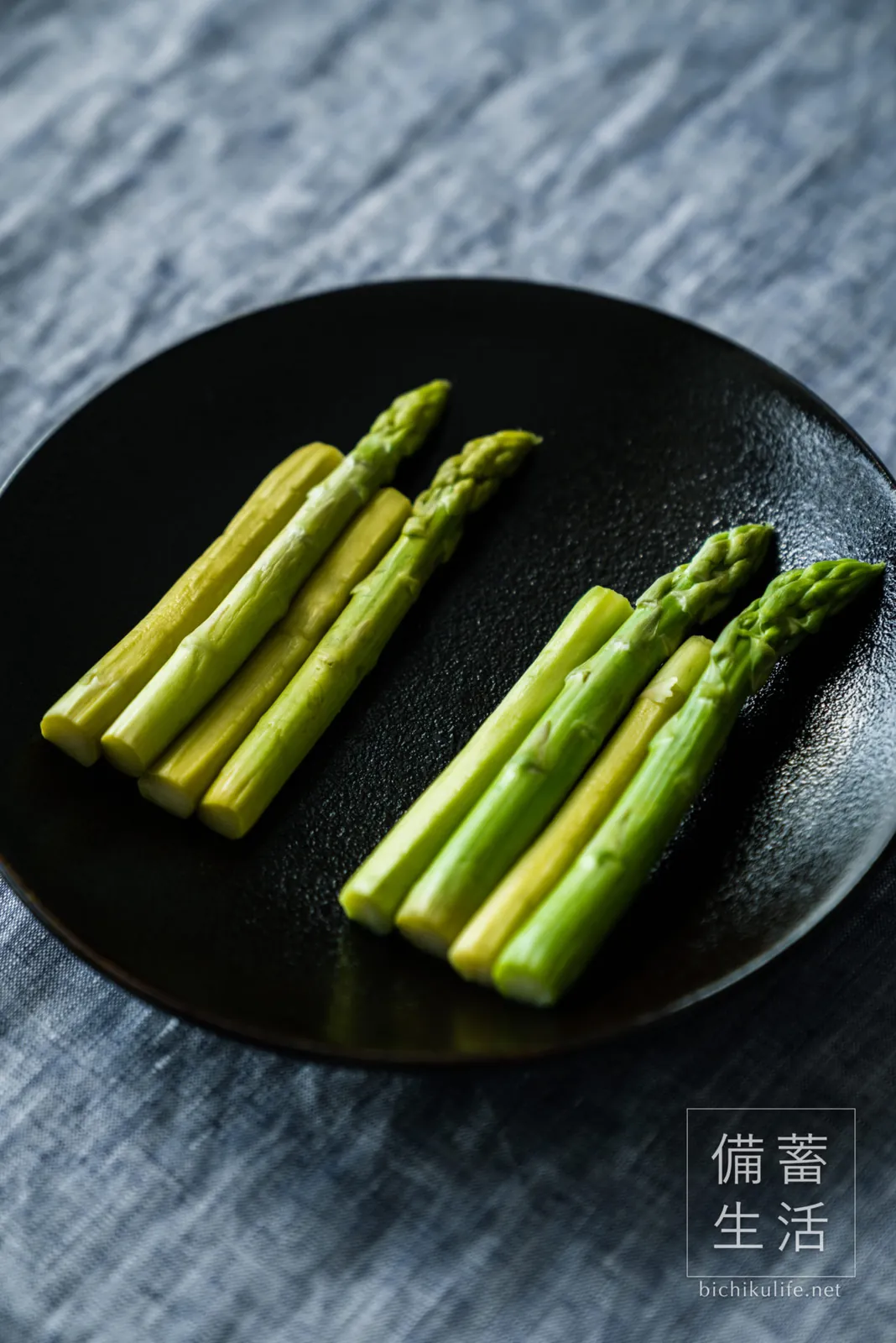
Crisp asparagus goes well with rice bran. In Hokkaido, where we live, it’s a common vegetable from spring to early summer.
You can pickle it raw, but blanching it first is much better. To compare, we pickled blanched and raw asparagus at the same time.
- Blanched: The bran soaks in well, and the color turns yellowish.
- Raw: It stays nicely crunchy, but stays almost completely green, and the grassy taste stood out.
Blanched asparagus needs a shorter pickling time; raw asparagus needs longer.
| Prep | Trim the ends, peel the lower part, blanch about 50 seconds and cool |
|---|---|
| Pickling time | 24 hours or more (longer if raw) |
| After pickling | Keep in the fridge and eat by the next day |
Pickling times are for a nuka bed kept in the fridge. At room temperature it pickles faster, and faster still in summer. The saltiness of your bed also makes a difference.
How to make asparagus nukazuke
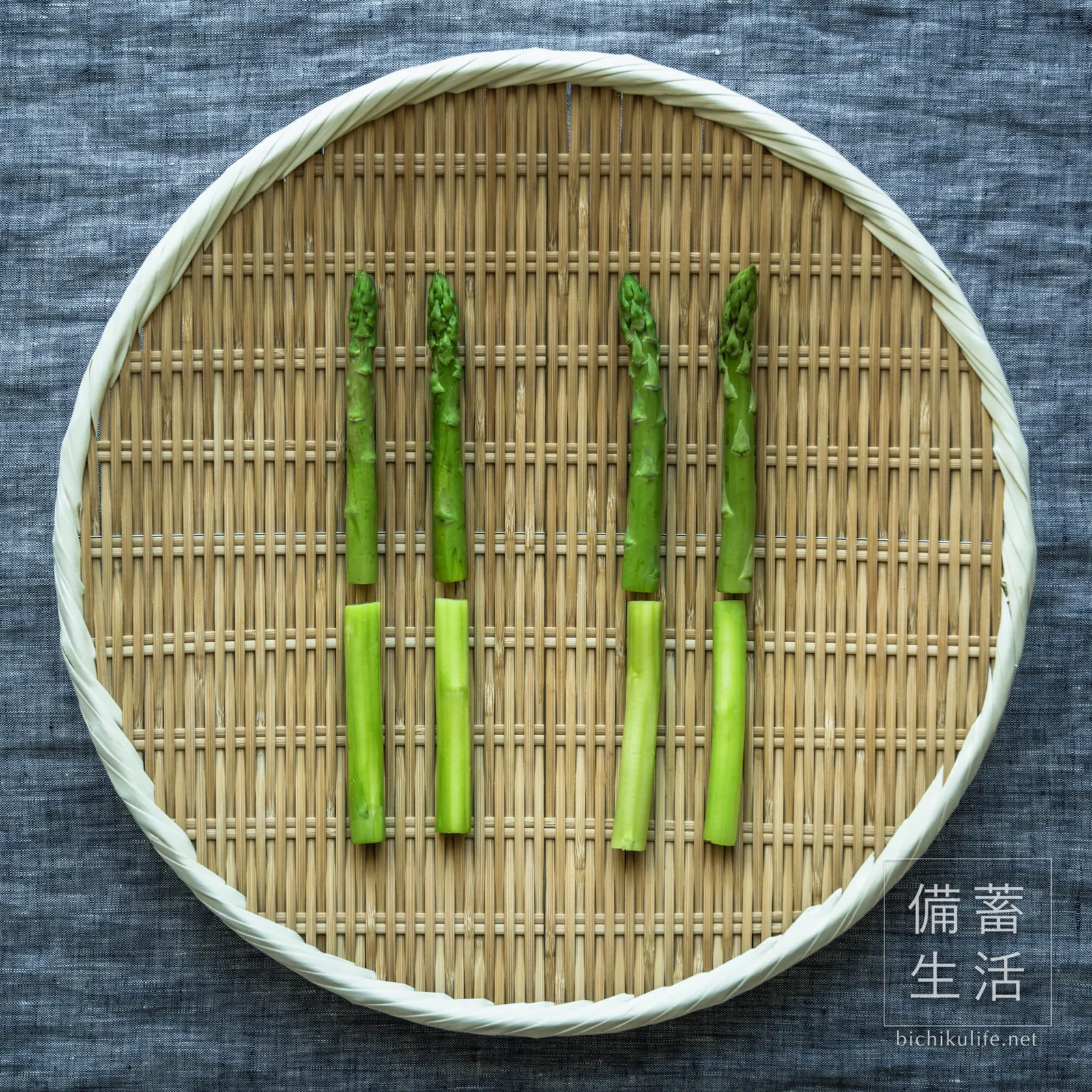
- Prep: Cut off the tough ends, and thinly peel the tough skin on the bottom third of the stalk with a peeler.
- Blanch: Boil for about 50 seconds, take out, and let the remaining heat finish cooking it.
- Cool completely: Wait until it’s completely cool, then pat dry.
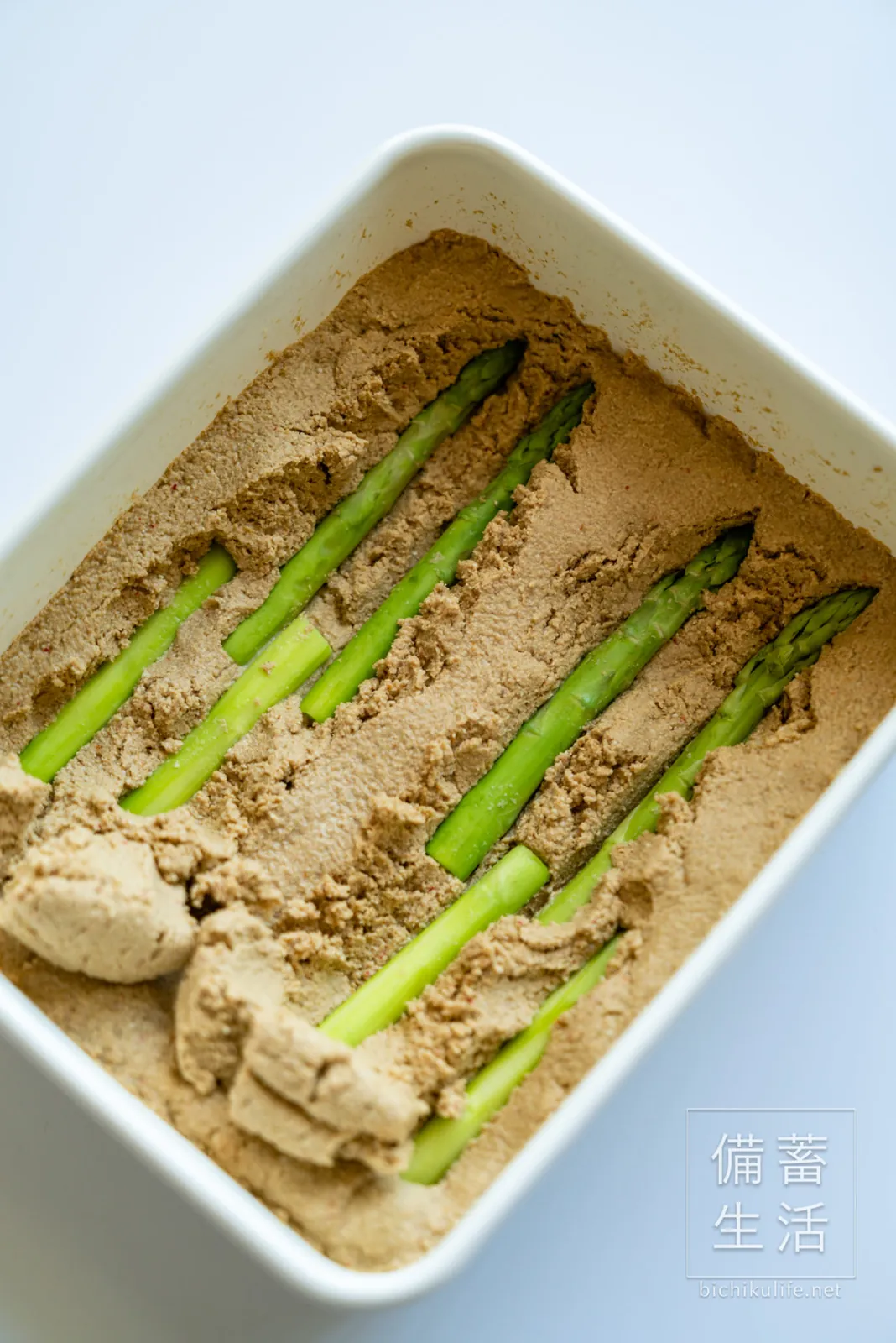
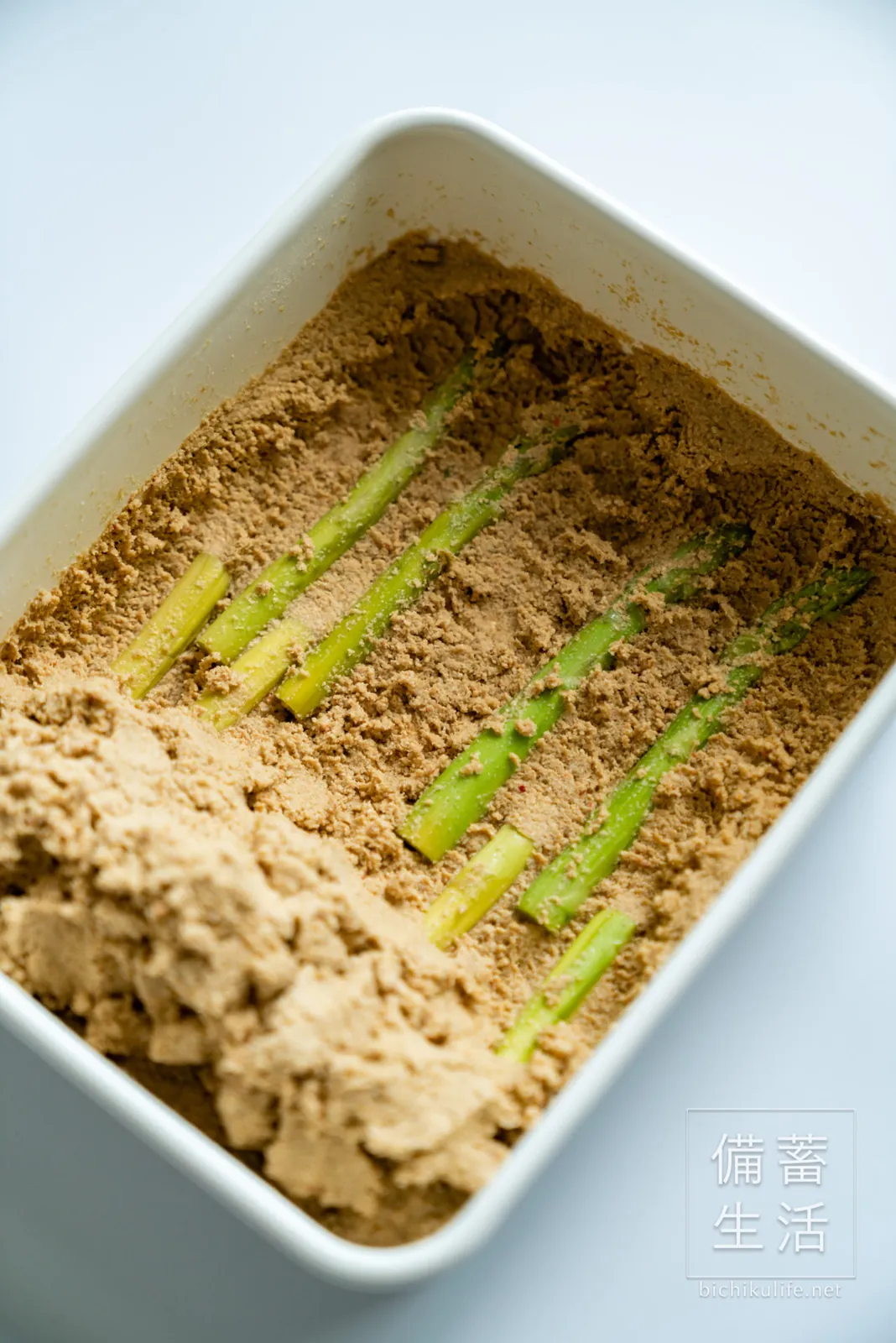
- Pickle: Lay the spears in the nuka bed and cover with bran.
- Take it out: Rinse off the bran and cut into easy-to-eat lengths.
From bed to plate
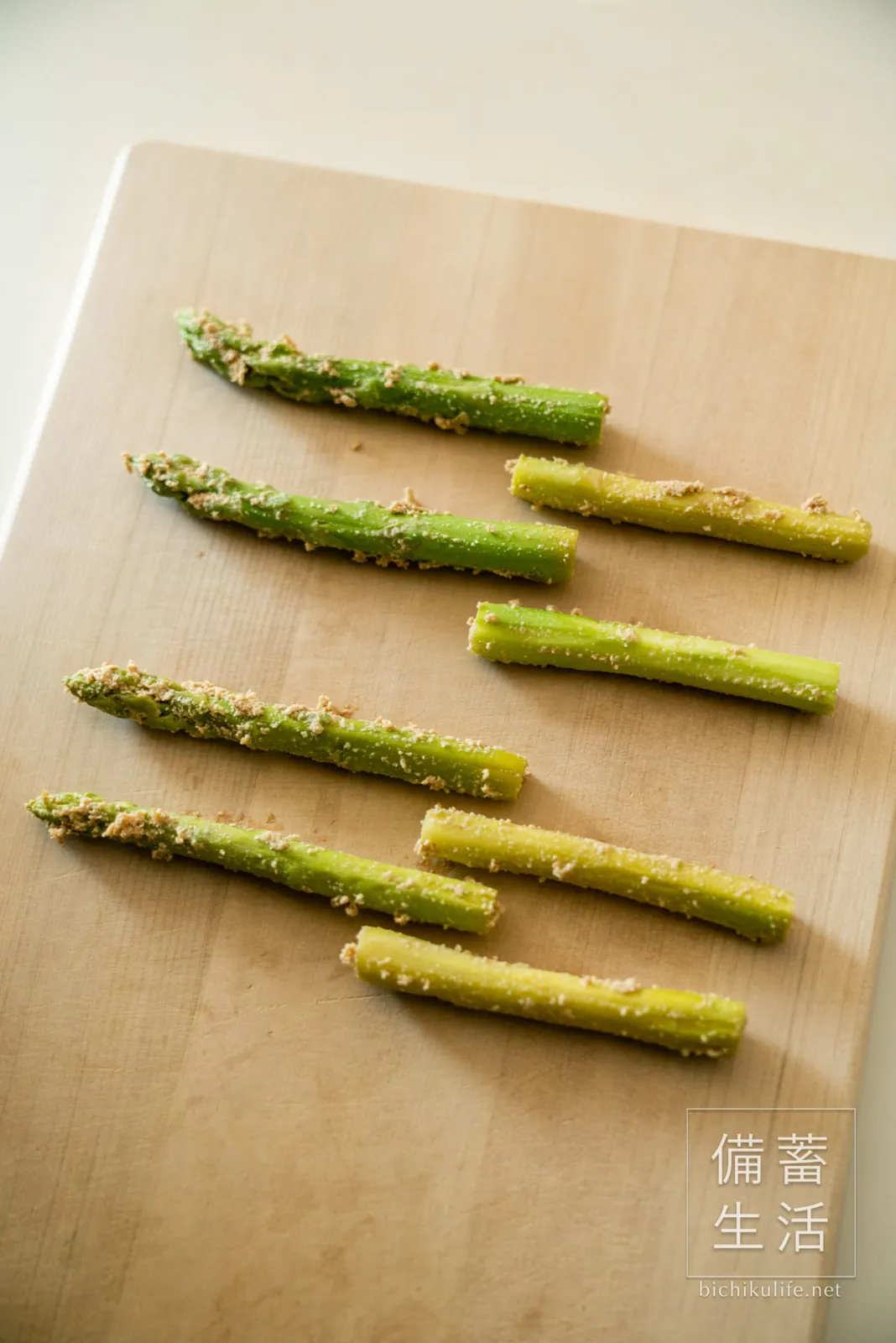
The blanched asparagus turned yellowish, a sign that the bran has soaked in. The raw spears stayed almost completely green.
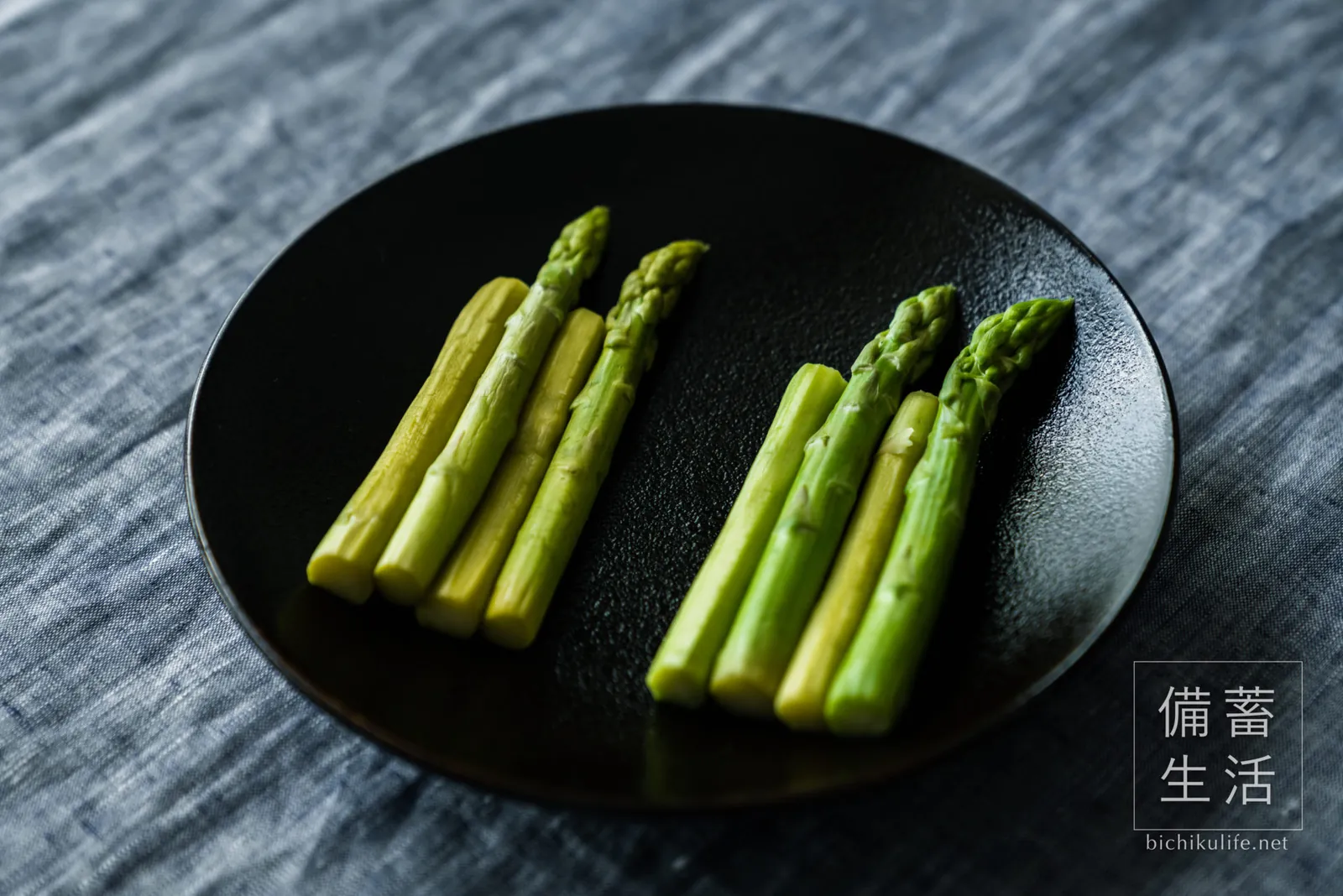
How to eat it
- As is: Cut into easy-to-eat lengths.
- Wrapped in bacon: Wrap pickled asparagus in bacon and pan-fry it. The saltiness is just right for a snack with drinks.
Care for your bed is covered in Caring for a Nuka Bed, and making one in How to Make a Nuka Bed.