Muji's Fermented Nuka BedPickling in the Bag, in the Fridge, and How It Tasted
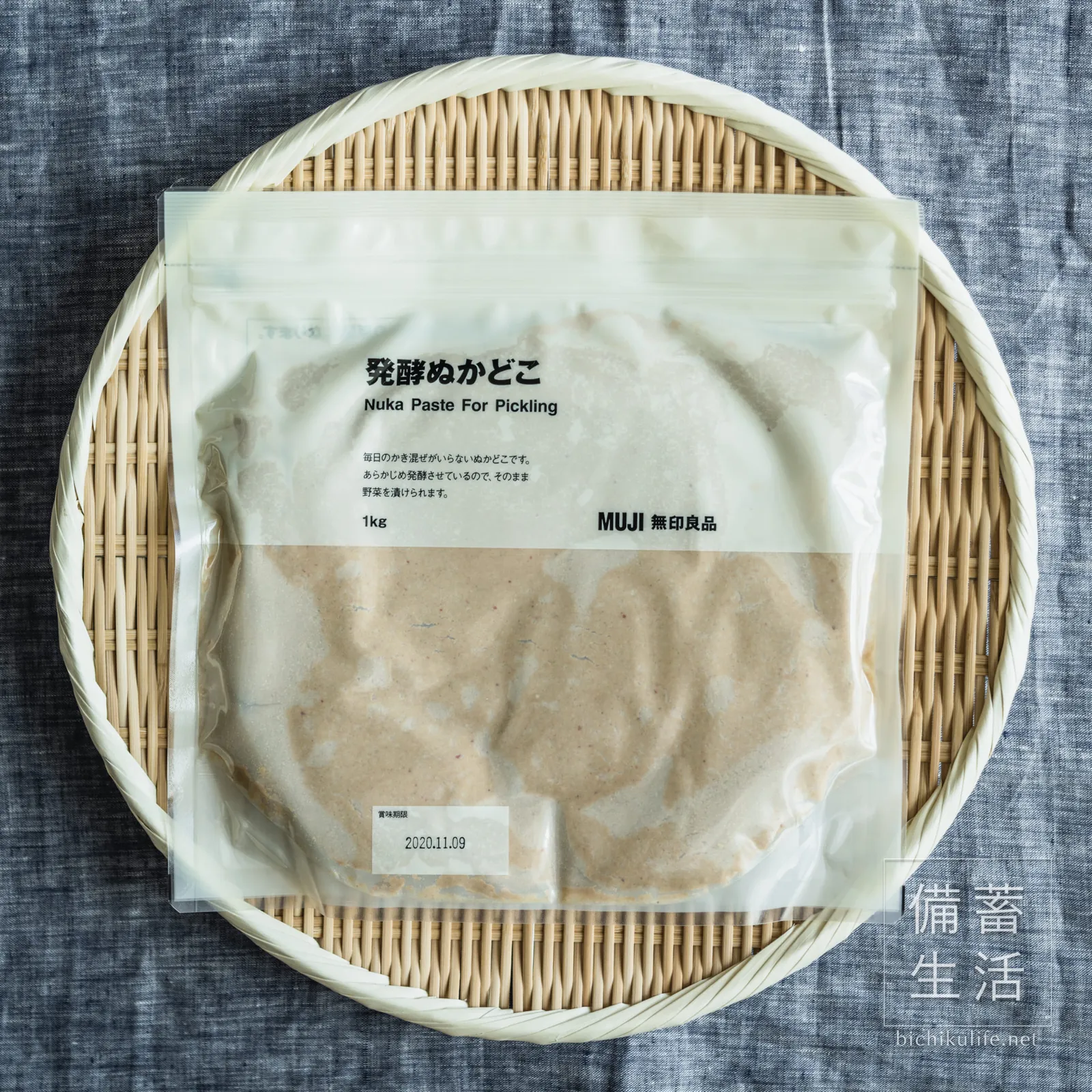
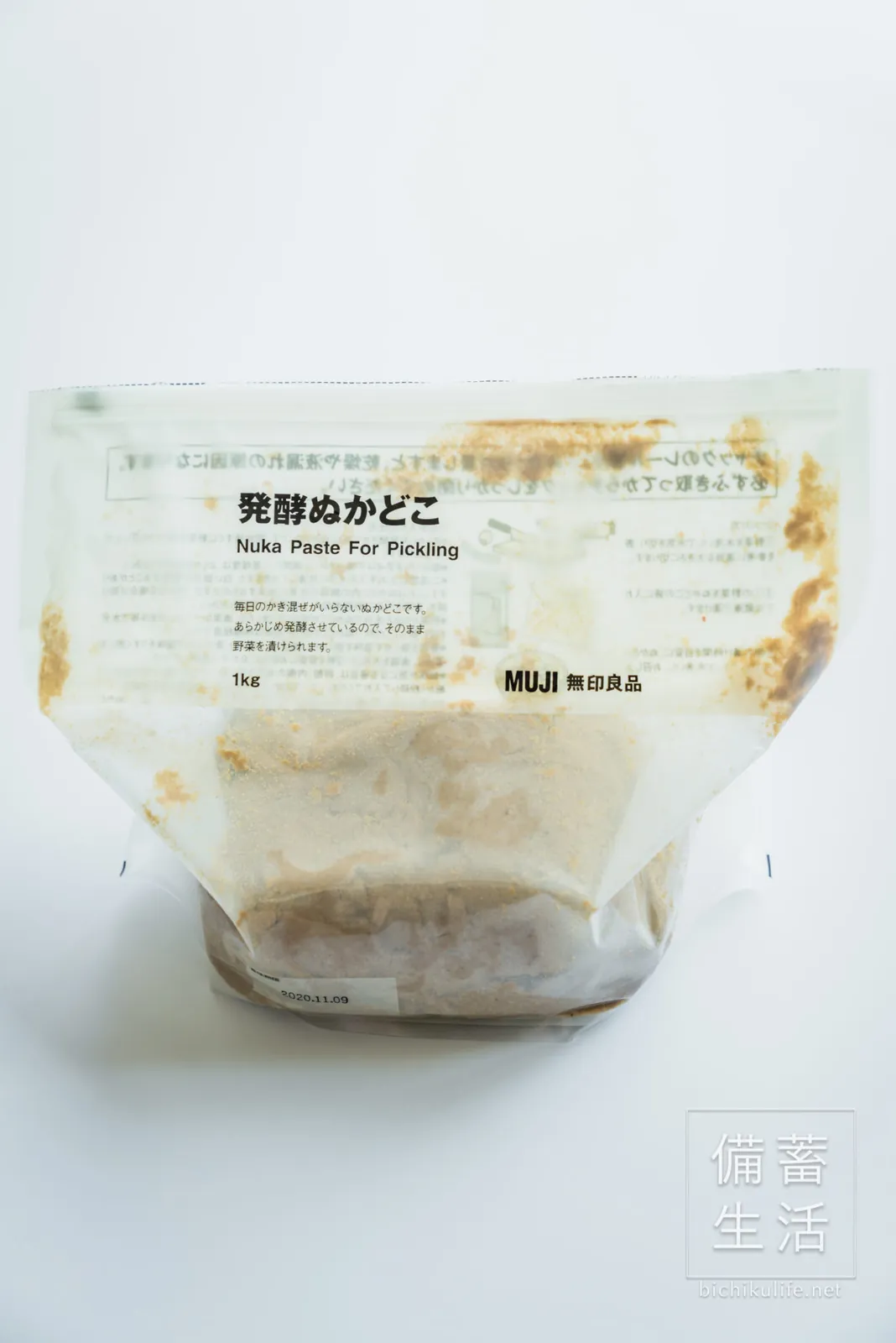
Muji, the Japanese lifestyle store, sells a nuka bed called hakko nukadoko (fermented nuka bed). A homemade bed needs daily stirring and 2–3 weeks to mature. Muji’s bed is already fermented, so you can make nukazuke from the day you buy it, and stirring about once a week is enough.
The bag has a zip at the top, so you can pickle right in the bag. You can also move it into another airtight container.
| Product | Muji hakko nukadoko (fermented nuka bed) |
|---|---|
| Ingredients | Rice bran (from Japan), salt, kombu, chili pepper, brewer’s yeast, etc. |
| Amount | 1 kg (2.2 lb) |
| Where to keep it | Fridge |
| Made by | Mitake Shokuhin Kogyo (Saitama, Japan) |
Ingredients and price may change. Check the label when you buy.
This product is sold in Japan, and may not be available in Muji stores in other countries. Outside Japan, Japanese grocery stores and online shops sell similar ready-made nuka beds (look for “nukadoko” or “nuka pickling bed”).
Mitake’s fermented nuka bed
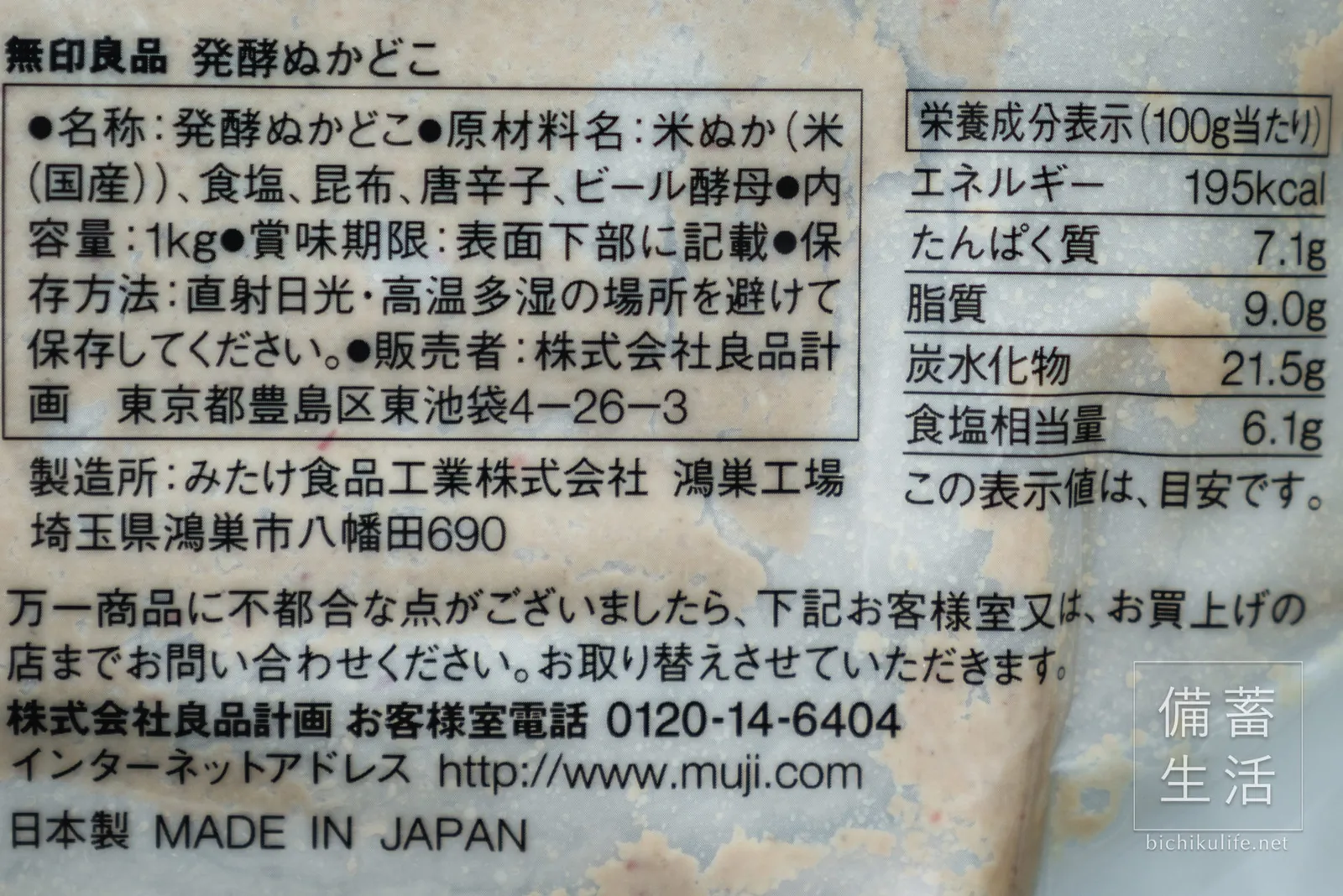
This is a Japanese-made fermented nuka bed using bran from Japanese rice. It is made by Mitake Shokuhin Kogyo in Konosu, Saitama, which also sells its own fermented nukadoko. If Muji’s is sold out, Mitake’s works the same way, and refills are available too.
Care
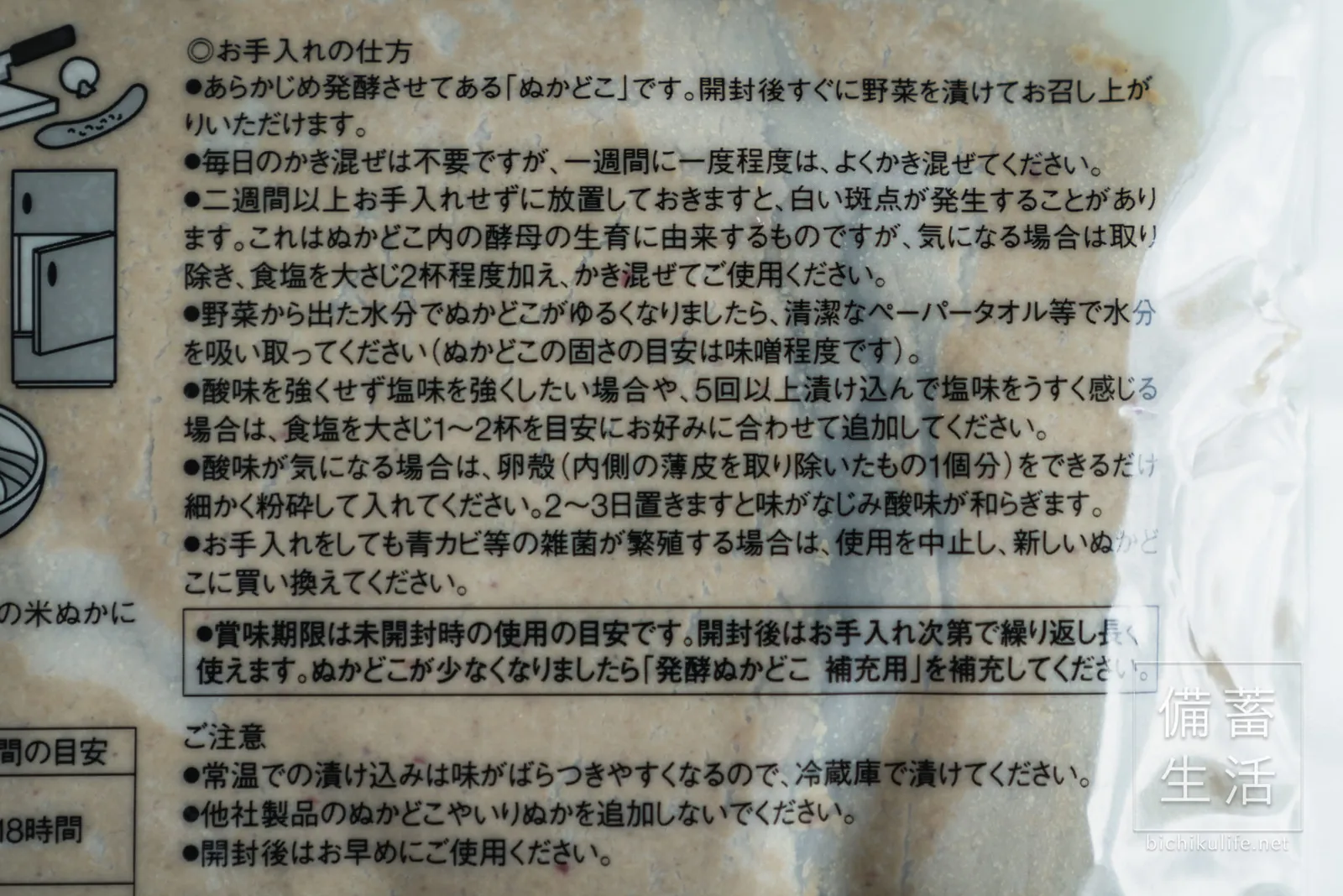
The care instructions on the package say:
- Stir about once a week.
- If you leave it more than two weeks without care, white spots may appear. If they bother you, remove them, add about 1 tablespoon of salt and mix.
- Pickling at room temperature makes the results uneven, so pickle in the fridge.
How to deal with white spots or a watery bed is explained in Caring for a Nuka Bed.
How to pickle, and pickling times
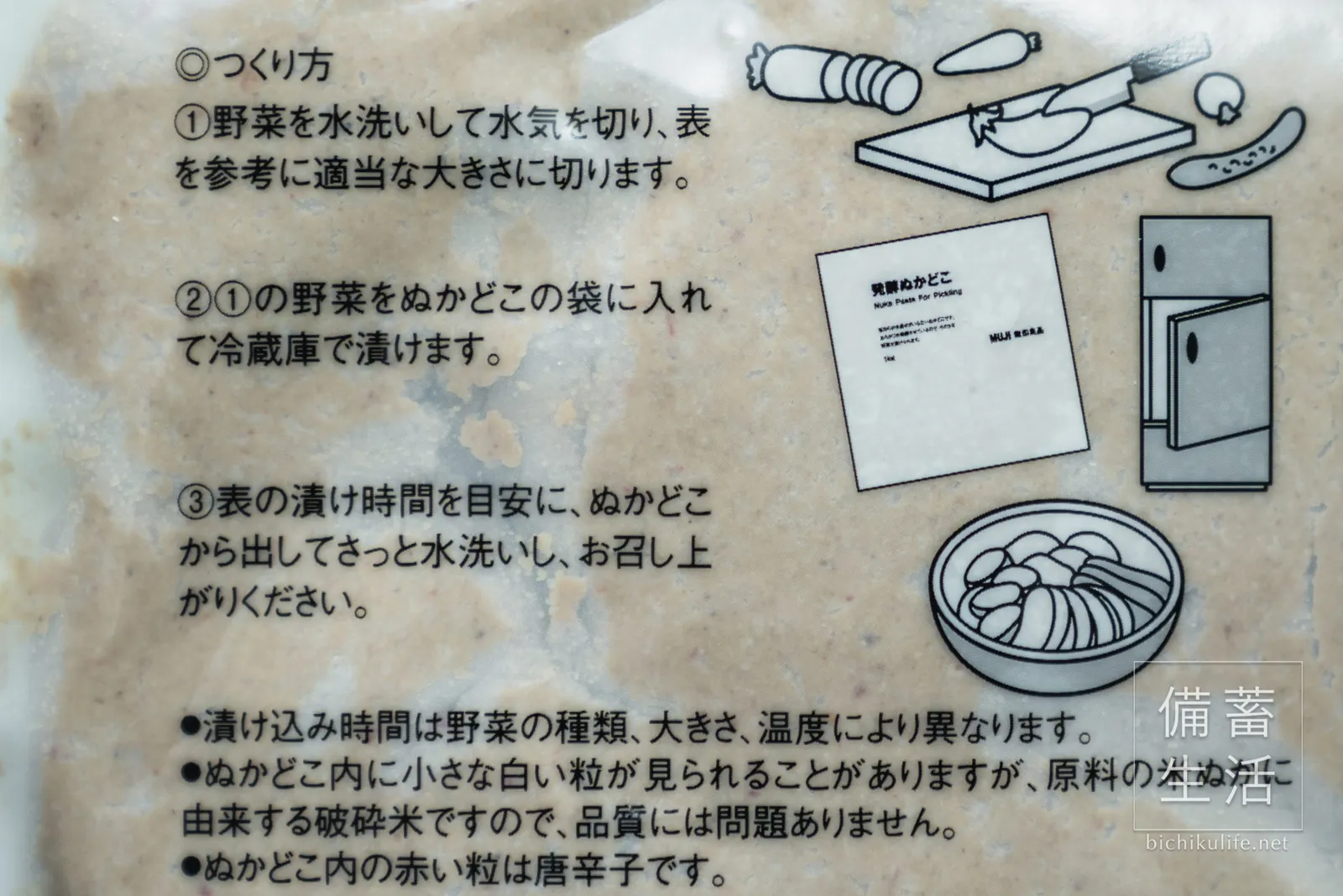
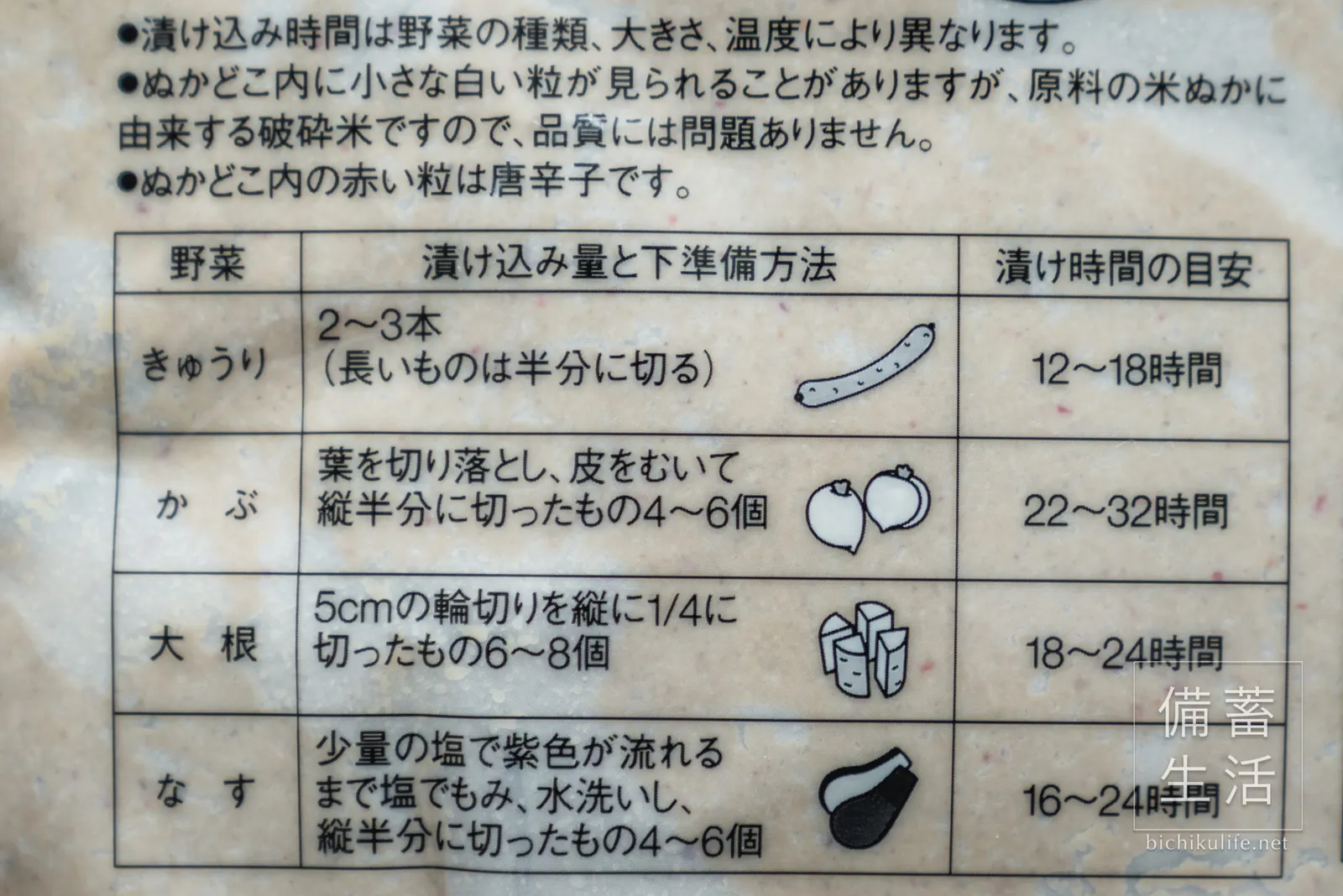
Pickling times printed on the package, for pickling in the fridge:
| Vegetable | Pickling time (fridge) |
|---|---|
| Cucumber | 12–18 hours |
| Eggplant | 16–24 hours |
| Daikon radish | 18–24 hours |
| Turnip | 22–32 hours |
We tried it
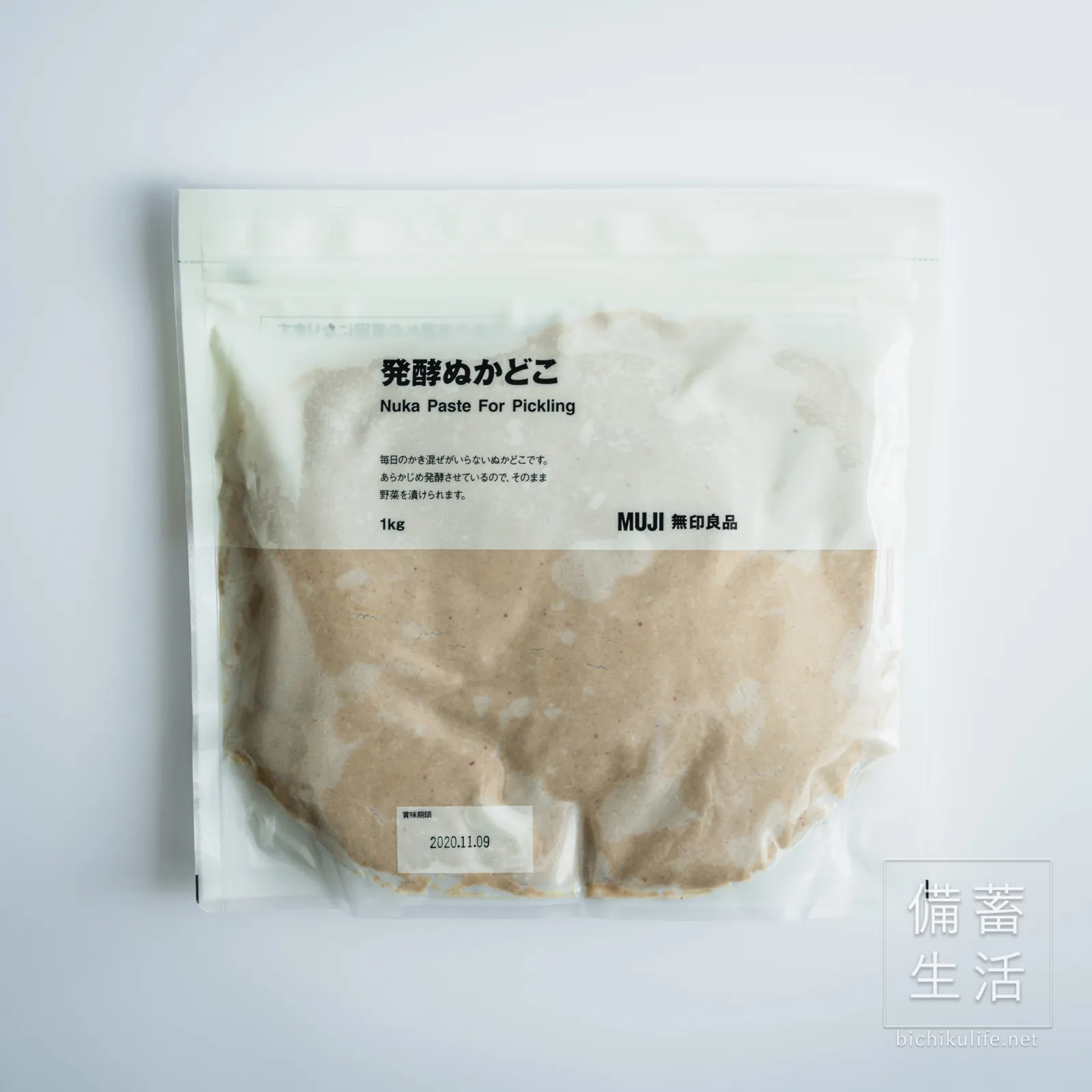
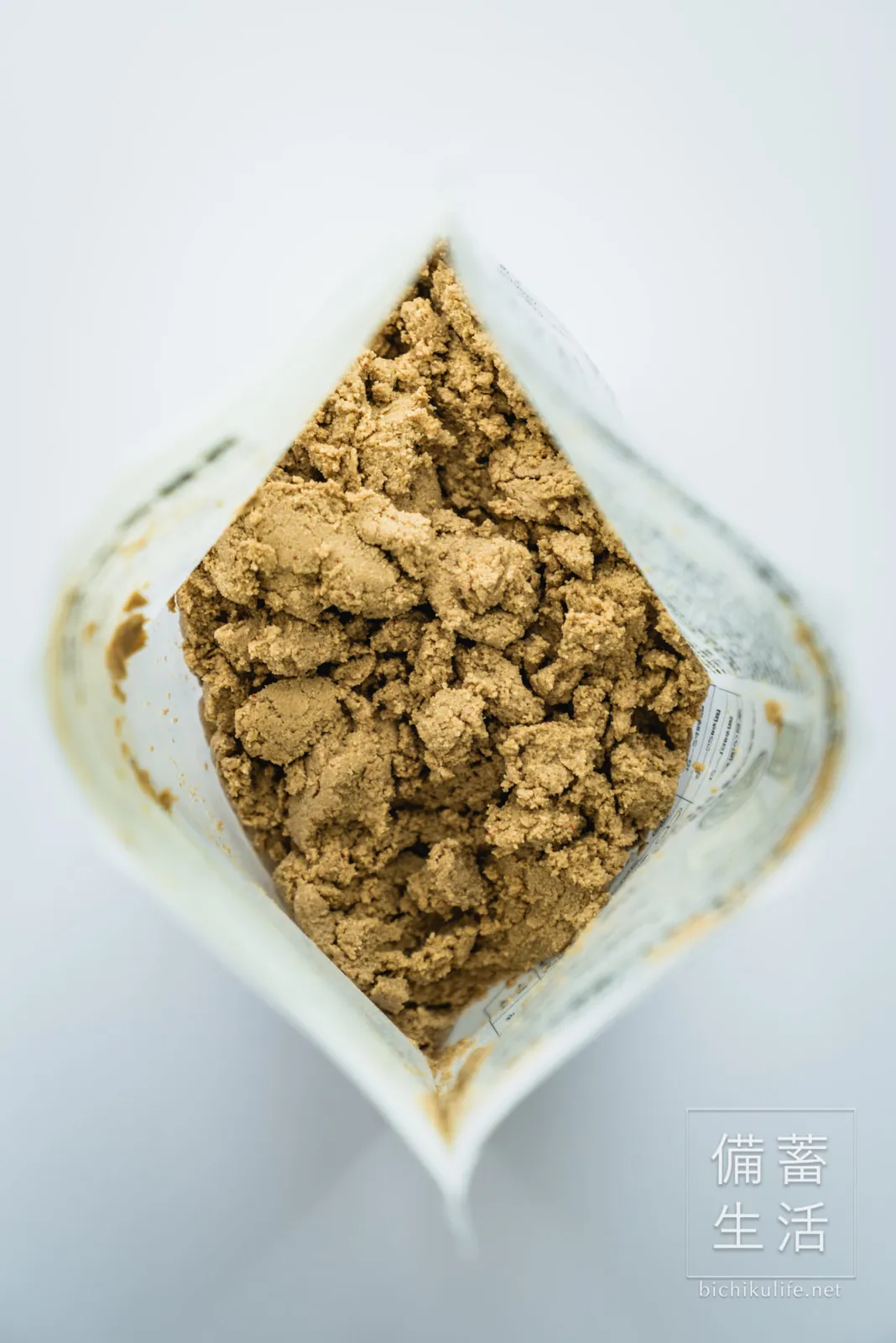
Cut open the top with scissors and knead the bag from the outside to loosen the bran. We pickled cucumber, eggplant, turnip and daikon, one after another, in the bag in the fridge.
Cucumber (18 hours)
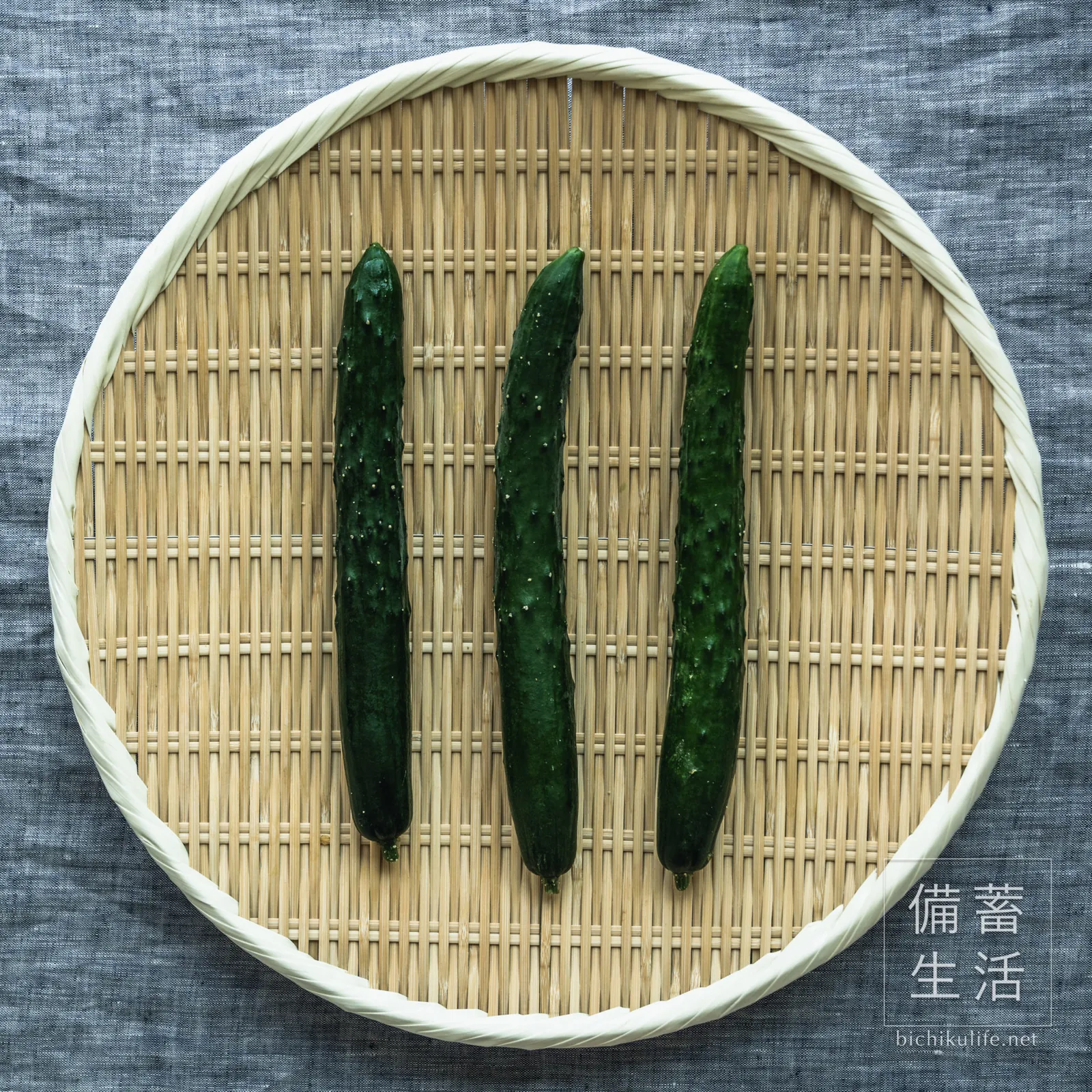
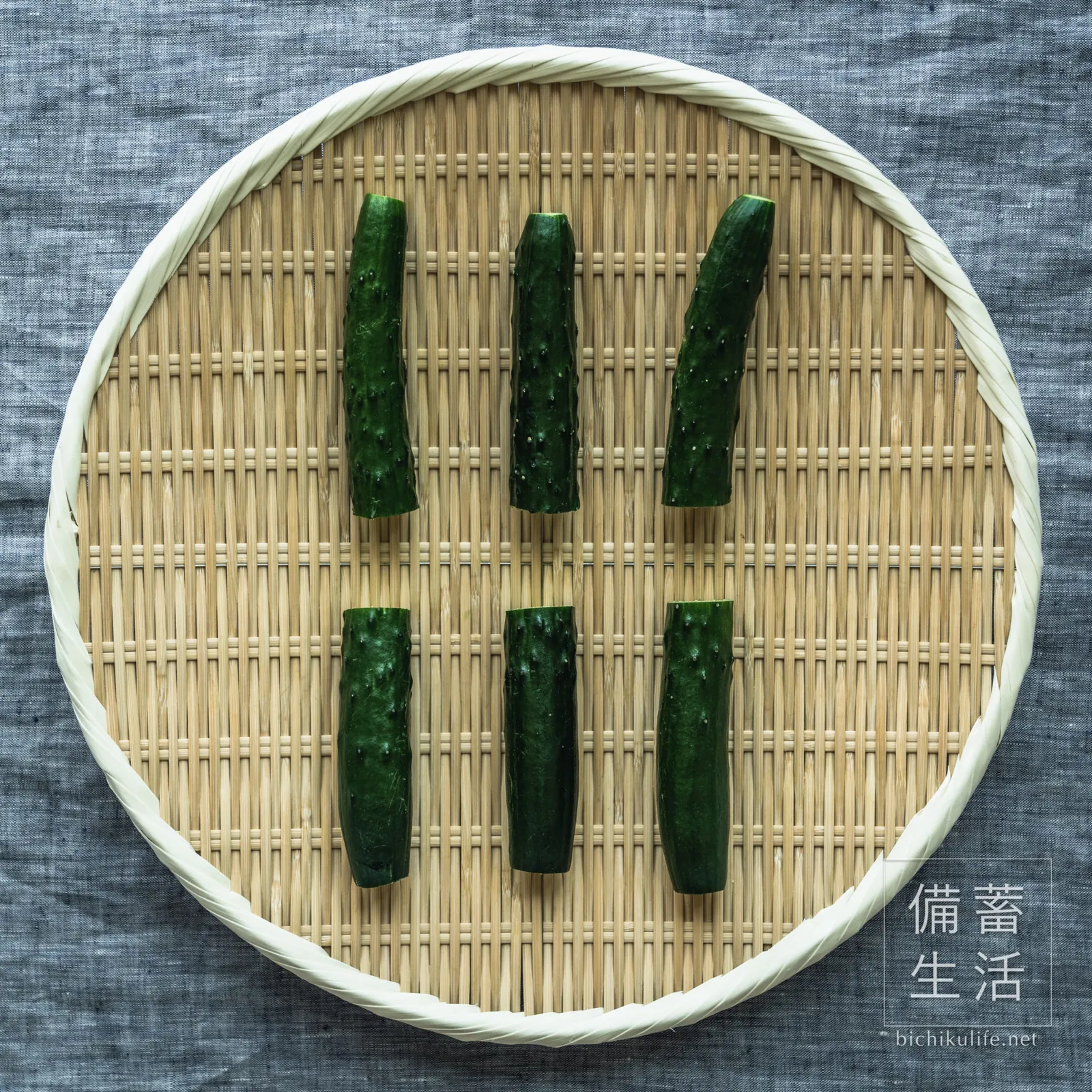
We used three cucumbers. Cut off both ends and cut each in half.
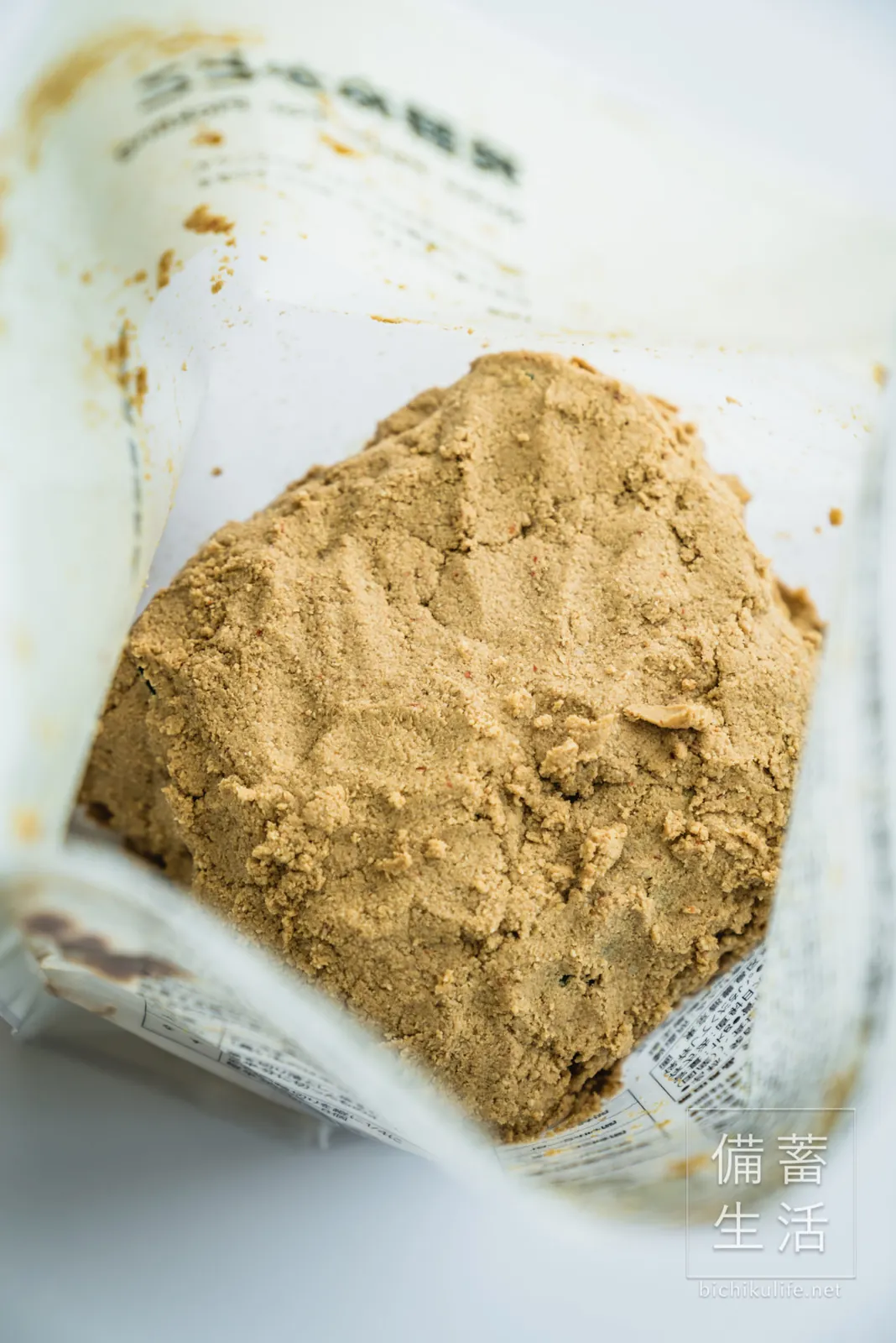
All three cucumbers fit perfectly.
Press out the air and close the zip tightly.
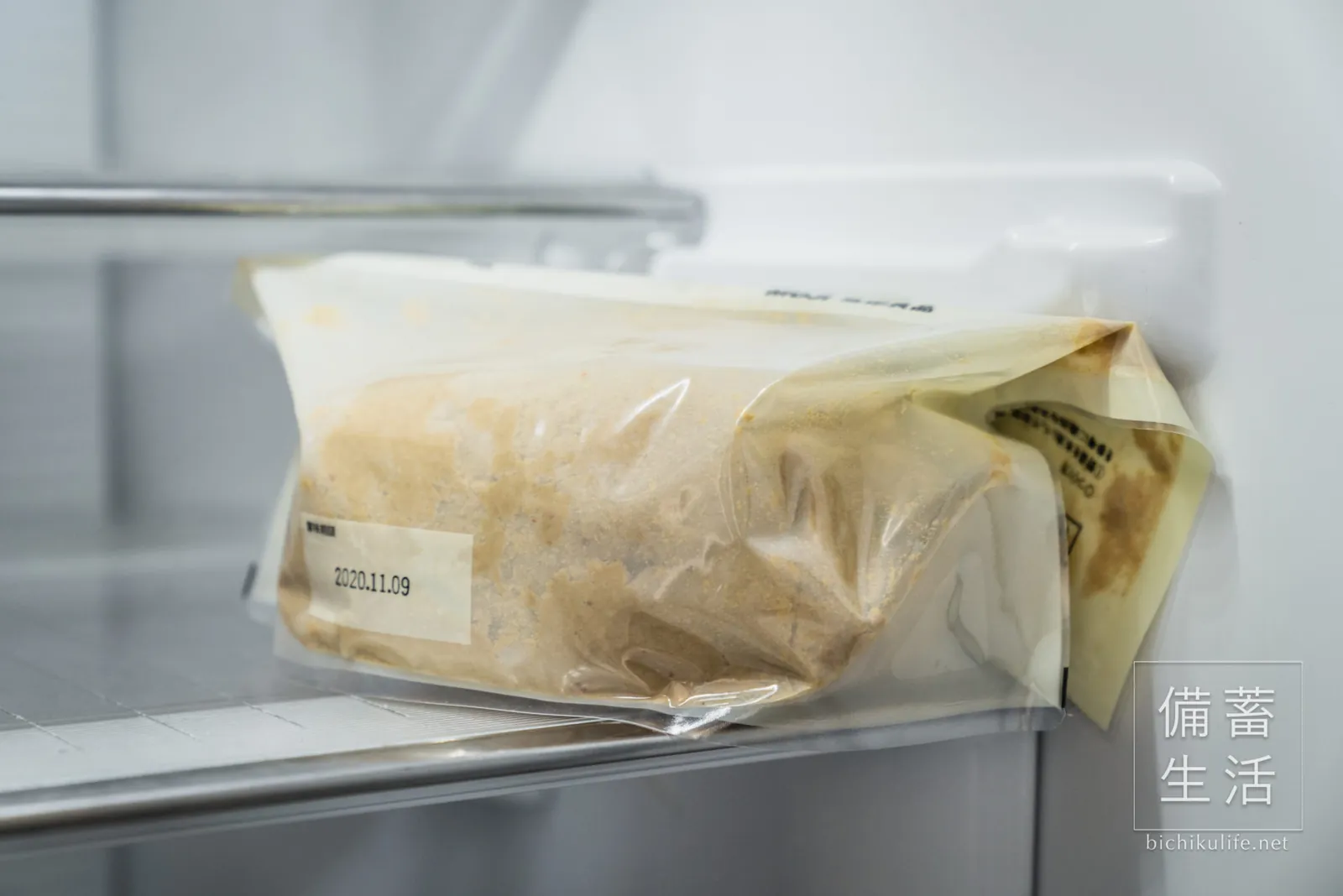
Keep it in the fridge.
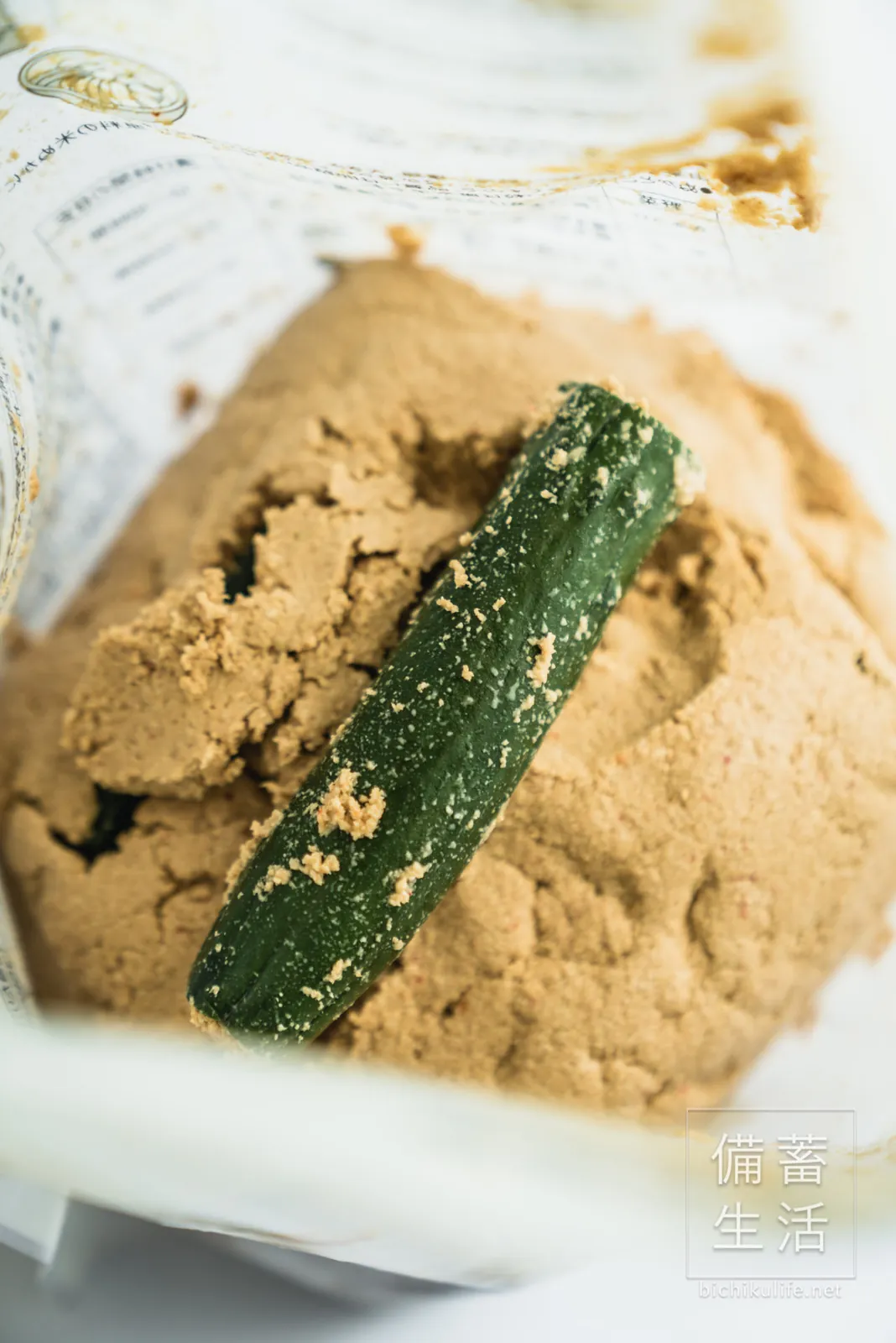
After 18 hours, the bran had soaked in well and the cucumbers were soft and bendy.
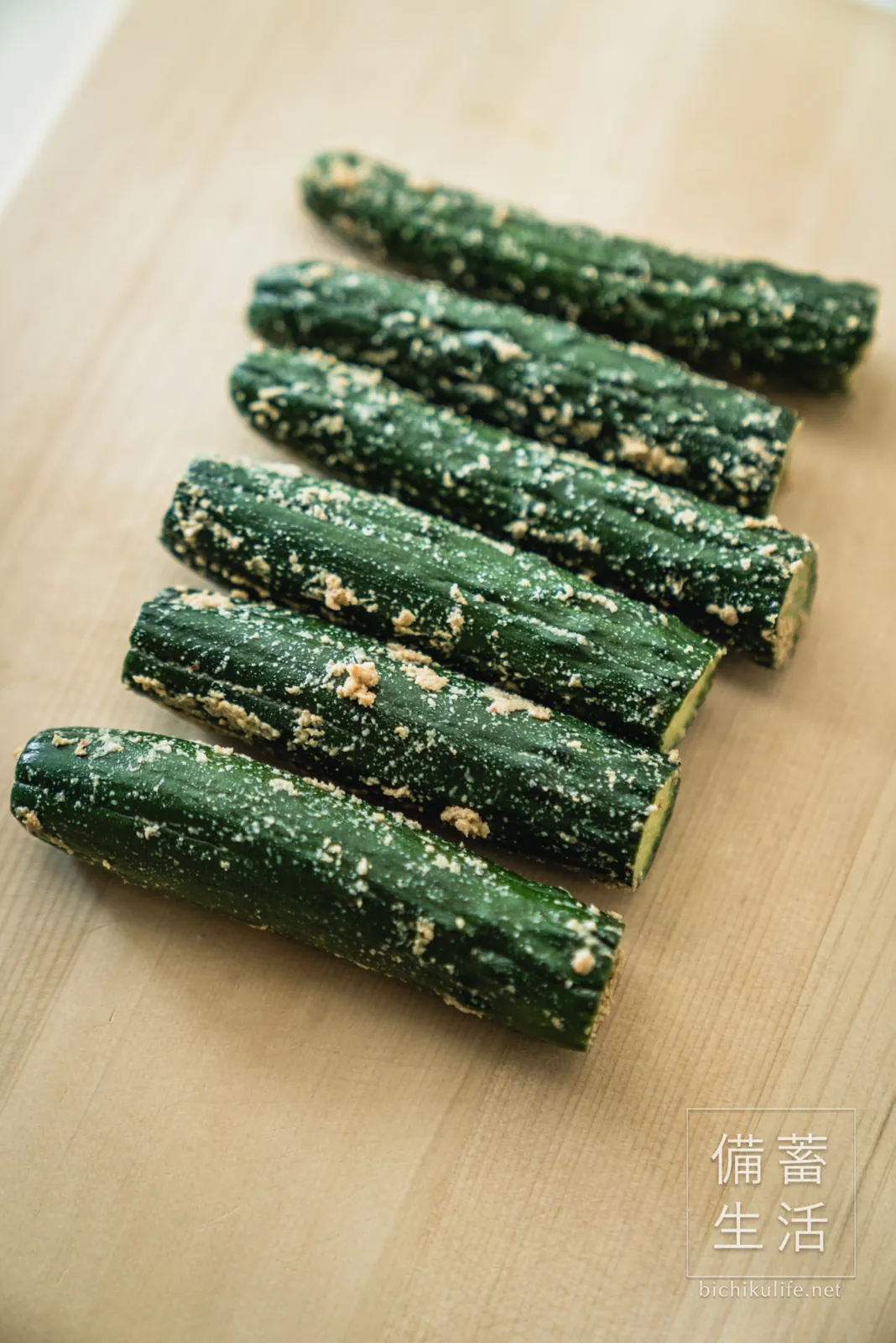
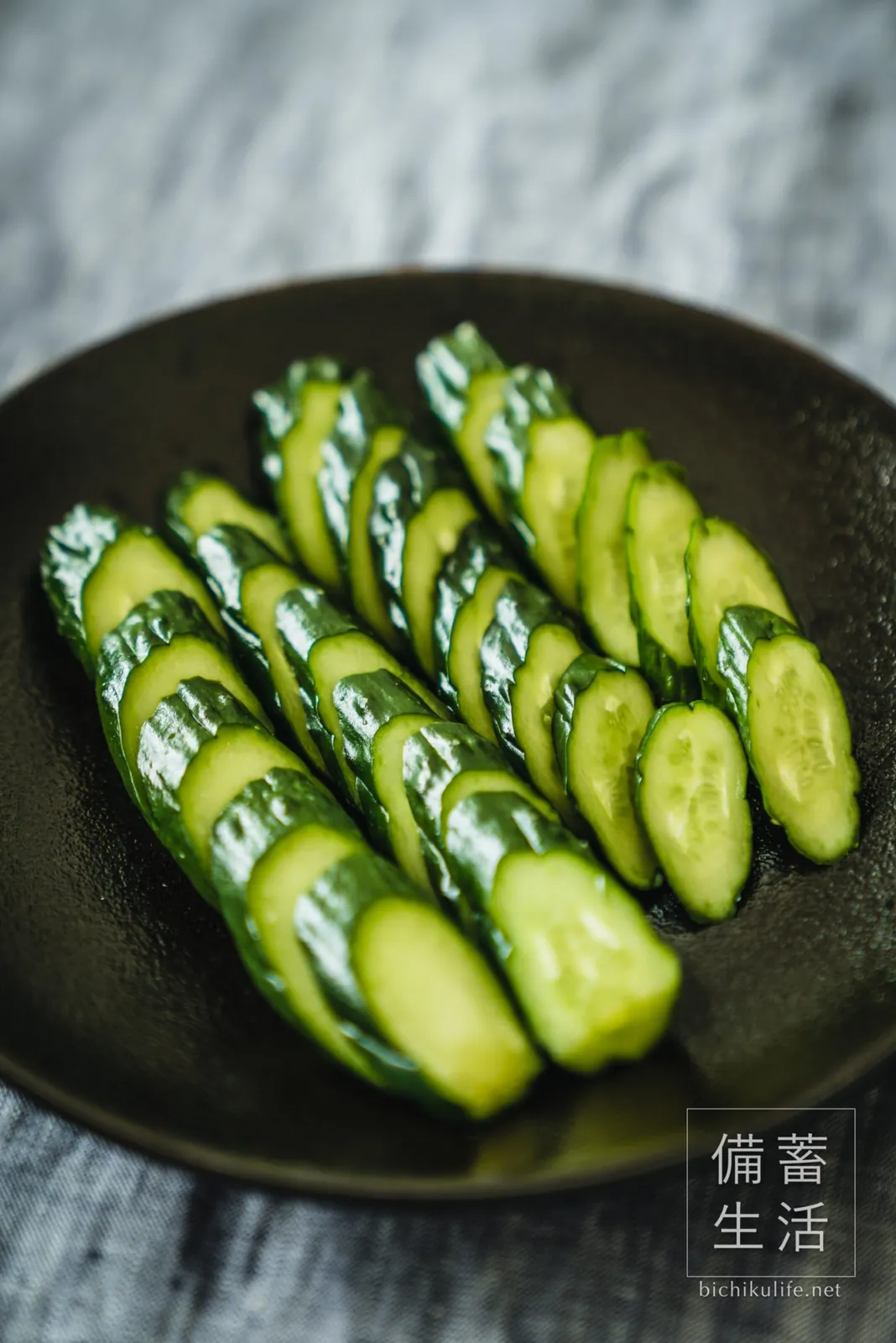
The taste: quite salty, the kind of saltiness that goes well with a drink. Tasty, but salty. If you want less salt, about 12 hours seems right. A freshly opened bed is on the salty side, and it mellows as you use it.
More in Cucumber Nukazuke.
Eggplant (24 hours)
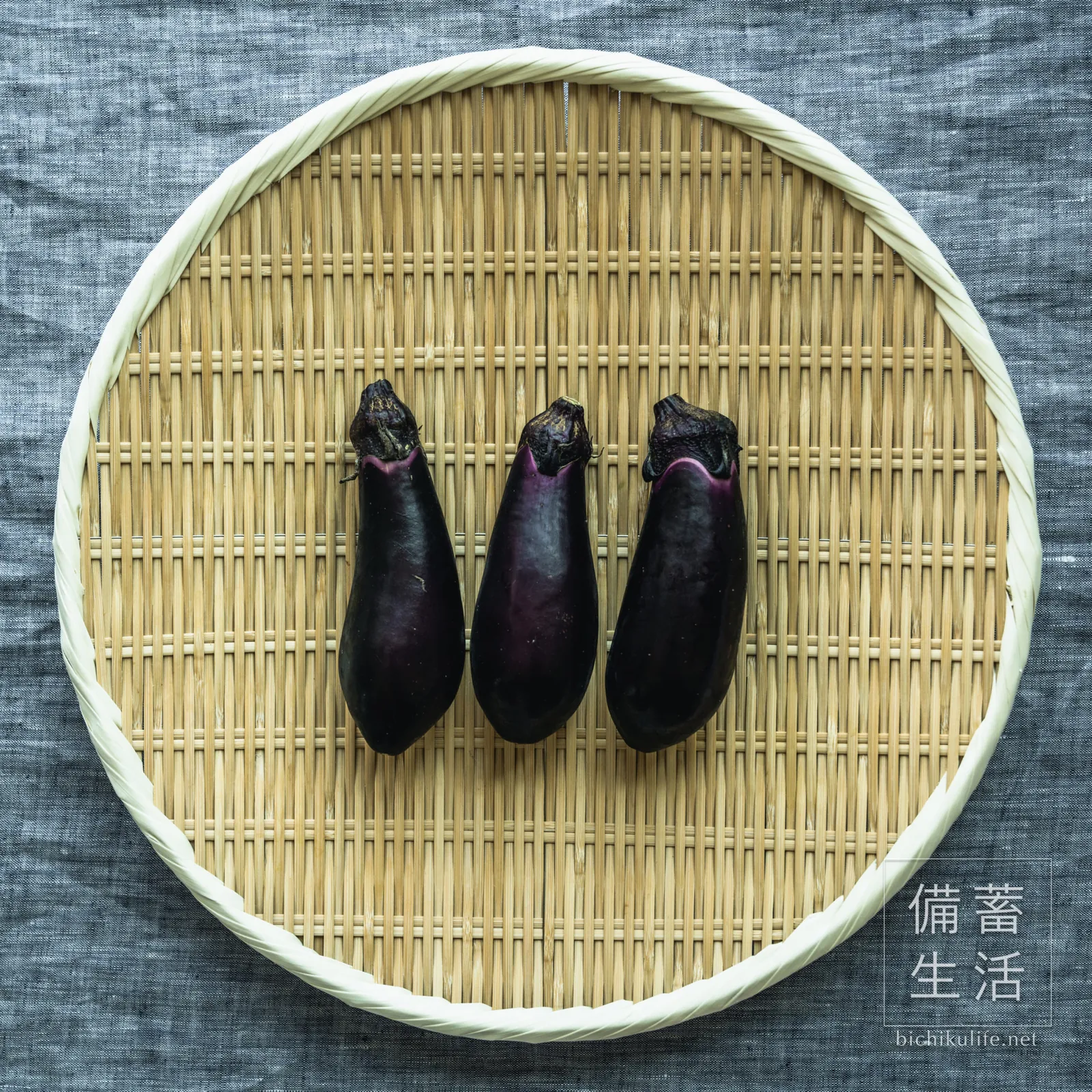
To keep the skin’s color, eggplant needs to be rubbed with salt before pickling. You can rub it before or after cutting; this time we cut them in half first.
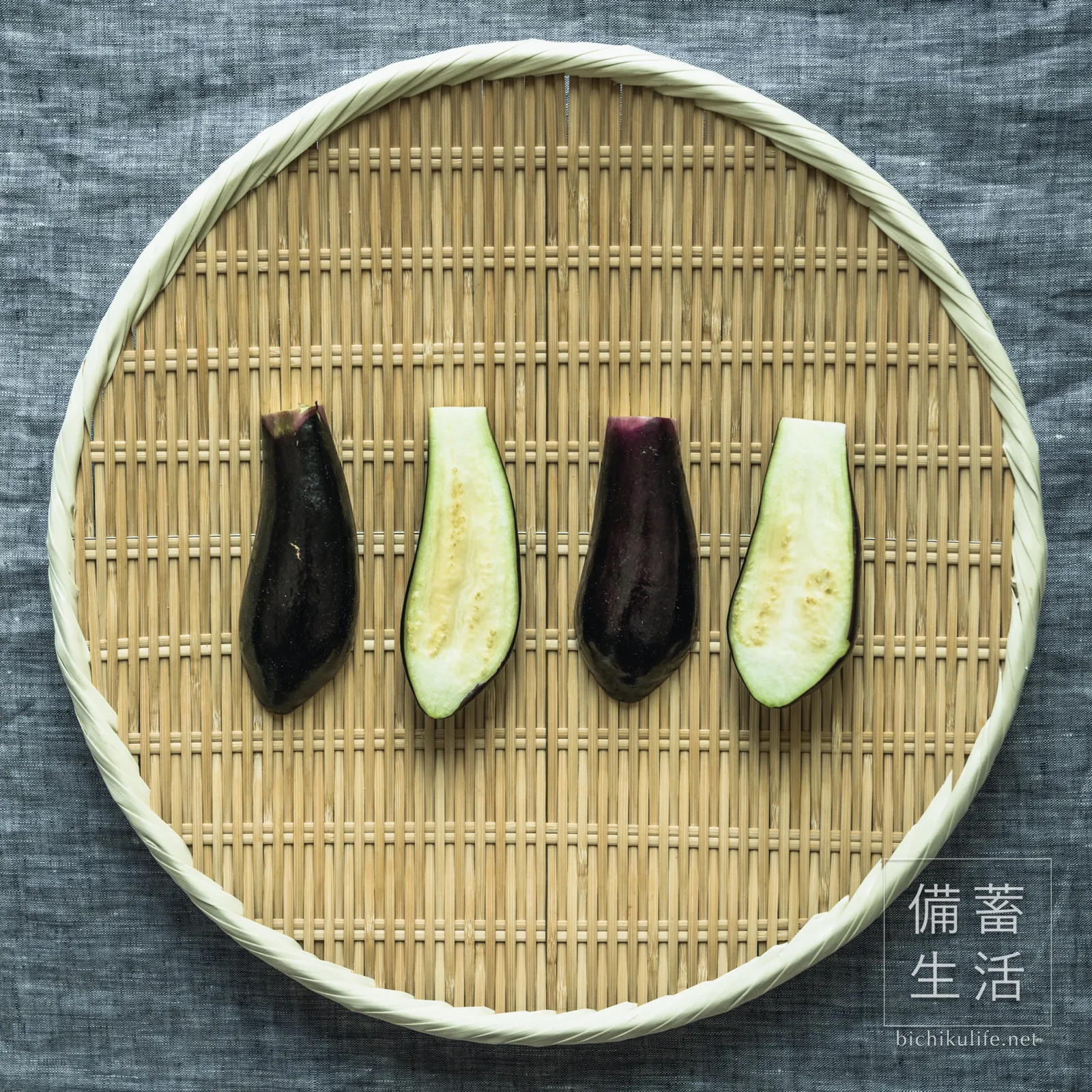

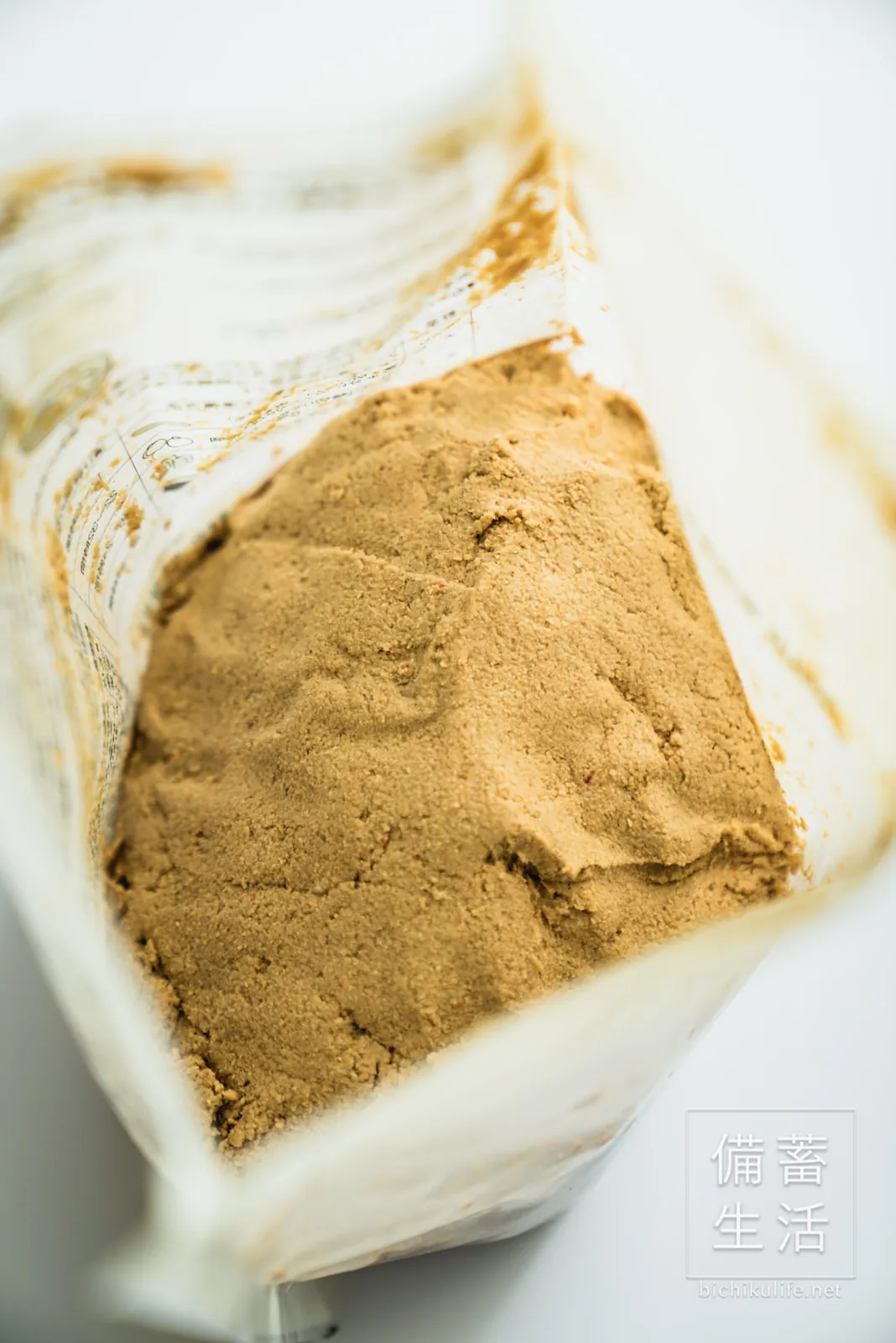
Cover them well and keep in the fridge.
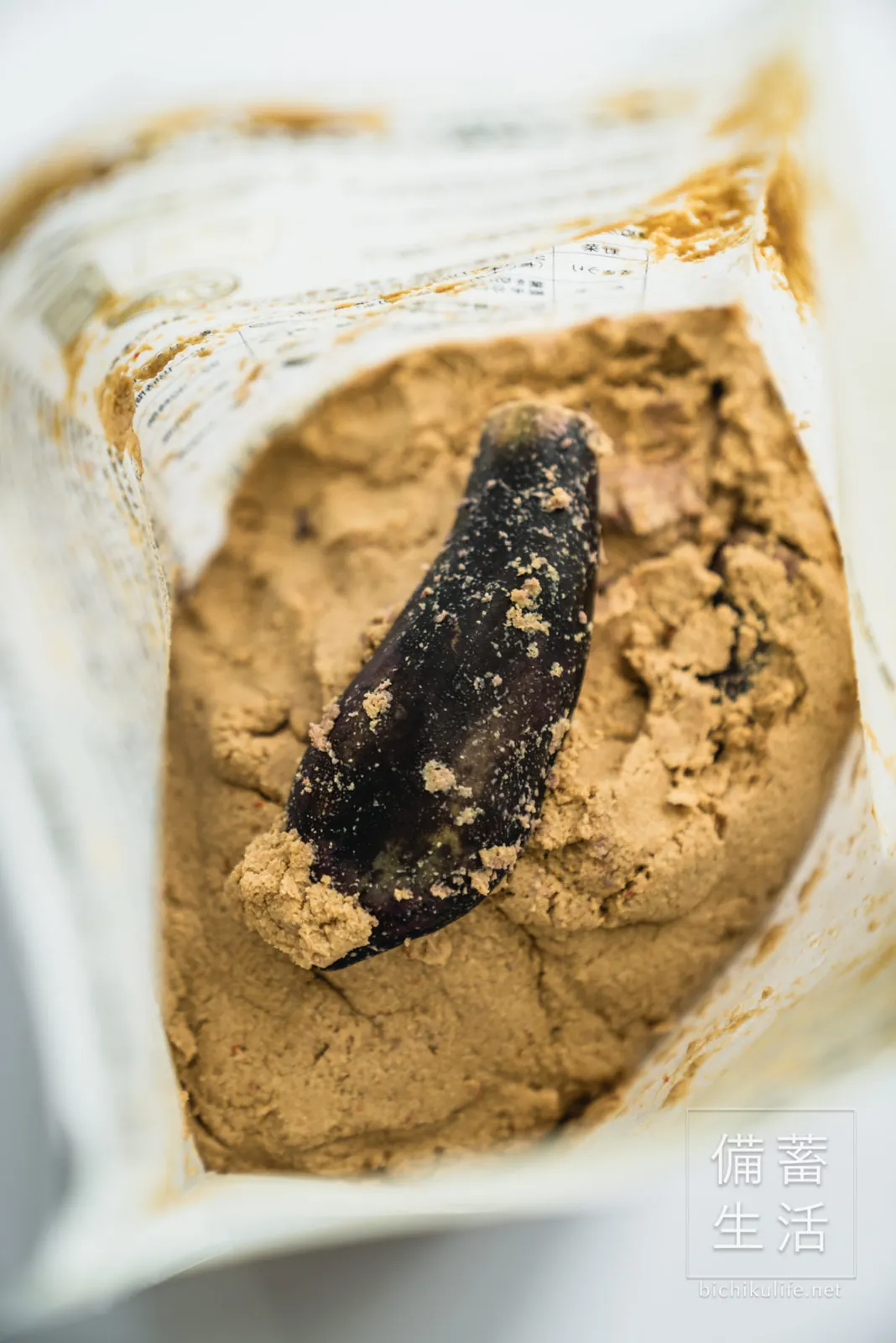
After 24 hours, the eggplant was moist and soft.
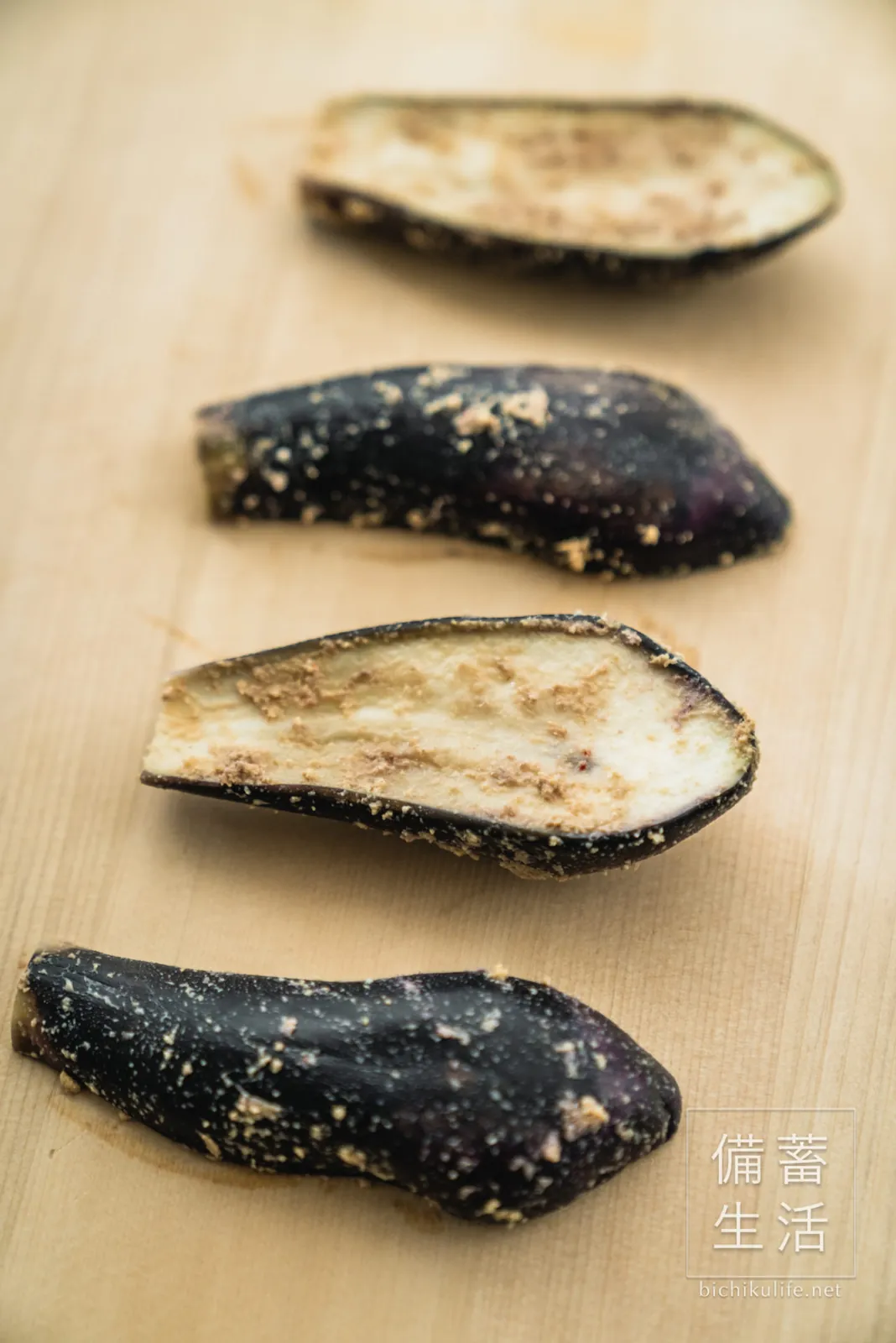
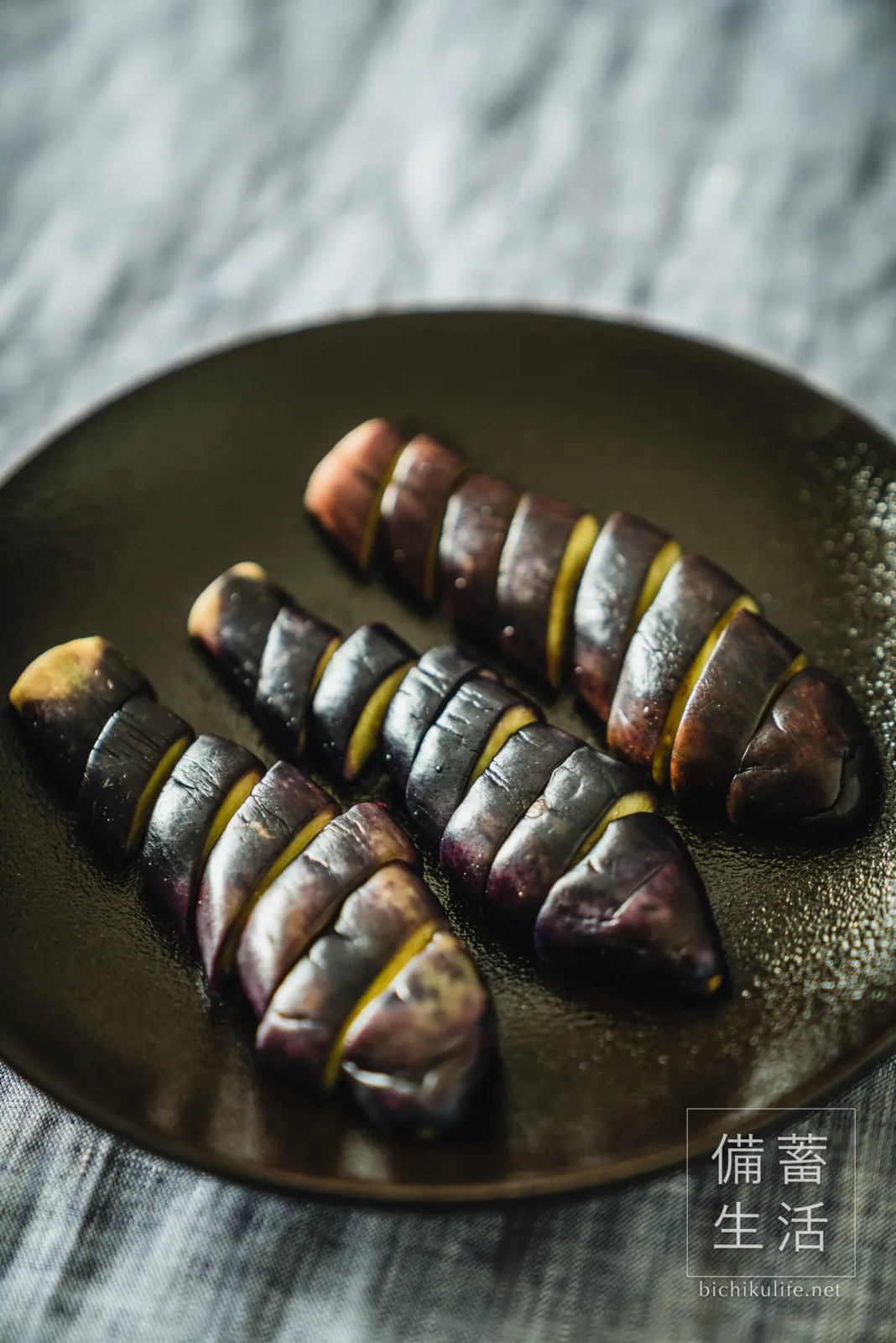
Rinse off the bran, pat dry, and serve for breakfast. After 24 hours the eggplant was also a little salty, but delicious.
More in Eggplant Nukazuke.
Turnip (24 hours)

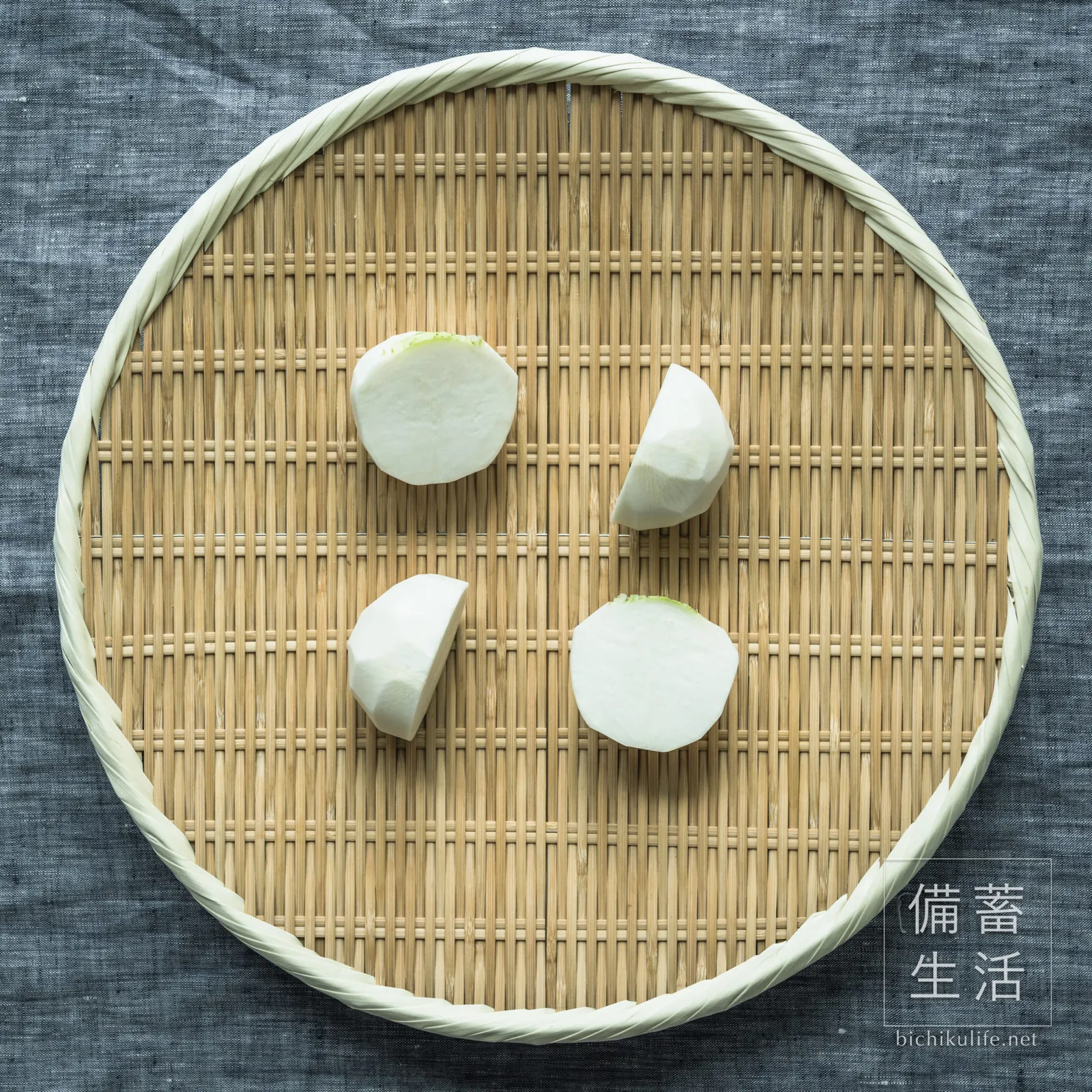
Cut off the leaves, peel the turnips and cut them in half.
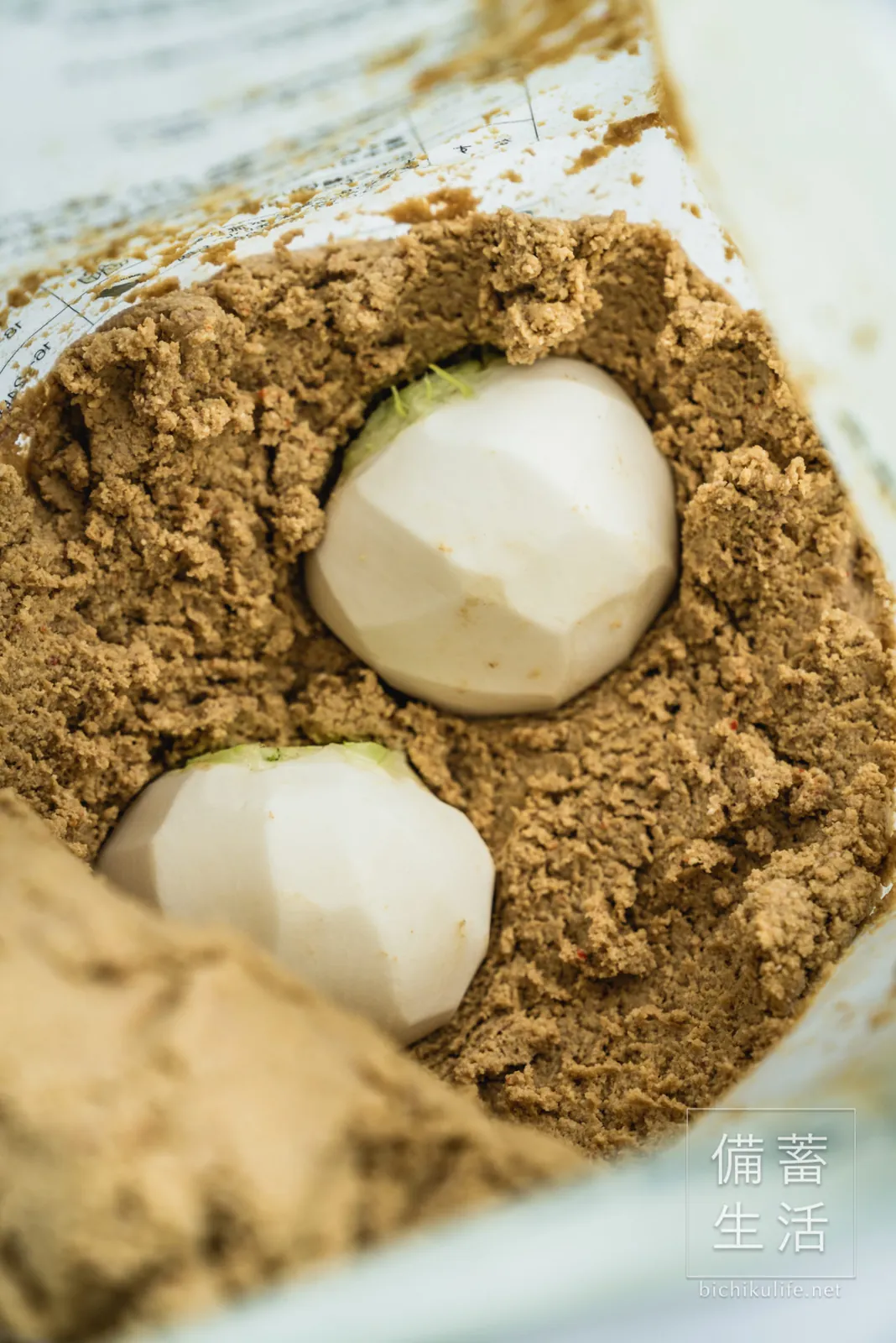
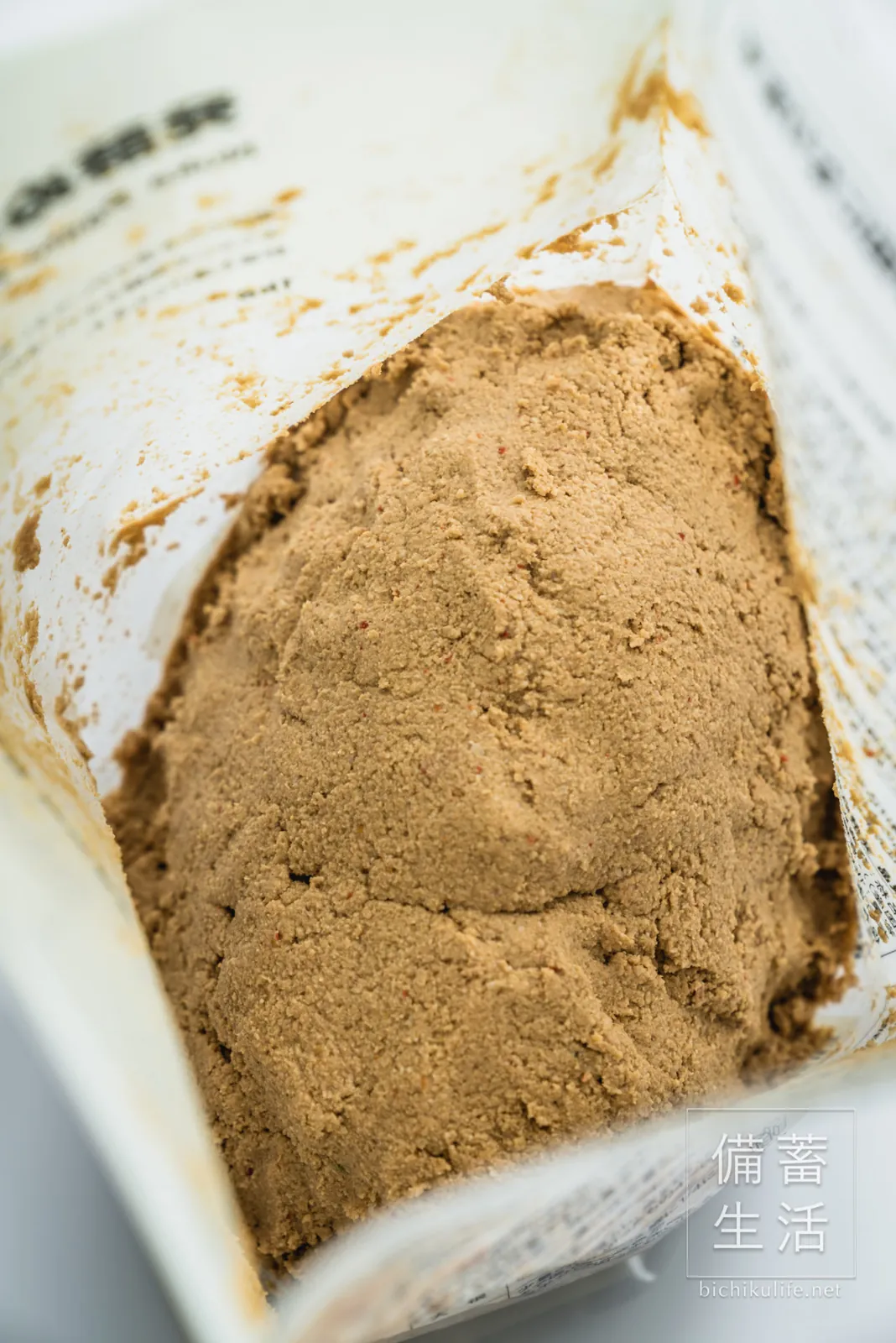
Close the bag and put it in the fridge.
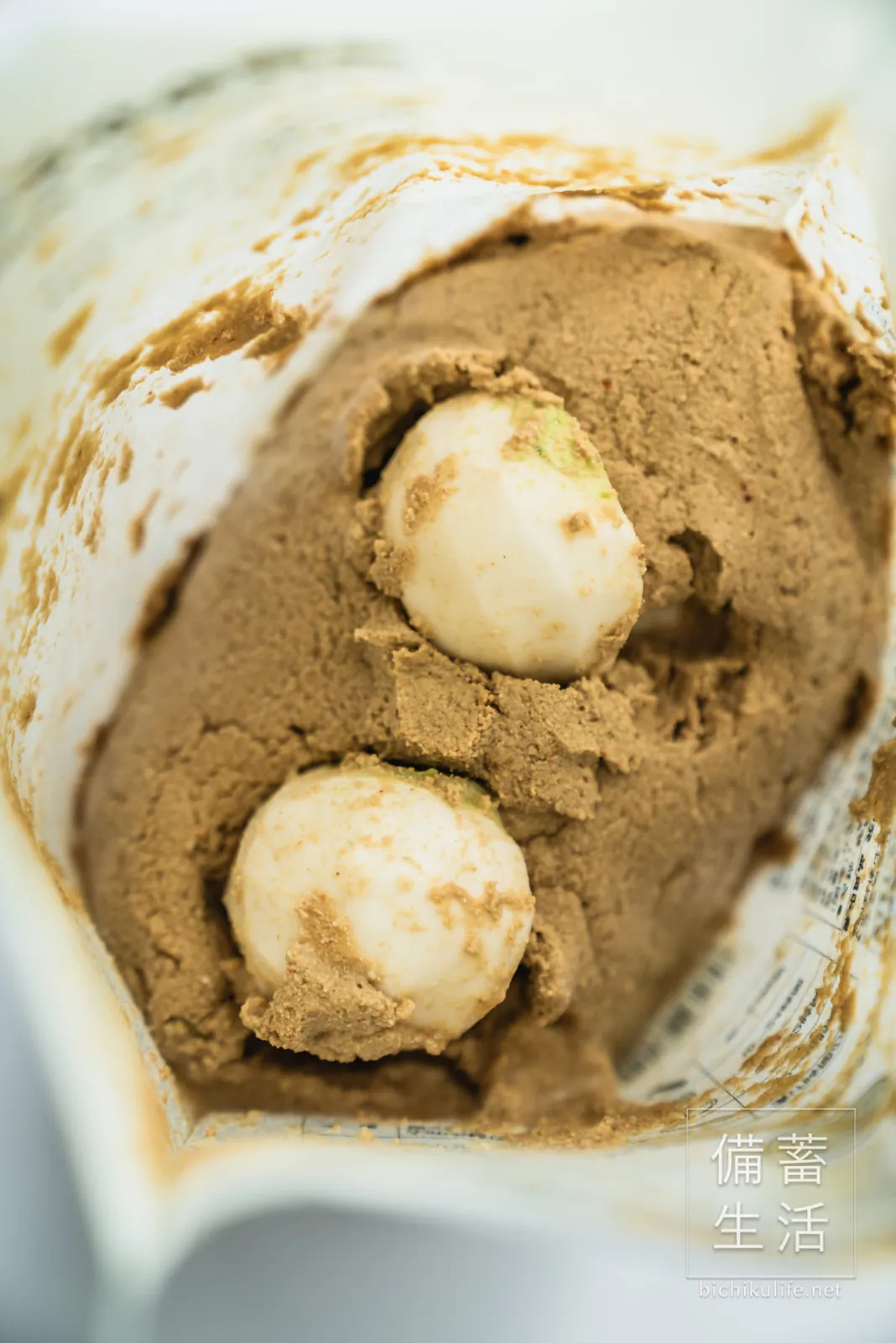
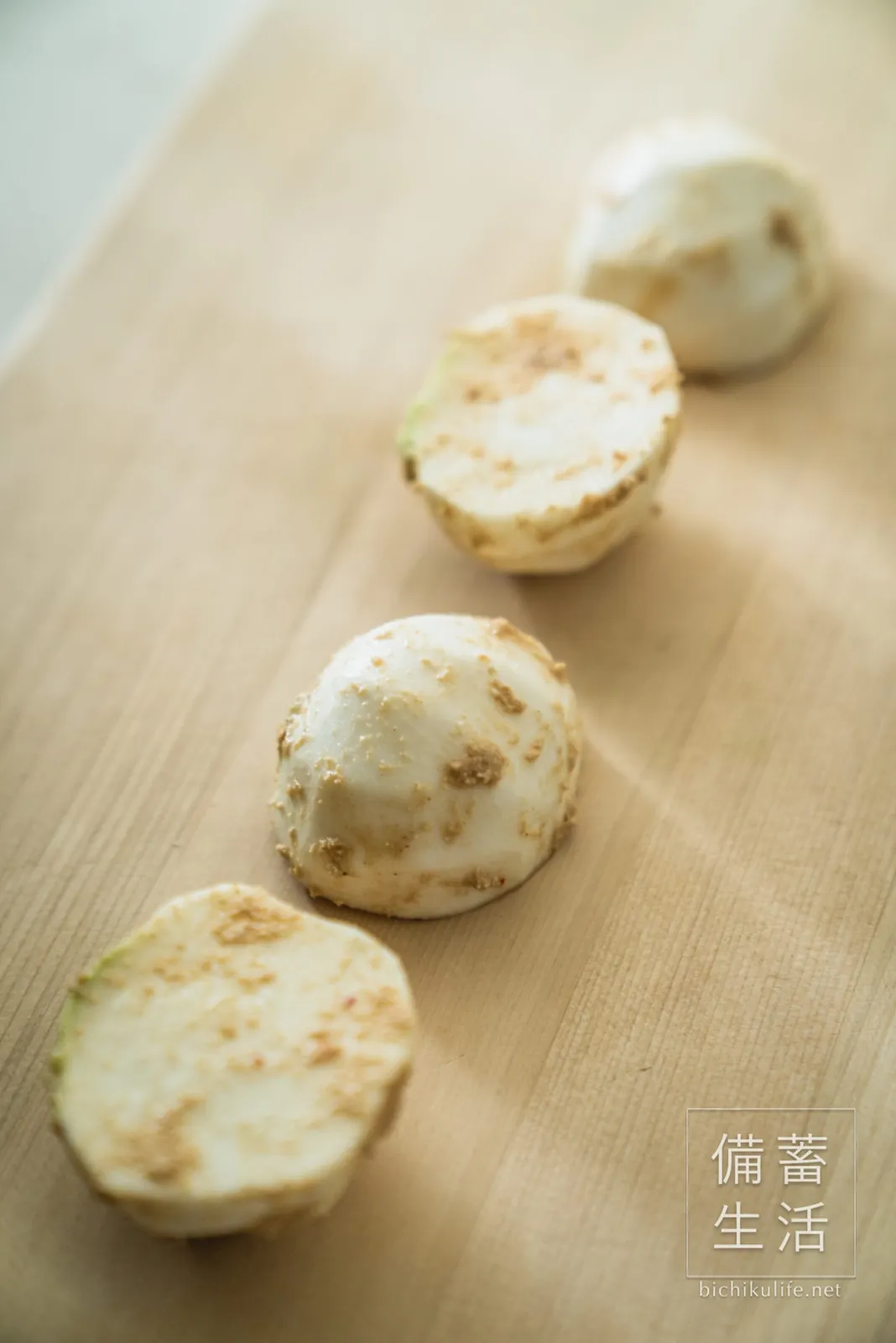
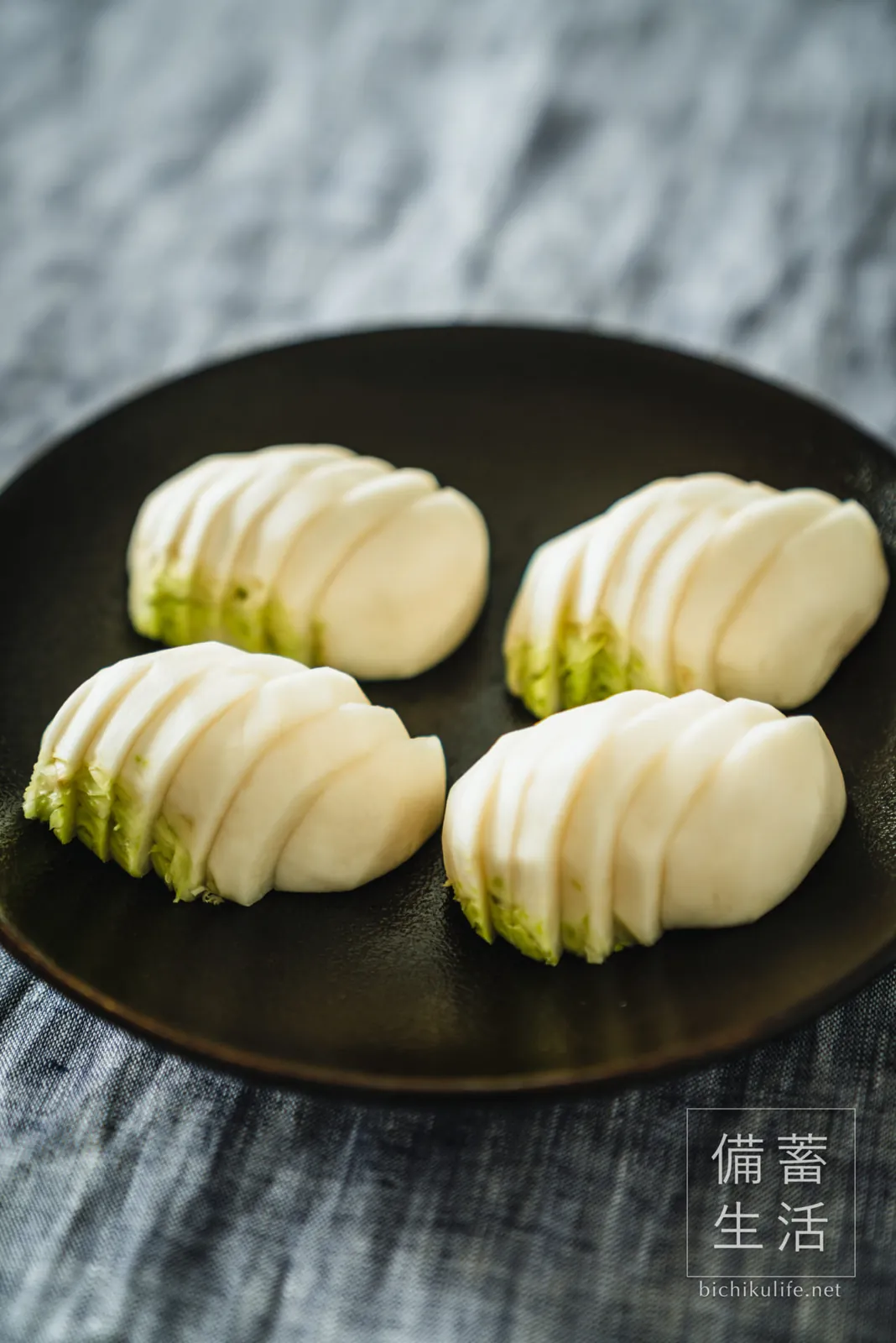
Turnip pickled for 24 hours. The saltiness was just right.
More in Turnip Nukazuke.
Daikon radish (24 hours)
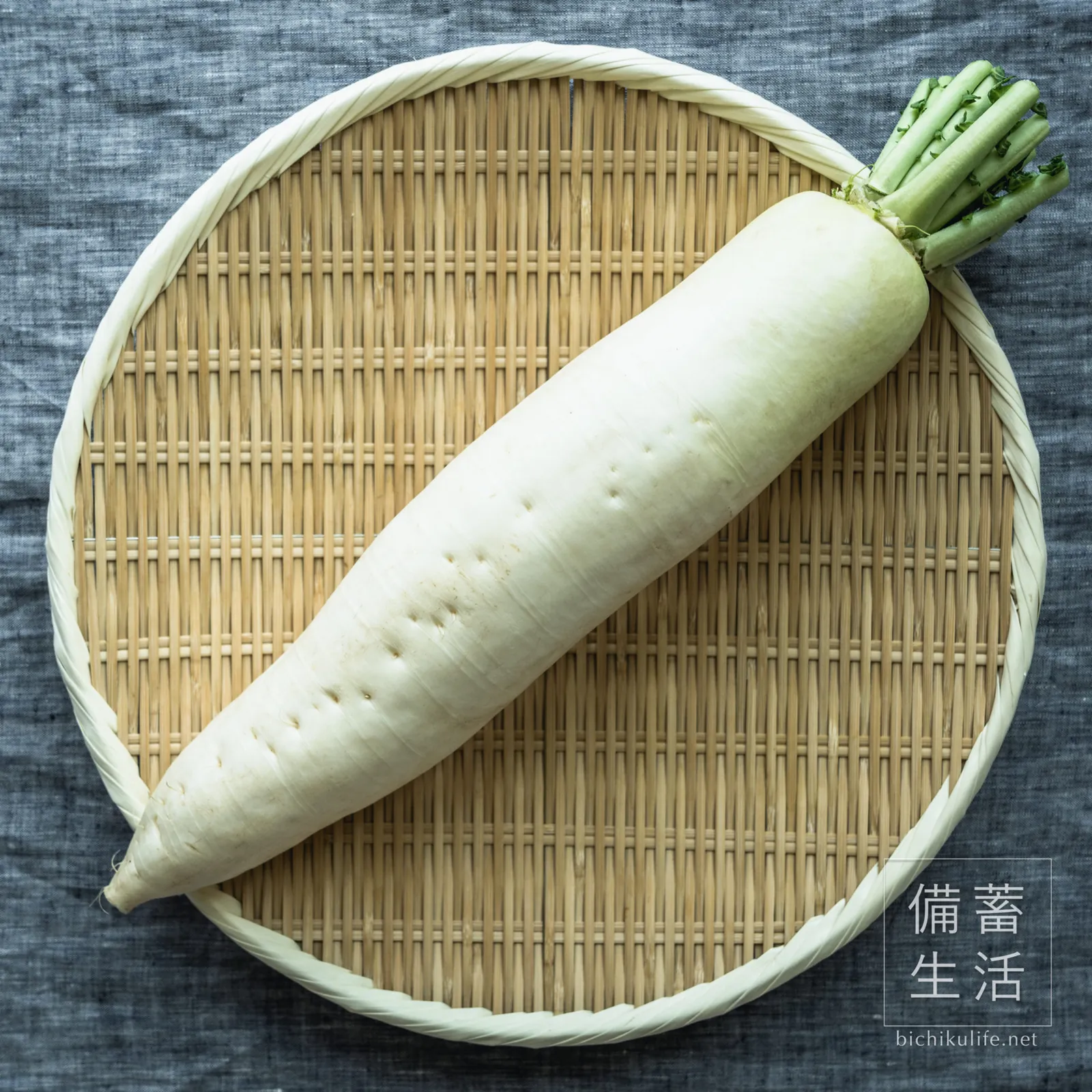
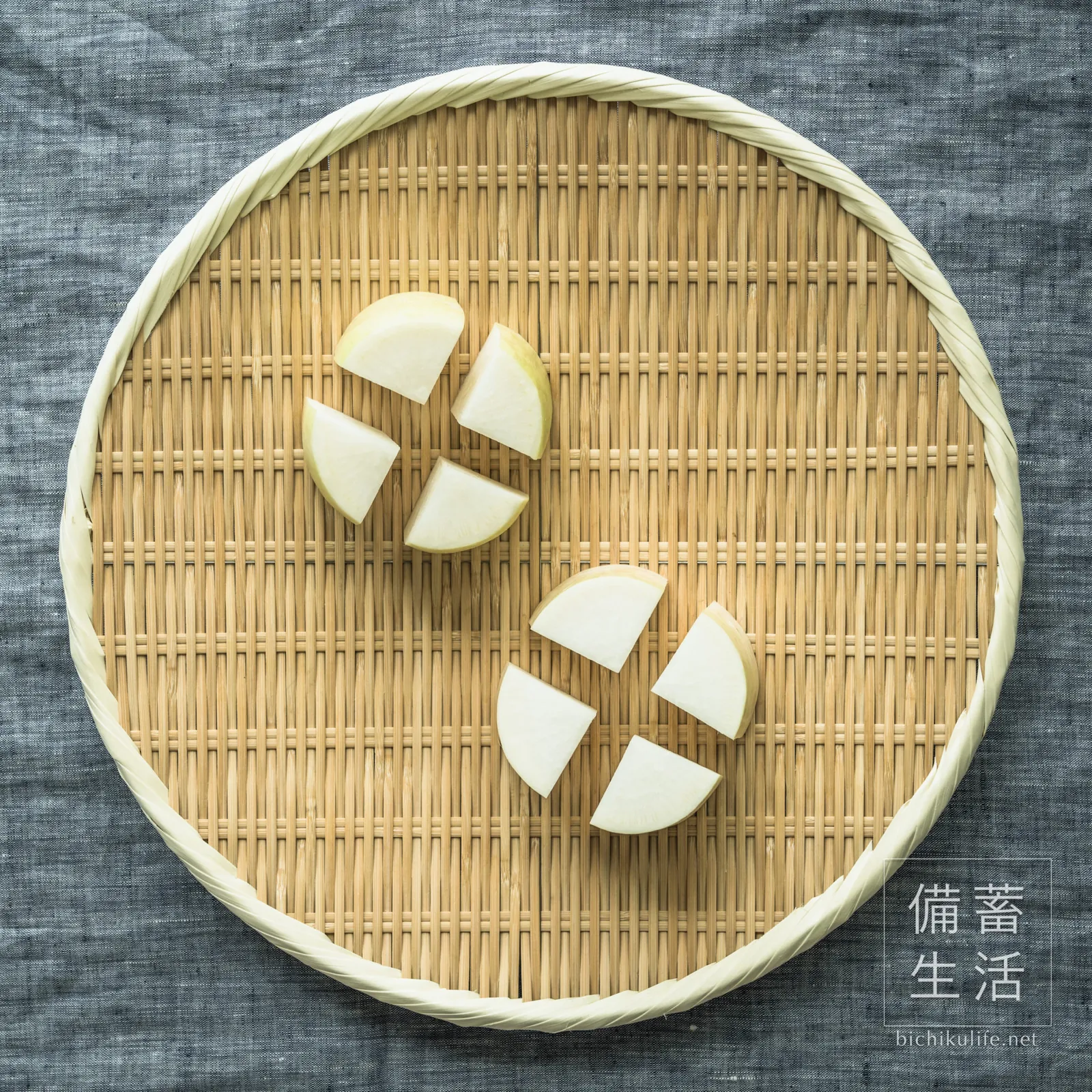
Cut the daikon into rounds 5 cm (2 in) thick, then into quarters.
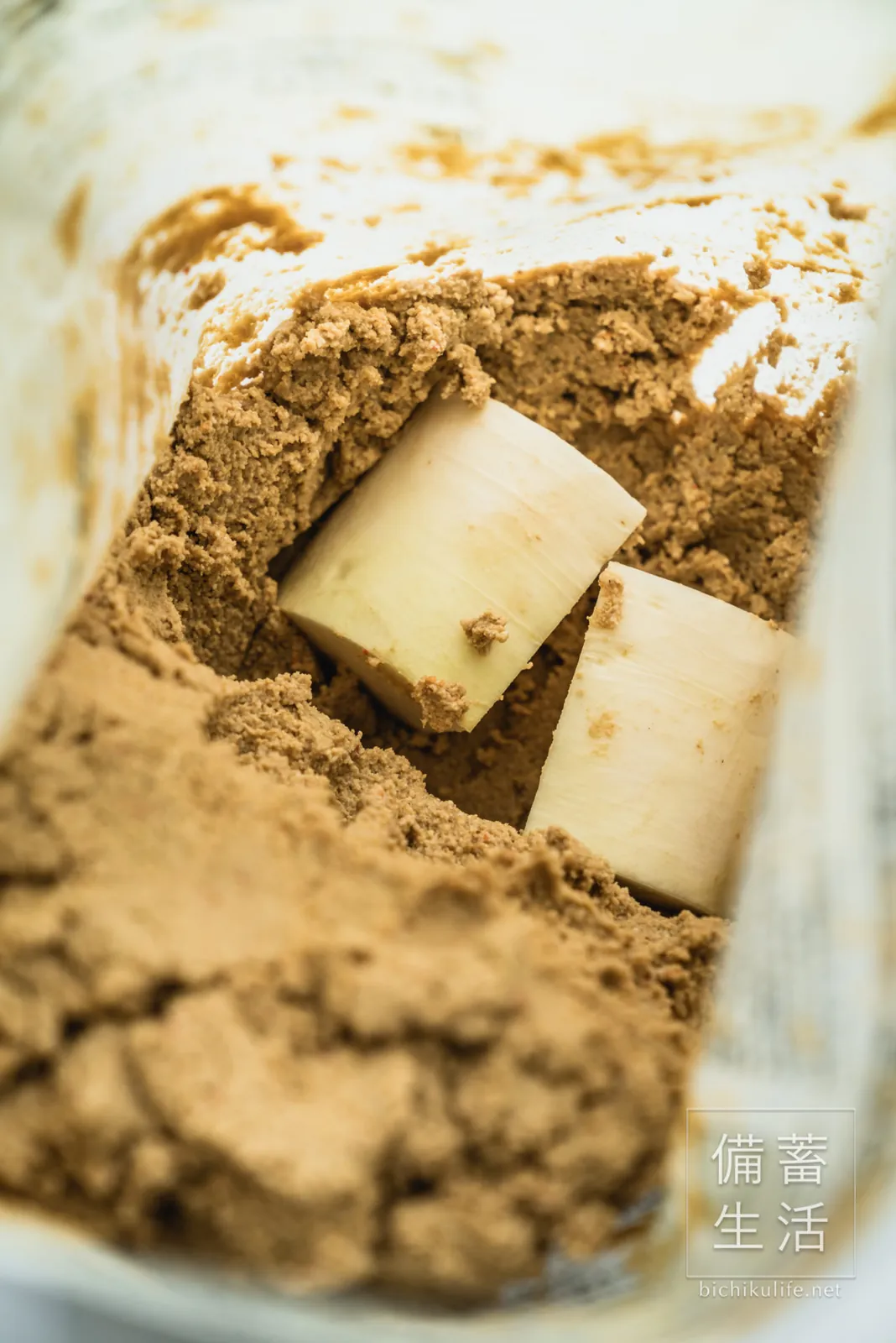
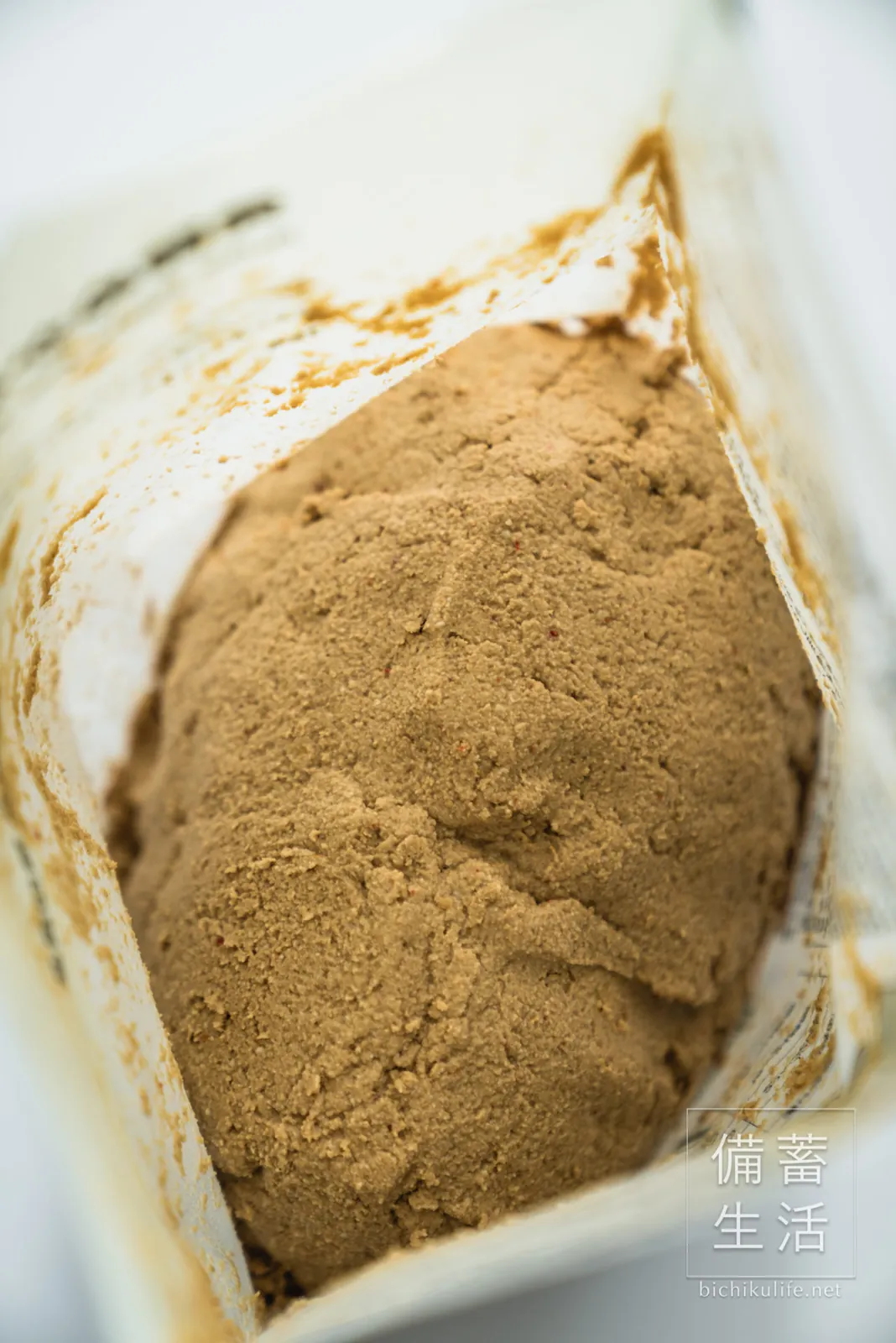
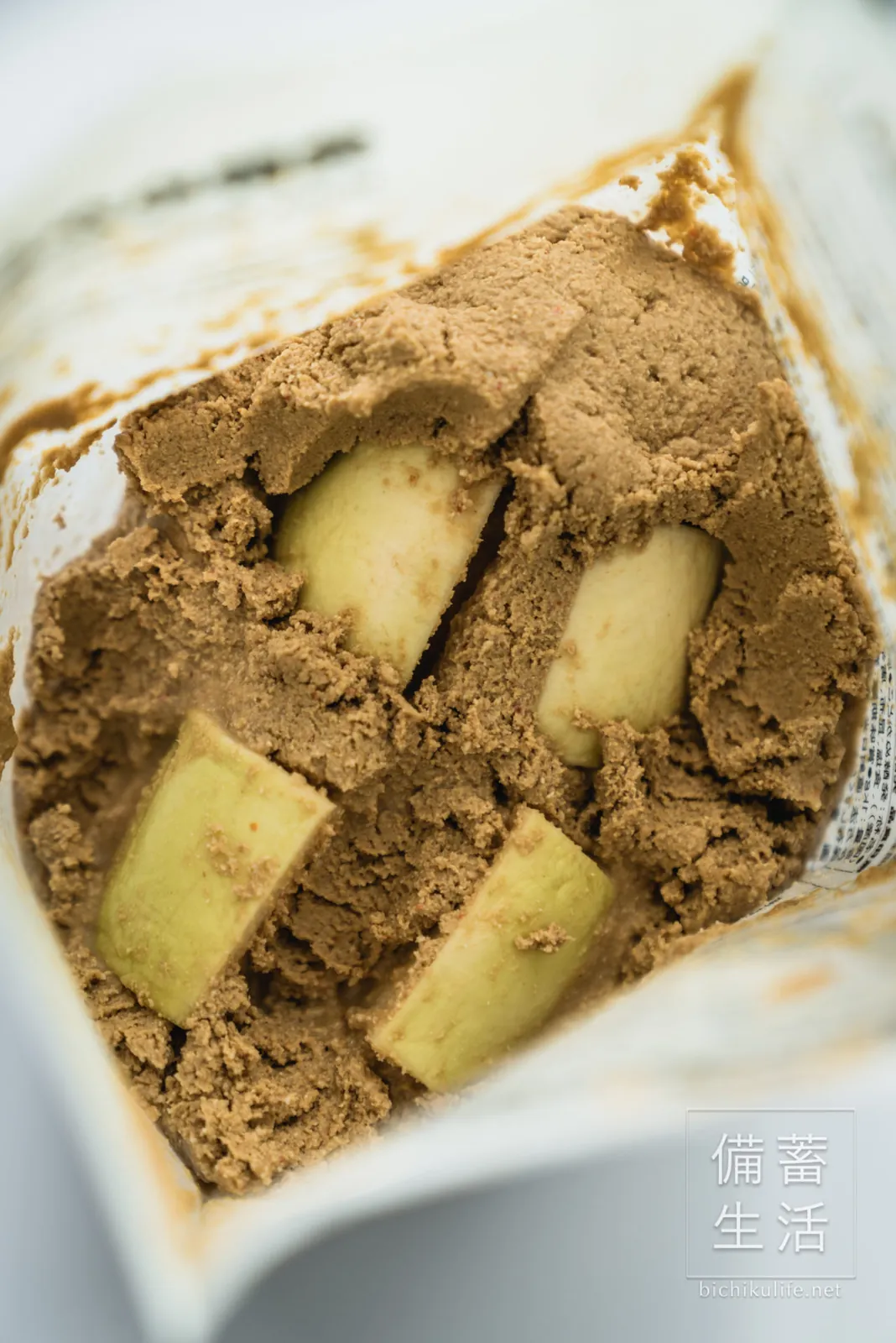
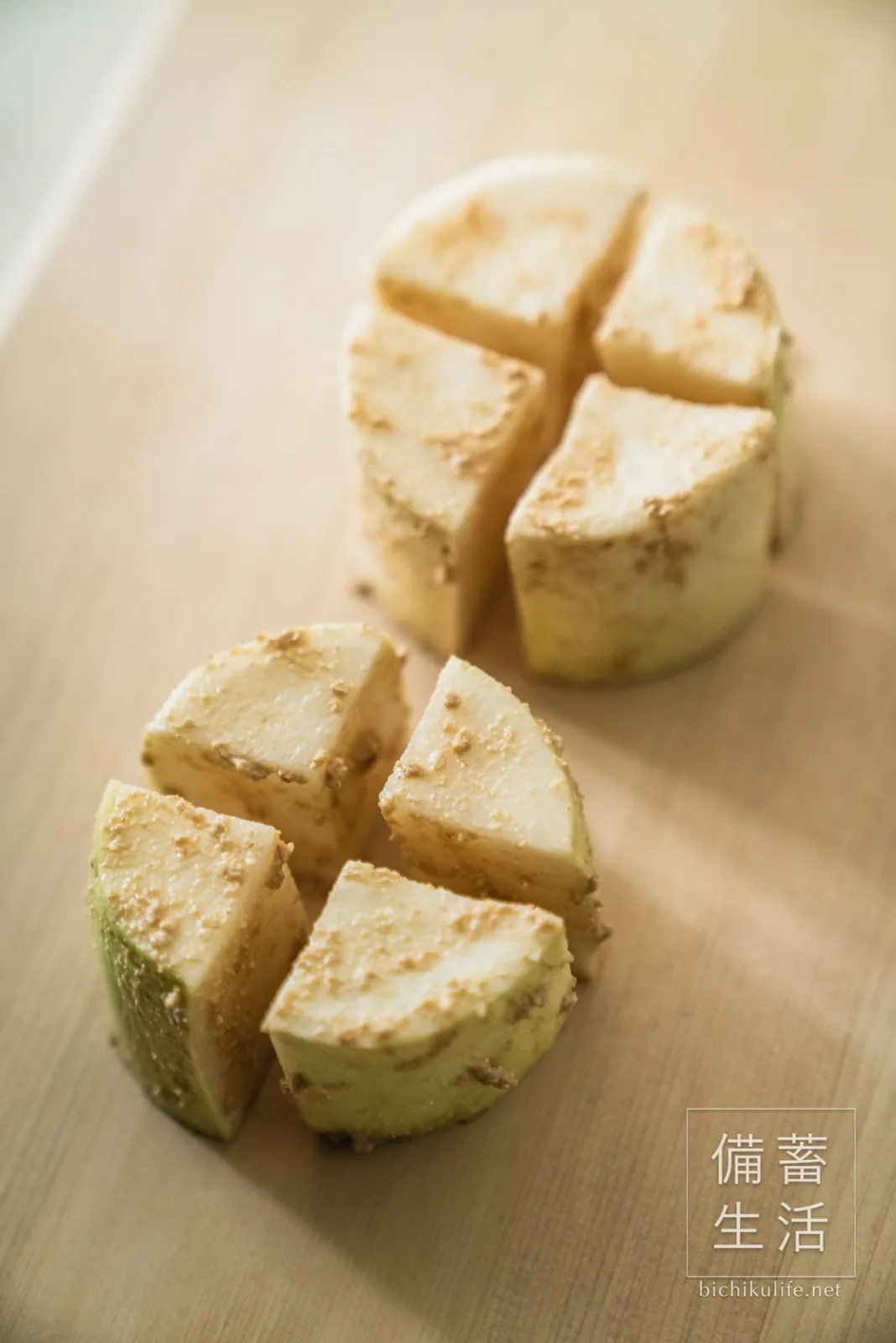
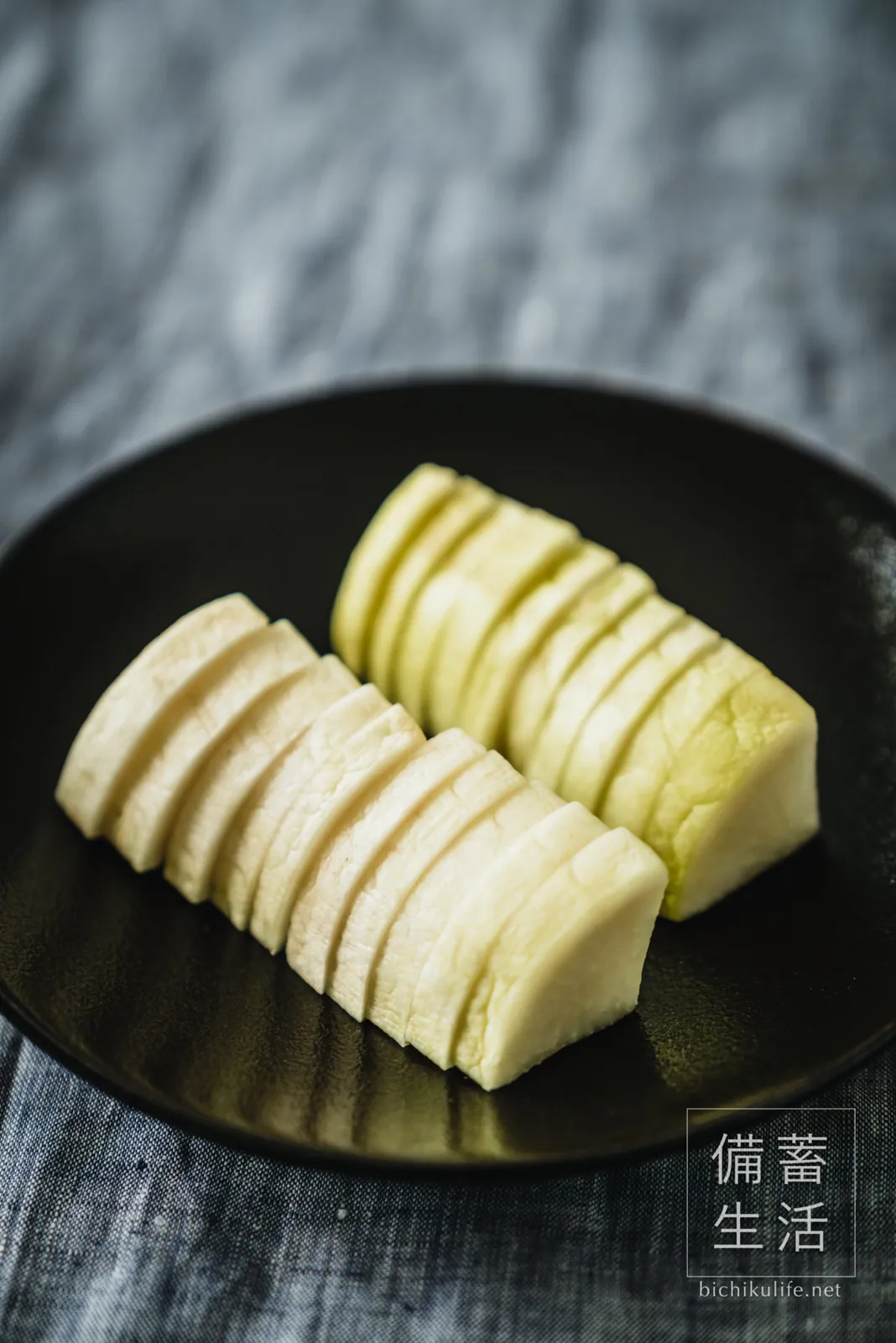
Daikon pickled for 24 hours. By now, water from the earlier vegetables had loosened the bed, so the saltiness had settled down and it was easy to eat.
After taking the daikon out, we kept it in a container in the fridge for a day, and the flavor became even milder and tastier.
More in Daikon Nukazuke.
Refill bran
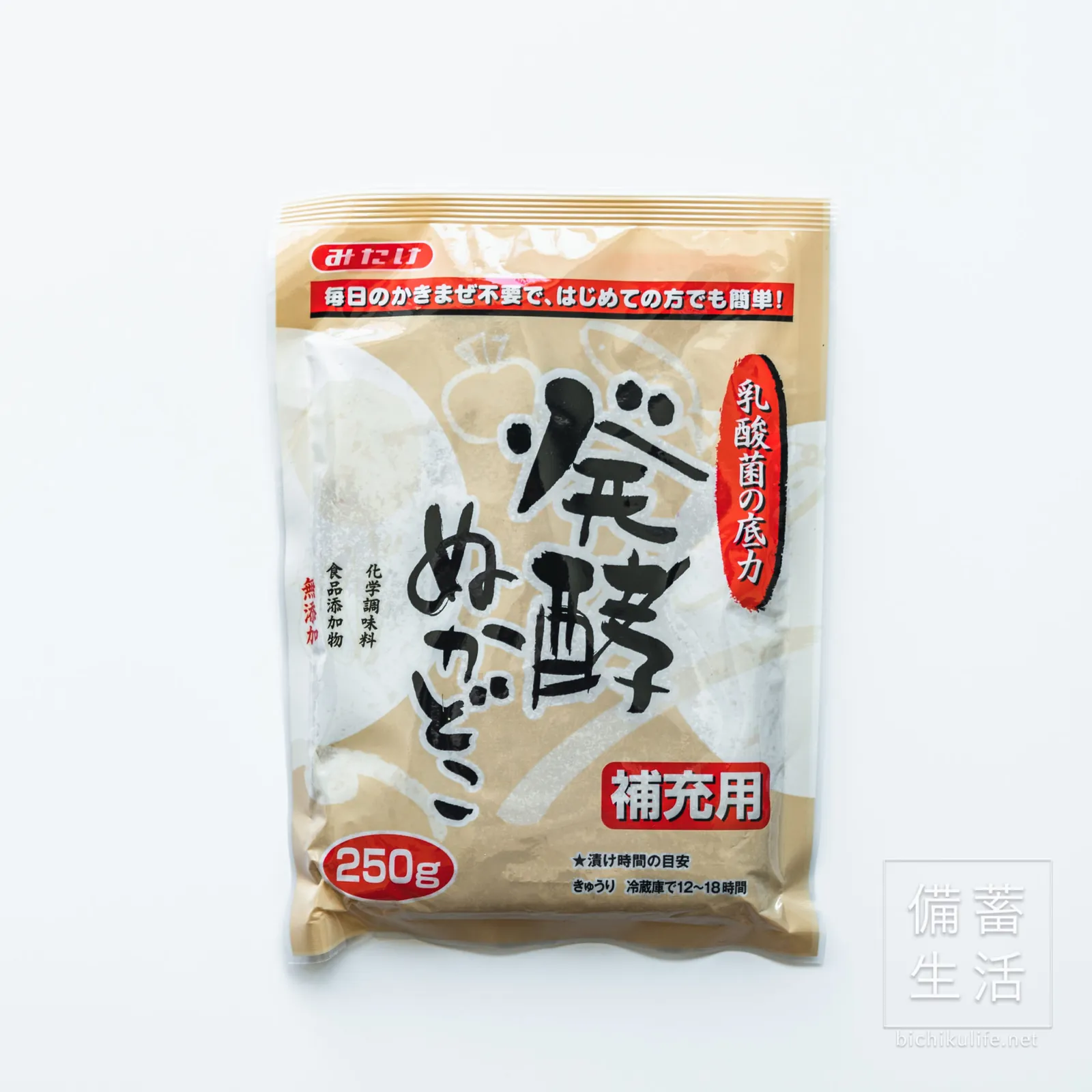
As you keep pickling, the bed gets wetter (looser) and smaller. After about 10 rounds of pickling, ours had shrunk, so we bought Mitake’s fermented nukadoko refill.
Moving it to a container
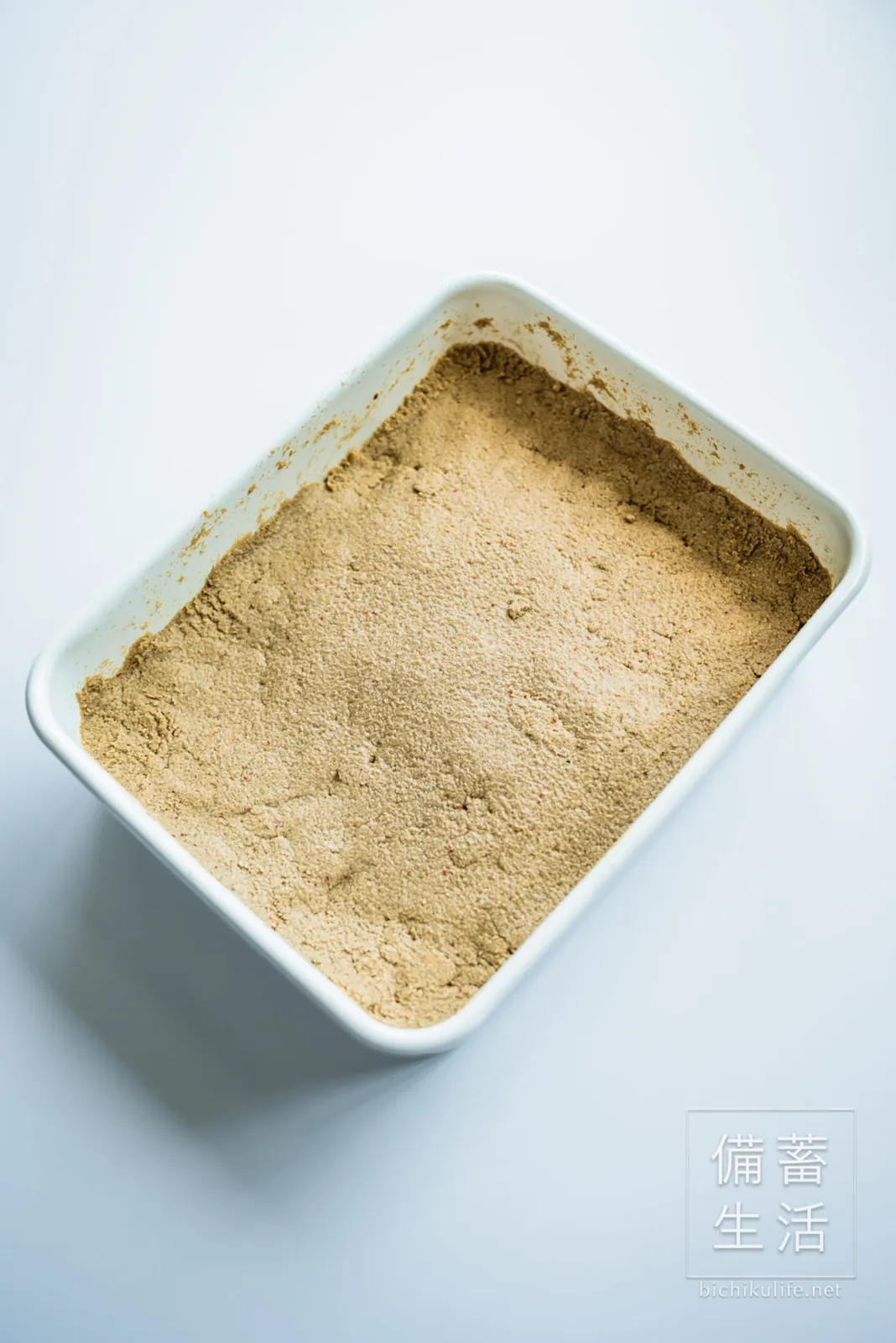
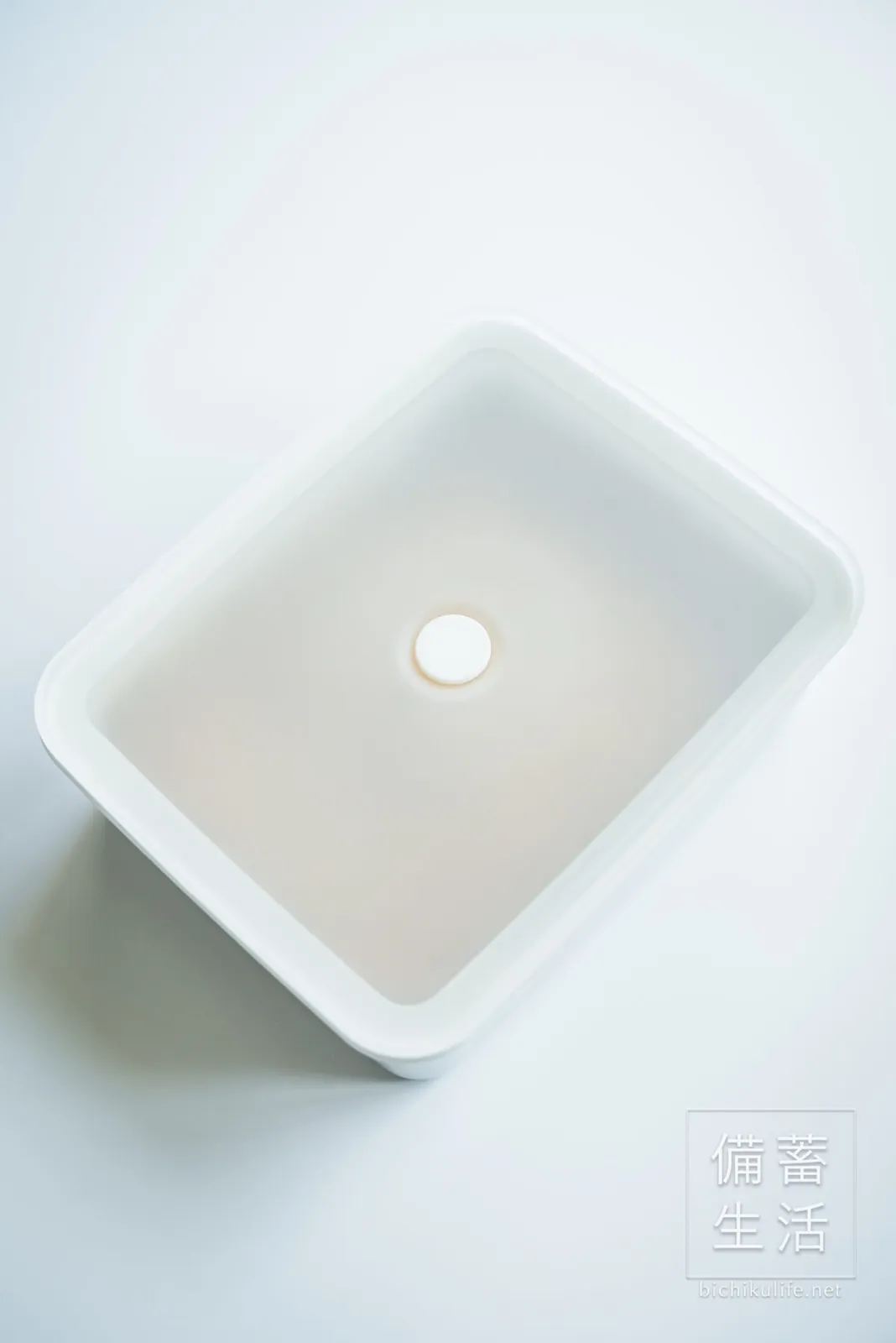
If you’re going to keep making nukazuke, moving the bed into an enamel nuka container or an airtight container with a gasket is a good idea. It’s easier to stir than a bag, and easier to put vegetables in and take them out.
The one in the photo is Muji’s airtight enamel container with a valve (deep, large). It keeps smells in, so it’s fine in the fridge.
To make a nuka bed from scratch, see How to Make a Nuka Bed.