How to Dry VegetablesWhere, When and in What Weather, and Tips to Avoid Failure
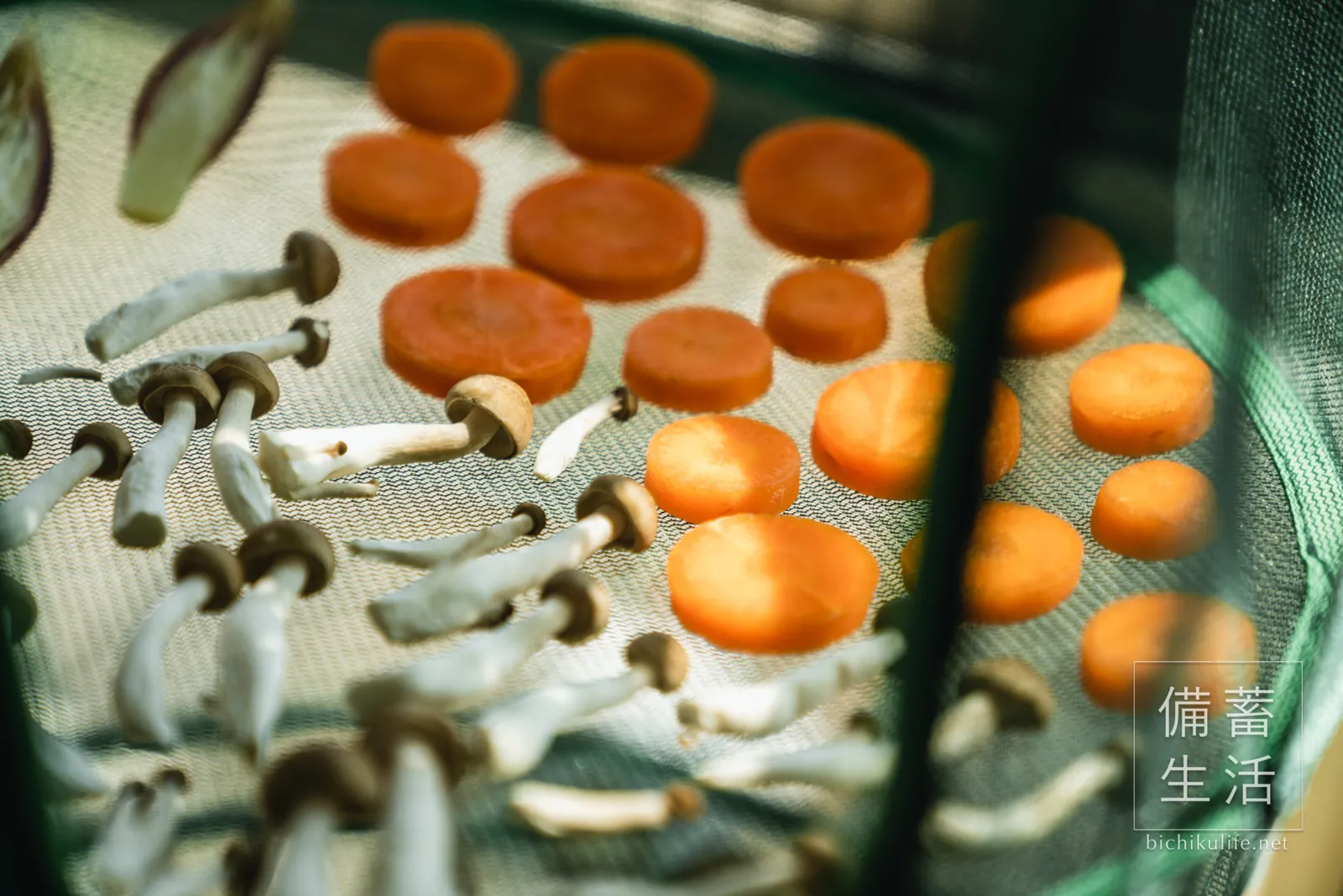
Drying vegetables is simple: cut, lay out, dry. But getting three things right, the place, the time of day and the weather, makes a big difference to the result and to how often things go wrong. This page sums up the basics from our experience drying more than 60 vegetables and fruits.
The basic steps
- Dry them fresh: Vegetables that are starting to go bad mold easily while drying. Dry them soon after buying.
- Wash: Wash off soil and dirt. Mushrooms soak up water, so wipe them clean instead of washing.
- Dry them well: Pat off the water with paper towels. Leftover drops slow drying and can lead to mold.
- Cut: Cut to an even thickness (see “Cuts and thickness” below).
- Lay out: Spread them on the basket without overlapping. Overlapping parts don’t dry.
- Dry: Put them somewhere sunny and breezy, and turn them about once a day.
- Bring them in by evening: Keep them indoors overnight, and put them out again the next morning.
- Store once dry: Let them cool and lose any moisture, then put them in bags or jars.
Cuts and thickness
An even thickness means even drying and fewer failures. The thinner, the faster.
| Cut | Thickness | Good for | Time to fully dry |
|---|---|---|---|
| Thin slices | 2–5 mm (⅛–¼ in) | Lemon, sudachi, ginger, mushrooms | 2–5 days |
| Thin strips | 5 mm (¼ in) square | Daikon, carrot, burdock root | 1–3 days |
| Rounds | 8 mm–1 cm (⅜ in) | Carrot, eggplant, cucumber, zucchini, lotus root | 2–4 days |
| Wedges, chunks | About 1 cm (⅜ in) | Kabocha, turnip, onion, carrot | 3–5 days |
| Whole or halved | — | Cherry tomatoes, shishito peppers, green beans, shiitake | 3 days–1 week |
Where to dry
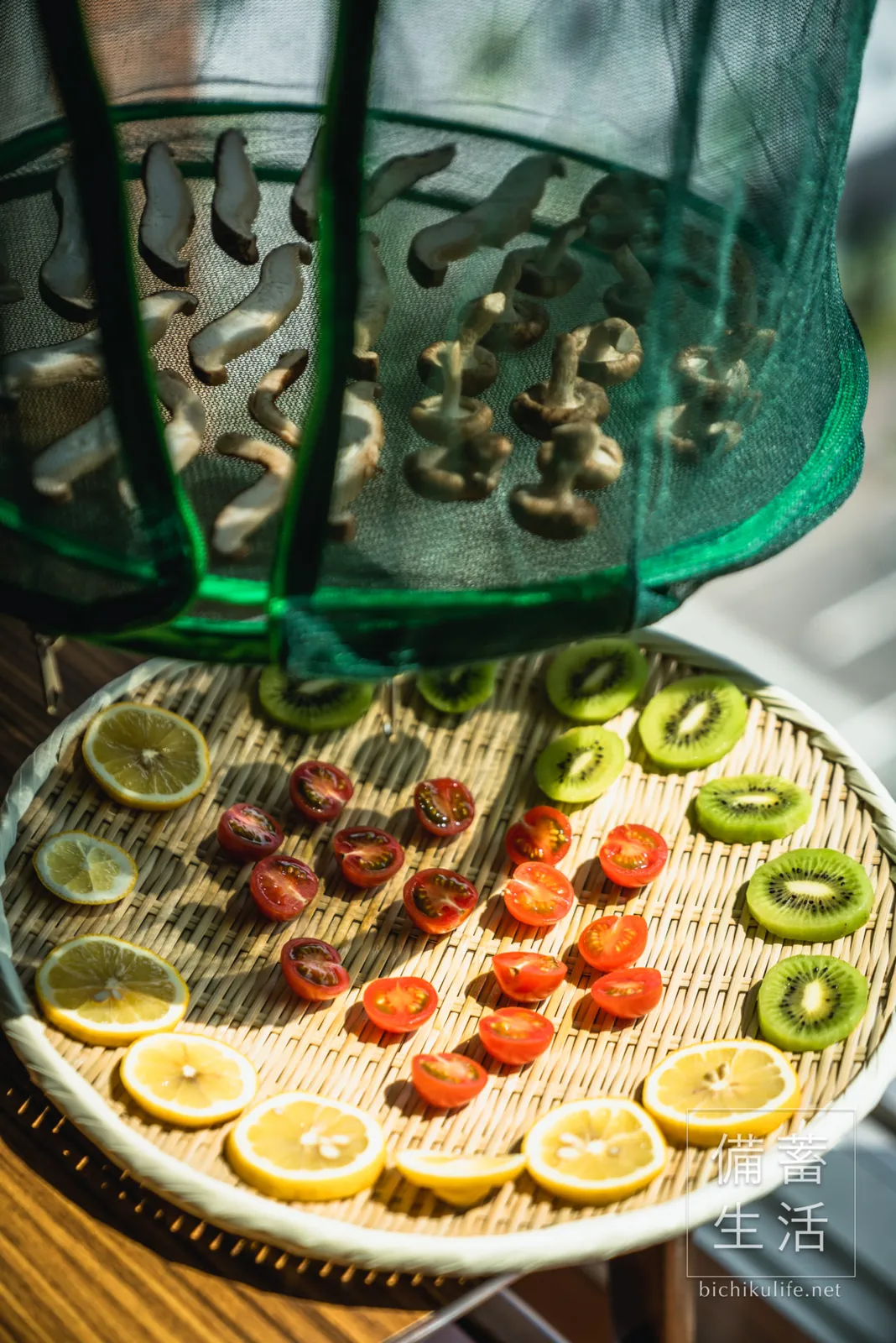
The best place is somewhere with plenty of sun and a good breeze.
- Outdoors: A yard or balcony. Put the basket on a stand or a railing, off the ground.
- Indoors: In front of a screened window, or by a window left slightly open so the air moves. A closed window traps moisture and slows drying.
- Places to avoid: Near a road with car exhaust, dusty spots, and in front of an air conditioner’s outdoor unit (the hot air dries only the surface).
When to dry
The best time is during the day while the sun is out, especially from about 10 a.m. to 3 p.m.
If you’re drying over several days, bring them inside in the evening. Humidity rises outdoors at night, and dew and damp air would undo the day’s drying. Put them out again the next morning once the sun is on them.
To check where the sun will be during the day, the app Sun Surveyor (paid) is handy. It’s usually used by photographers planning sunrise, sunset and night-sky shots, but because it calculates the sun’s position for any day, it helped us work out which part of the balcony gets sun at what time.
Weather and seasons
Drying works best when the air is dry and there’s a run of sunny days. Check the forecast a few days ahead before you start.
- Fall and winter: The air is dry and there are few bugs, so this is the best season. It’s why kiriboshi daikon (dried daikon strips) and dried persimmons are made in winter in Japan.
- Spring: Easy to dry if you pick a sunny spell.
- Summer: The strong sun dries things fast, but it’s humid and buggy. Fruit and juicy vegetables spoil easily, so be careful.
- Rainy season: In humid weather, the water in the vegetables doesn’t escape well and they mold easily. Take a break, or use the methods in “Drying on rainy days” below.
We once dried juicy cherry tomatoes and fruit through a spell of rain, and they went moldy. The juicier it is, the more important it is to pick good weather.
By the way, Hokkaido, where we live, has no real rainy season and fairly low humidity even in summer, so it’s an easier place to dry vegetables than most of Japan.
Sun drying vs. shade drying
| Sun drying | Shade drying (shade or part shade) | |
|---|---|---|
| Good for | Vegetables, mushrooms, fruit | Herbs, green shiso, mitsuba |
| Why | Dries quickly, and brings out sweetness and savory flavor. Mushrooms gain vitamin D | Keeps strong sun from fading the color and driving off the aroma |
Herbs and strongly aromatic leaves keep their color and aroma best when dried in a breezy, shady spot, or by a window behind a sheer curtain.
Bugs, birds and dust
- Cover with a net: Put cheesecloth or insect netting over the basket, or use a drying net with a zipper.
- Keep them off the ground: Dry them on a stand, or hang them from a clothesline.
- If birds visit: Avoid spots where birds like to perch, such as balcony railings.
Drying tools are covered in Tools for Drying Vegetables.
Drying on rainy days
If the weather turns before things are dry, or during the rainy season, you can finish drying with an appliance.
- Oven: Lay the pieces on a baking sheet lined with parchment paper and heat at a low temperature of about 100°C (210°F) for 30 minutes to an hour, checking as you go. Turn them halfway and be careful not to scorch them.
- Food dehydrator: Set the temperature and timer and leave it. Weather doesn’t matter, and herbs keep their color well.
- Indoors with a fan or dehumidifier: Put the basket indoors and point a fan at it, or put it in a room with a dehumidifier running, and it dries faster.
If the weather turns partway through sun drying, don’t force it outside. Keep the basket indoors with a fan on it and wait for a sunny spell.
Common problems and fixes
| Problem | Cause | Fix |
|---|---|---|
| Mold | Too juicy, rain or humidity for days, cut too thick | Pick a run of sunny days. Cut thinner. Dry well before laying out. Throw away moldy pieces and everything on the same basket |
| Dry outside, damp inside | Too thick, or strong heat hardened the surface | Cut thinner. Keep drying while it’s still springy when pressed |
| Turned dark | Oxidation of the cut surface, bitterness | Soak eggplant, lotus root and burdock in water or salt water before drying. Parboil potatoes and yams |
| Stuck to the basket | Juice from fruit or sugary vegetables | Turn once or twice a day. Use a cooling rack |
| Blew away | Light pieces left outdoors | Hold down with weights or clothespins. Use a hanging net |
How to store them once dry is in How to Store Dried Vegetables. For each vegetable, see all dried vegetables.