Root vegetables
Kiriboshi Daikon (Dried Daikon Strips)Drying Time, Storage and Rehydrating
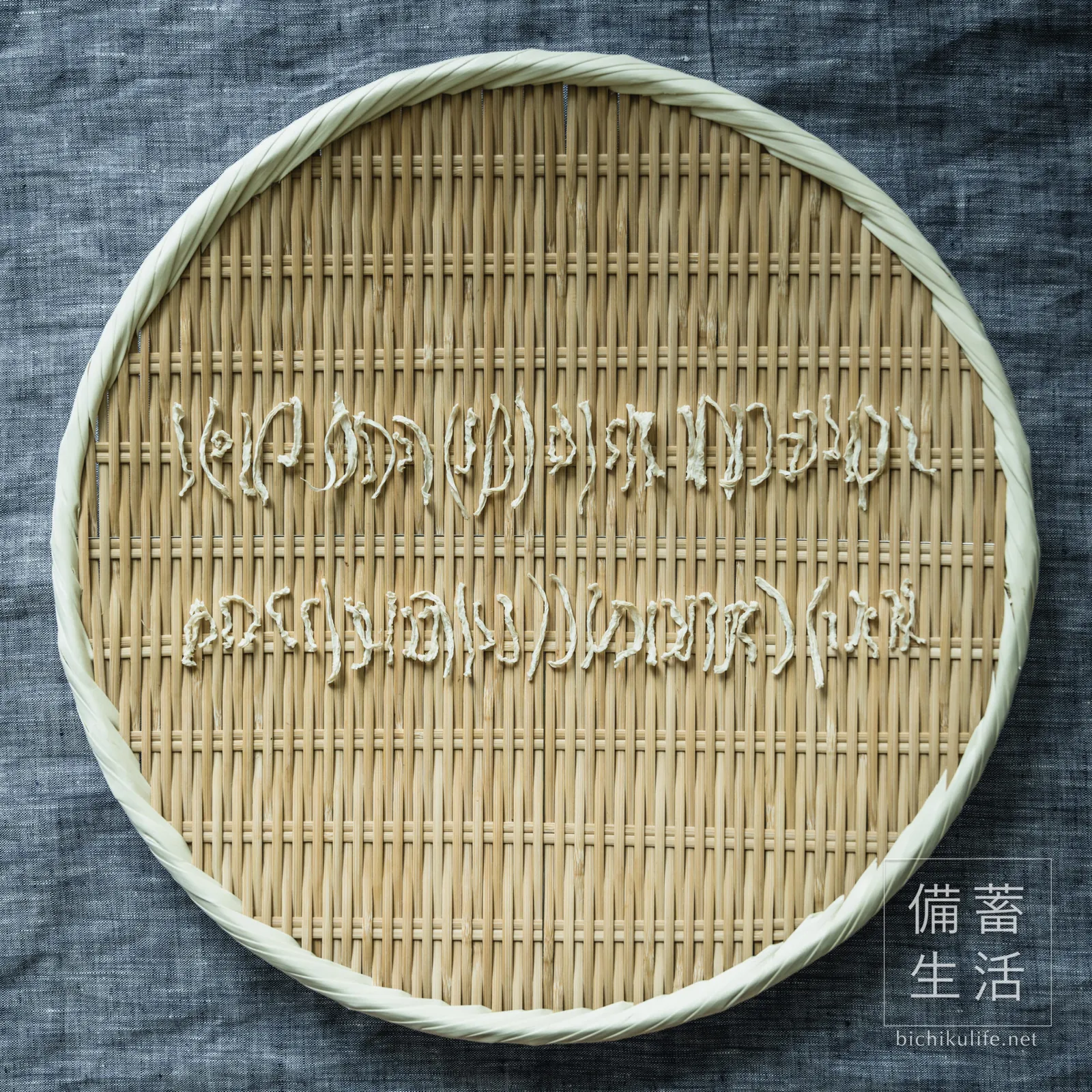
Kiriboshi daikon, dried strips of daikon radish, is one of the most familiar dried vegetables in Japan. Drying makes it sweeter and more savory, with a chewy texture quite unlike fresh daikon. Daikon is the large white Japanese radish; outside Japan, look for it at Asian grocery stores, or use Korean mu radish.
The best time to make it is winter, when the air is dry and there’s a run of sunny days. Cold, dry wind makes it white and clean. It’s also when daikon is at its best.
| Drying time | Storage | |
|---|---|---|
| Dry | 2–4 days | 1 month at room temperature / 6 months frozen |
| Semi-dried | 1–3 hours | 5 days in the fridge |
Drying times assume drying during the day in sunny weather and bringing them in at night.
How to make kiriboshi daikon
- Peel: Peeling is optional, but peeled daikon rehydrates faster and dries whiter.
- Cut: Cut the daikon in half crosswise, slice it lengthwise along the fibers into 5 mm (¼ in) thick slabs, then cut those into 5 mm (¼ in) wide strips. Cutting along the fibers keeps the strips chewy after rehydrating.
- Spread out and dry: Spread on a basket without overlapping, somewhere sunny and breezy. Loosen and turn them by hand once or twice a day. Bring them in by evening.
Where and when to dry is covered in How to Dry Vegetables, and tools in Tools for Drying Vegetables.
When it’s done
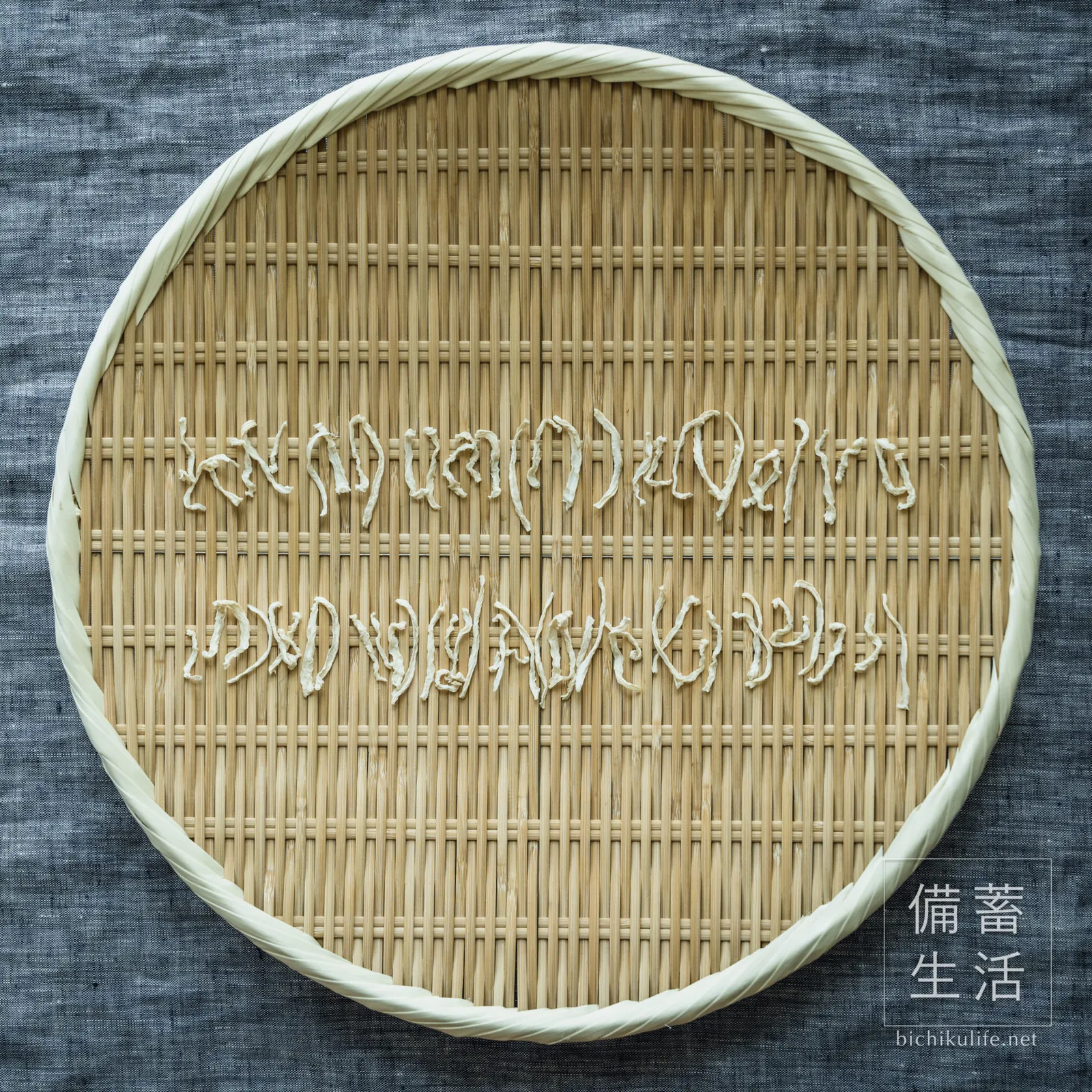
Dry (2–4 days)
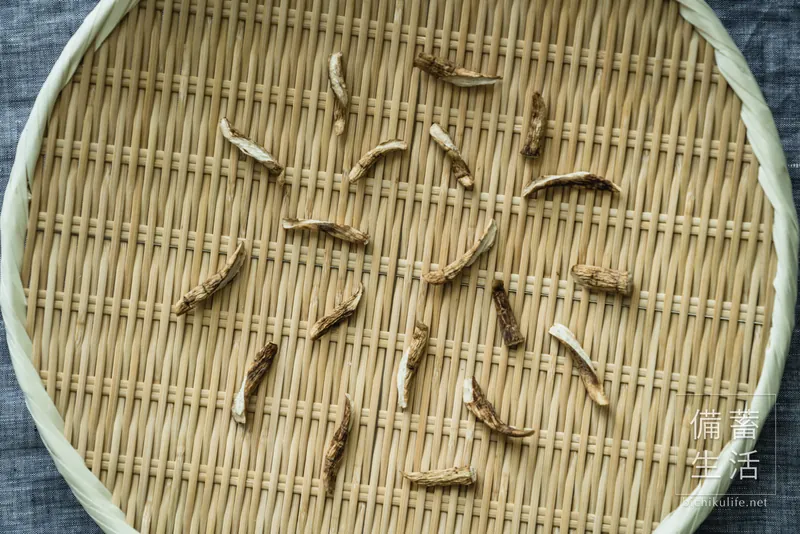
It’s done when the strips have shrunk thin and twisted, and rustle when you squeeze a handful. Any part that’s still a little moist can mold during storage.
Semi-dried (1–3 hours)
The surface is dry and the strips are limp. Used as is in salads, quick pickles or harihari-zuke (a crunchy soy and vinegar pickle), they stay crunchy instead of watery.
Day by day
Before drying
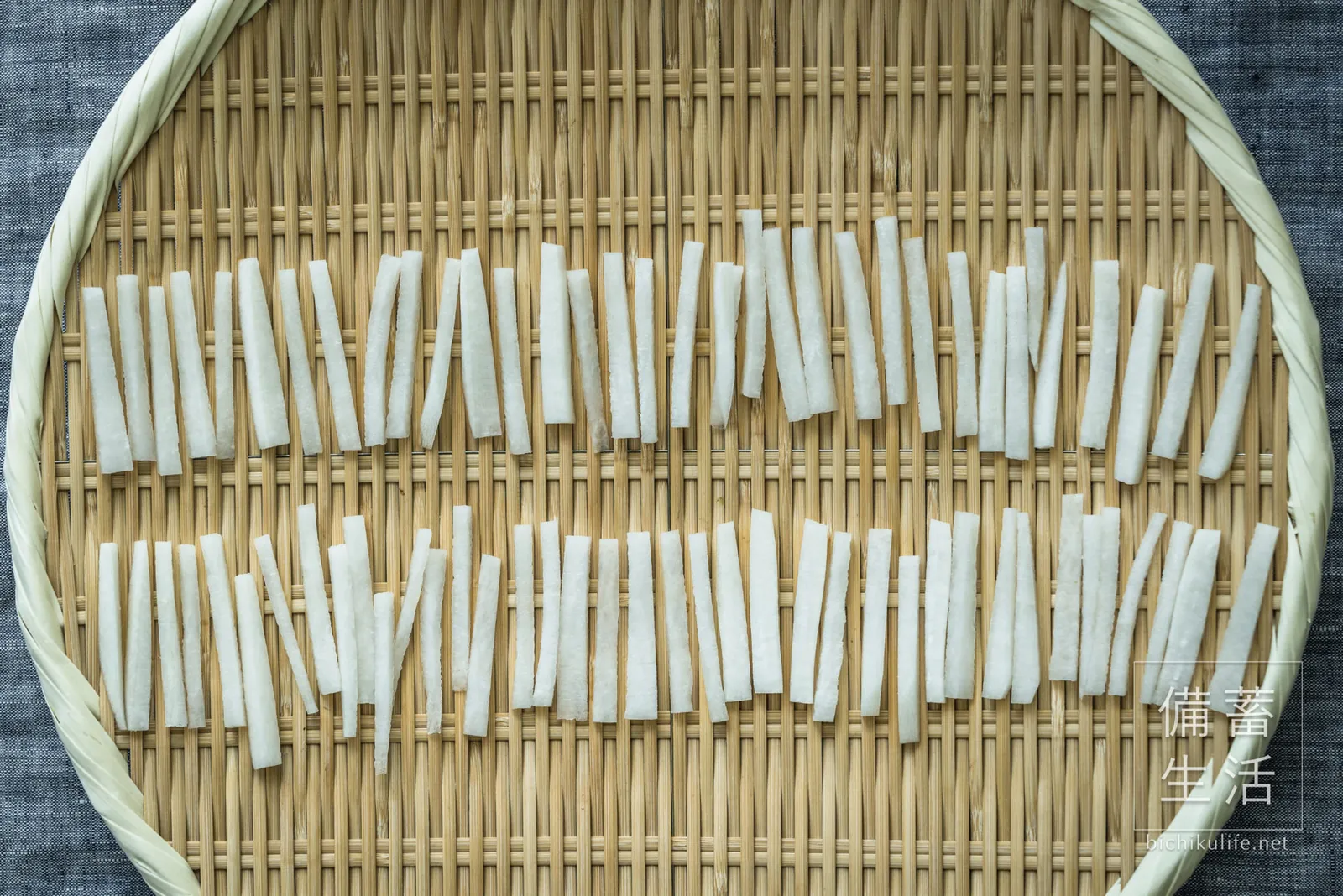
Day 1
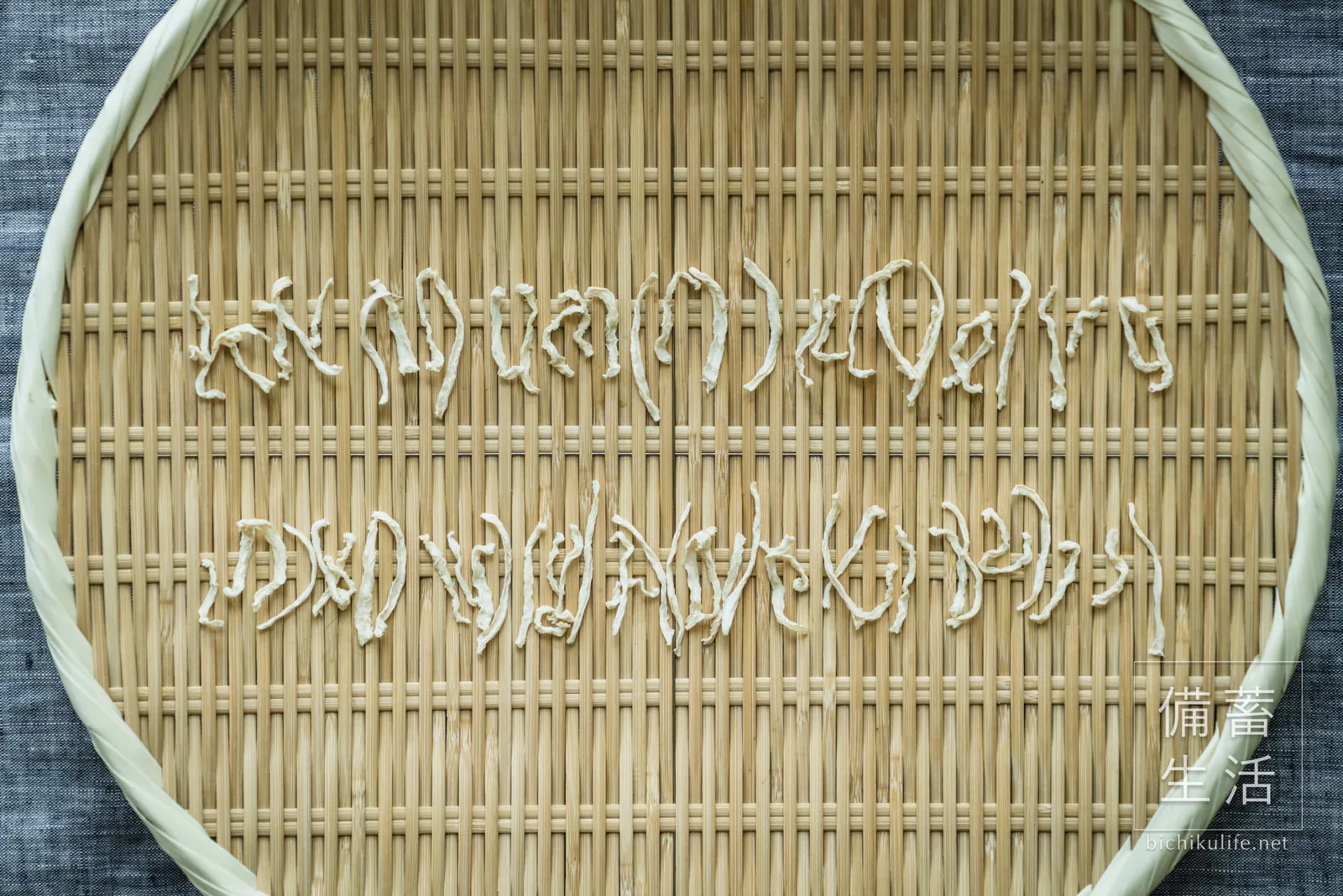
Day 2
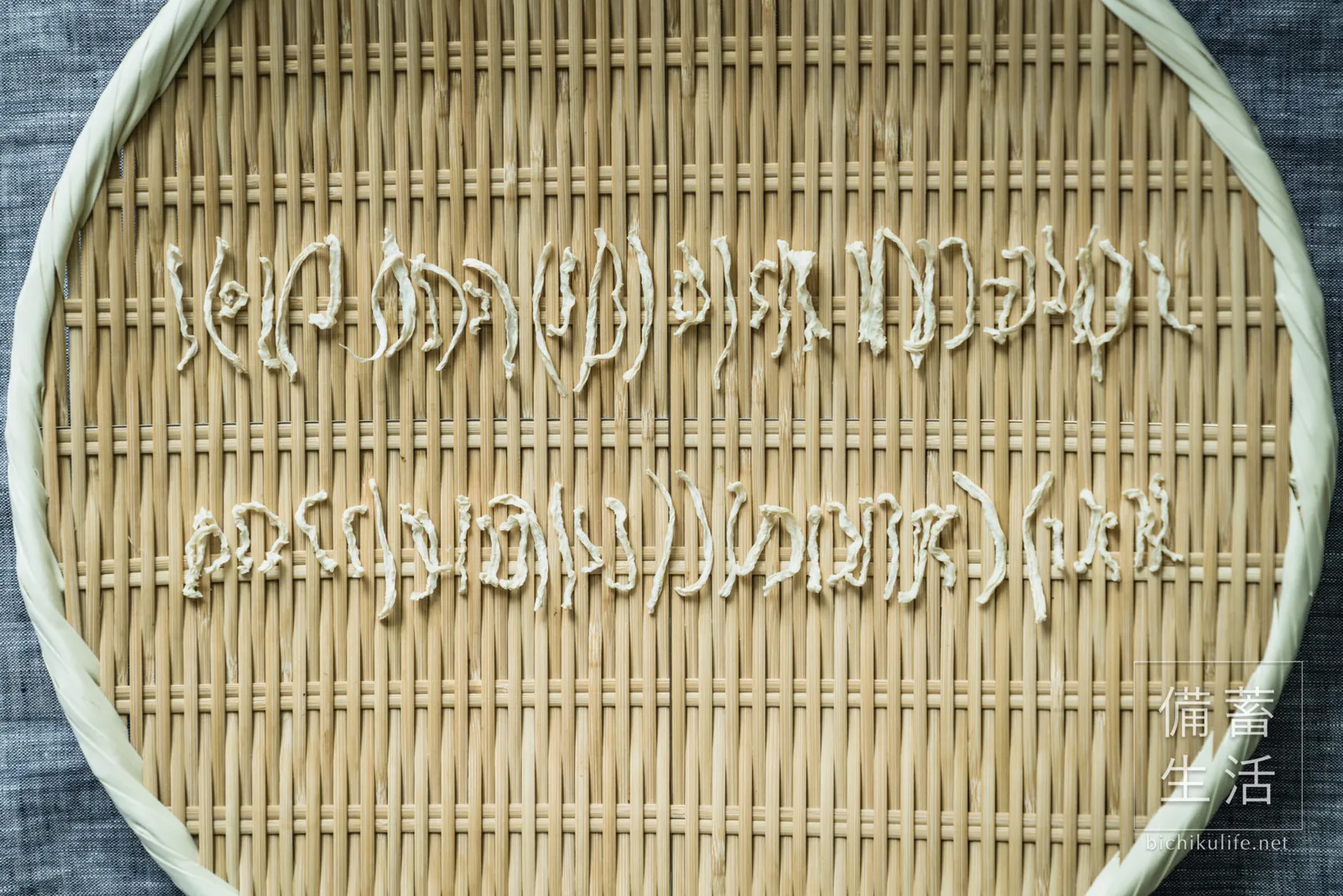
Storage
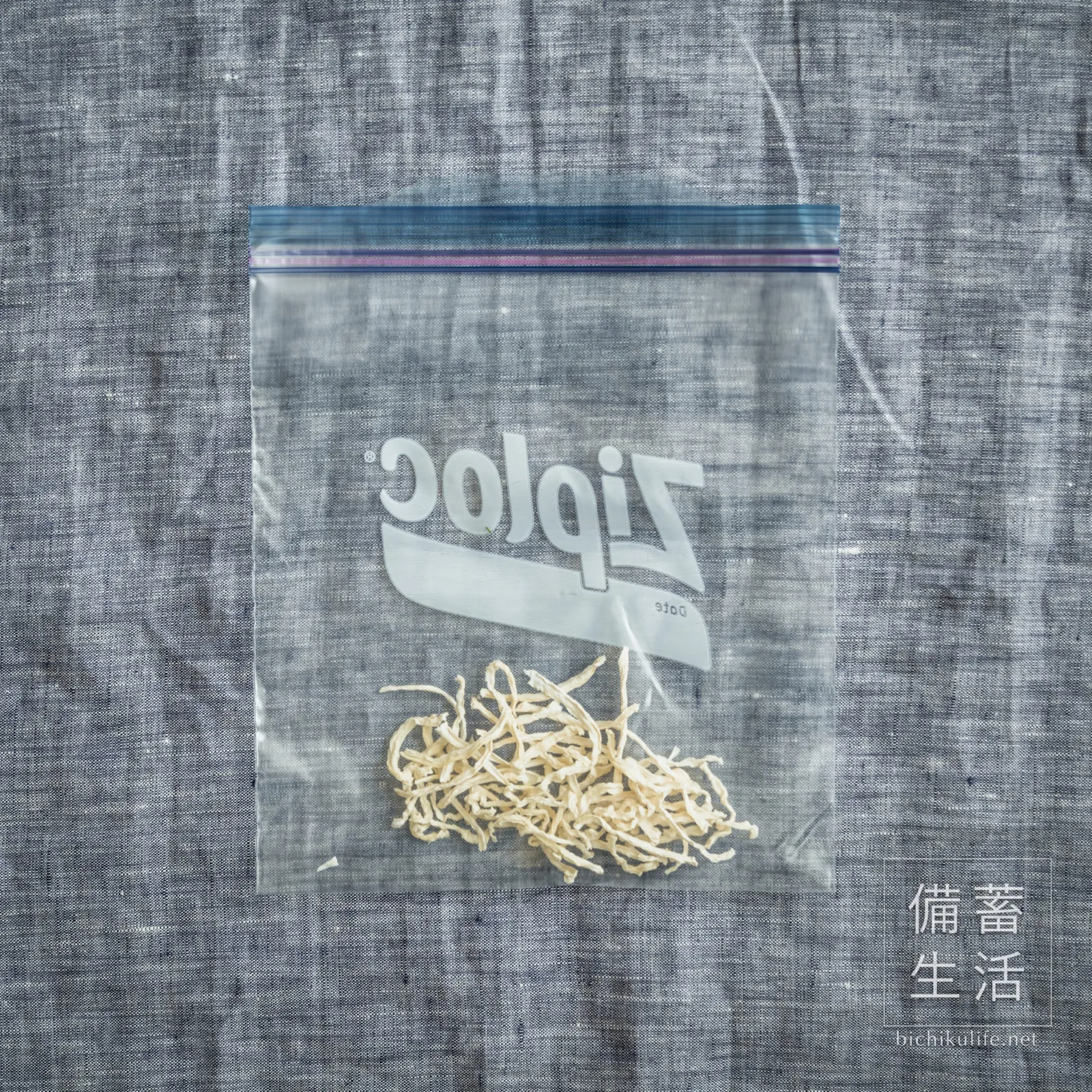
- Dry: Put completely dry strips in a bag or airtight container with a desiccant, and keep somewhere cool and out of direct sun for about 1 month. In humid summer weather, keep it in the fridge.
- Frozen: To keep it longer, freeze it. It keeps about 6 months.
- Semi-dried: Keep in a bag in the fridge and use within about 5 days.
Kiriboshi daikon gradually turns brown in storage. This is a change in the daikon’s sugars, not mold. But fuzzy white or green growth, black spots or a bad smell are signs of mold or spoilage; throw it away. More in How to Store Dried Vegetables.
Rehydrating and using it
- Rehydrate: Rinse quickly to remove any dust, and soak in plenty of water for 10–15 minutes. Soaking too long washes out the chew and flavor, so stop when it’s still a little firm. Squeeze lightly before using.
- Use the soaking water: It’s sweet from the daikon, so use it in simmered dishes or miso soup.
- Good in: The classic simmered dish (with deep-fried tofu and carrot), harihari-zuke, salads, Japanese rolled omelet, stir-fries, miso soup.