Fruiting vegetables
Dried CornDrying the Kernels and Silk, Storage and How to Make Corn Silk Tea
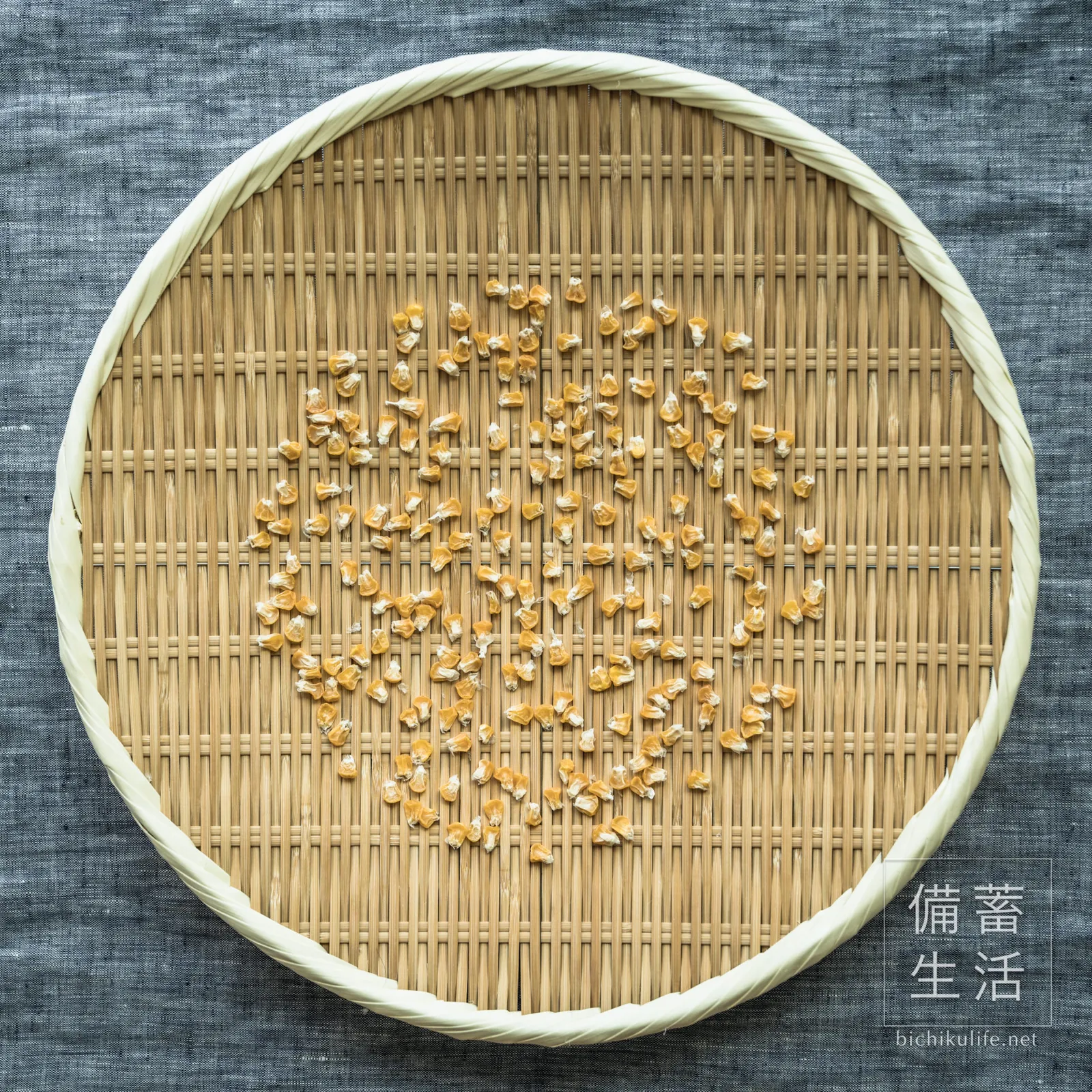
Sweet corn is a summer favorite. Much of its goodness is in the germ at the base of each kernel.
Corn starts losing its sweetness the moment it’s picked. If you have a lot, dry it soon. It loses its fresh juiciness, but gains a concentrated, deep sweetness and a pleasant pop.
Even the silk you’d usually throw away makes a toasty tea once dried.
| Drying time | Storage | |
|---|---|---|
| Kernels (dry) | 4–6 days | 1 month at room temperature (fridge in humid summer) |
| Silk (dry) | 3–4 days | 3 months at room temperature |
Drying times assume drying during the day in sunny weather and bringing them in at night.
How to dry corn
- Remove the kernels: Shave the kernels off the cob with a knife, close to the base, or cut off one row with a knife and then push the rest off one by one with your thumb. Taking them off at the base keeps the germ.
- Separate and lay out: Break apart any kernels that are stuck together, and spread them on a basket without overlapping.
- Dry: Put them somewhere sunny and breezy, and shake the basket once or twice a day to roll the kernels around. Bring them in by evening.
Where and when to dry is covered in How to Dry Vegetables, and tools in Tools for Drying Vegetables.
When it’s done
Dry (4–6 days)
It’s done when the kernels have shrunk and wrinkled, turned a deep yellow, and feel hard when pinched, without squashing.
Day by day
Before drying
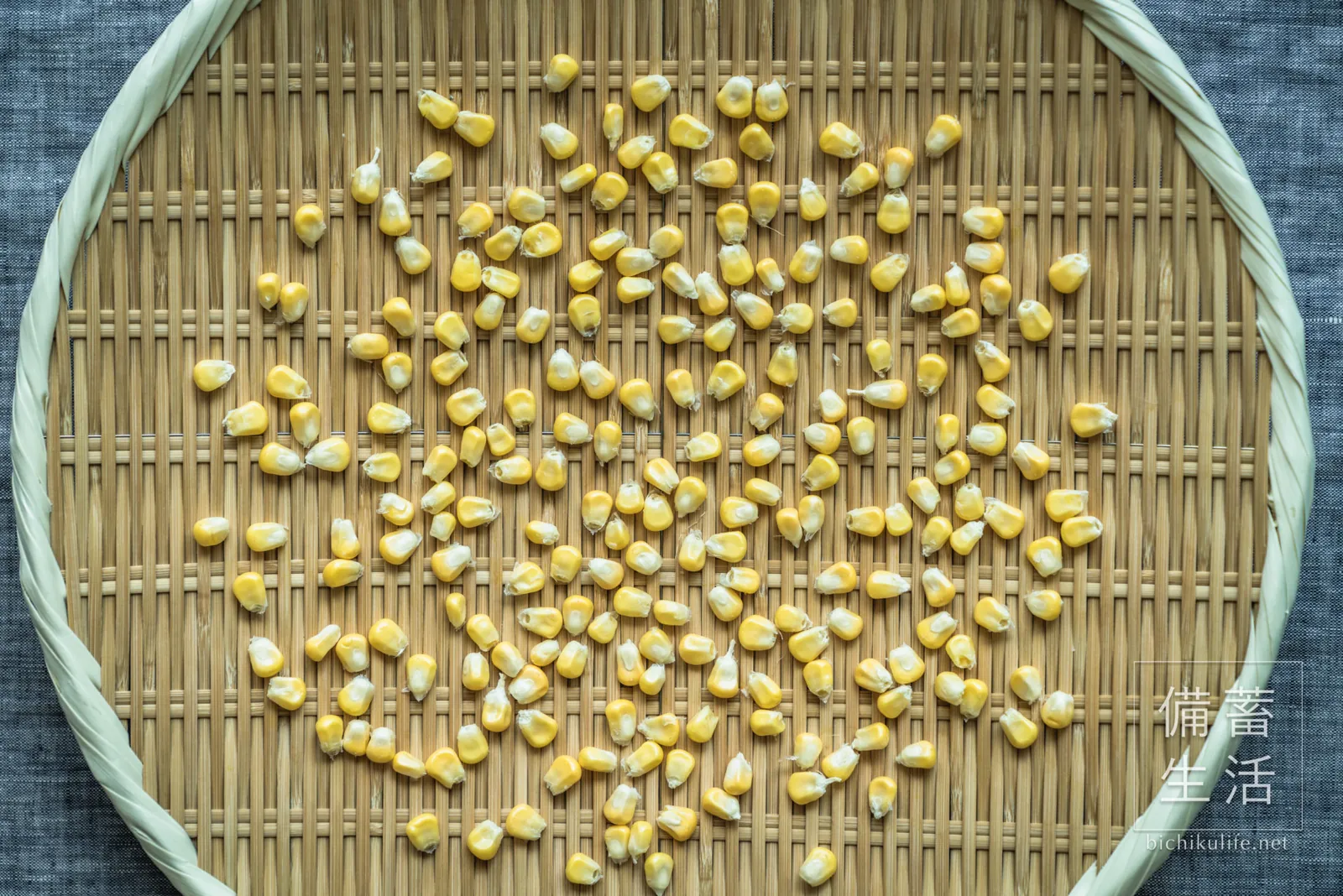
Day 1
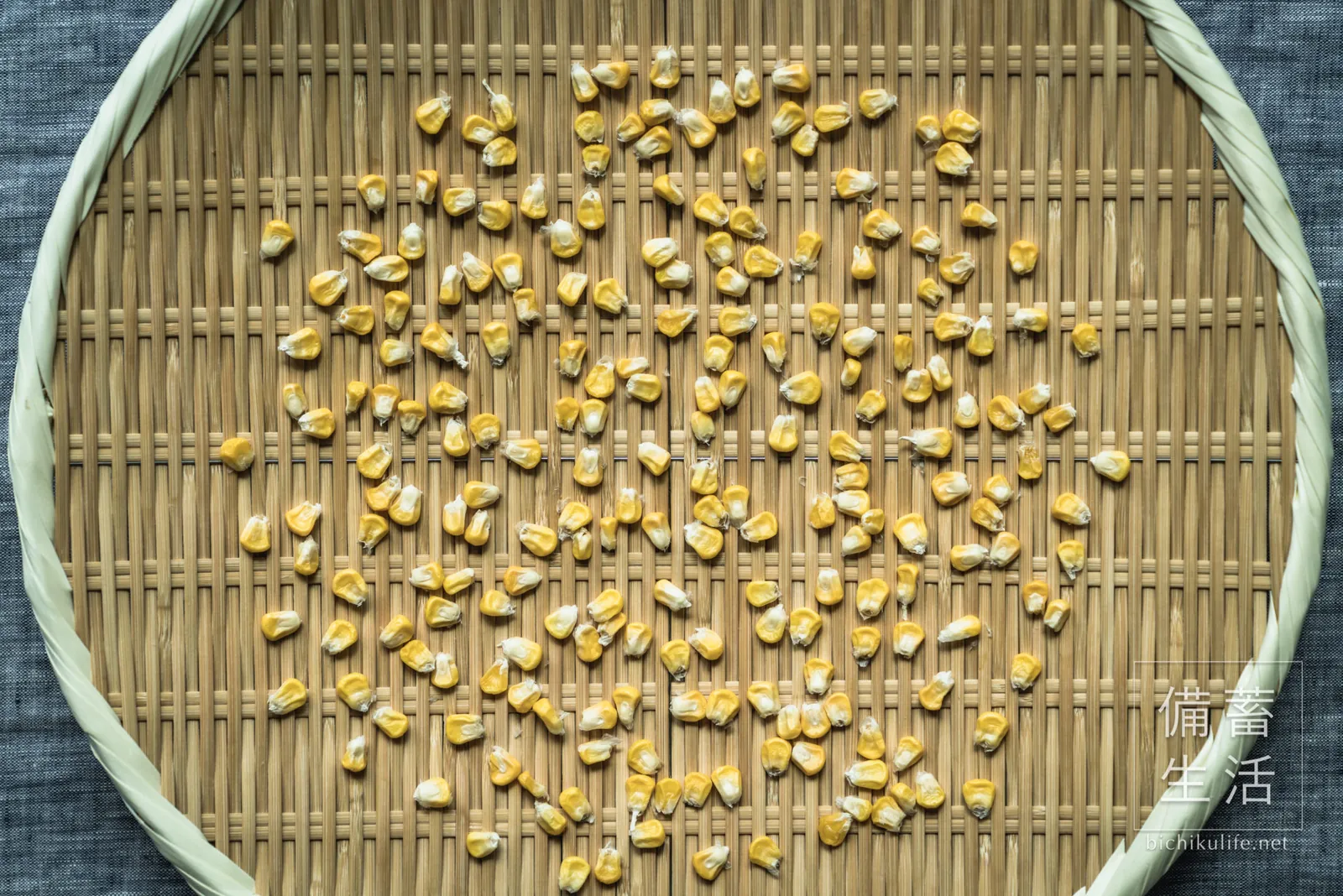
Day 2
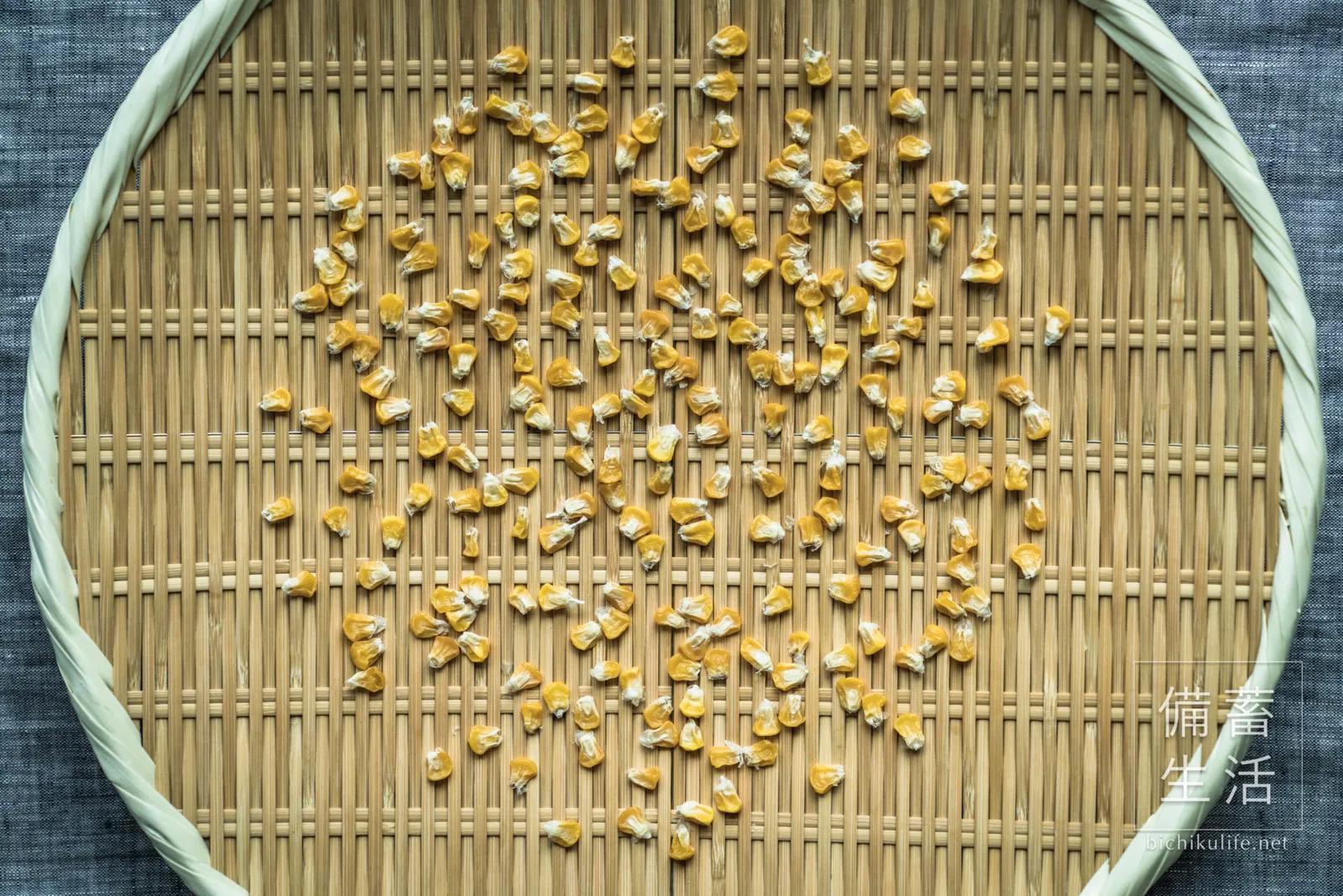
Day 3
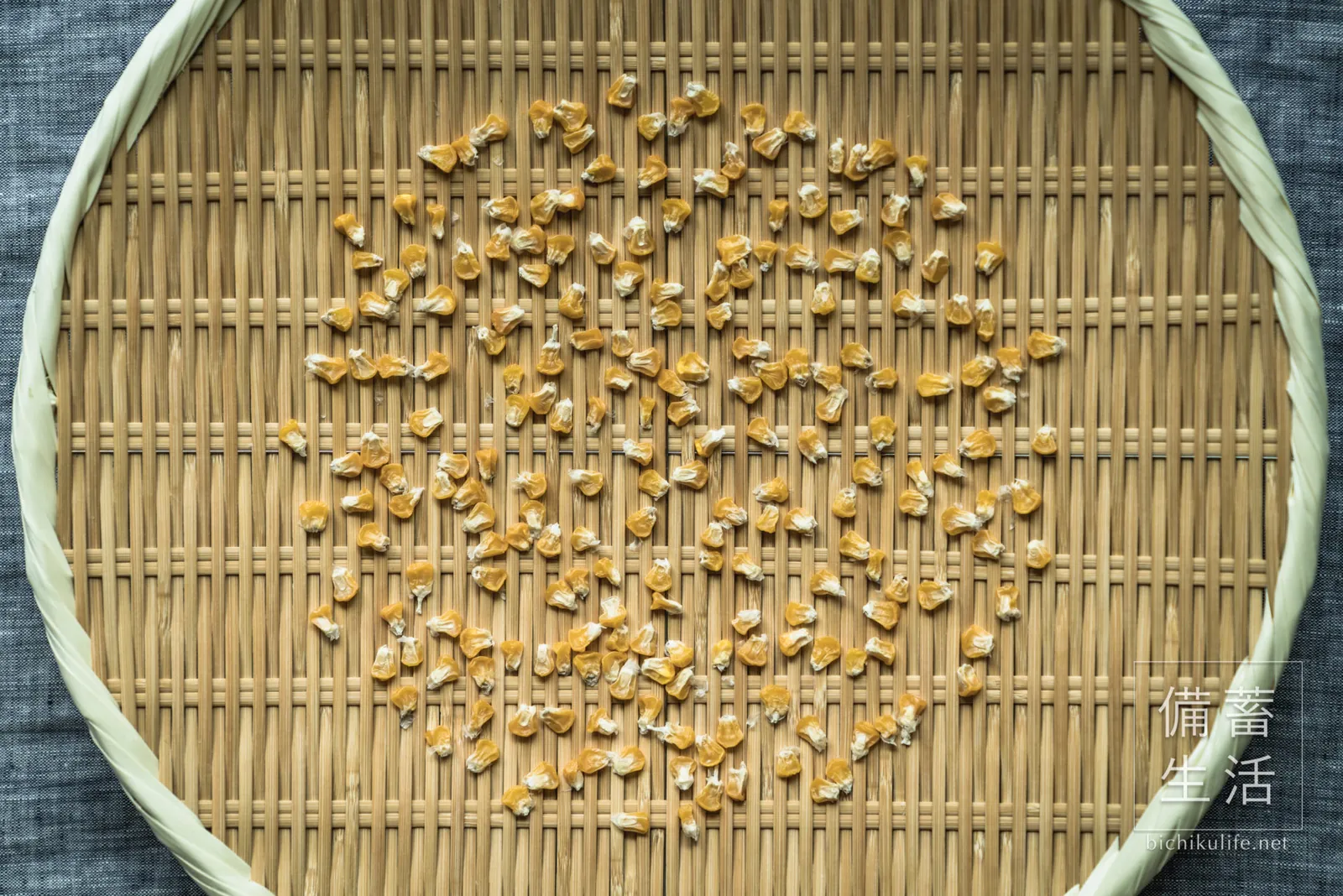
Day 4
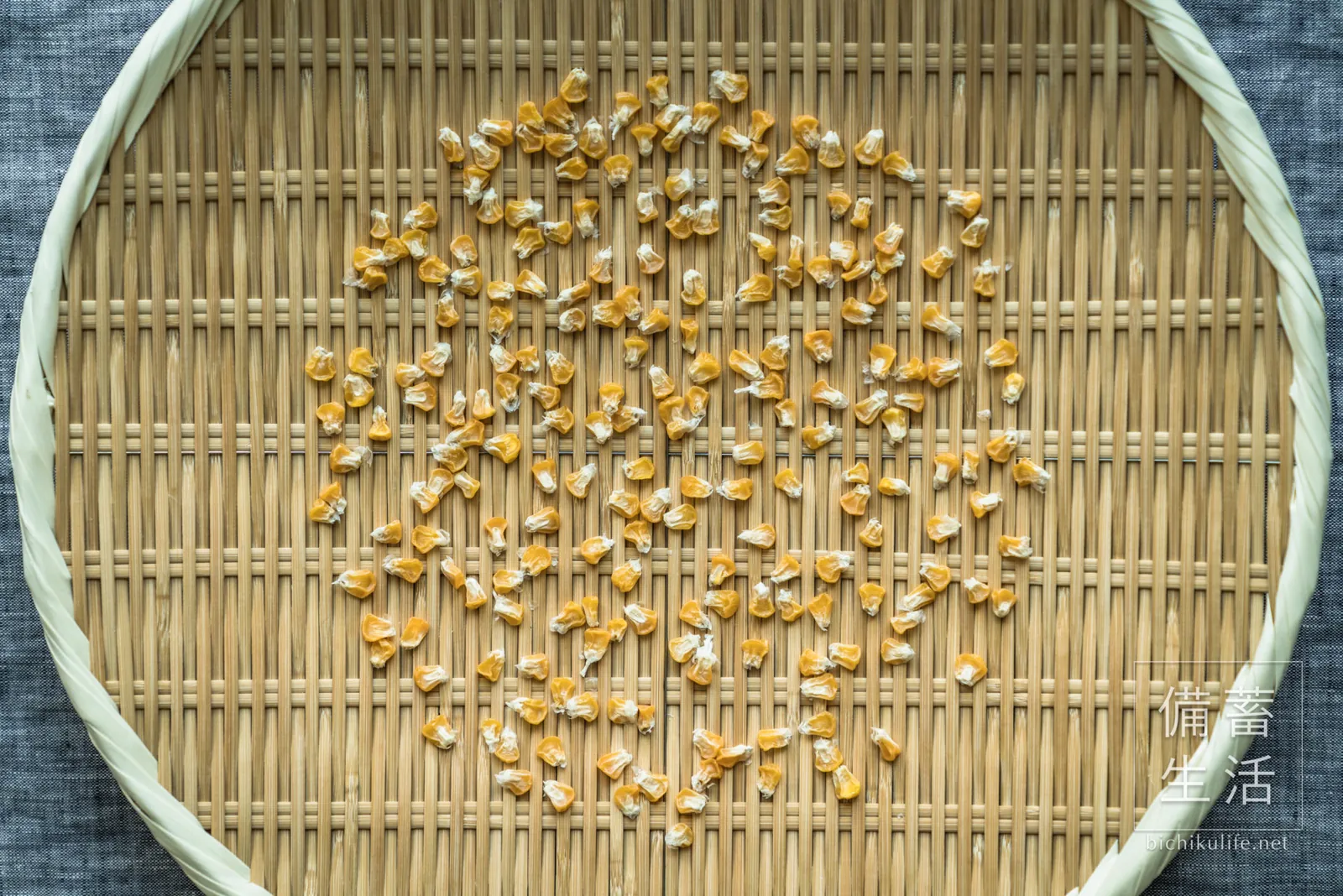
Day 5
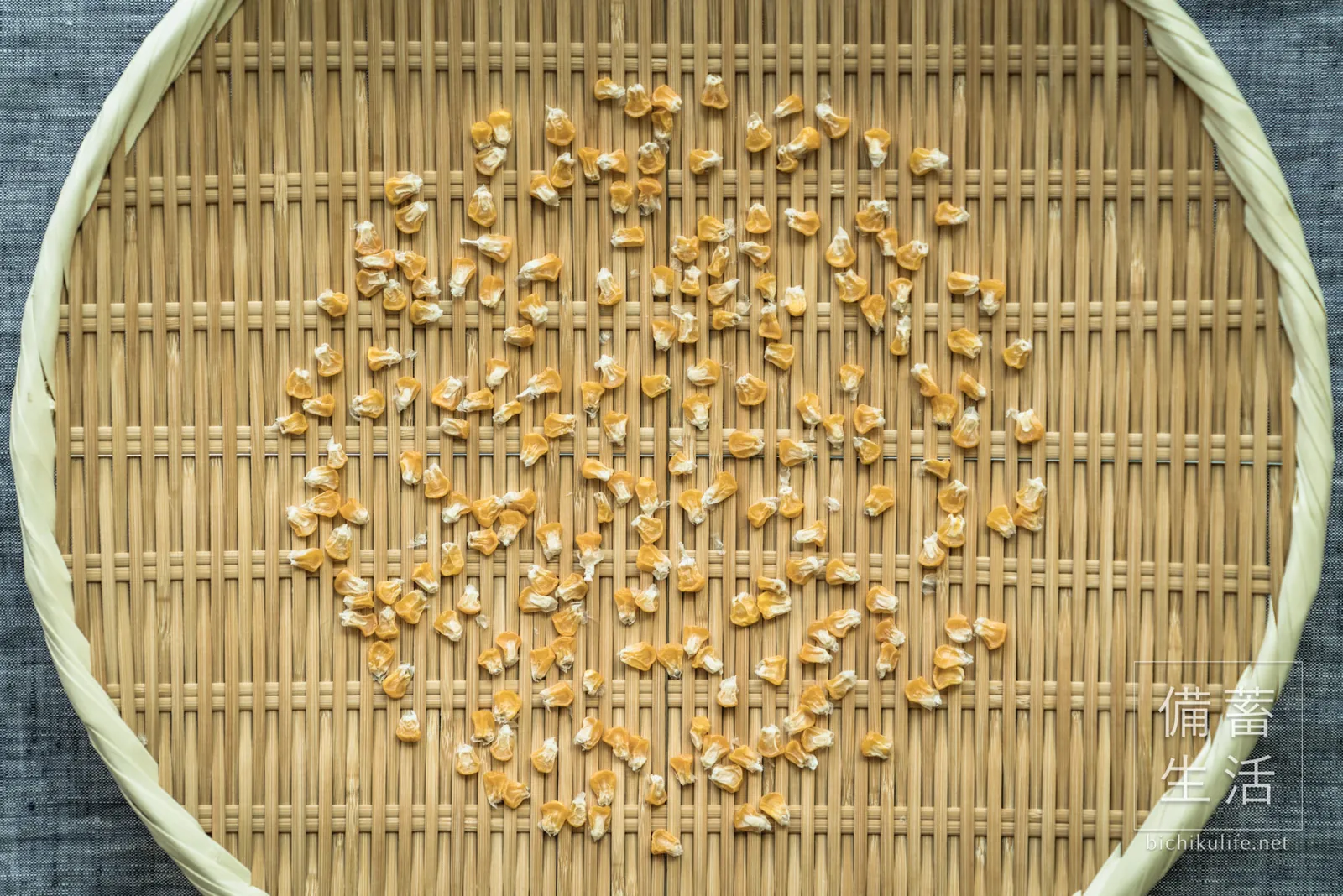
Corn silk
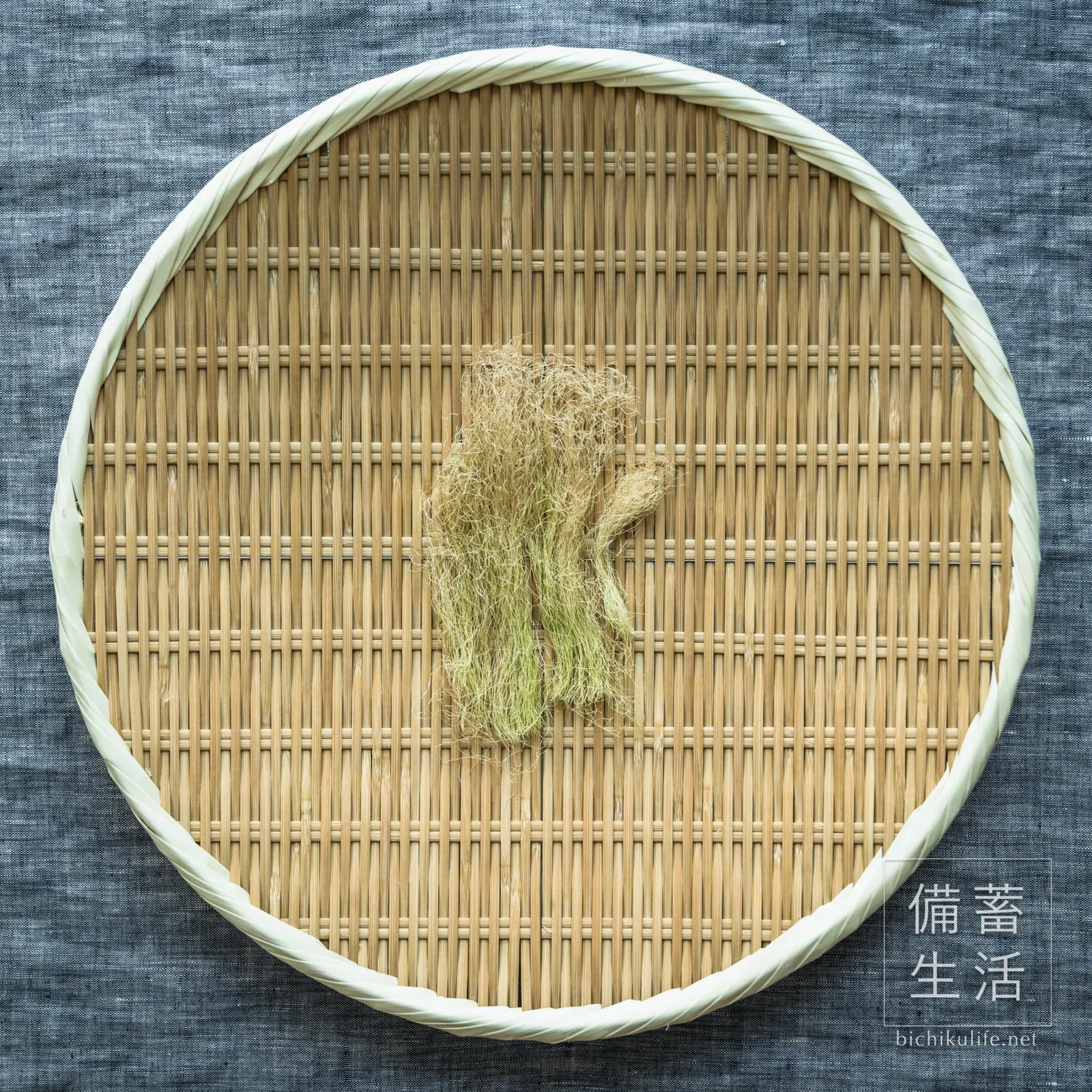
Corn silk, called nanbange in Japan, has long been brewed as a tea. Dried and then simmered, it makes a toasty tea with a hint of corn sweetness.
How to dry it
- Collect the silk: Gather the silk when you husk the corn. Cut off the brown, dried tips and use only the clean part.
- Wash: Rinse quickly and pat dry.
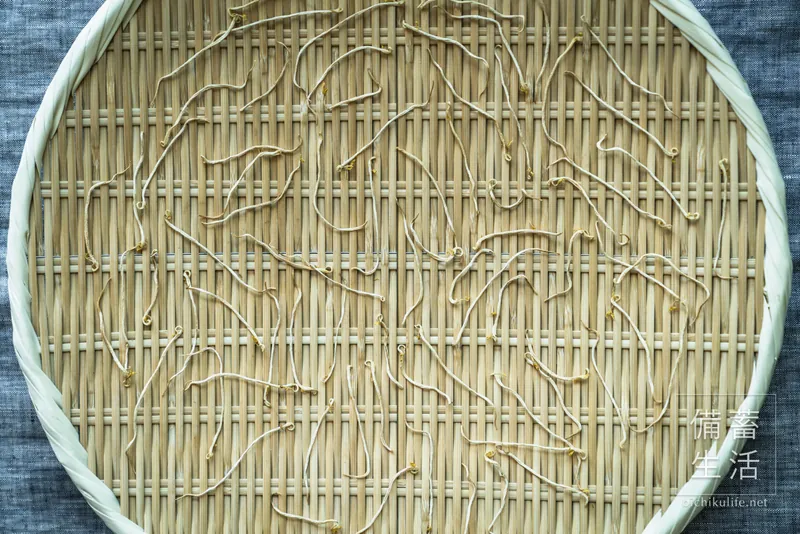
- Dry: Cut into convenient lengths and dry it in a net so it doesn’t blow away. It’s crisp in 3–4 days.
Day by day
Before drying
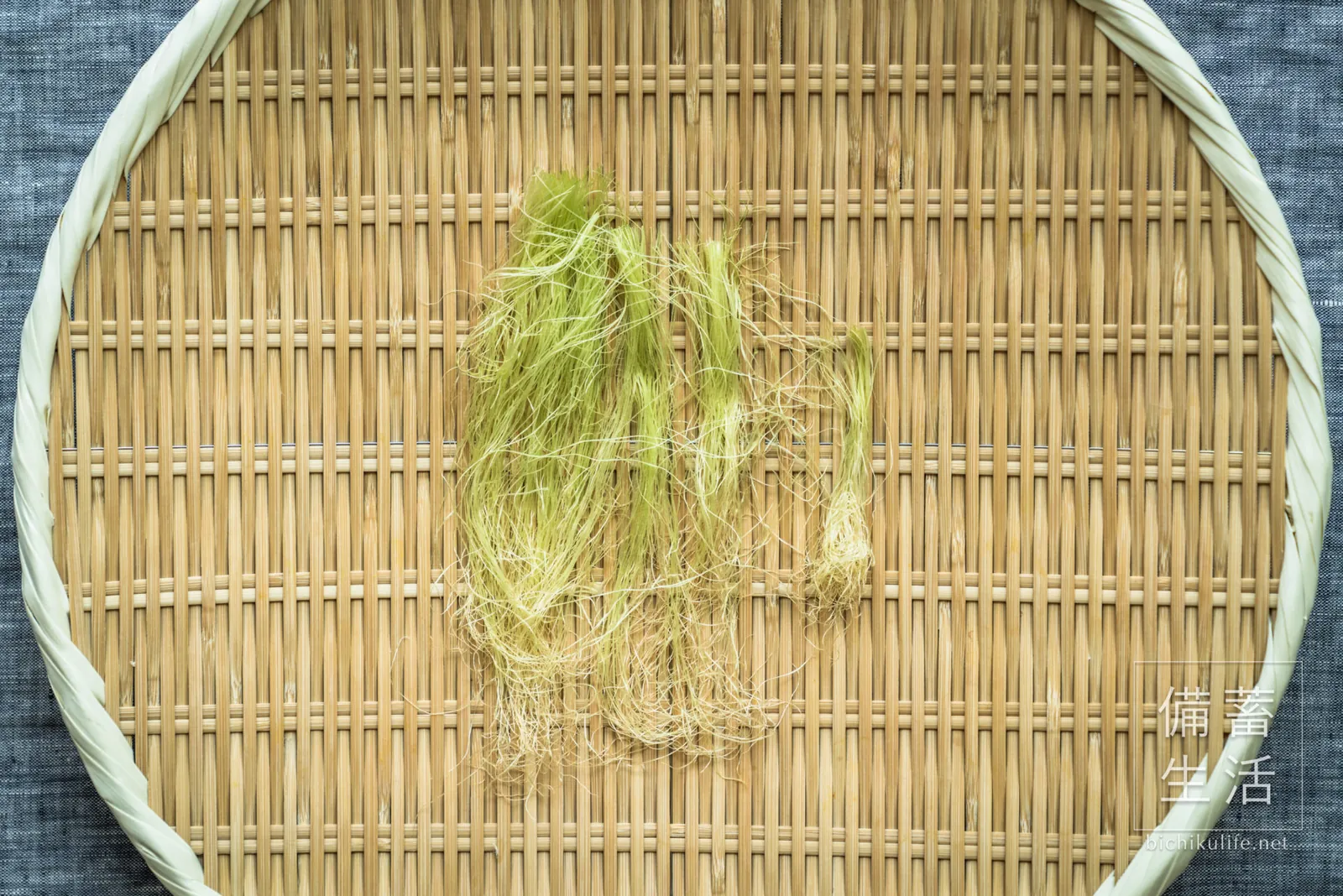
Day 1
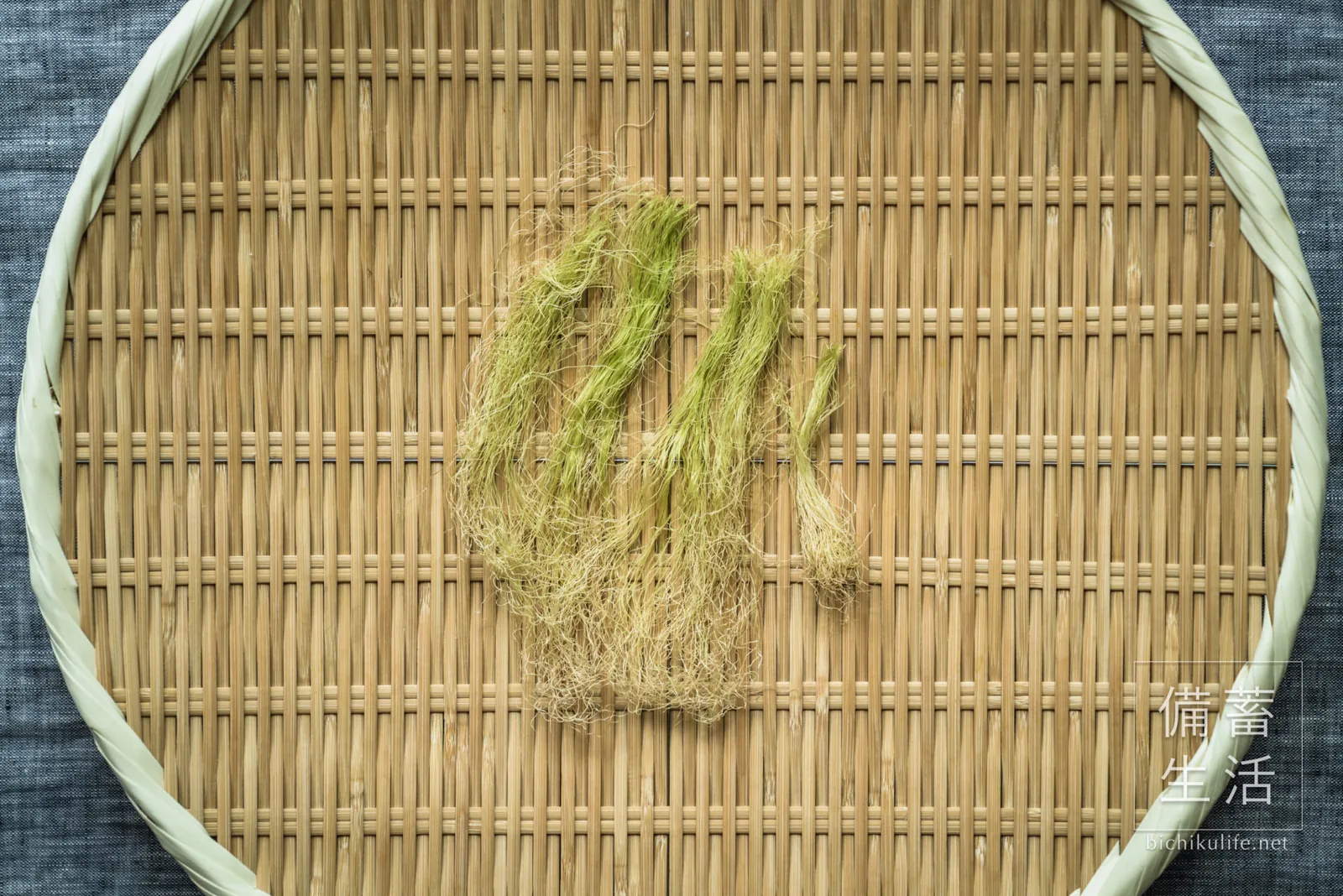
Day 2
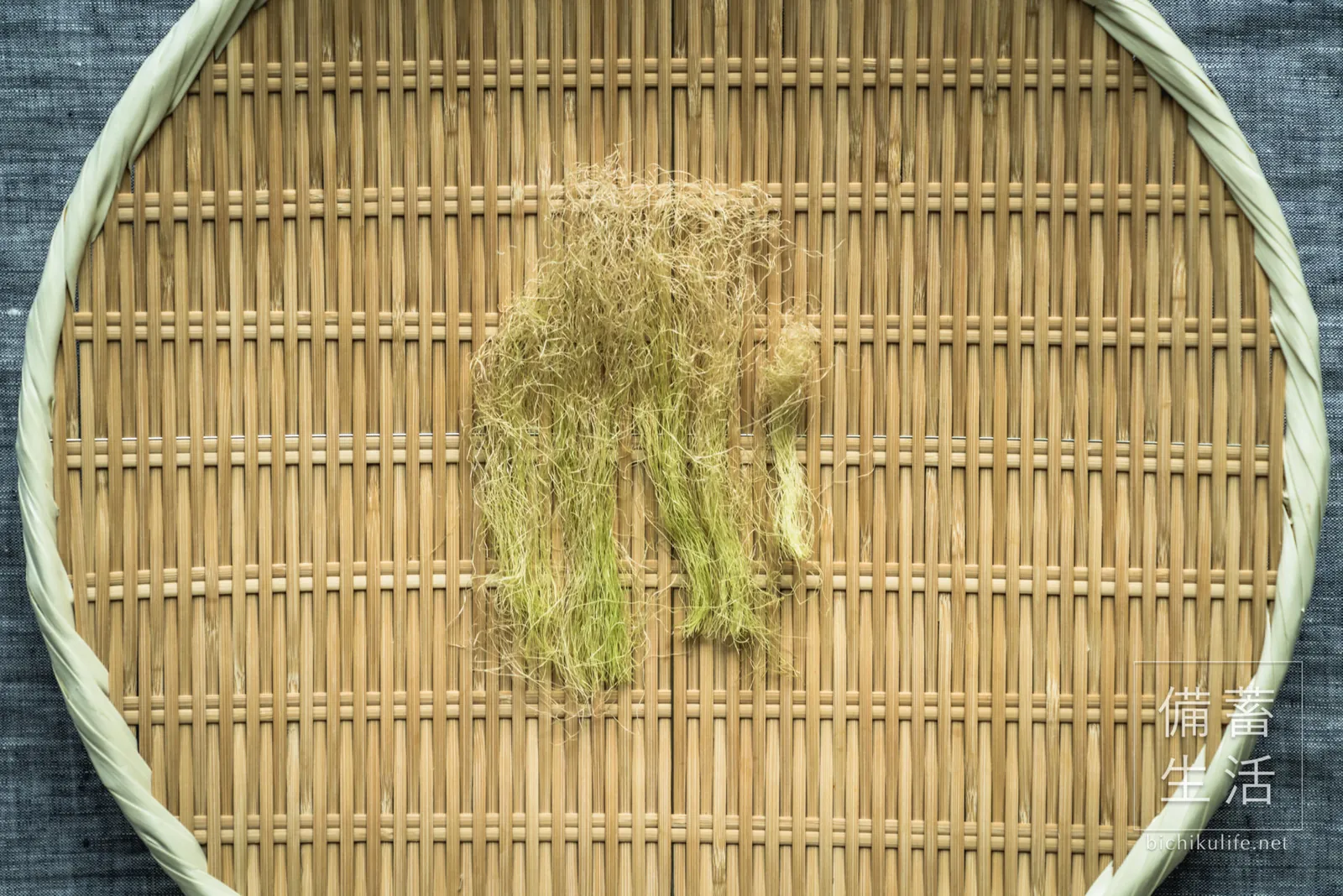
Day 3
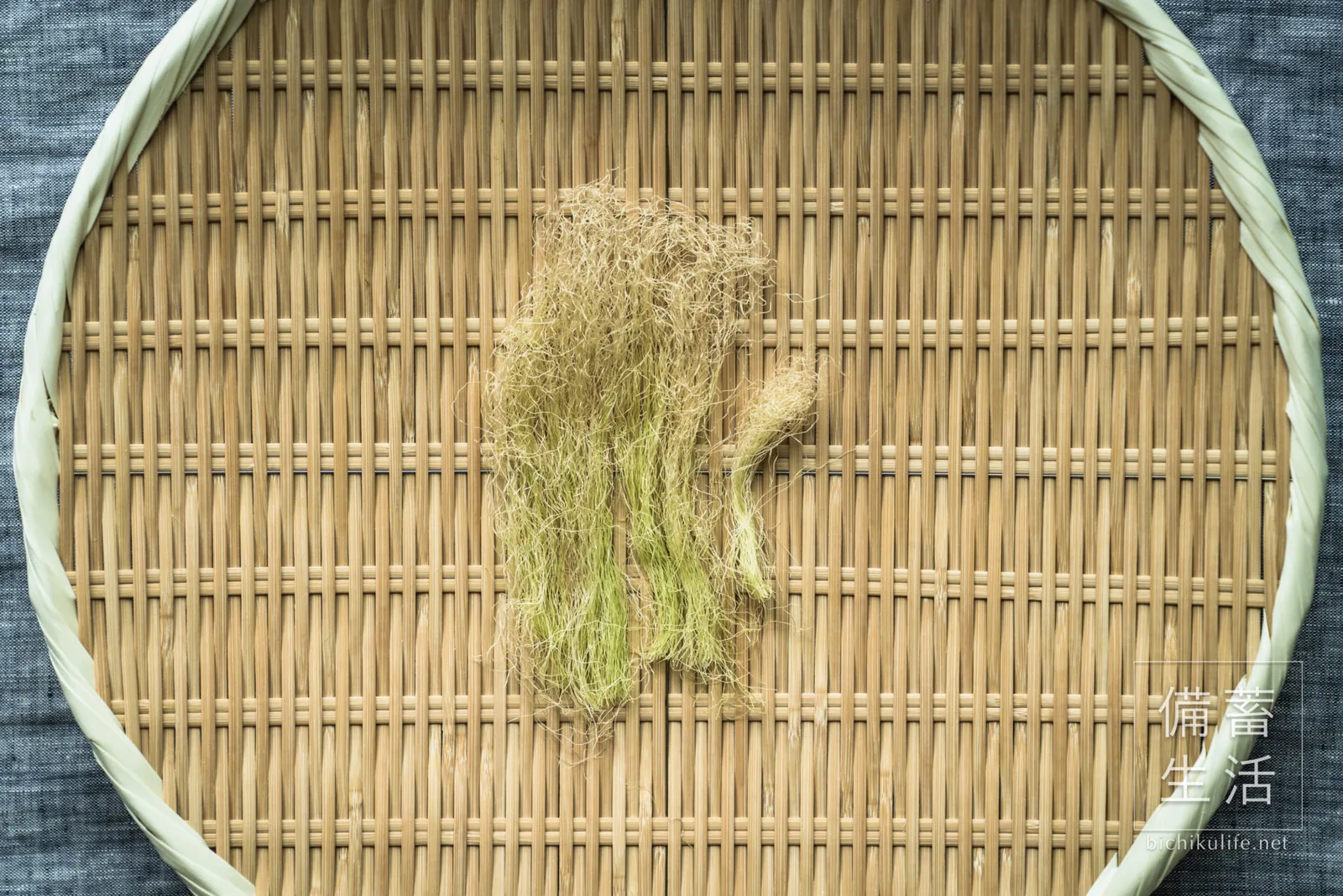
Day 4
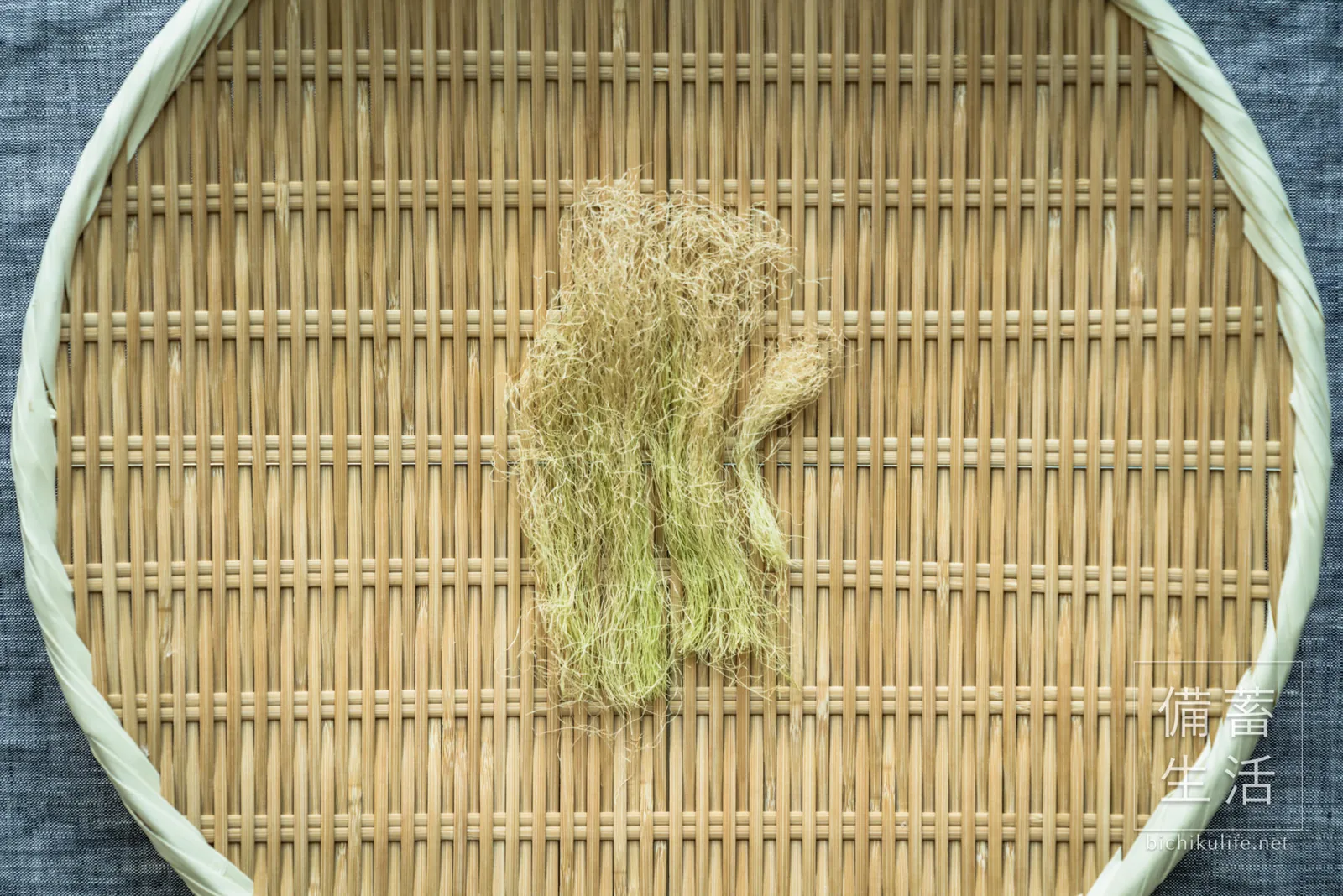
Corn silk tea
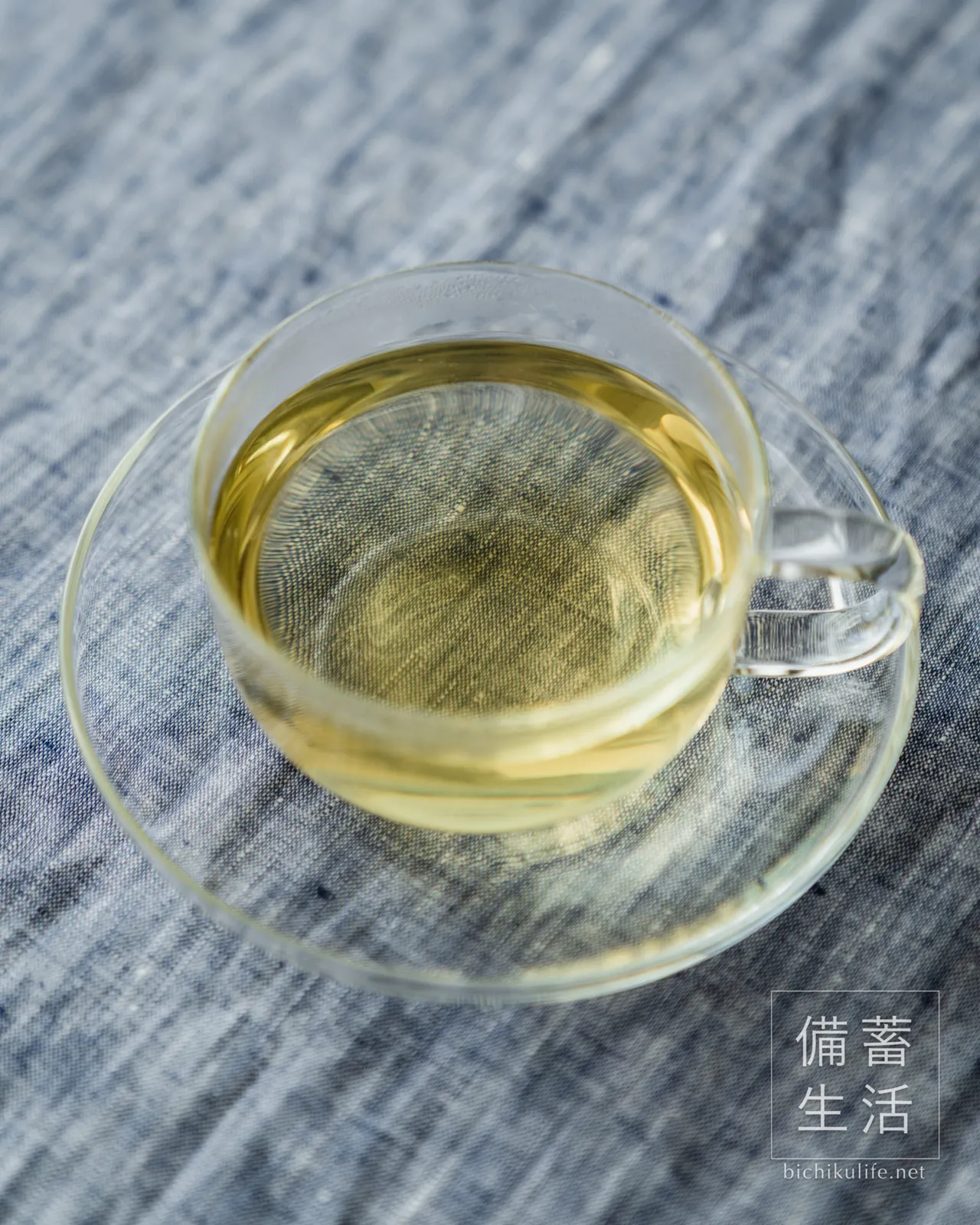
A gentle tea with a light sweetness and a toasty aroma.
- Put 1 liter (about 4 cups) of water and a handful (about 5 g) of dried silk in a pot.
- Bring to a boil, then simmer over low heat for 20–25 minutes.
- Strain through a tea strainer. It’s also good chilled.
Toasting the silk lightly in a dry frying pan first makes it even more fragrant. Keep the tea in the fridge and drink it the same day.
Storage
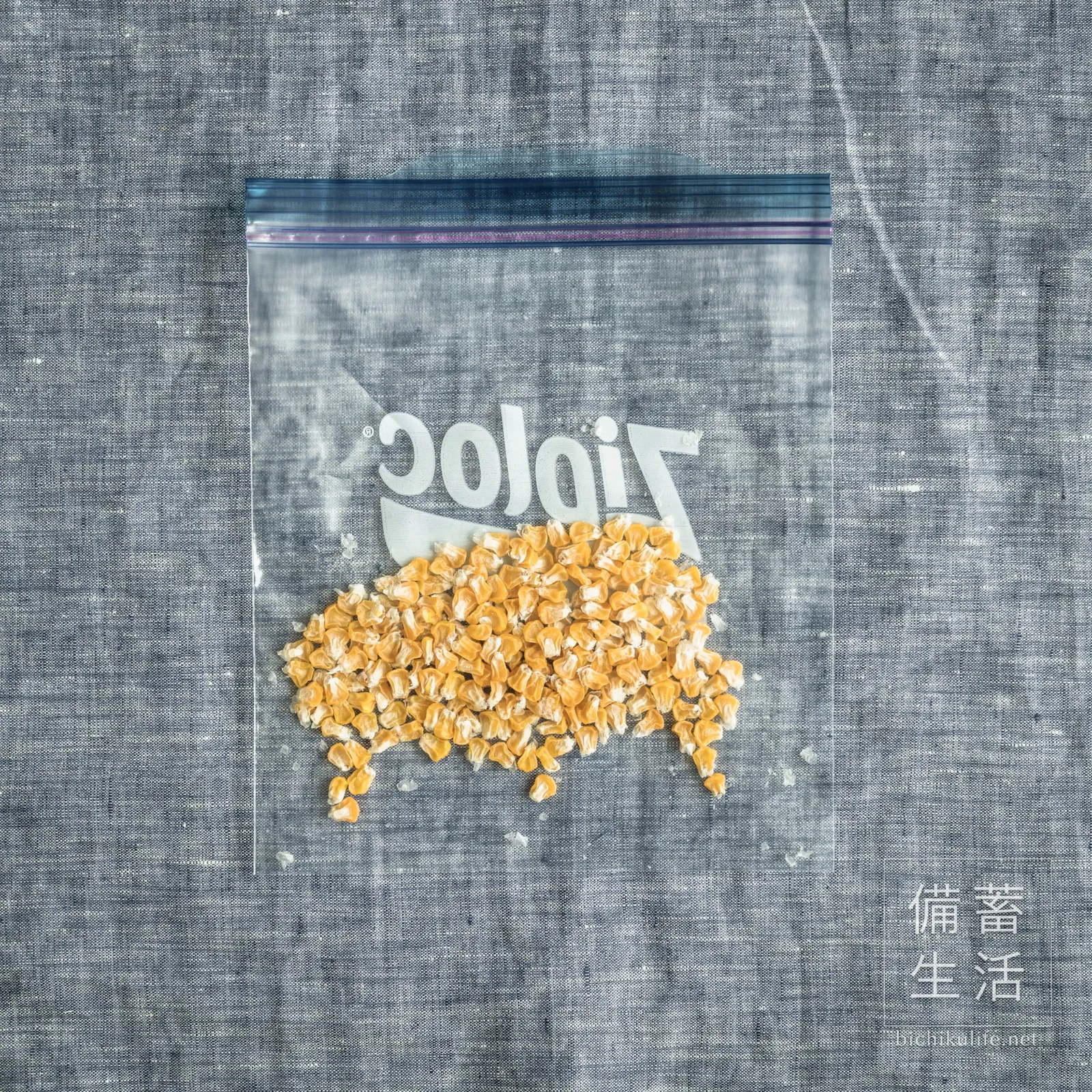
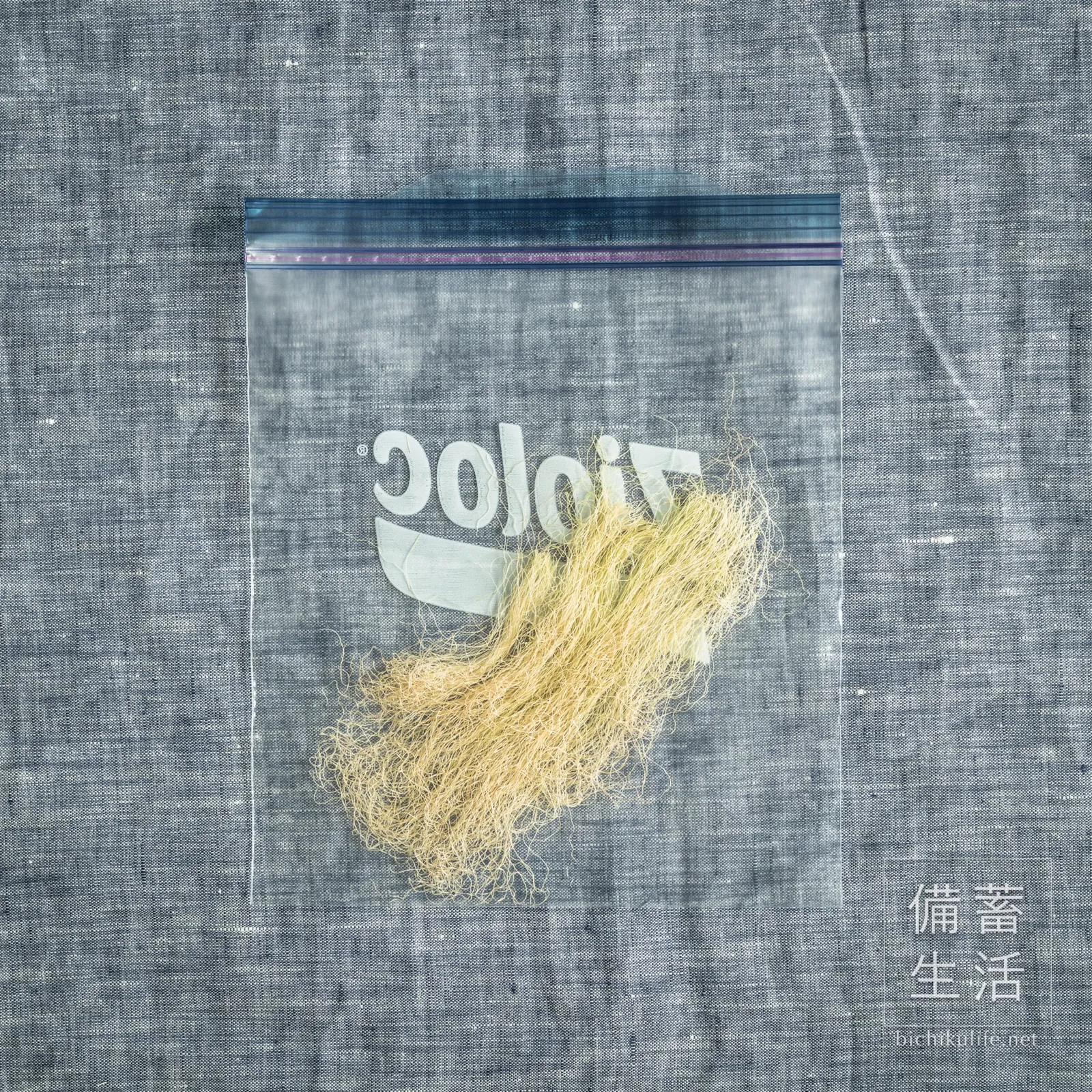
- Kernels: Put completely dry kernels in a bag or airtight container with a desiccant, and keep somewhere cool and out of direct sun for about 1 month. In humid summer weather, keep them in the fridge. Frozen, they keep 2–3 months.
- Silk: Put completely crisp silk in an airtight container with a desiccant. About 3 months at room temperature.
Fuzzy white or green growth, black spots or a bad smell are signs of mold or spoilage. Don’t eat it; throw it away. More in How to Store Dried Vegetables.
Rehydrating and using it
- Corn rice: Rinse 2–3 tbsp of dried corn and add it to 180 ml (¾ cup) of rice in the rice cooker. That’s all it takes for sweet corn rice.
- Soups: Add straight to corn soup or chowder and simmer.
- Rehydrate: For salads or kakiage (vegetable tempura fritters), soak in water for 1–2 hours, then boil briefly.