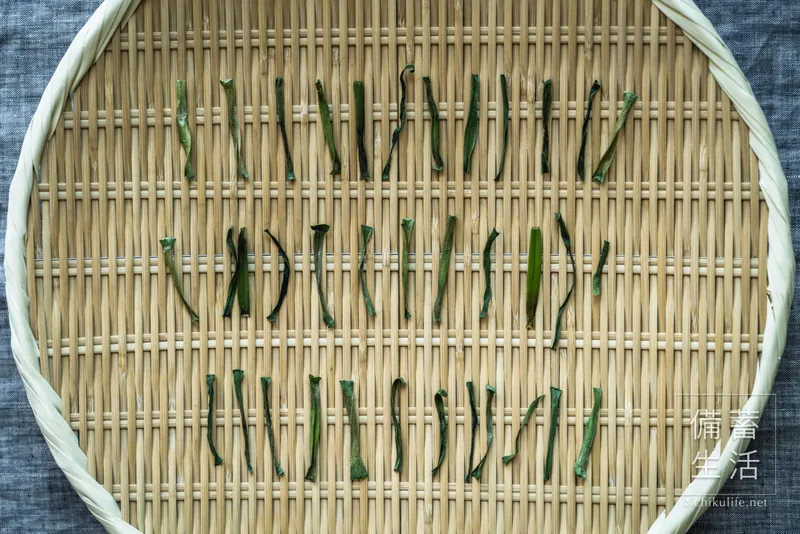
Leafy greens
Dried KomatsunaBlanch, Then Dry: Drying Time and Storage
Komatsuna, sometimes called Japanese mustard spinach, is a leafy green from the cabbage family. It has little bitterness and a mild taste, so it’s easy to use dried, in Japanese, Western or Chinese cooking alike. Outside Japan, look for it at Asian grocery stores. Young bok choy or yu choy are reasonable substitutes.
Leafy greens are not suited to semi-drying. If some water is left in them, they spoil quickly, so dry them until completely crisp.
| Drying time | Storage | |
|---|---|---|
| Dry | 2–3 days | 1 month at room temperature |
Drying times assume drying during the day in sunny weather and bringing them in at night.
How to dry komatsuna
- Trim the roots: Cut off the roots and wash away the soil collected at the base.
- Blanch in salted water: Add salt to boiling water and blanch for about 30 seconds. Blanching keeps the color bright and speeds up drying.
- Squeeze out the water: Cool in cold water, squeeze hard by hand, then wrap in paper towels to remove even more water.
- Spread out and dry: Spread the leaves out on a basket without overlapping. Put them somewhere sunny and breezy, and bring them in by evening.
Where and when to dry is covered in How to Dry Vegetables, and tools in Tools for Drying Vegetables.
When it’s done
Dry (2–3 days)
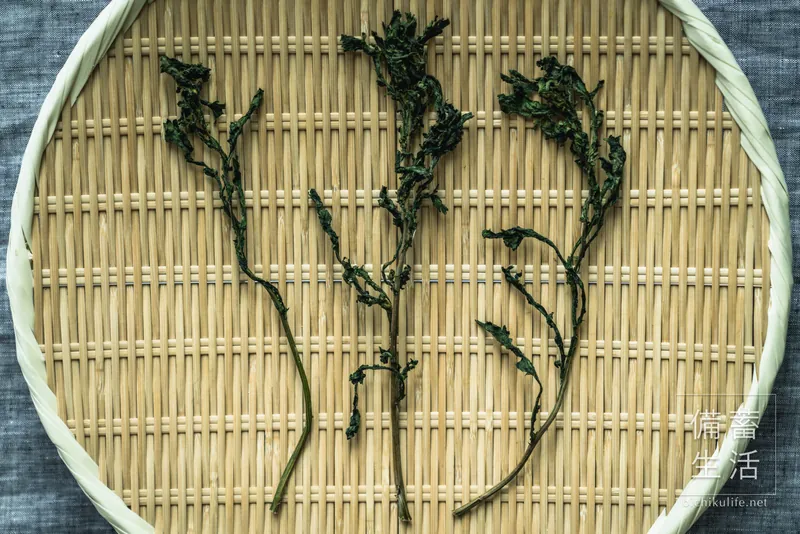
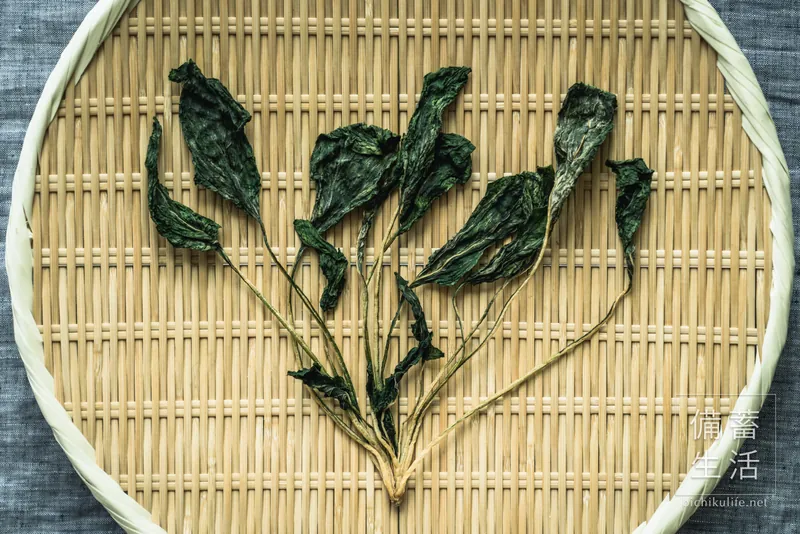
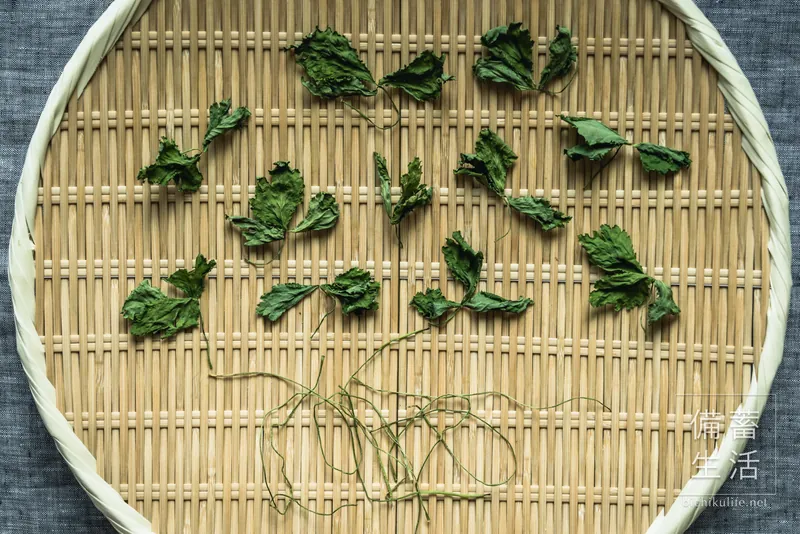
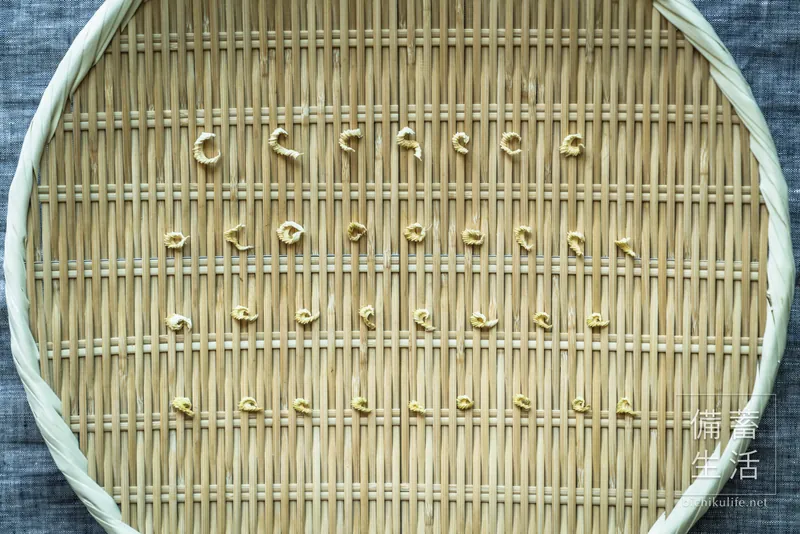
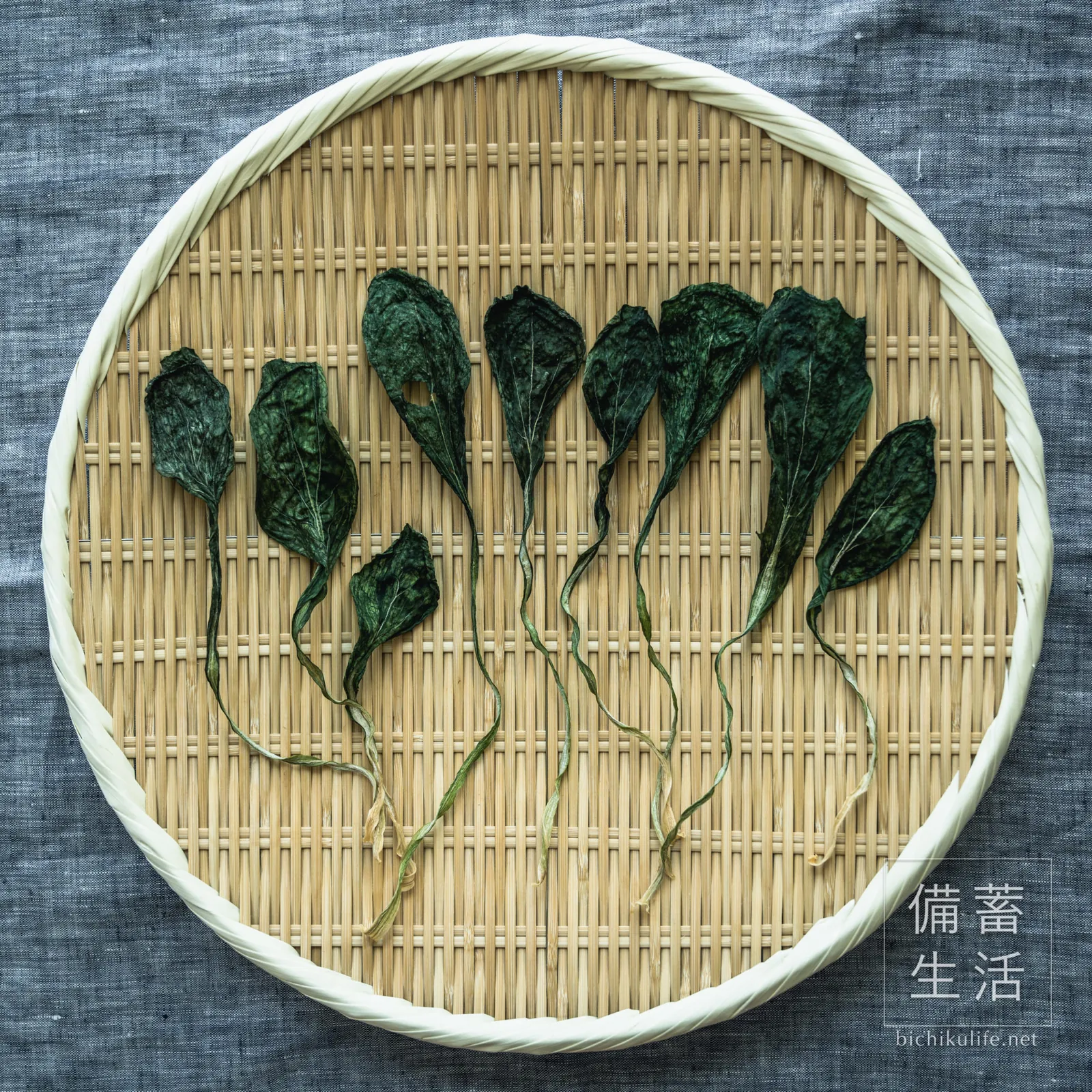
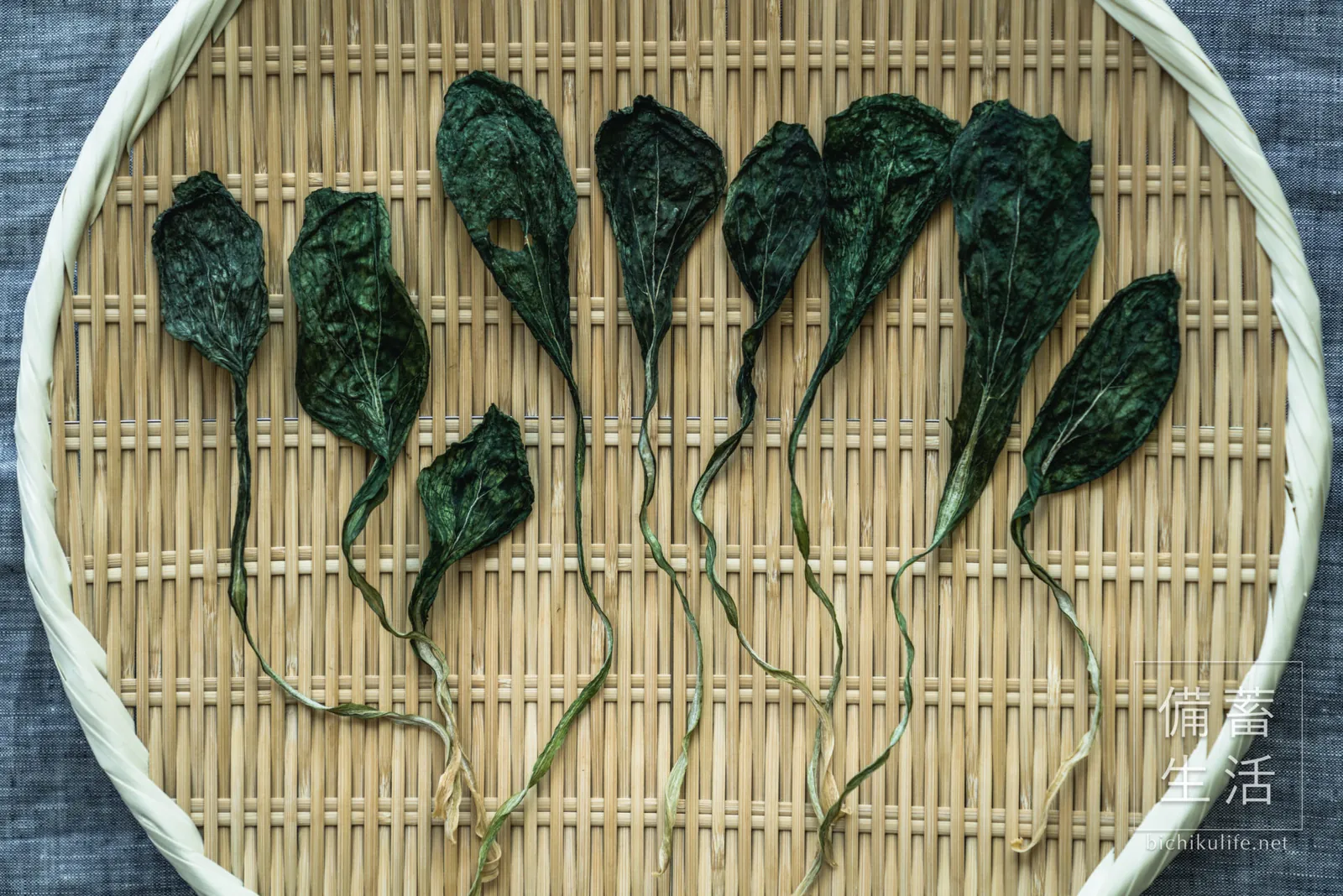
It’s done when the leaves have curled, turned dark green, and crumble when rubbed between your fingers. The thick stems dry last, so snap one to check.
Day by day
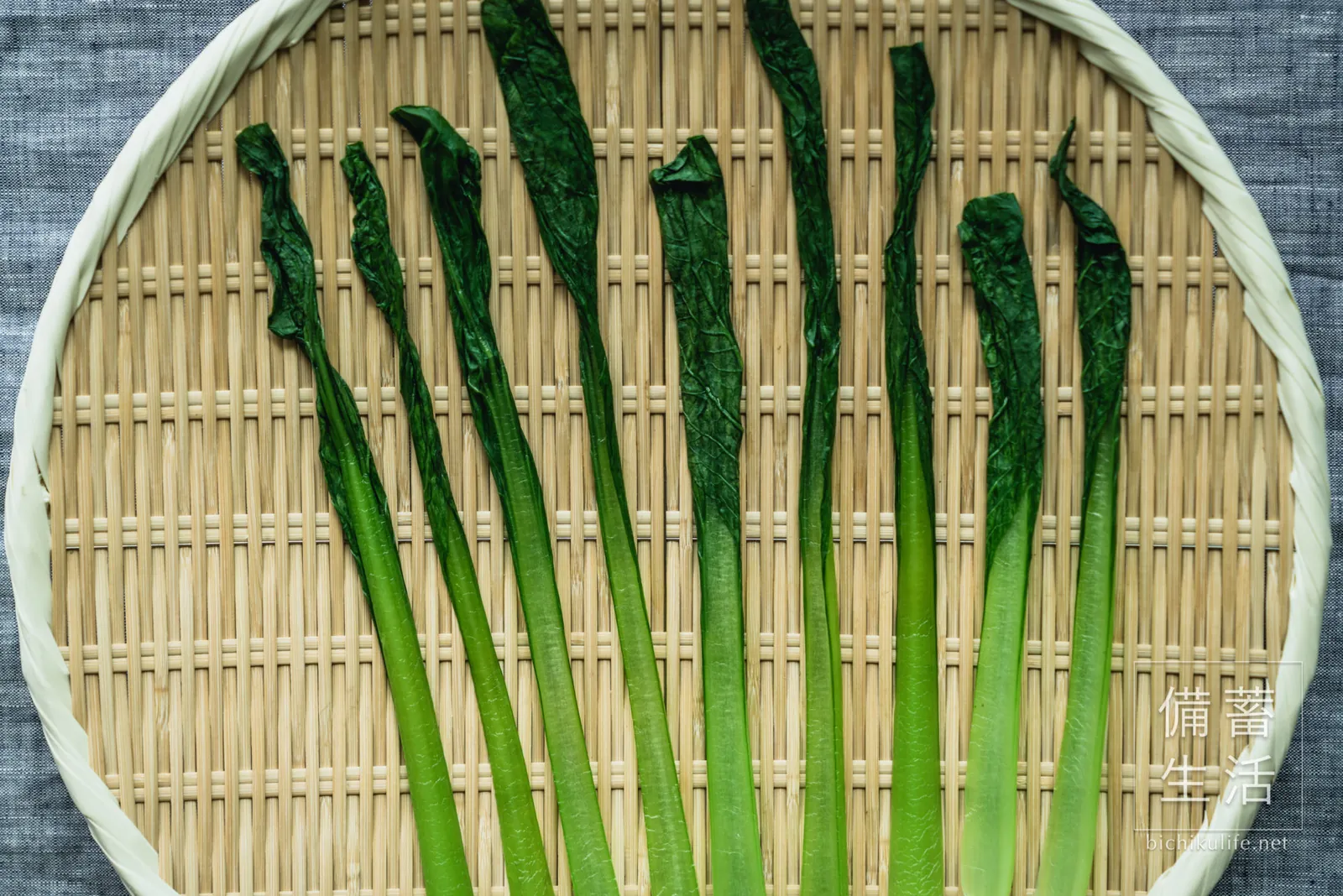
Before drying
Day 1
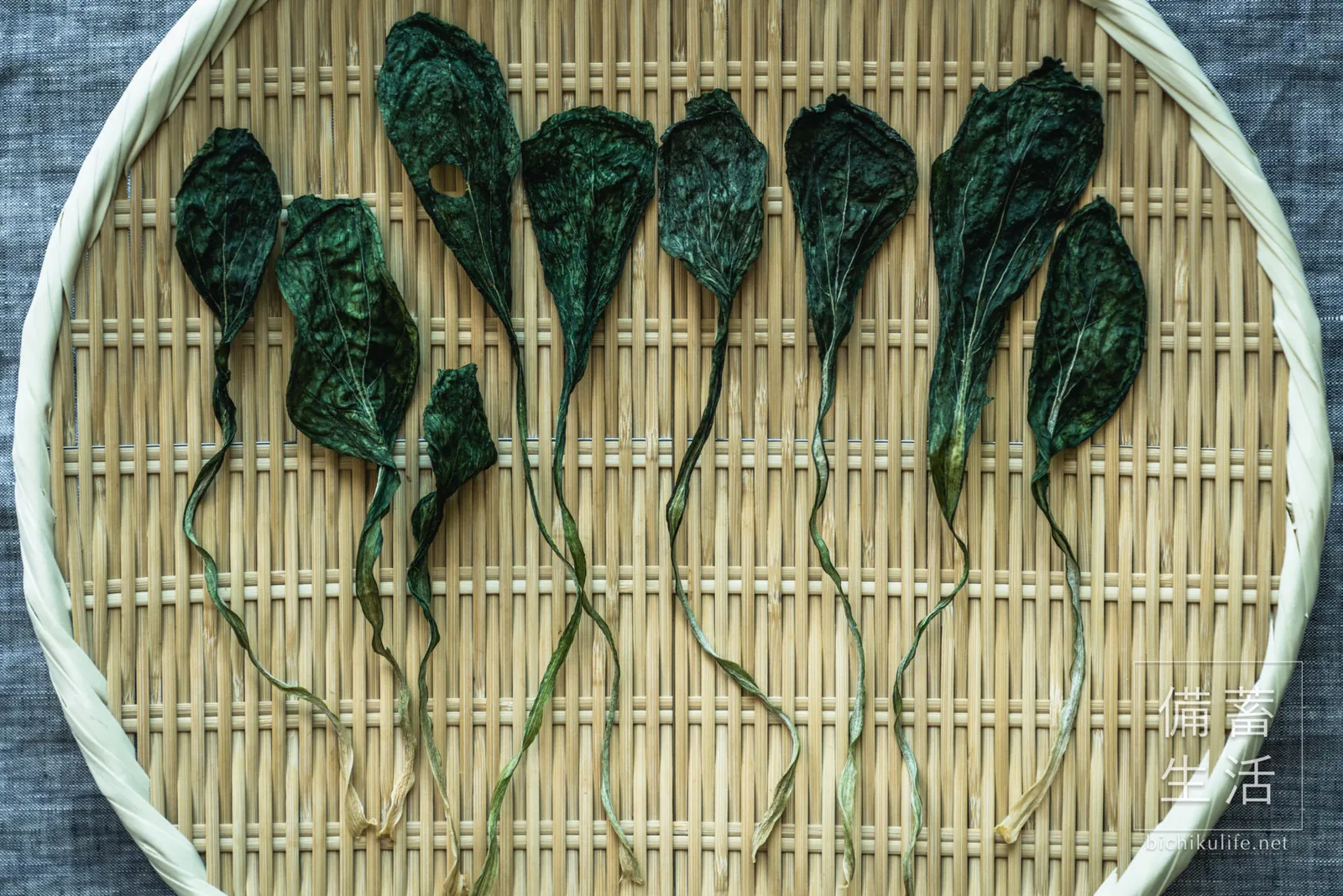
Day 2
Storage
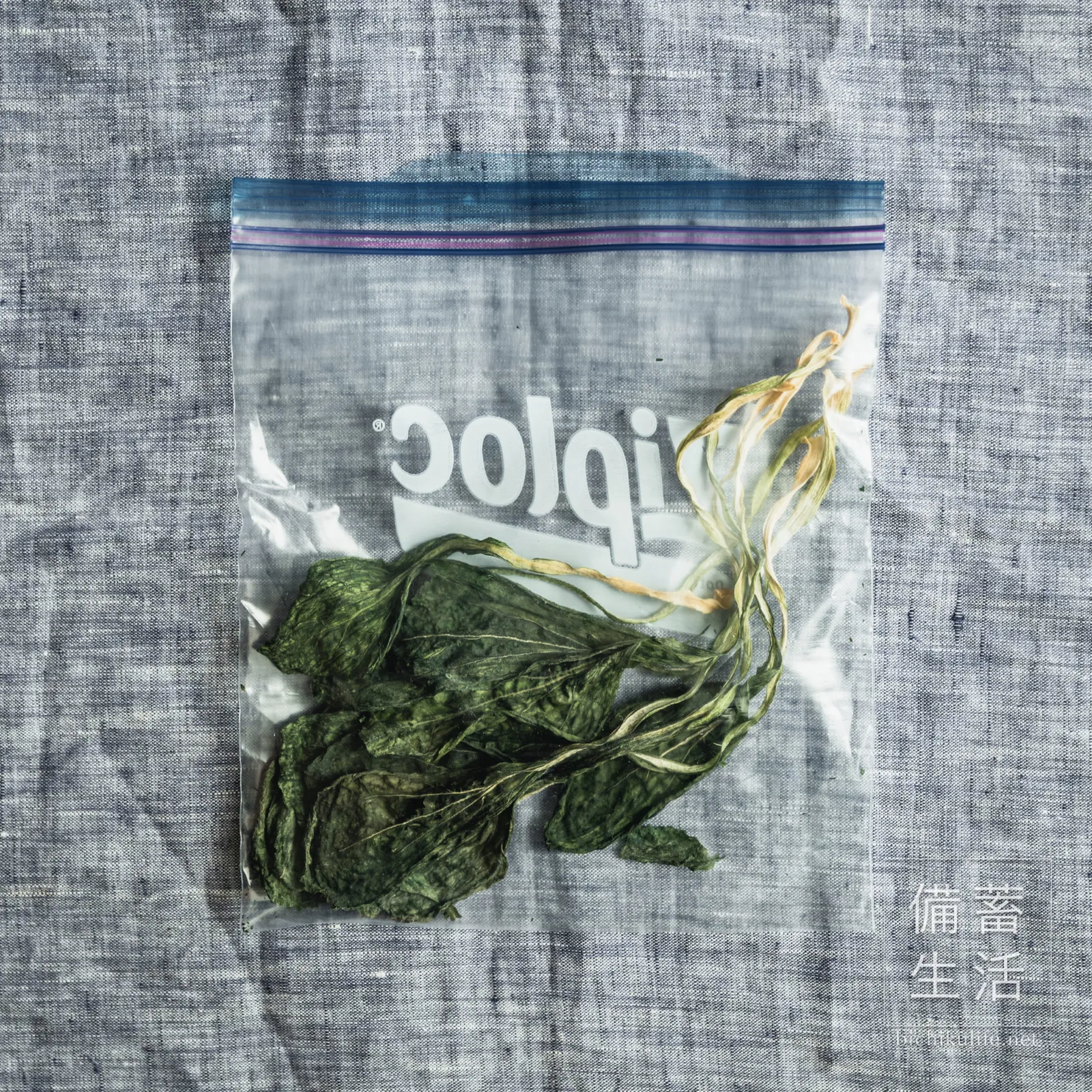
- Room temperature: Put completely crisp komatsuna in a bag or airtight container with a desiccant, and keep somewhere cool and out of direct sun for about 1 month. Press all the air out of the bag.
- Frozen: To keep it longer, freeze it for 2–3 months.
If it goes limp from moisture during storage, dry it again. Fuzzy white or green growth, black spots or a bad smell are signs of mold or spoilage; throw it away. More in How to Store Dried Vegetables.
How to use it
- Use it dry: Add straight to miso soup, soups, nibitashi (simmered in light broth) and udon.
- Rehydrate: For stir-fries or dressed side dishes, soak in water for 5–10 minutes and squeeze. It’s less watery than fresh, and picks up the flavors well in stir-fries.
- Rice seasoning: Crumble by hand and mix with small dried fish (jako), sesame and bonito flakes for a komatsuna furikake.