Fruiting vegetables
Dried Snow PeasDrying Time, Storage and How to Use Them
Snow peas are a spring vegetable.
Dried snow peas release a gently sweet broth. Added to clear soups, simmered dishes or miso soup, they make the whole bowl delicious.
| Drying time | Storage | |
|---|---|---|
| Dry | 5 days–1 week | 2 weeks at room temperature (fridge in humid summer) |
| Semi-dried | Half a day–1 day | 4 days in the fridge |
Drying times assume drying during the day in sunny weather and bringing them in at night.
How to dry snow peas
- Wash: Rinse quickly and pat dry well with paper towels.
- String them: Snap the stem end and pull the string down the side. Do the same on the other side.
- Lay out and dry: Spread on a basket without overlapping, somewhere sunny and breezy. Turn about once a day and bring in by evening.
Where and when to dry is covered in How to Dry Vegetables, and tools in Tools for Drying Vegetables.
When they’re done
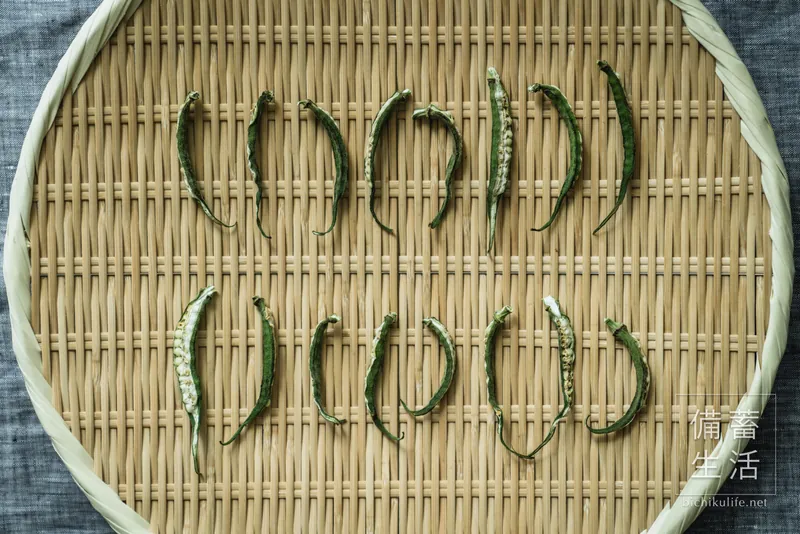
Dry (5 days–1 week)
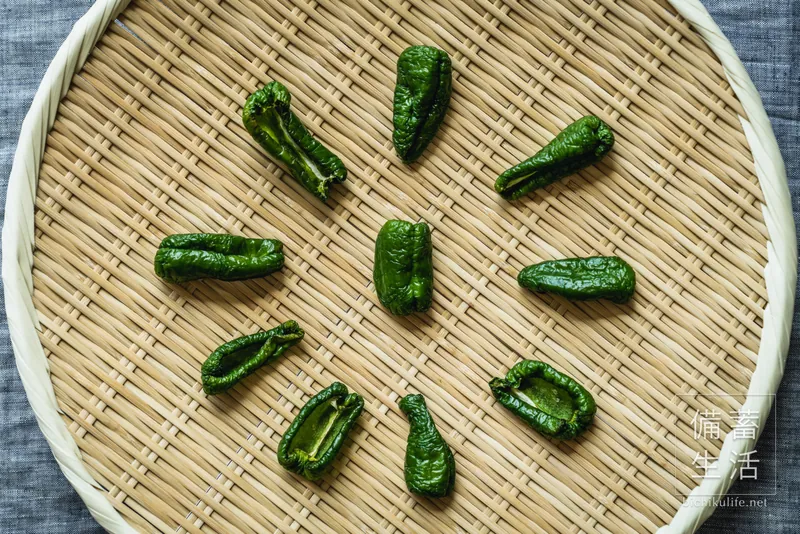
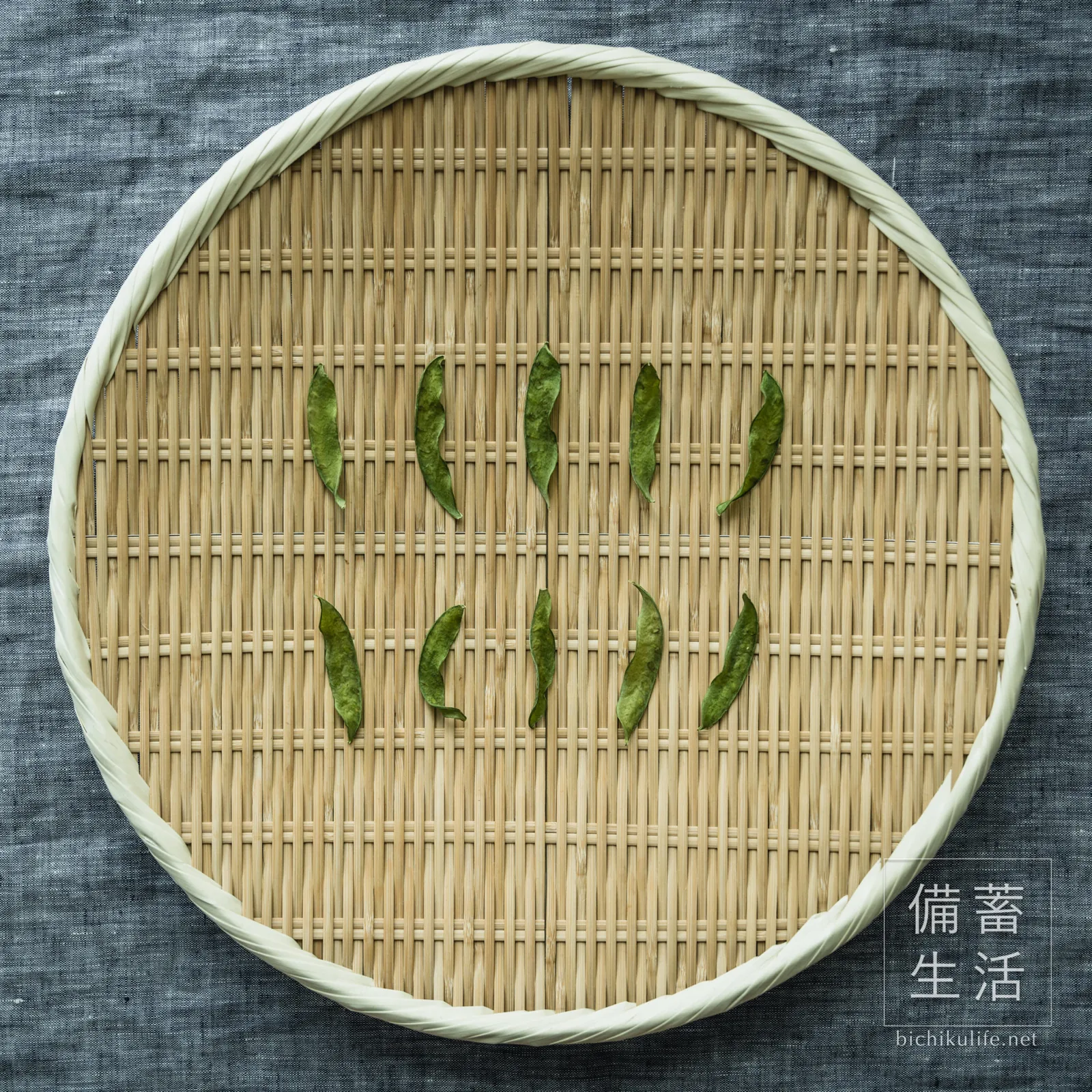
They’re done when the pods have shrunk thin, turned a dull green, and even the peas inside are hard. The pods dry quickly, but the bumps of the peas dry last, so pinch them to check.
Semi-dried (half a day–1 day)
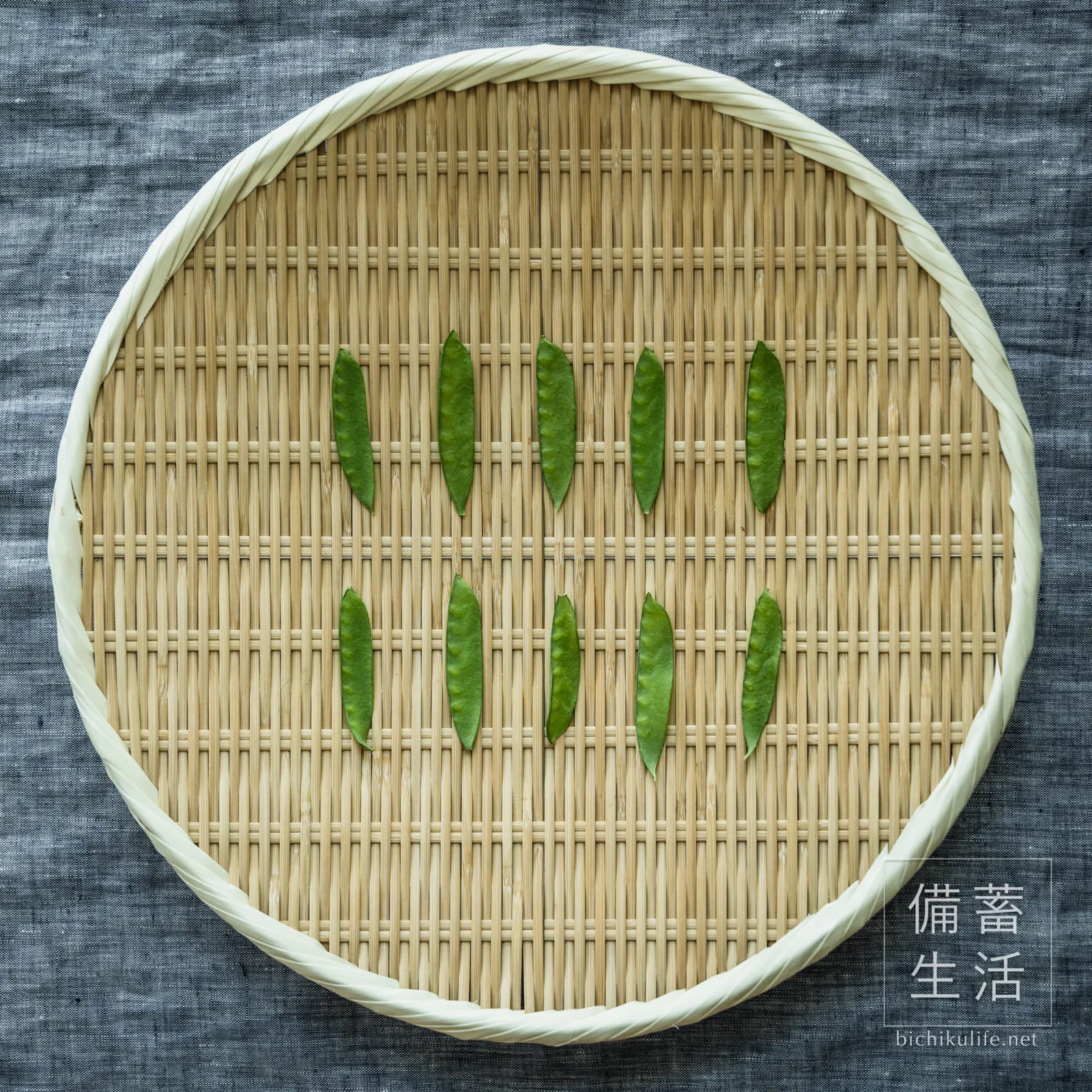
The surface of the pods is dry and they’re limp. Use them as is in stir-fries or simmered with egg.
Day by day
Before drying
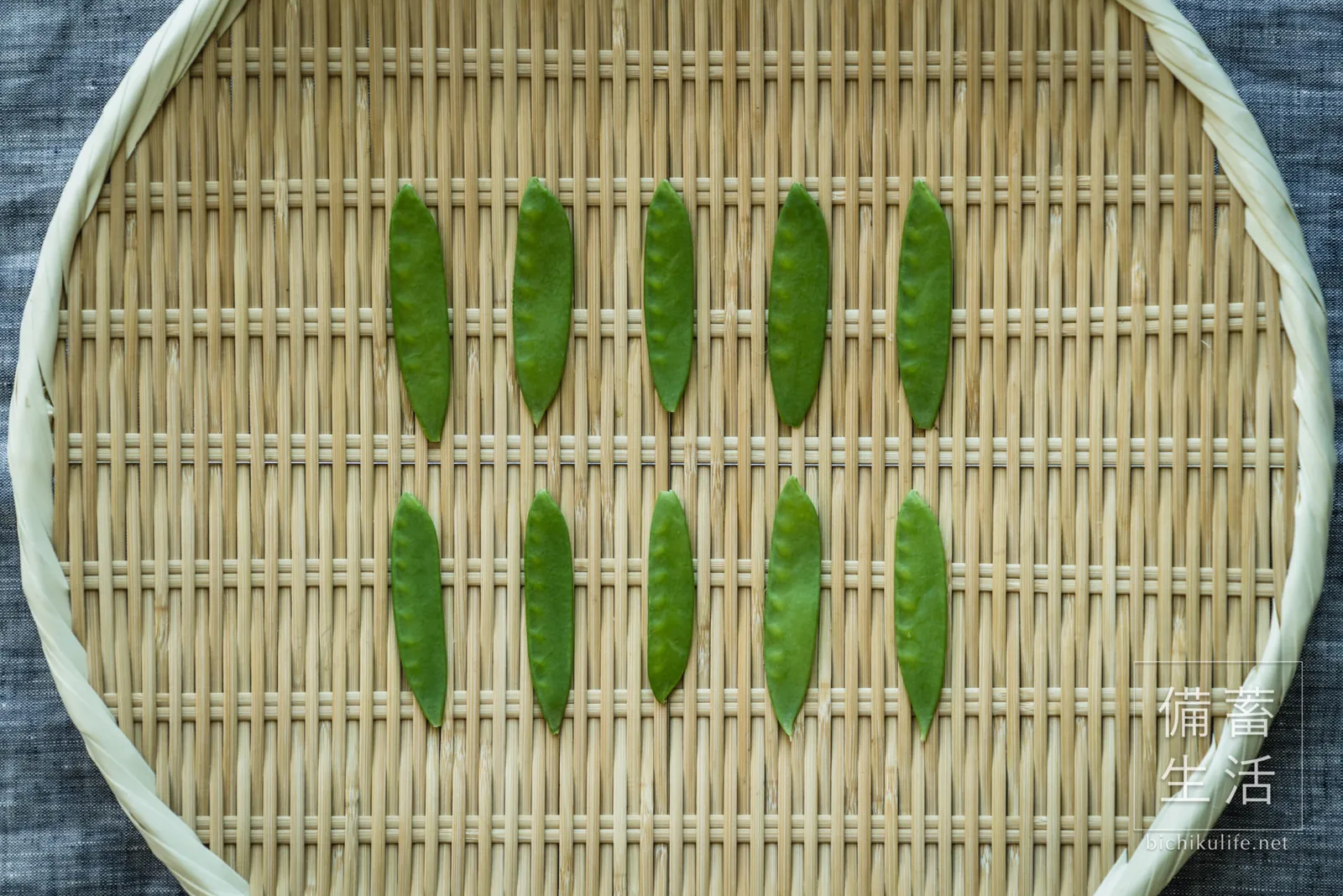
Day 1
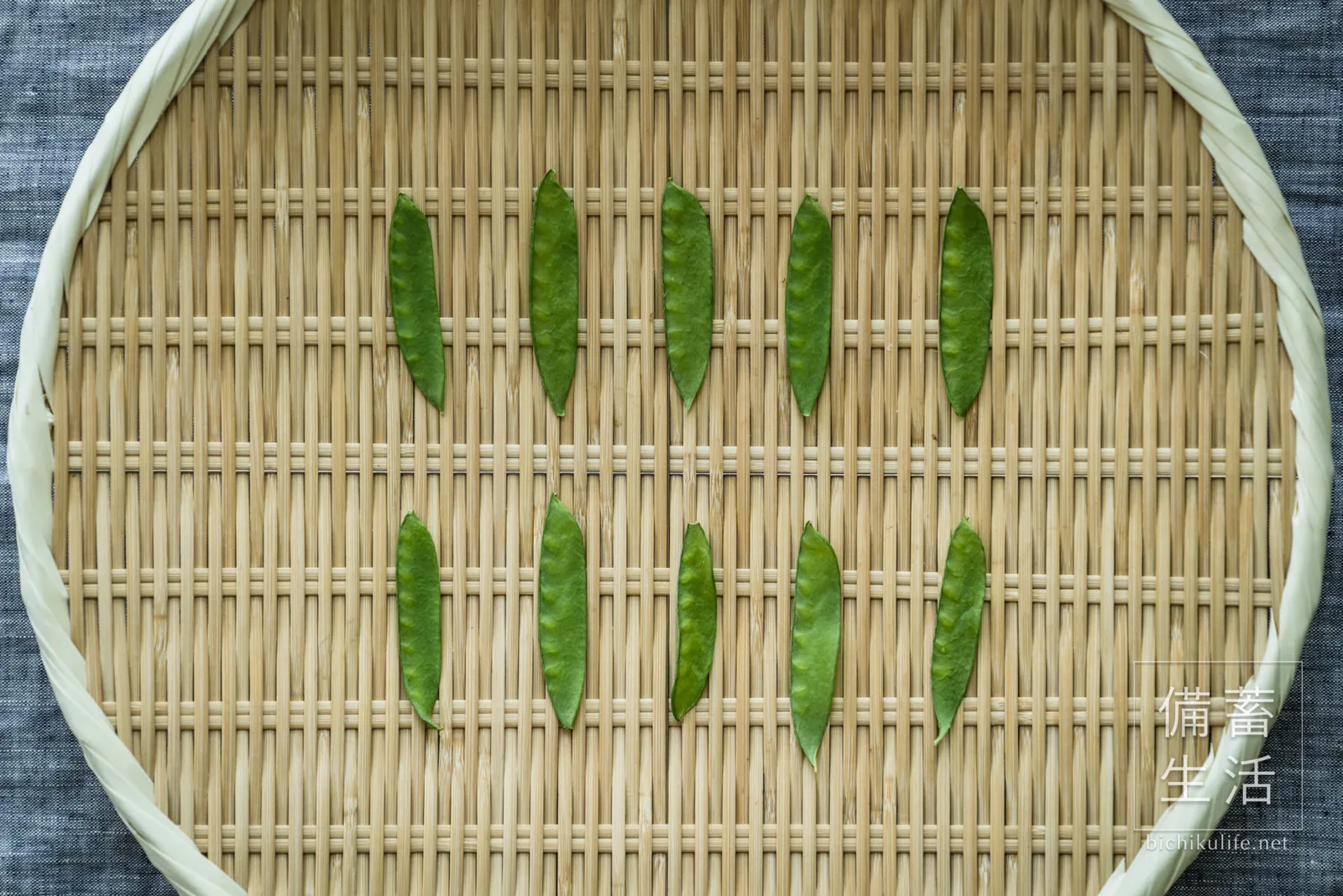
Day 2
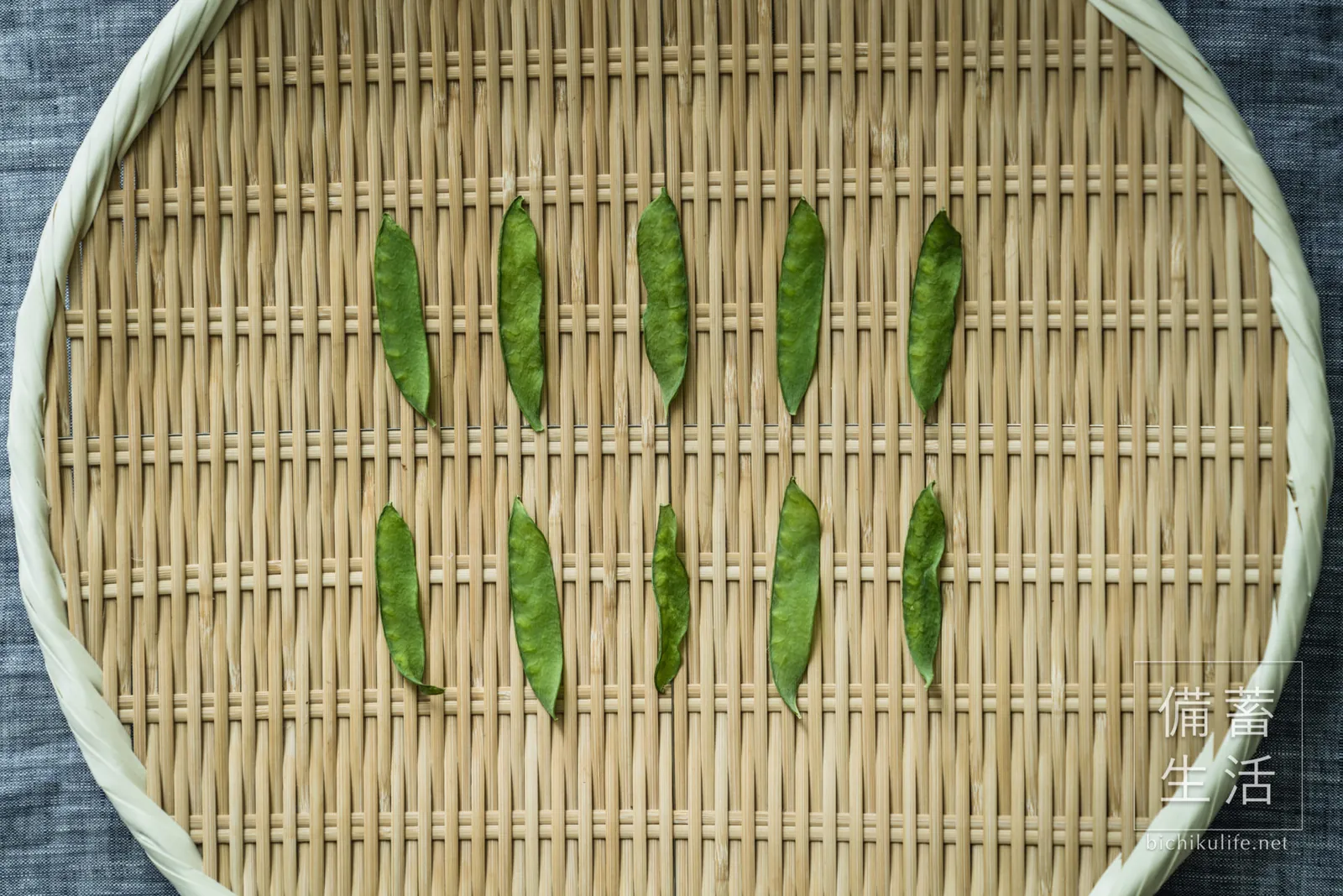
Day 3
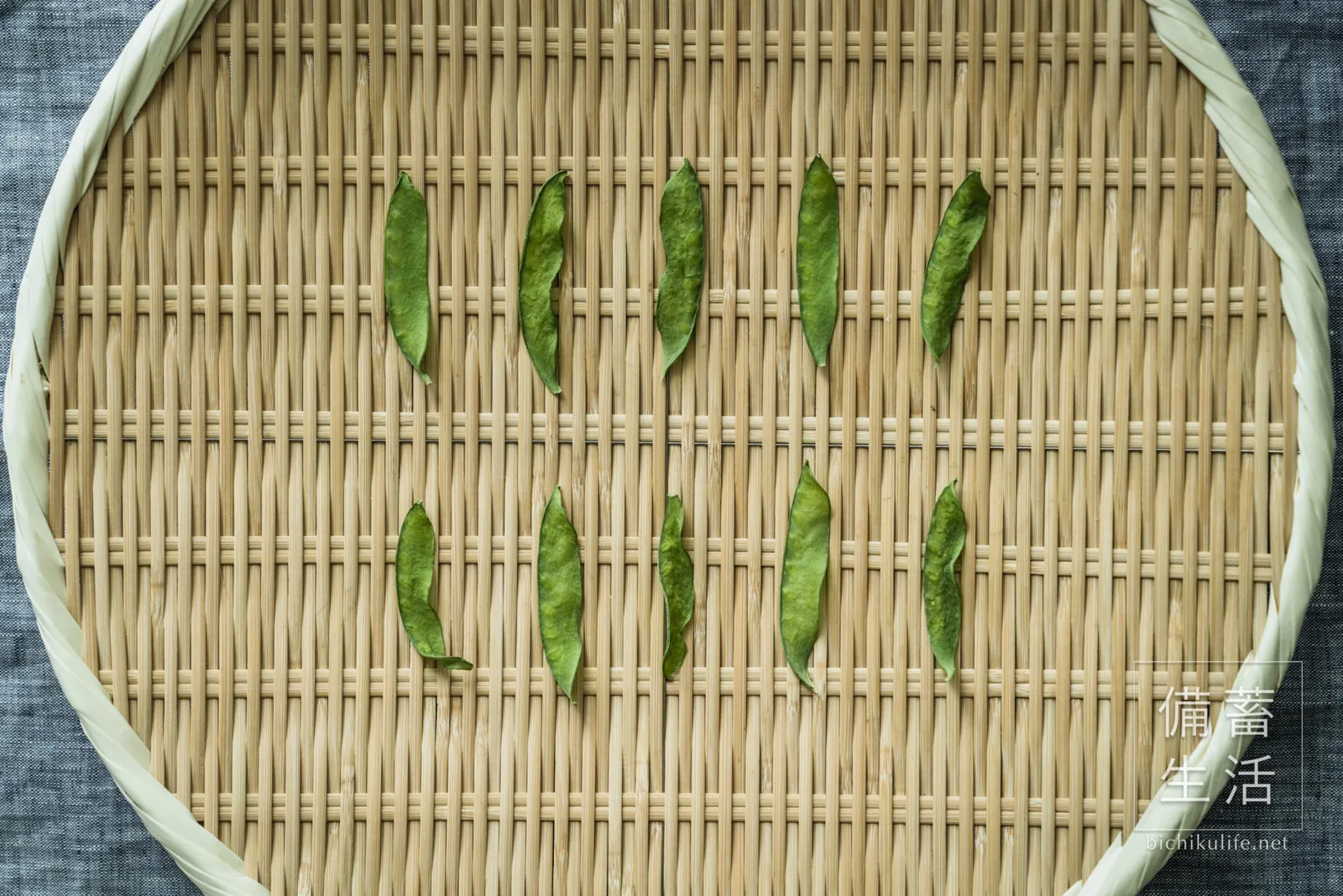
Day 4
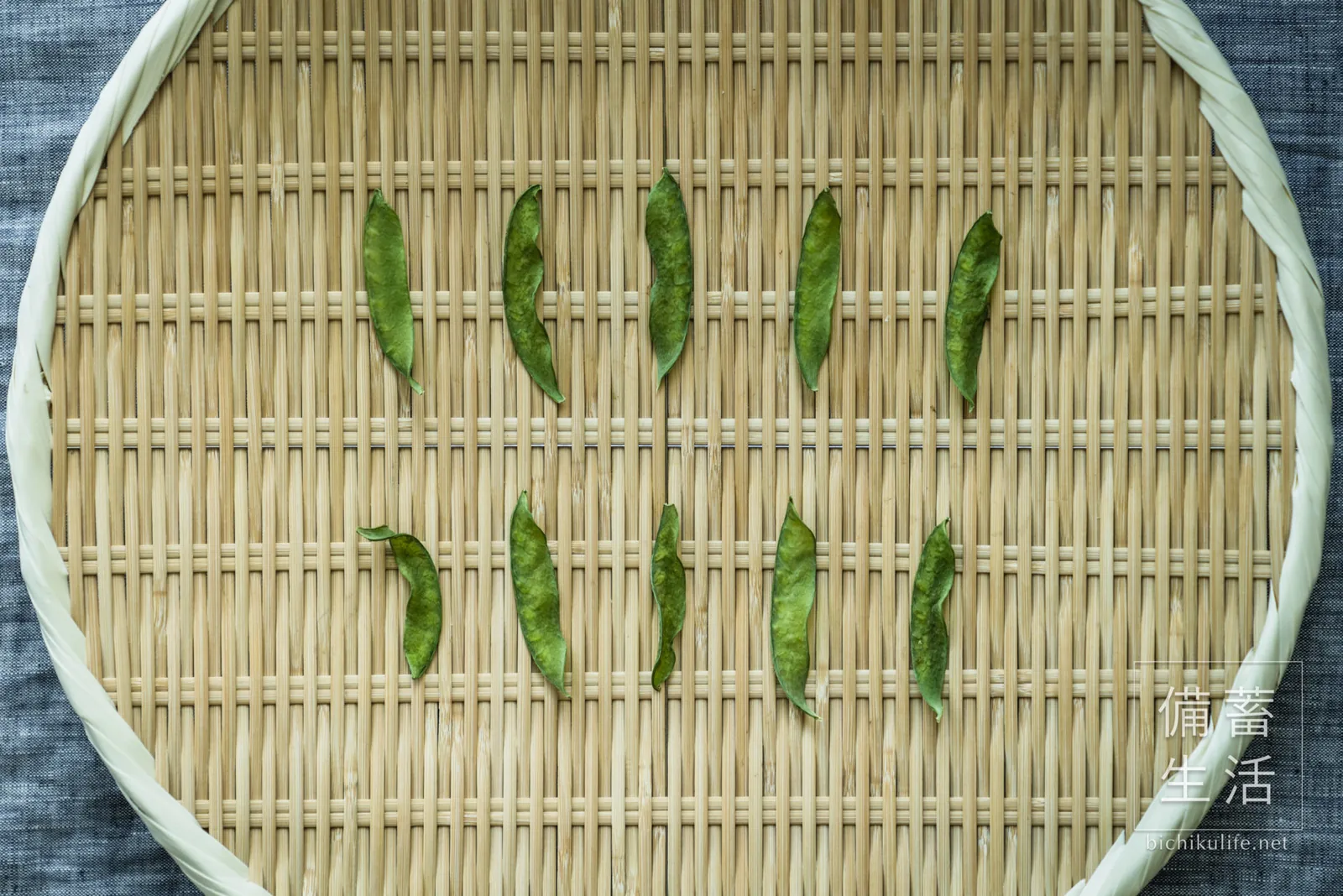
Day 5
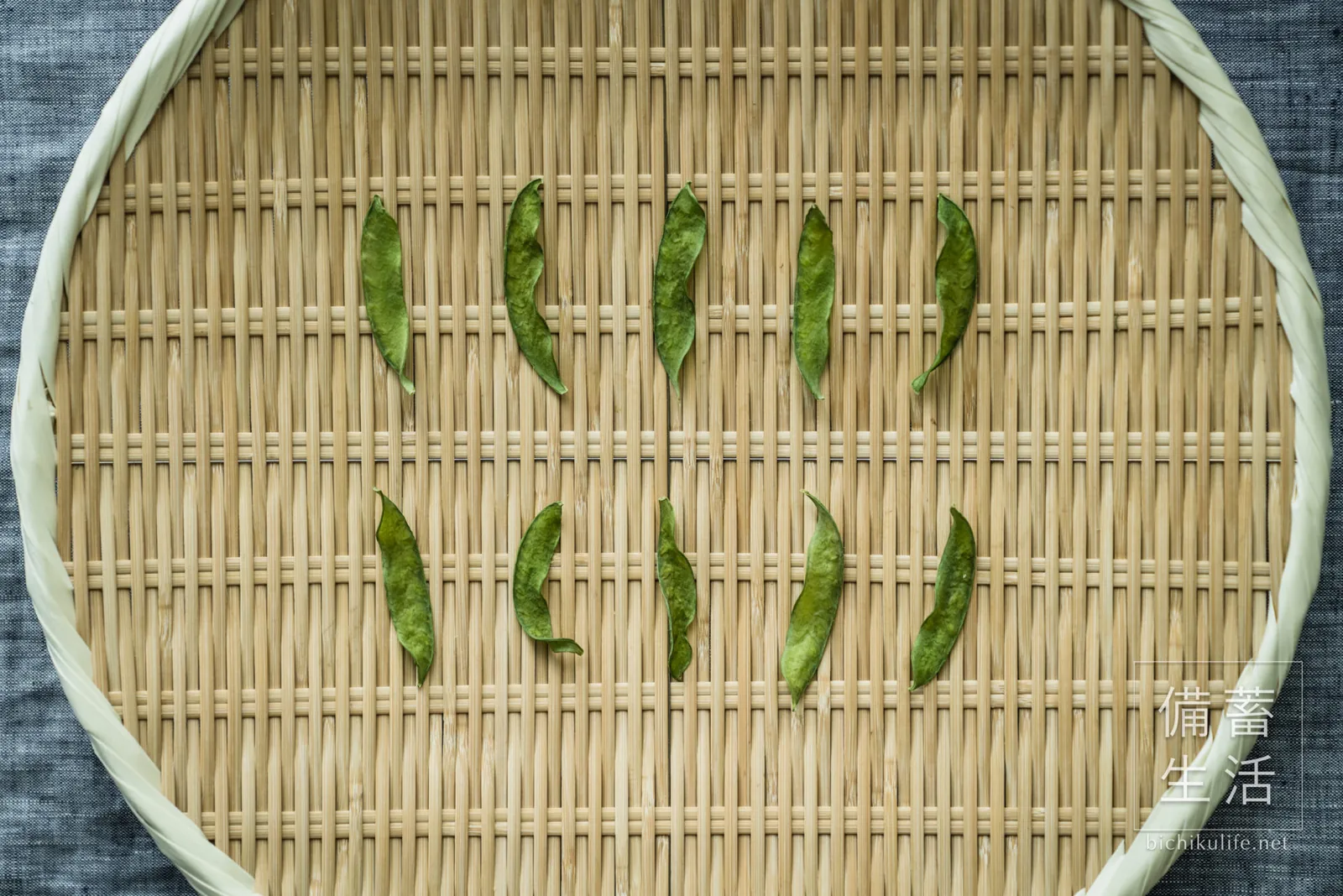
Day 6
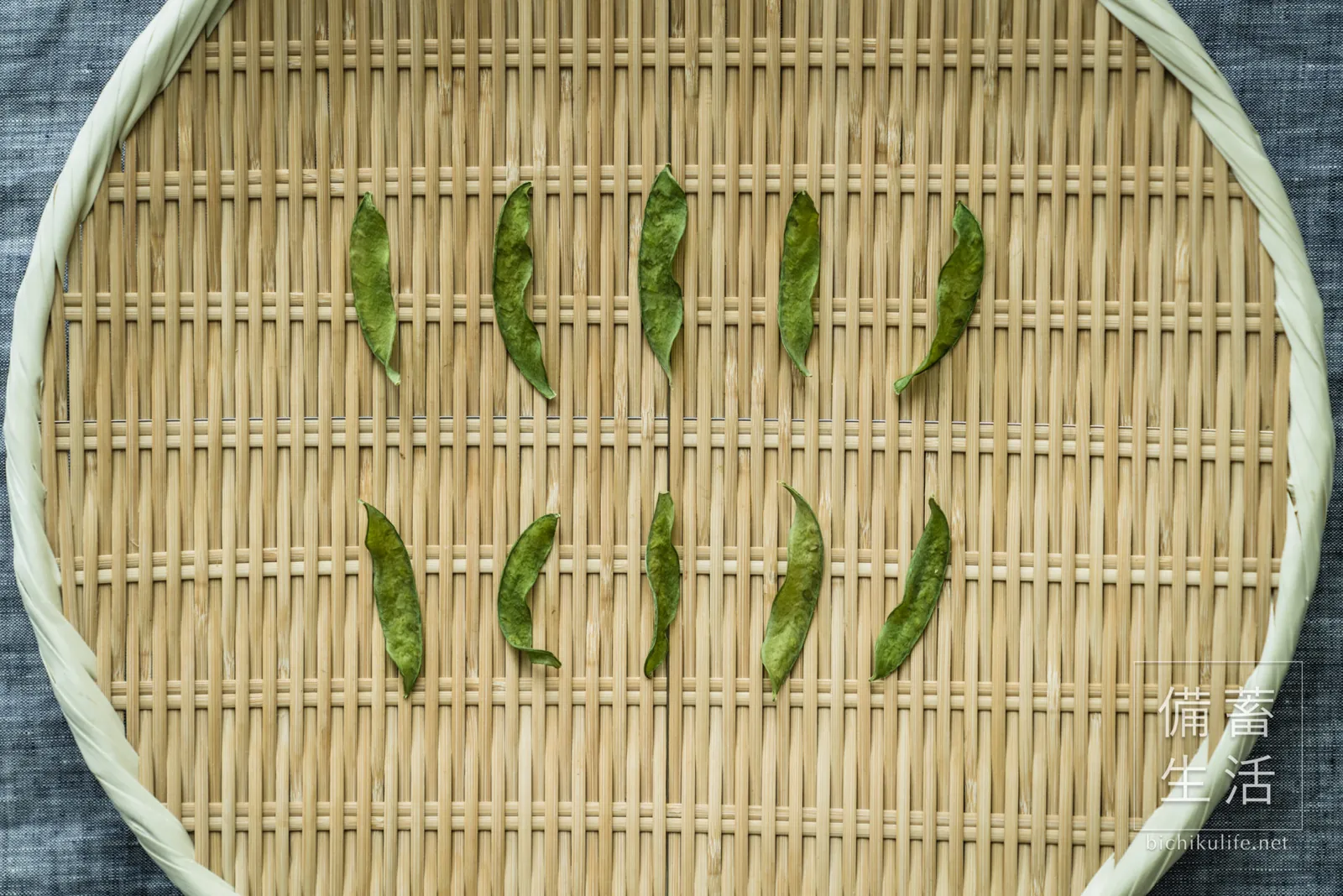
Storage
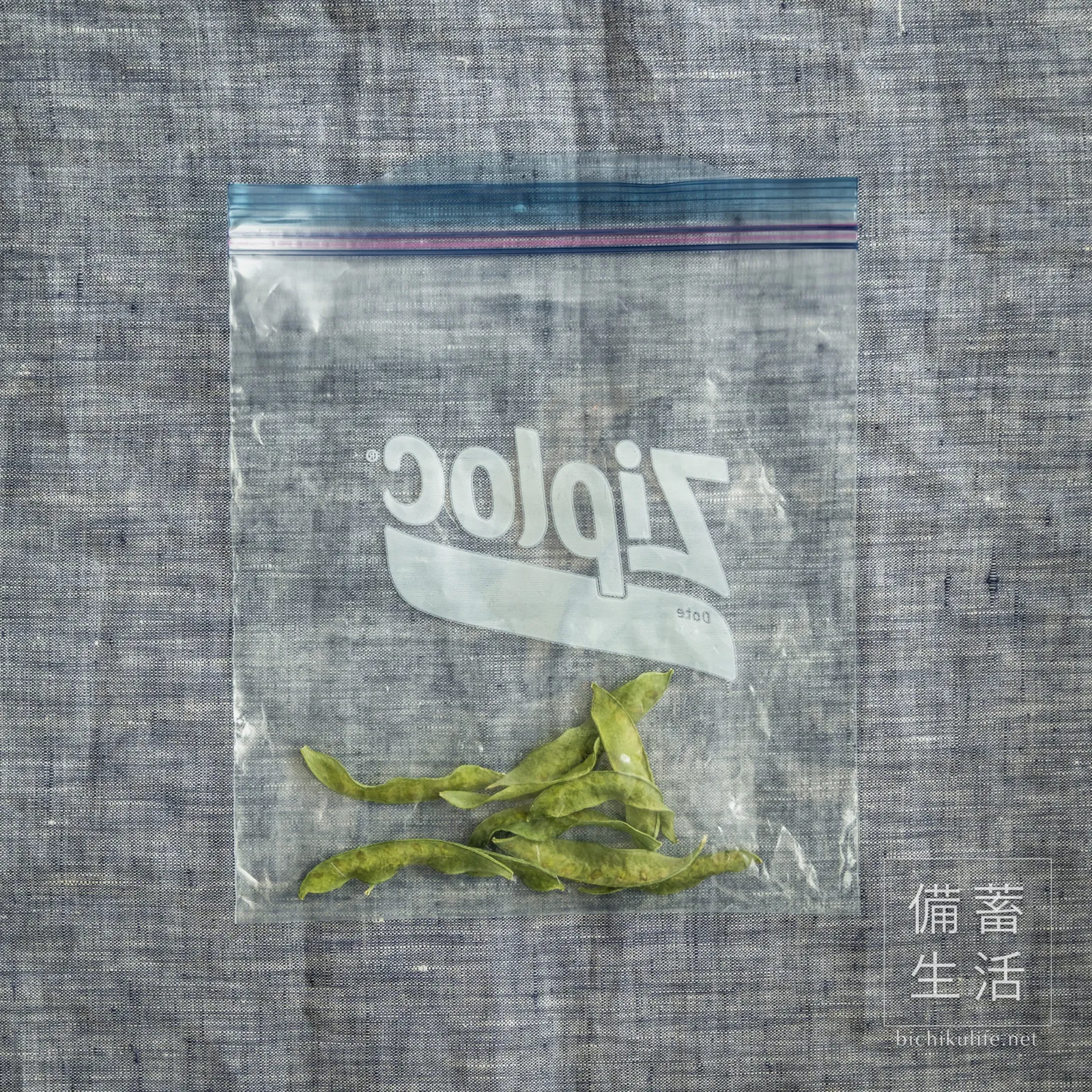
- Dry: Put completely dry snow peas in a bag or airtight container with a desiccant, and keep somewhere cool and out of direct sun for about 2 weeks. In humid summer weather, keep them in the fridge.
- Semi-dried: Keep in a bag in the fridge and use within about 4 days.
- Frozen: Both dry and semi-dried can be frozen for about 1 month.
Fuzzy white or green growth, black spots or a bad smell are signs of mold or spoilage. Don’t eat them; throw them away. More in How to Store Dried Vegetables.
Rehydrating and using them
- Use them dry: Rinse quickly and add straight to clear soup, miso soup, simmered dishes and soups. They soften as they cook and release their broth.
- Rehydrate: For dressed side dishes and stir-fries, soak in water for about 10 minutes, then blanch briefly.
- Good in: Clear soup, chikuzenni (simmered chicken and root vegetables), simmered with egg, as a colorful topping for chirashi sushi.