Fruiting vegetables
Dried Kabocha SquashDrying Time, Storage, and Drying the Seeds for a Snack
Kabocha is a Japanese winter squash with dense, sweet flesh, sold in many supermarkets outside Japan; buttercup squash is similar. Dried, it loses water and its sweetness becomes much more concentrated, and it holds its shape better in simmered dishes.
A whole kabocha is often too much to use at once. Dry what’s left, and you can use a little at a time. Dry the seeds too, and you can toast them for a nutty snack.
| Drying time | Storage | |
|---|---|---|
| Flesh (dry) | 4–5 days | 2 weeks at room temperature (fridge in humid summer) |
| Seeds (dry) | 4–5 days | 3 weeks at room temperature |
Drying times assume drying during the day in sunny weather and bringing them in at night.
How to dry kabocha
- Remove the seeds and pulp: Scoop out the seeds and stringy pulp with a spoon. Keep the seeds (see “Seeds” below).
- Cut: Leave the skin on and cut into wedges about 8 mm (⅓ in) thick. Kabocha is hard; microwaving it for 1–2 minutes makes it easier to cut.
- Lay out and dry: Spread on a basket without overlapping, somewhere sunny and breezy. Turn about once a day and bring in by evening.
Where and when to dry is covered in How to Dry Vegetables, and tools in Tools for Drying Vegetables.
When it’s done
Dry (4–5 days)
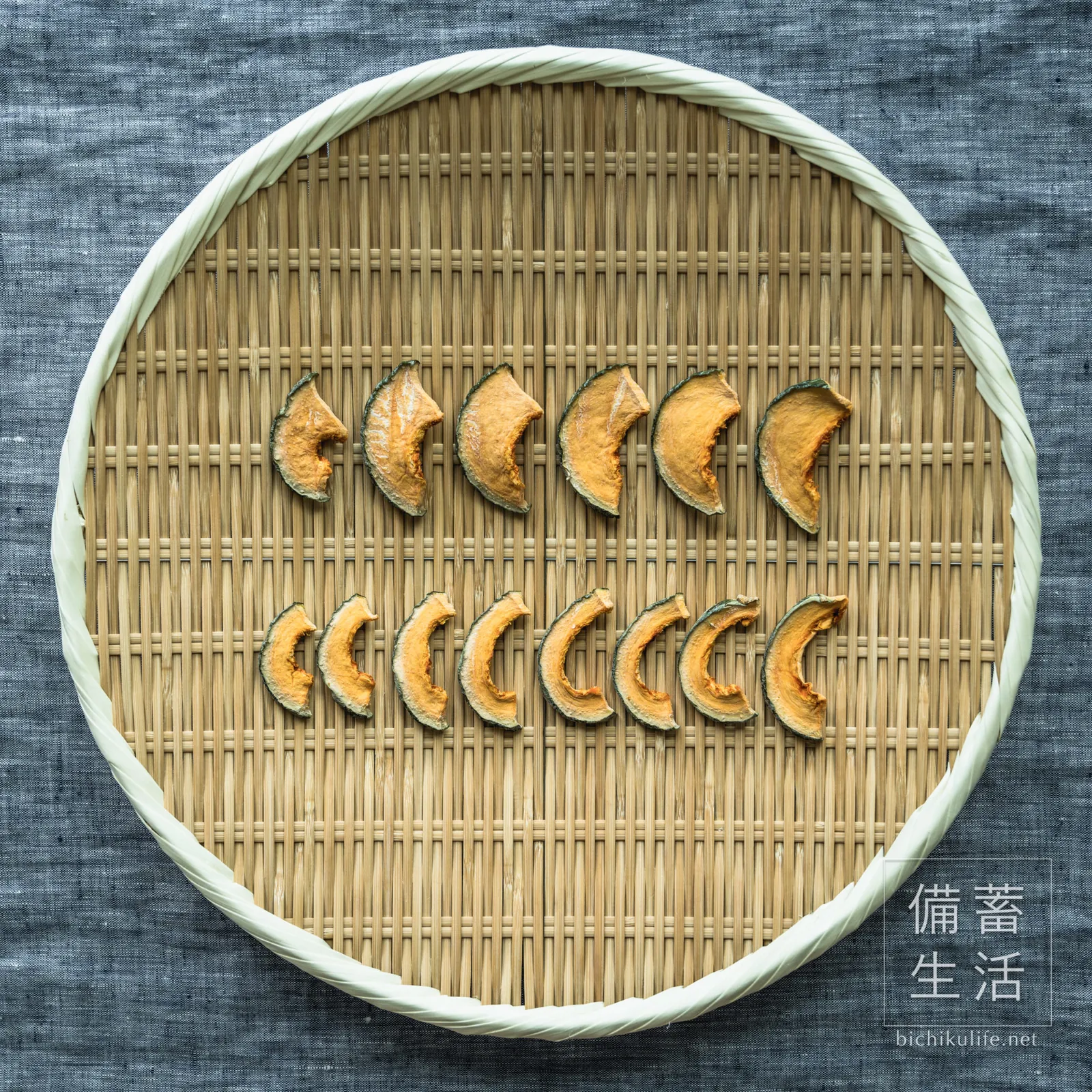
It’s done when the wedges have shrunk, the flesh has turned deep orange, and they’re firm. Kabocha is sugary and the surface tends to get sticky. As long as it still feels springy or moist when pressed, keep drying.
Day by day
Before drying
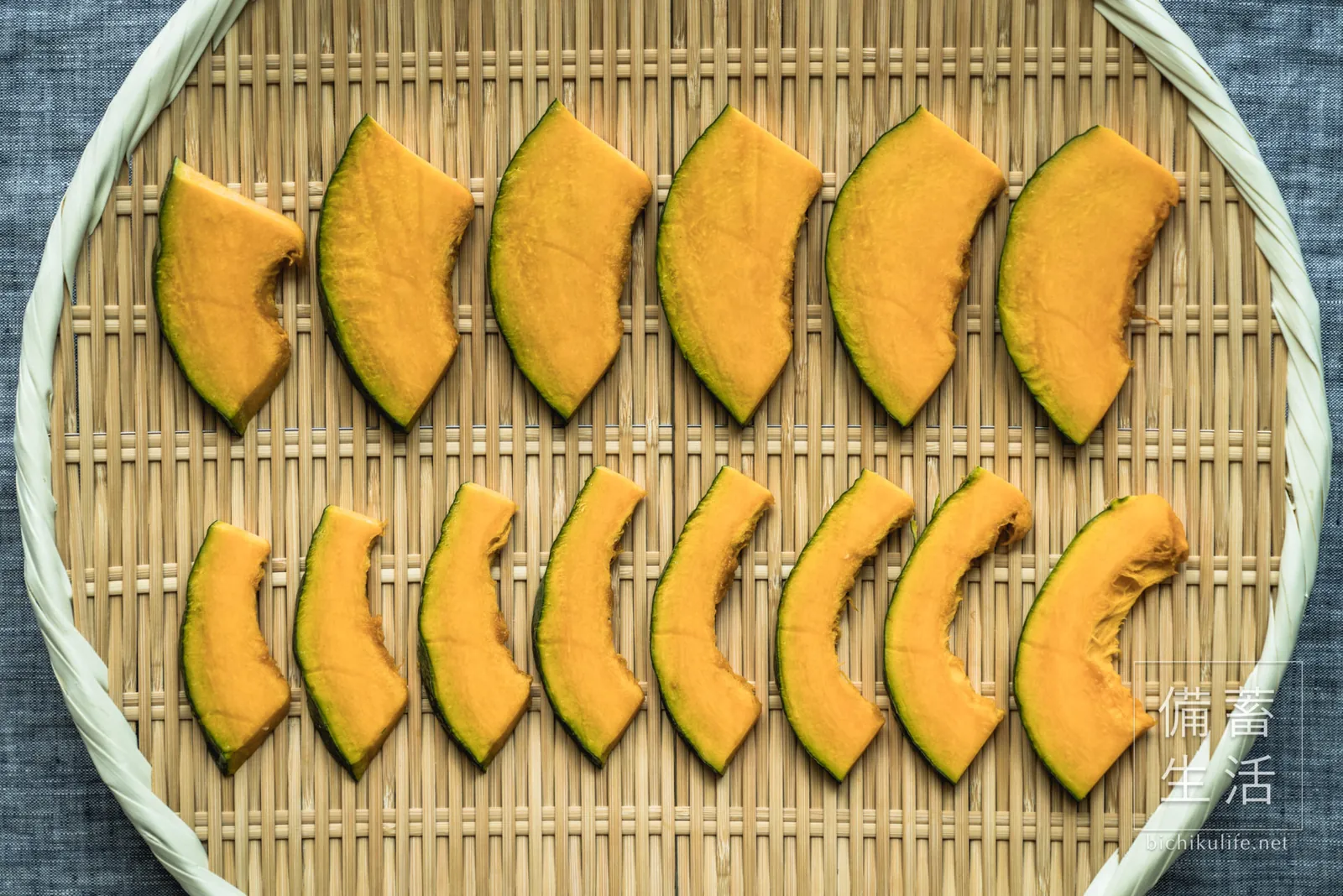
Day 1
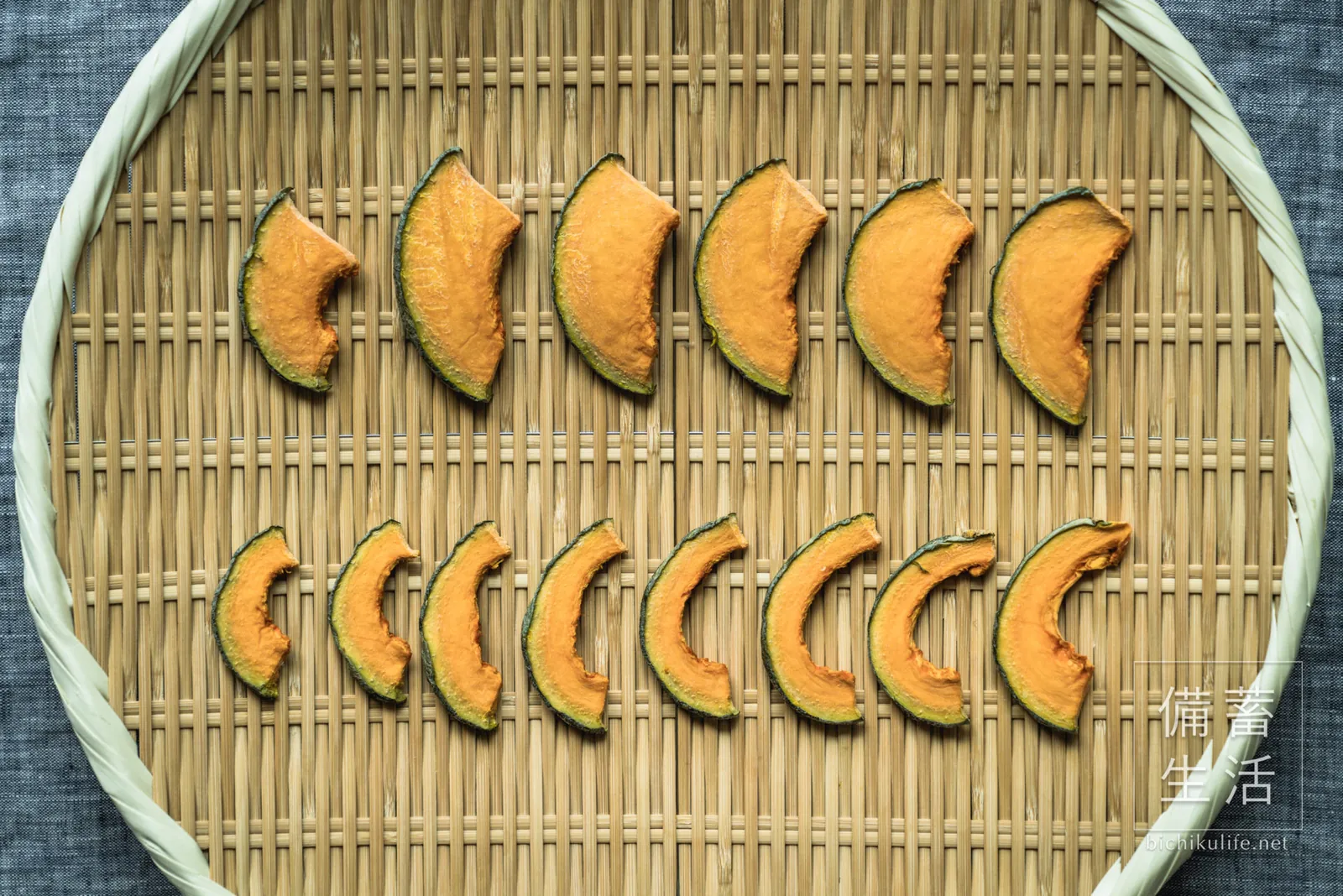
Day 2
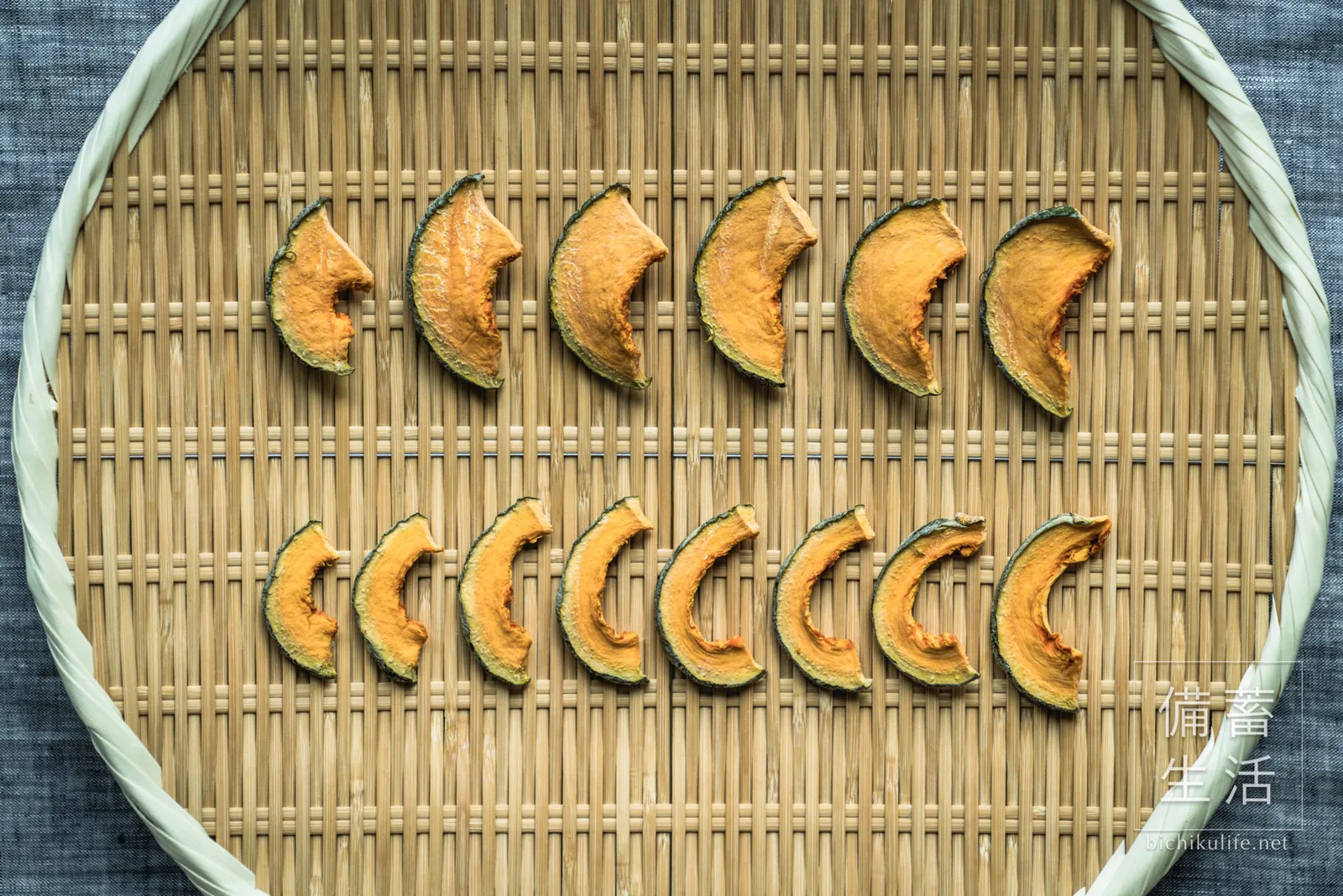
Day 3
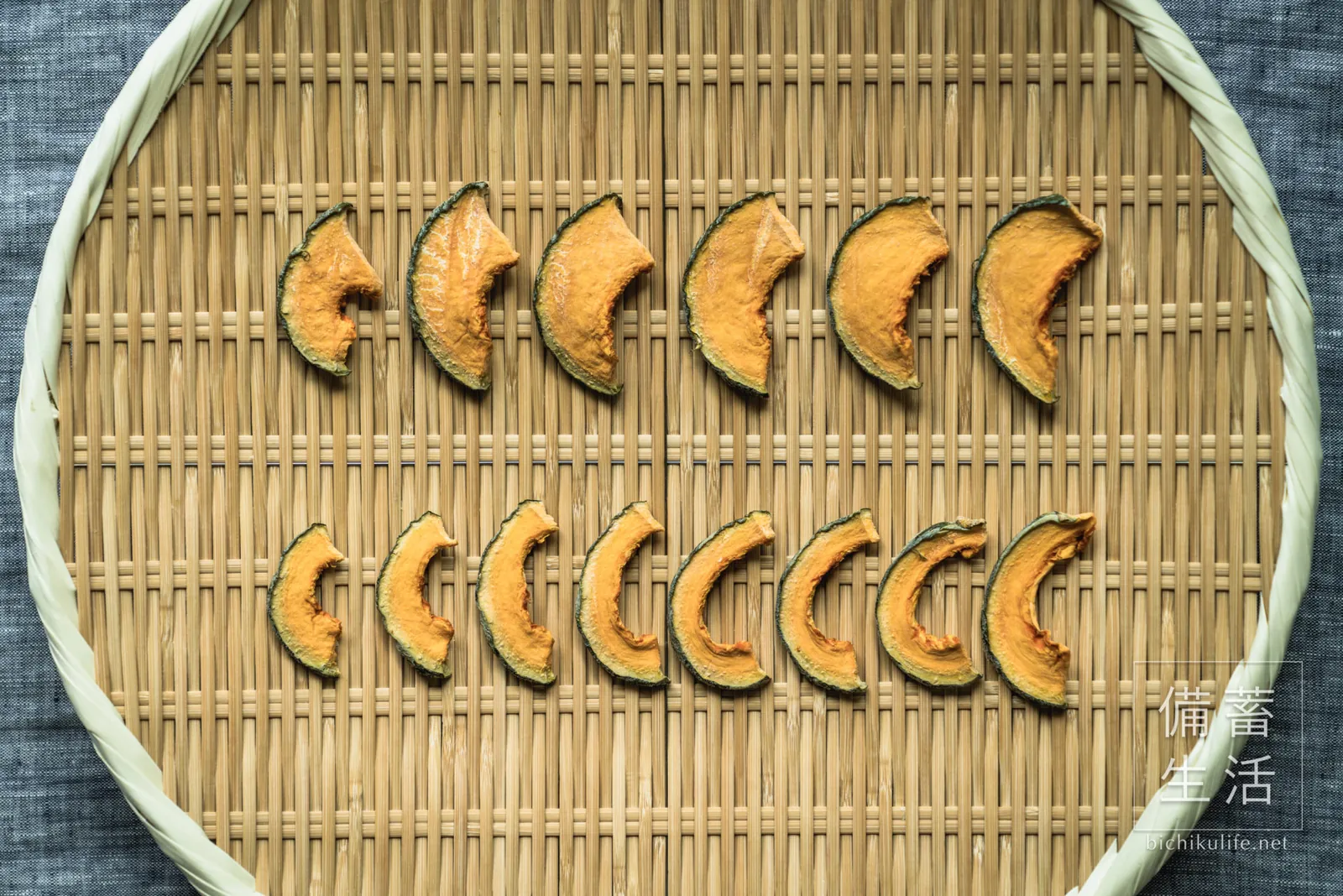
Day 4
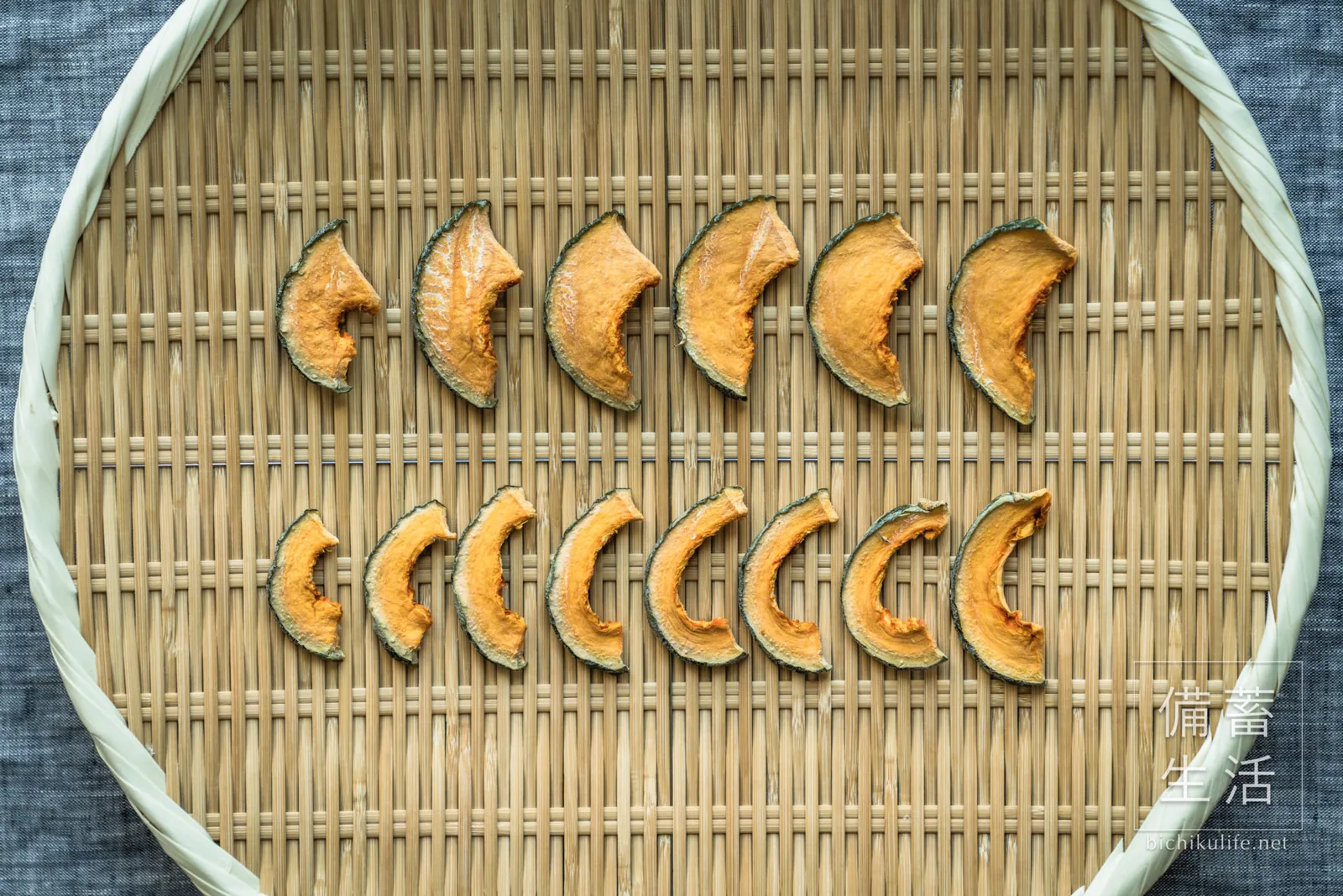
Day 5
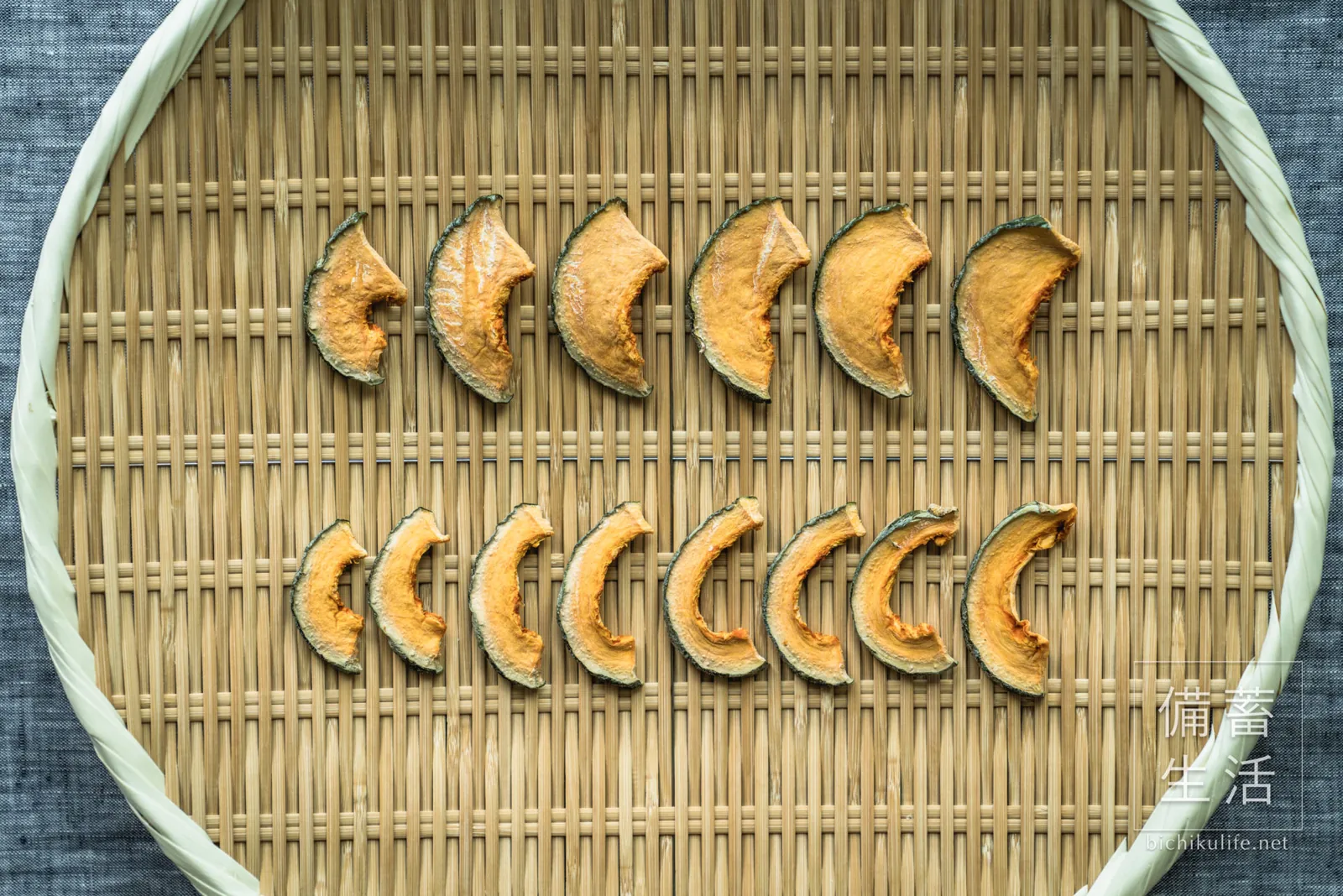
Seeds
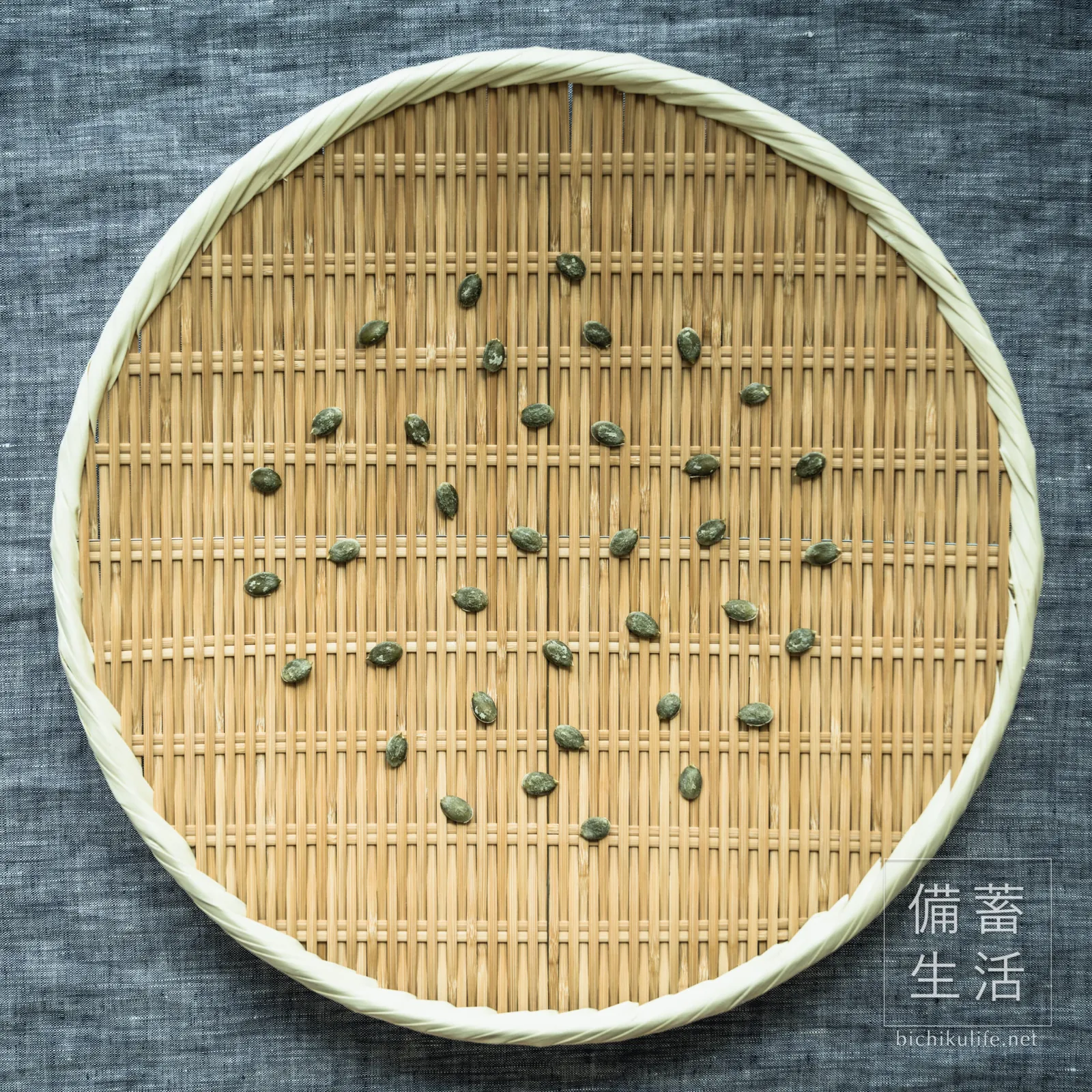
Like store-bought pumpkin seeds (pepitas), dry the seeds in their shells until completely crisp, then eat the green seeds inside.
How to dry them
- Wash: Rub the seeds clean in a bowl of water, changing the water, to remove the slime and pulp.
- Pat dry: Dry thoroughly with paper towels.
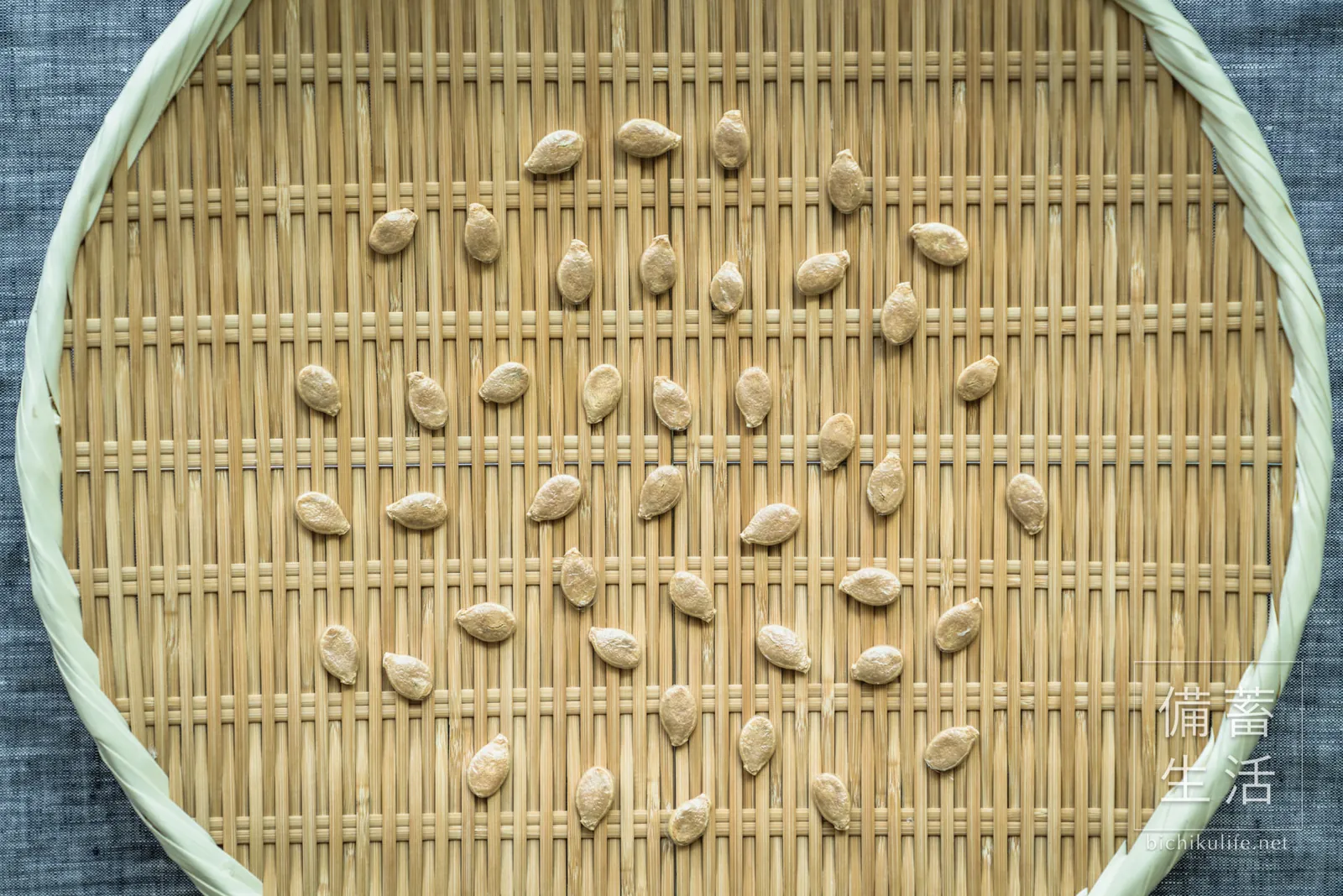
- Dry: Spread on a basket without overlapping and dry for 4–5 days, until completely crisp.
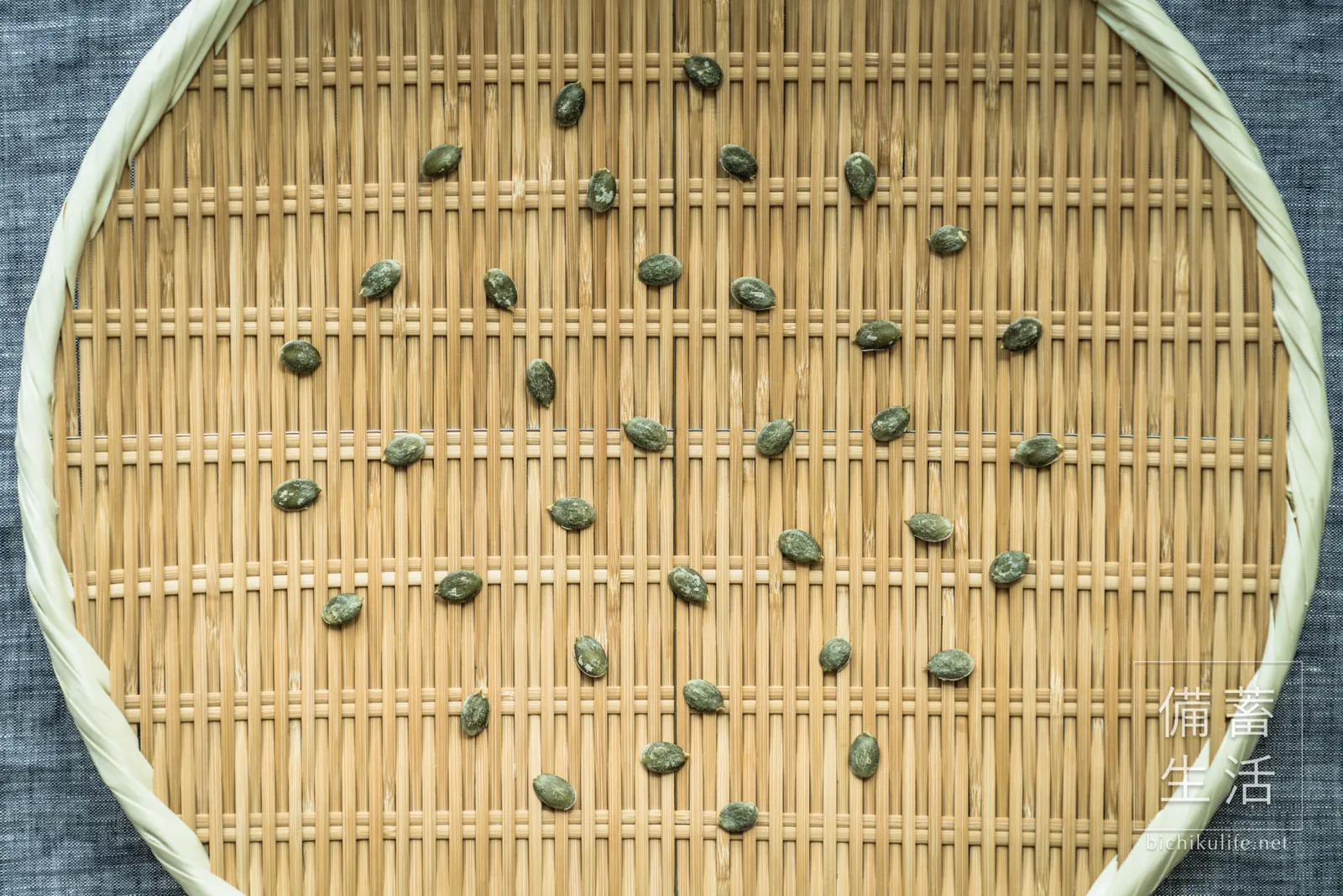
- Shell: Snip the edge of the shell with kitchen scissors, or crack it gently with your front teeth, and take out the seed.
Dry
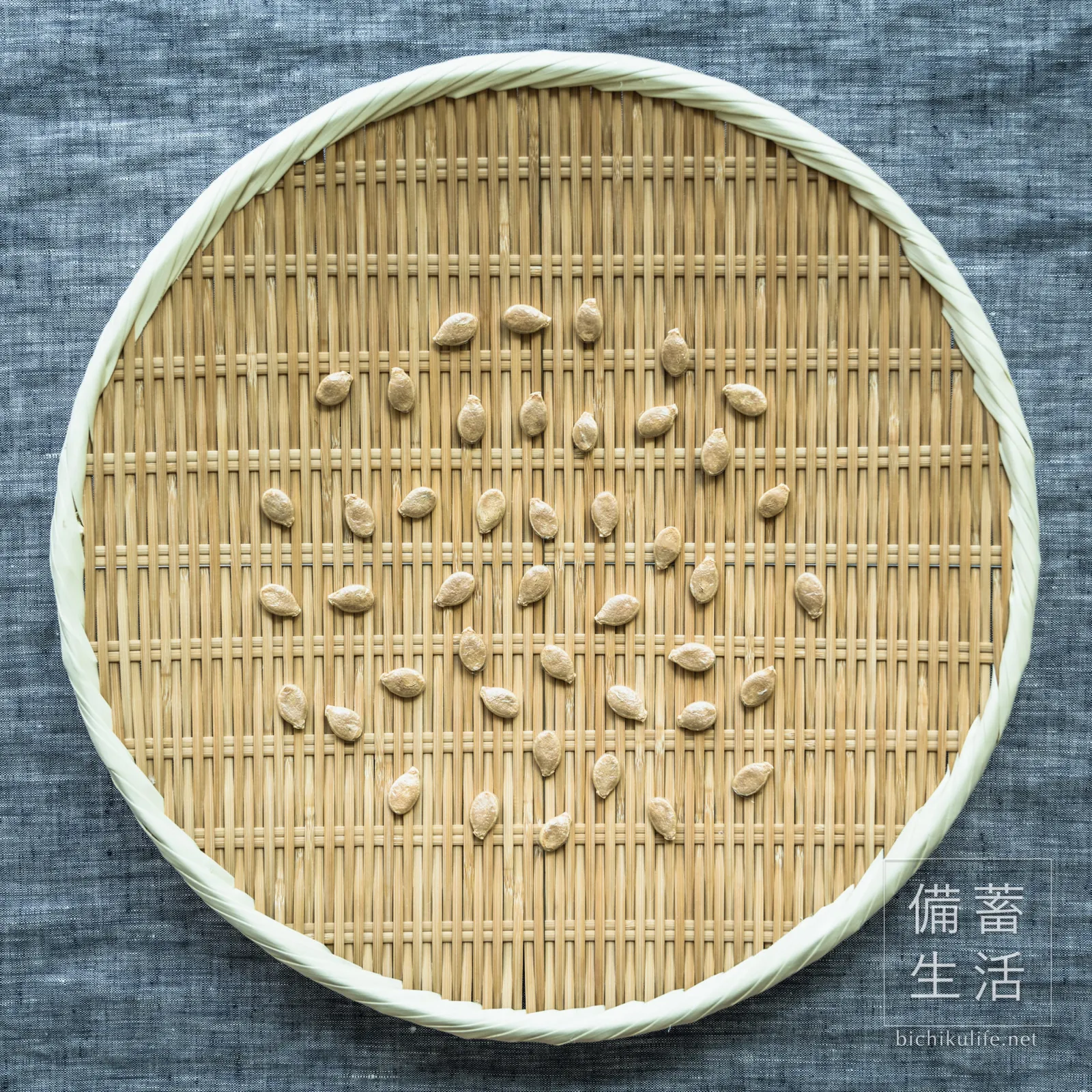
Day by day
Before drying
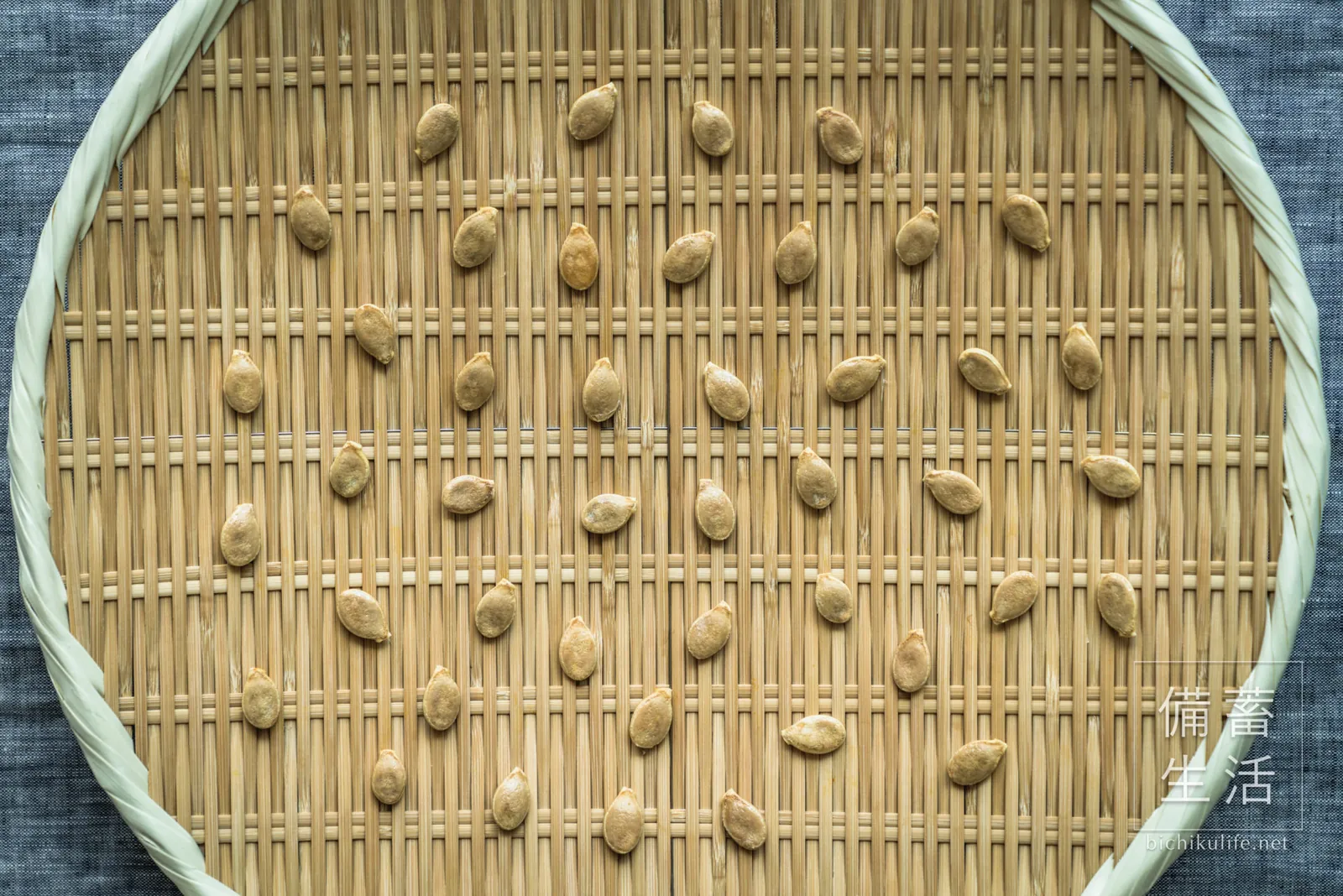
Day 1
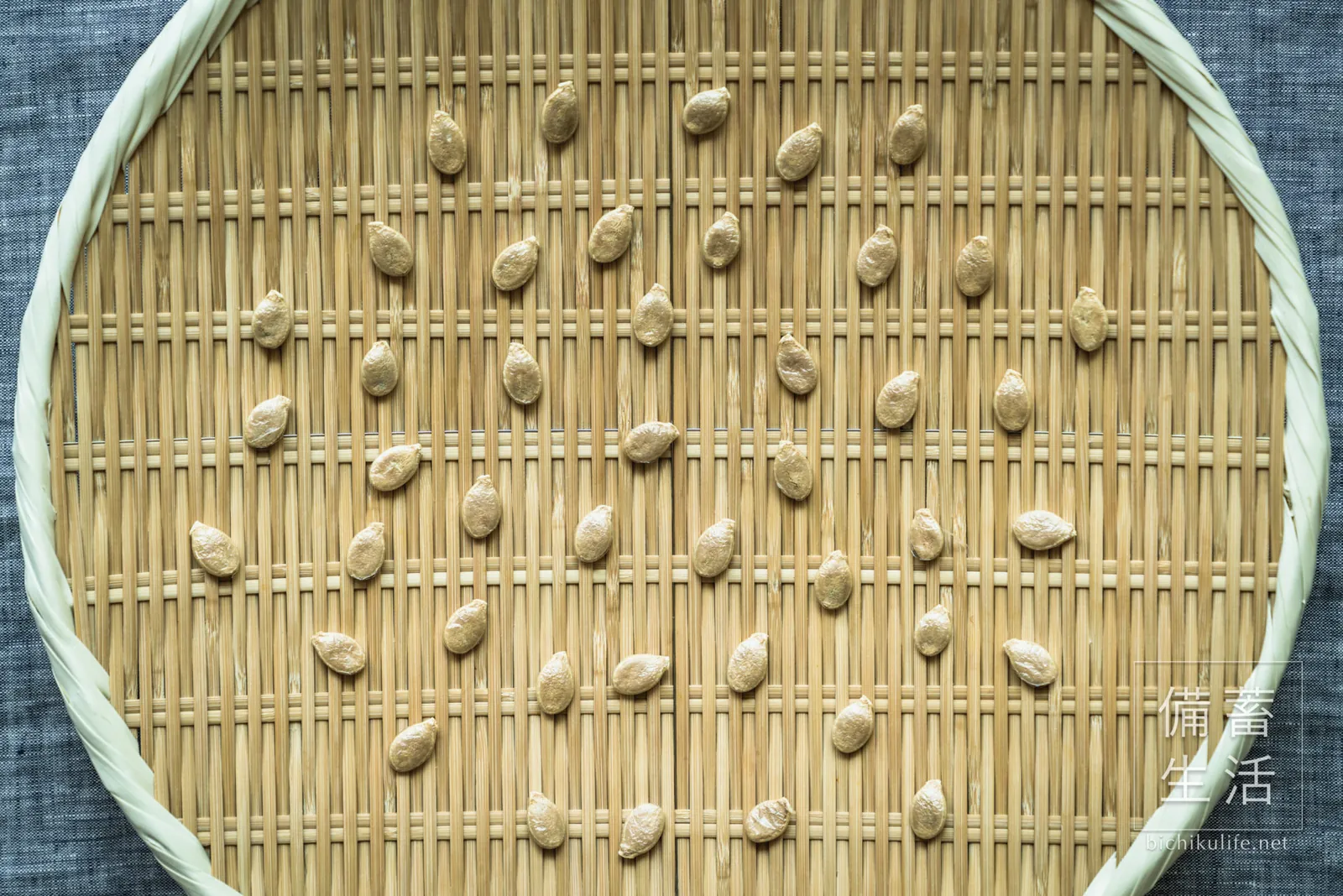
Day 2
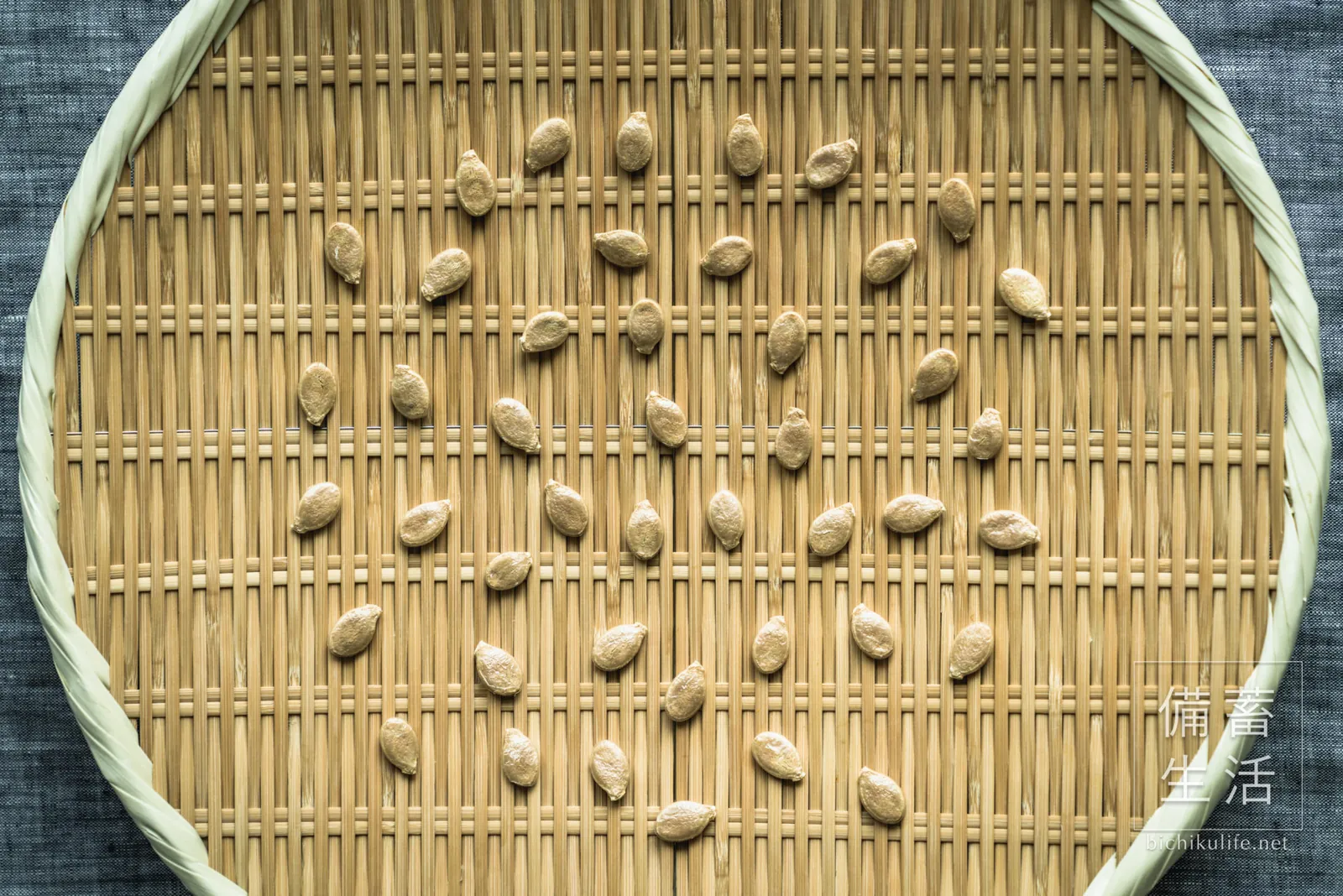
Day 3
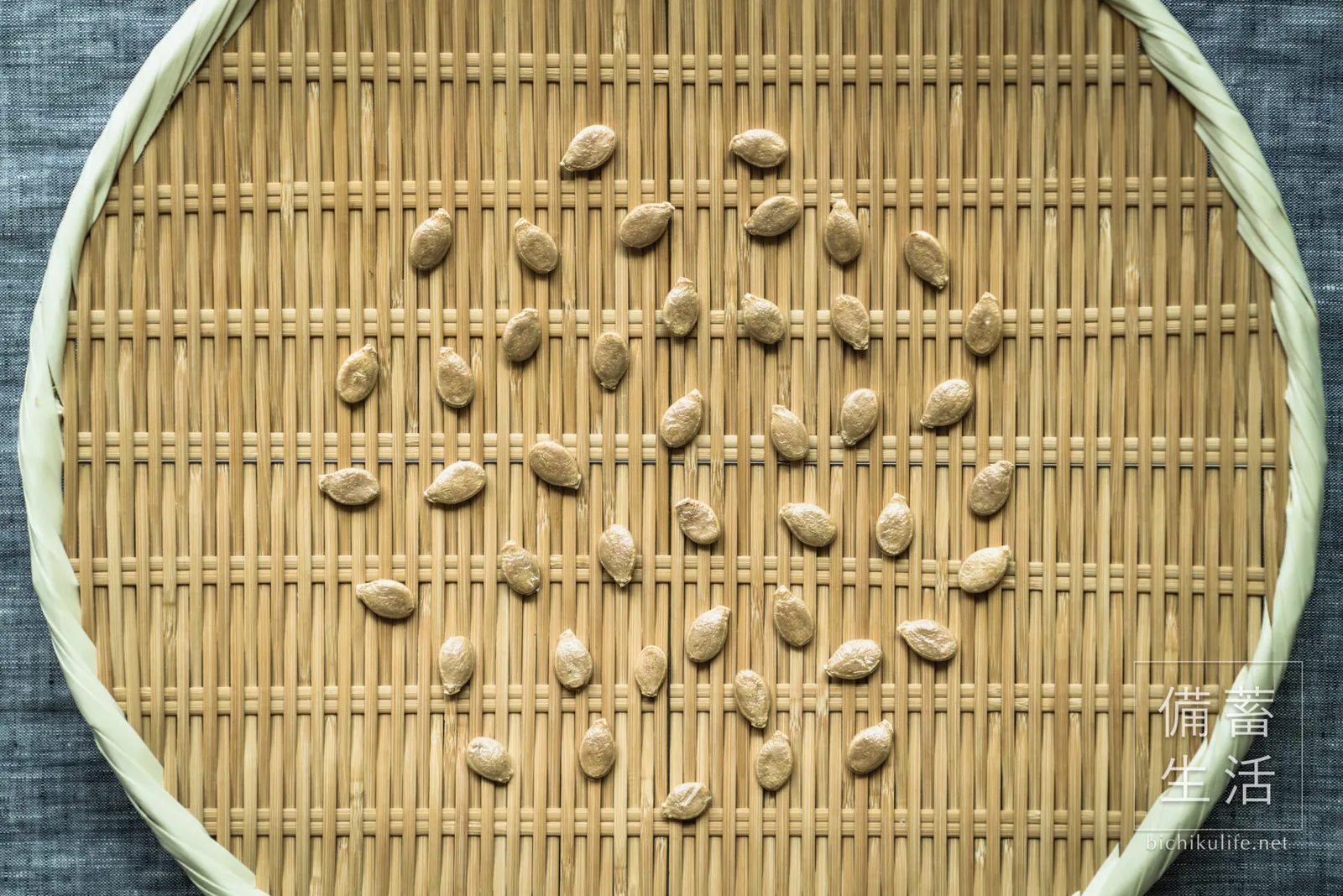
Day 4
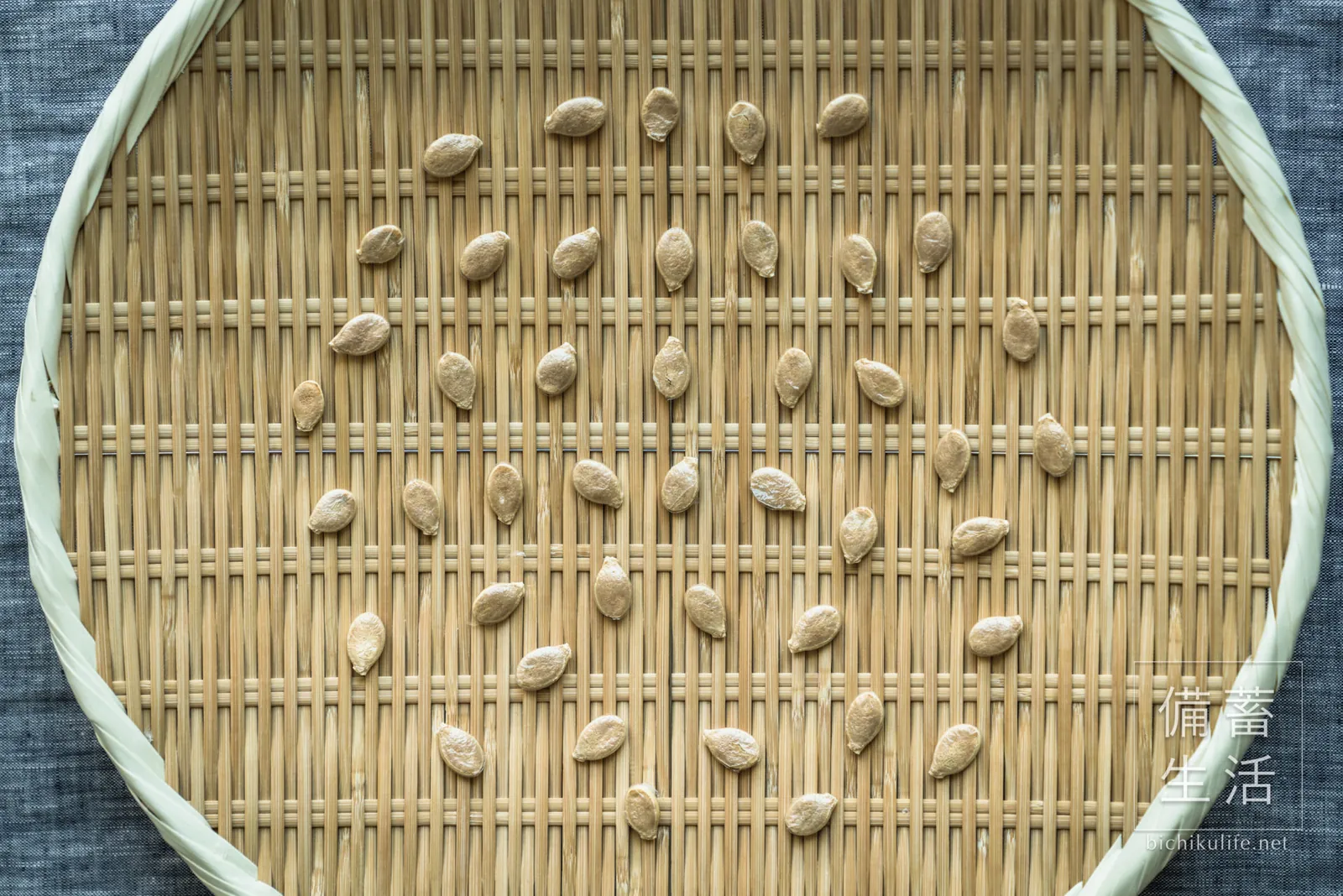
Day 5
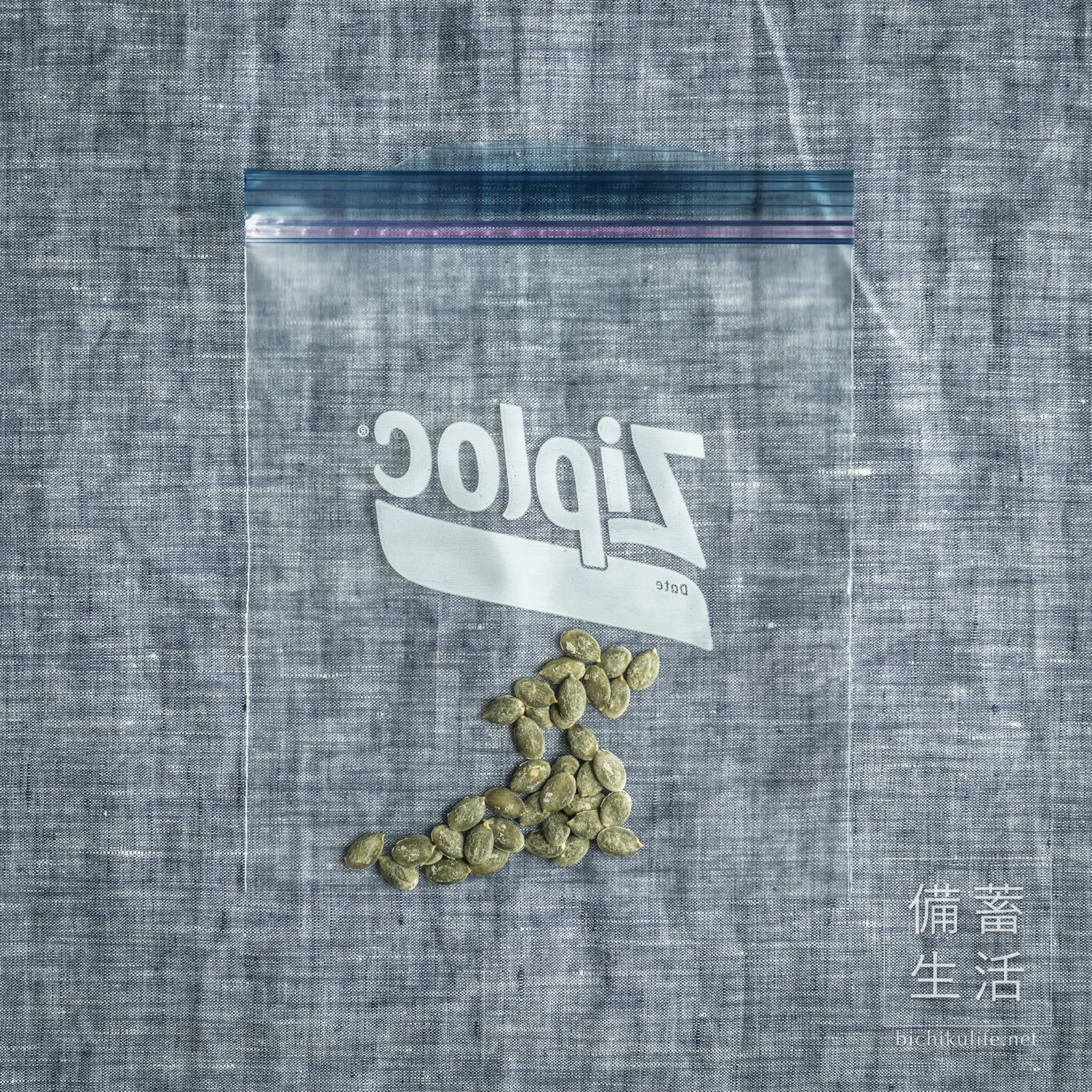
Shell them before storing.
How to eat them
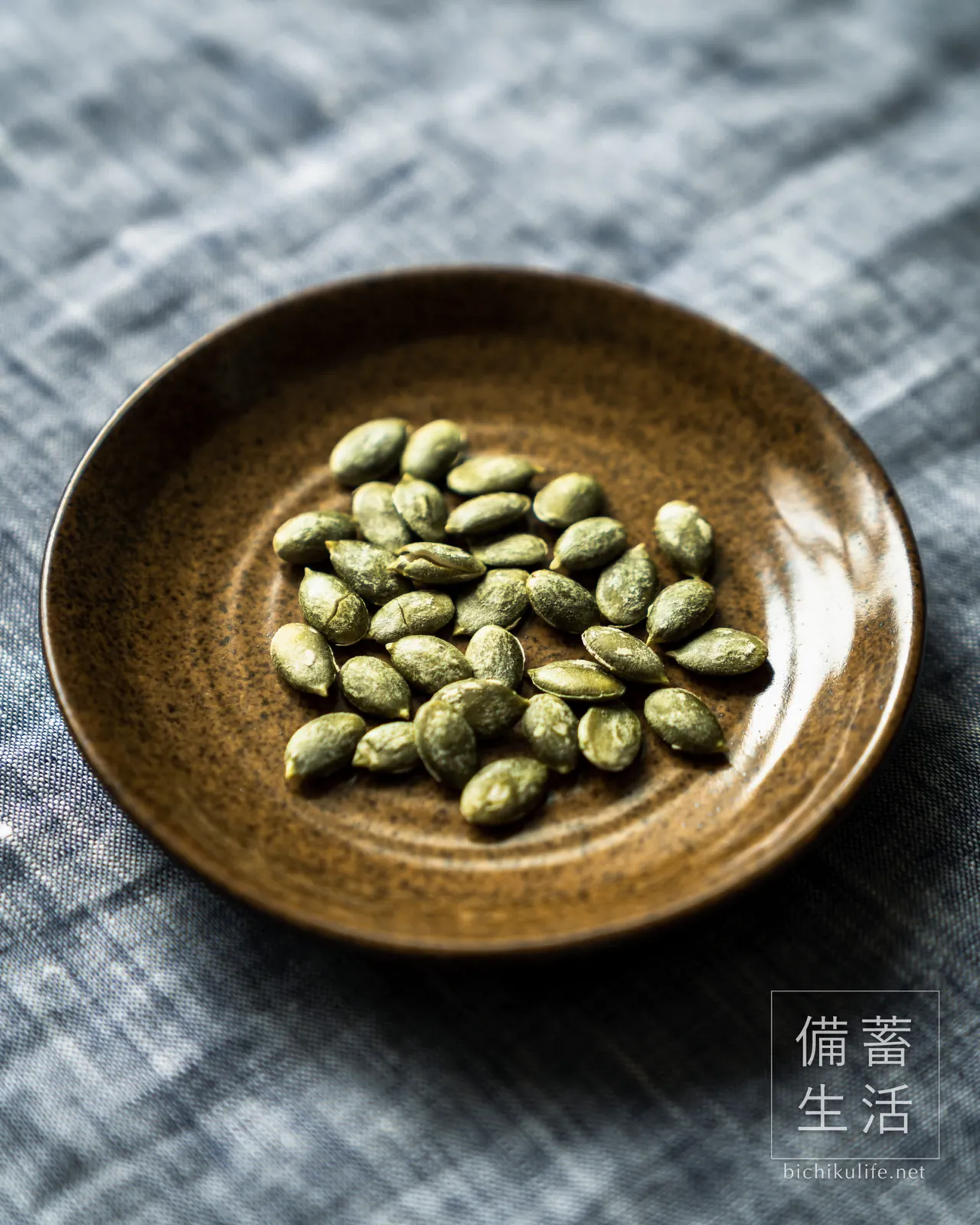
Toast them in a dry frying pan over low heat for about 5 minutes, until fragrant, and sprinkle lightly with salt. They’re also good on salads or in granola.
Storage
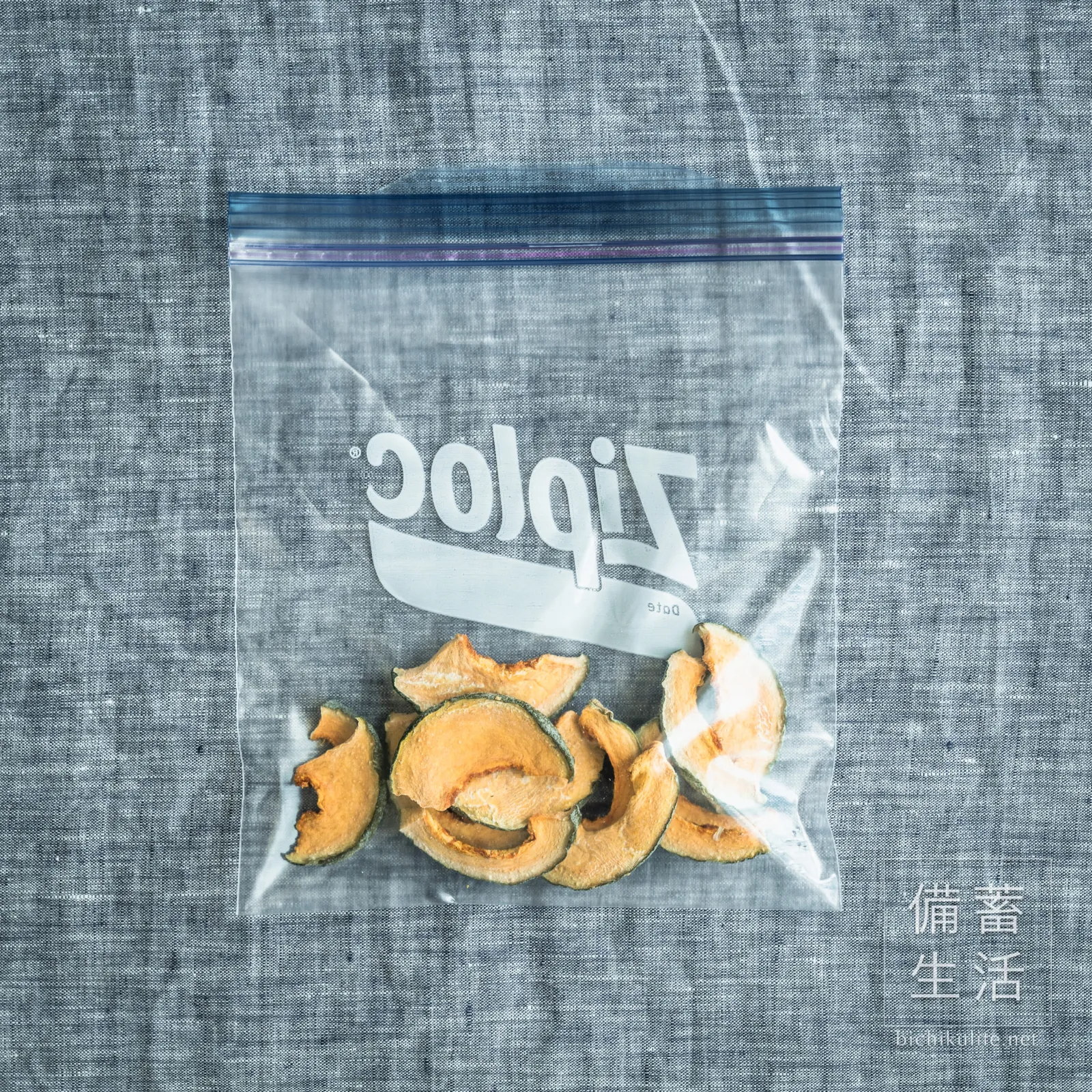
- Flesh (dry): Put completely dry wedges in a bag or airtight container with a desiccant, and keep somewhere cool and out of direct sun for about 2 weeks. In humid summer weather, keep them in the fridge. Frozen, they keep 1–2 months.
- Seeds: Keep shelled seeds in an airtight container at room temperature for about 3 weeks. They contain oil, which goes stale over time, so if you make a lot, keep them in the fridge or freezer.
Fuzzy white or green growth, black spots or a bad smell are signs of mold or spoilage. Don’t eat it; throw it away. More in How to Store Dried Vegetables.
Rehydrating and using it
- Simmer without soaking: Add straight to simmered dishes, miso soup and soups. It holds its shape better than fresh and tastes sweeter.
- Rehydrate: For salads or potage, soak in water for 20–30 minutes, then steam or boil until tender.
- As is: Thinly sliced and dried, it can be eaten as a slightly chewy snack.