Root vegetables
Dried Burdock Root (Gobo)Chunks and Strips: Drying Time, Storage and a Rice Recipe
Burdock root (gobo) is a long, slender root vegetable used throughout Japanese cooking. Outside Japan, look for it at Japanese or Korean grocery stores (in Korean it’s called ueong).
Drying intensifies its earthy aroma and flavor. With the water gone, it soaks up seasonings well in simmered dishes.
Burdock takes time to peel and cut, so if you cut a batch when you have time and dry it, it’s ready whenever you need it.
| Drying time | Storage | |
|---|---|---|
| Dry | 2–4 days | 1 month at room temperature (fridge in humid summer) |
| Semi-dried | 3–5 hours | 4–5 days in the fridge |
Drying times assume drying during the day in sunny weather and bringing them in at night.
How to dry burdock root
- Scrub off the dirt and skin: Scrub gently with a brush to remove the dirt. The aroma and flavor are just under the skin, so don’t peel it with a knife; just scrub.
- Cut: Cut into bite-sized chunks, rolling the root as you cut, or into thin strips.
- Soak: Soak in water for about 10 minutes to remove bitterness. Soaking too long washes out the aroma too, so 10 minutes is enough.
- Pat dry and dry: Pat dry well with paper towels and spread on a basket without overlapping. Put it somewhere sunny and breezy, and bring it in by evening.
Where and when to dry is covered in How to Dry Vegetables, and tools in Tools for Drying Vegetables.
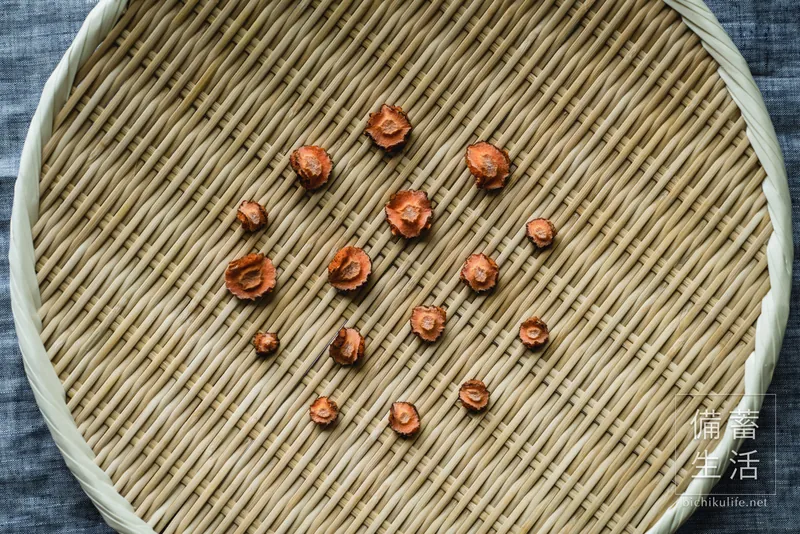
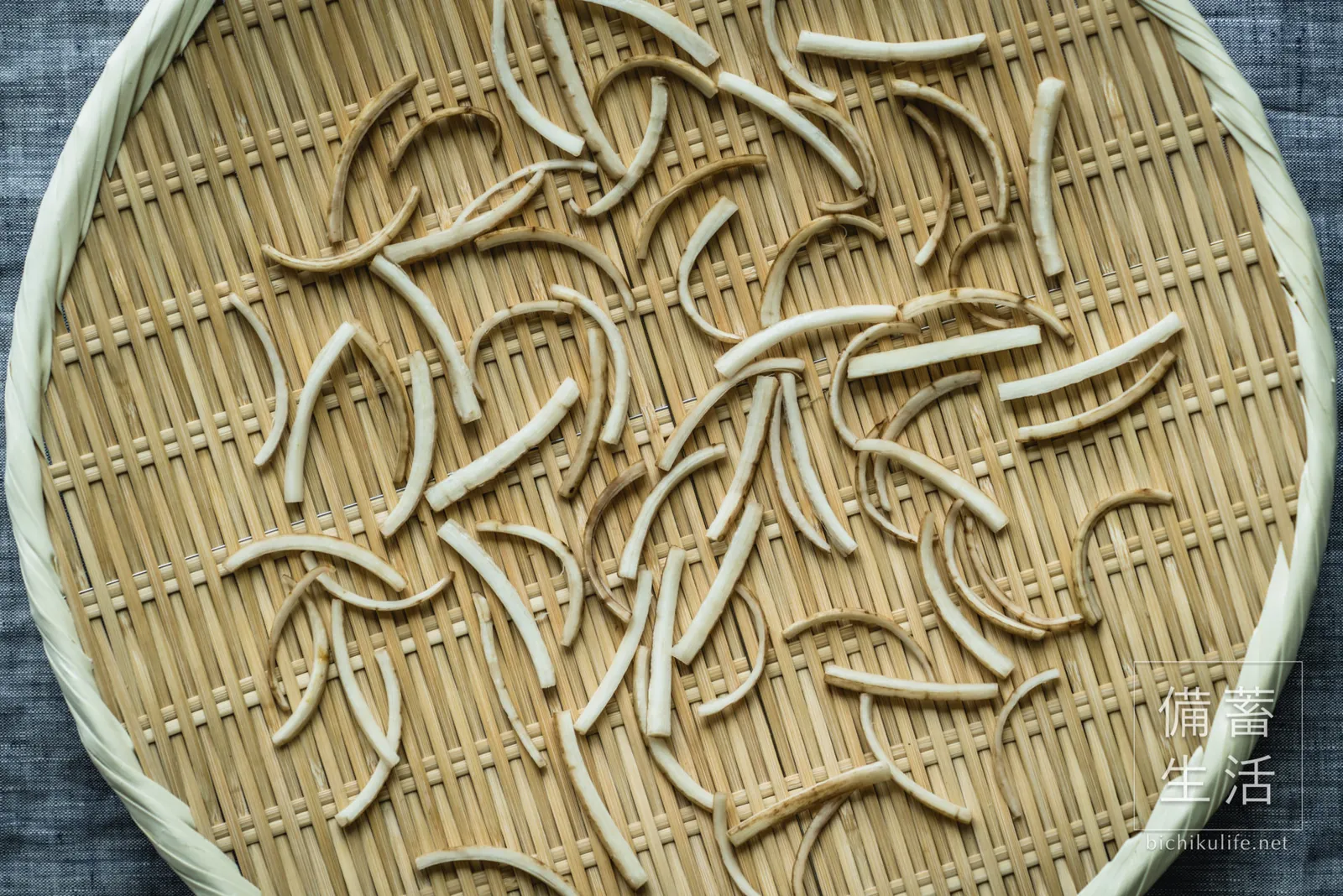
Chunks
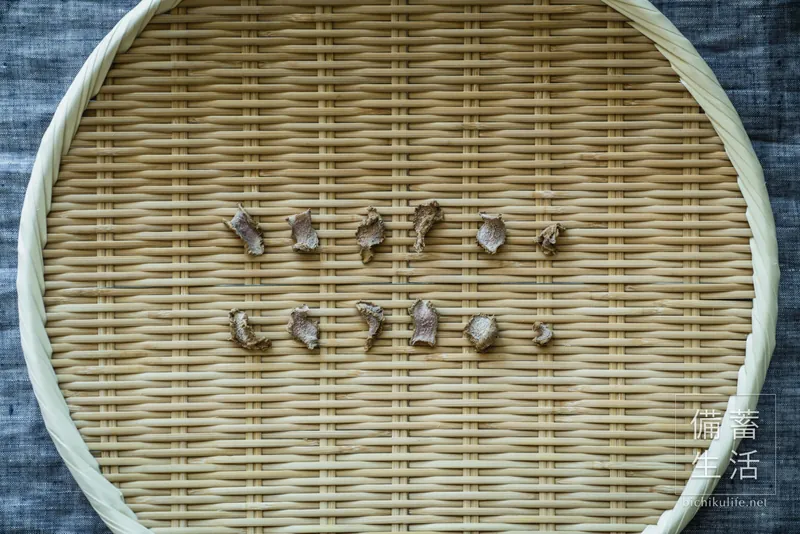
Dry (2–4 days)
It’s done when the pieces have shrunk, darkened, and are hard with no give when pressed. The thick centers dry last, so break a large piece to check.
Semi-dried (3–5 hours)
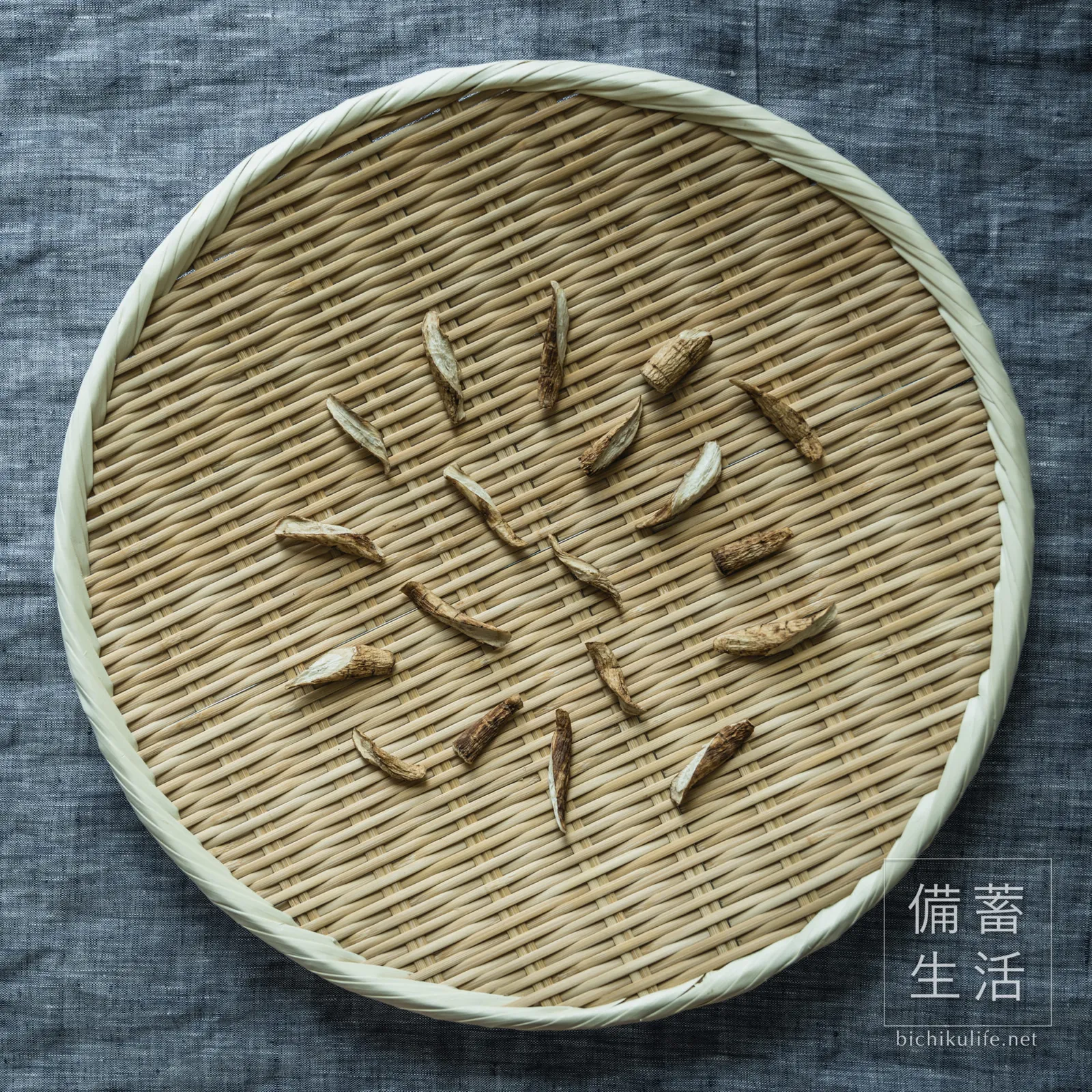
The surface is dry. Used as is in simmered dishes or kinpira (stir-fried with soy sauce and sugar), it soaks up the flavor well.
Day by day
Before drying
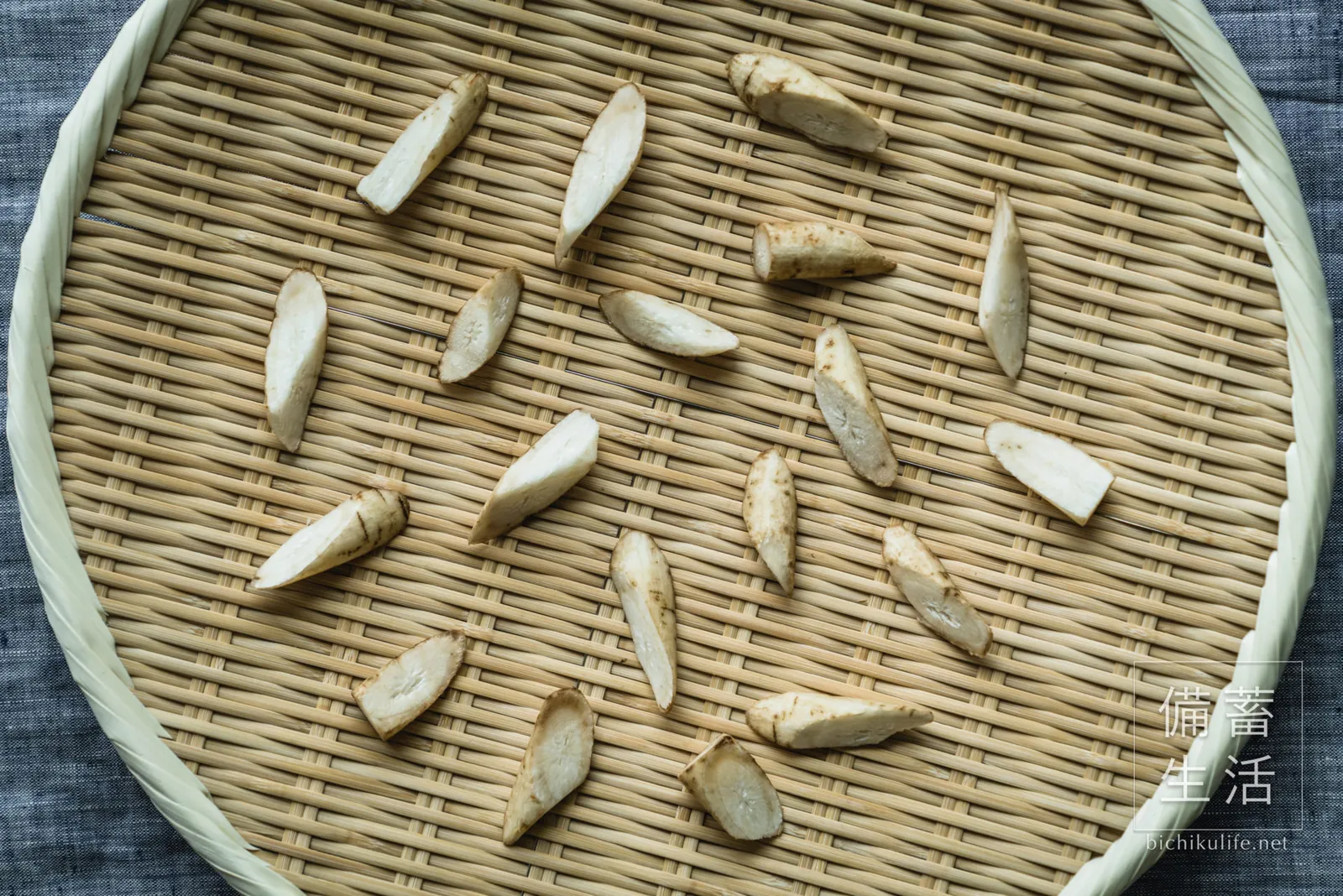
Day 1
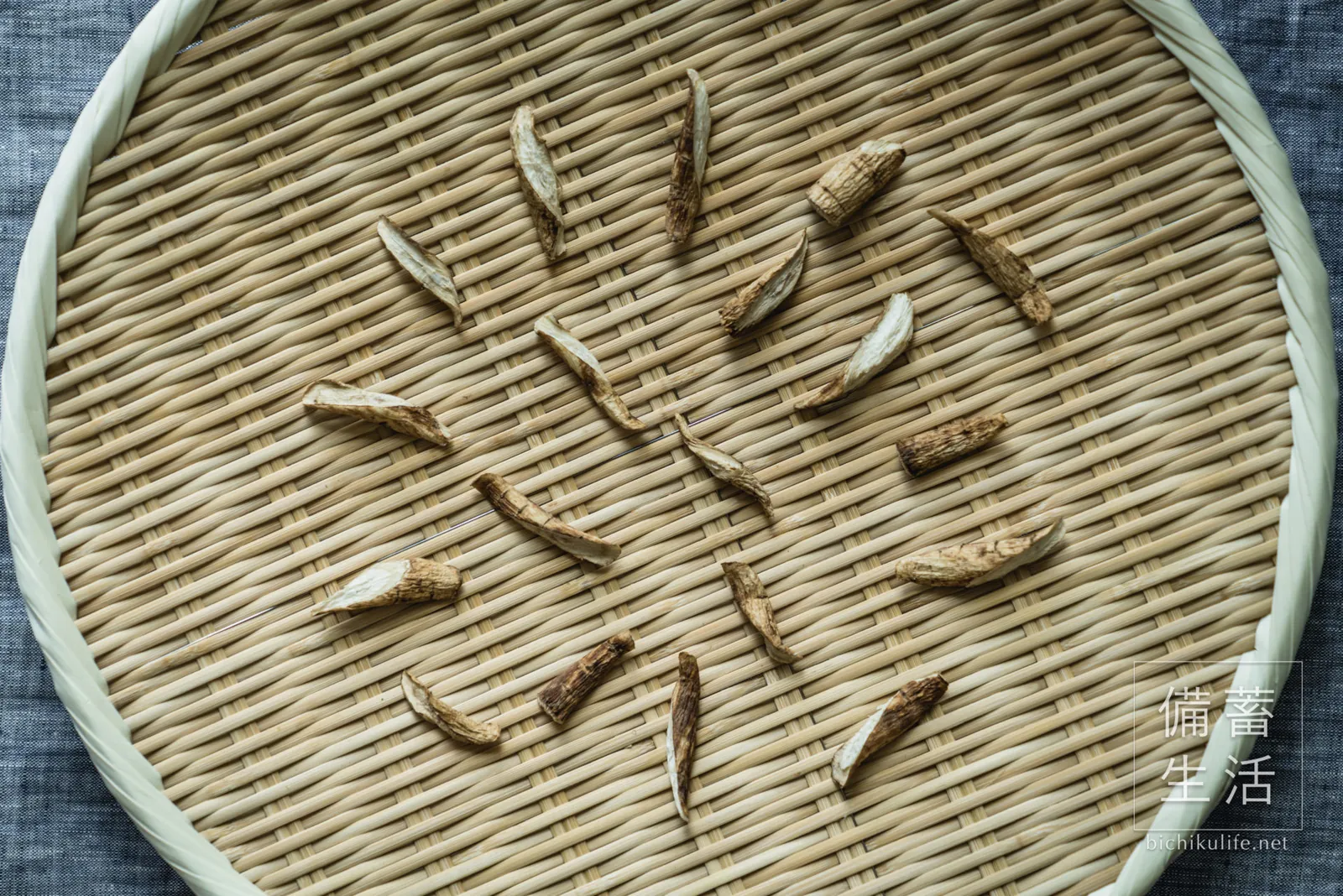
Day 2
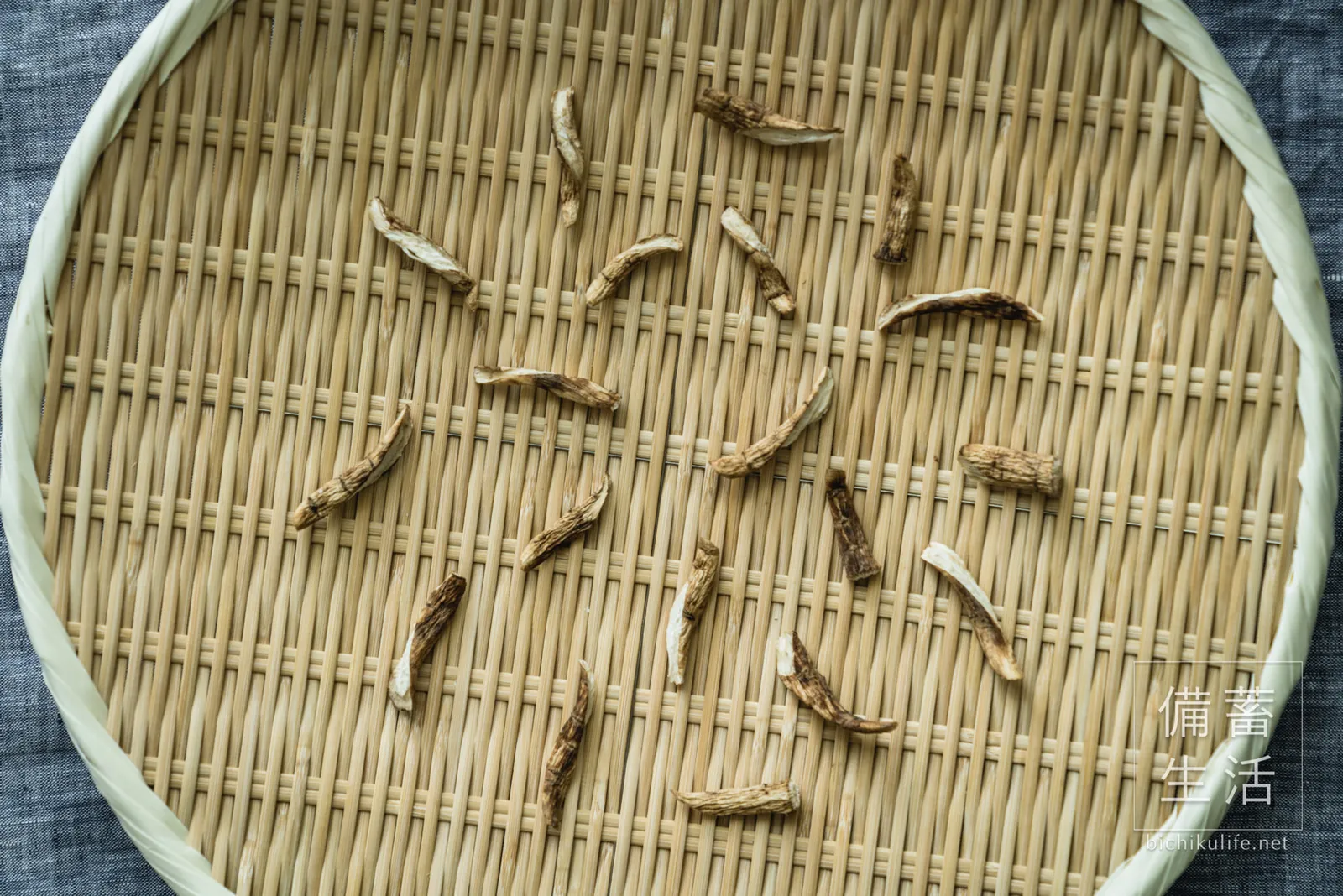
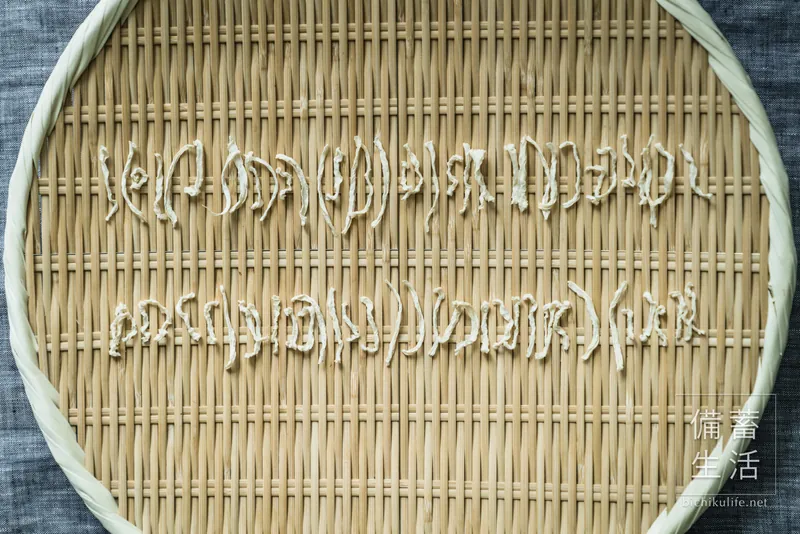
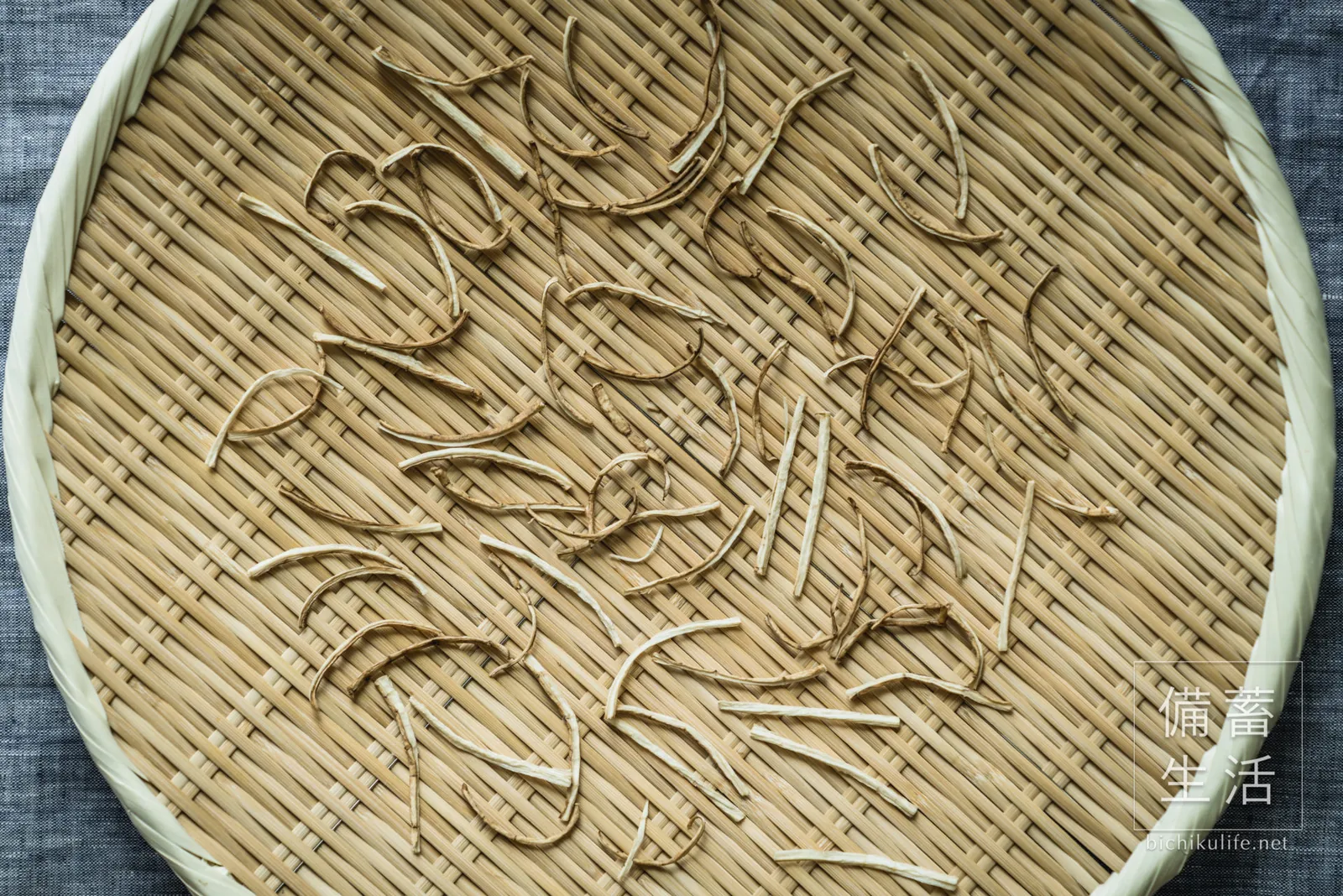
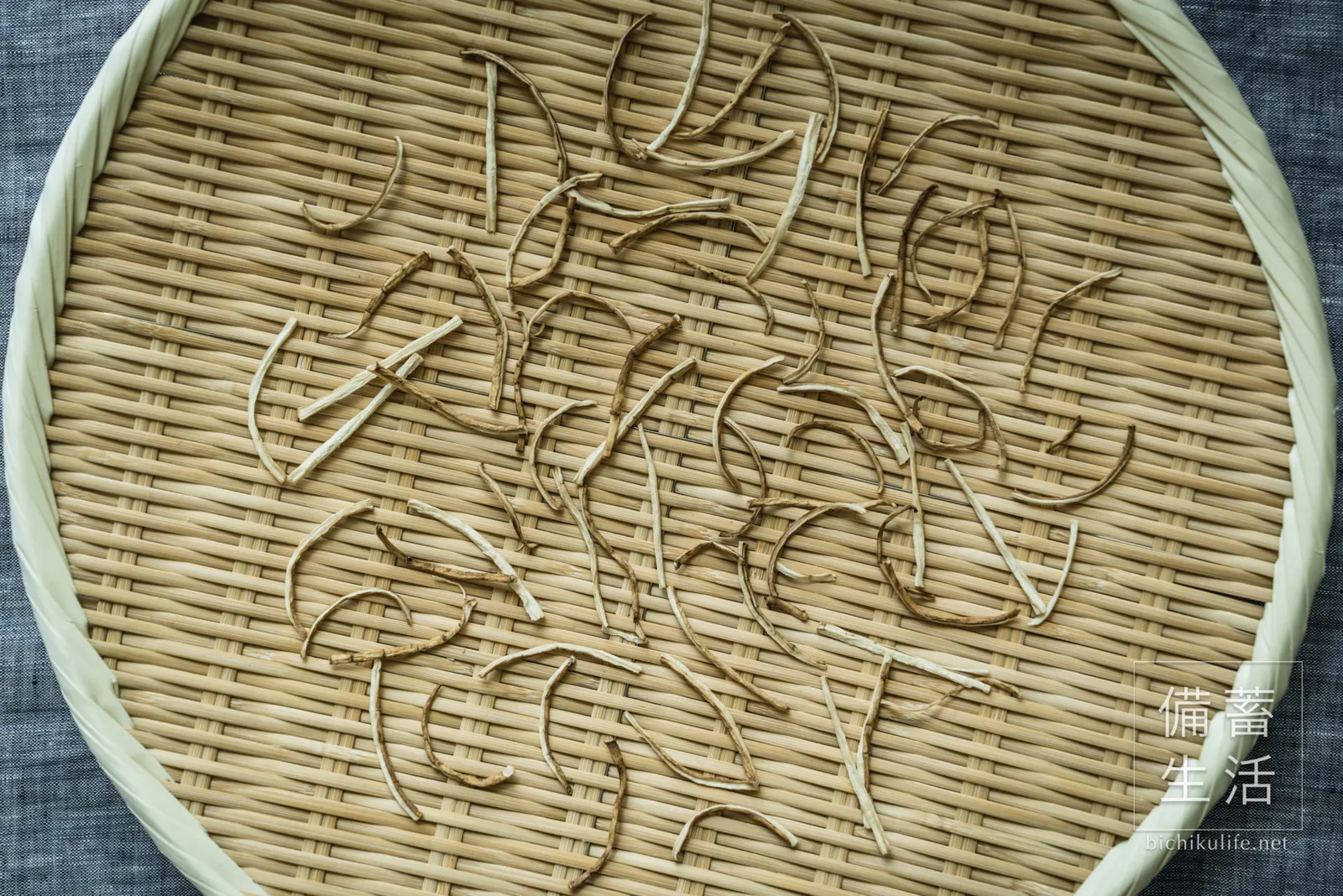
Thin strips
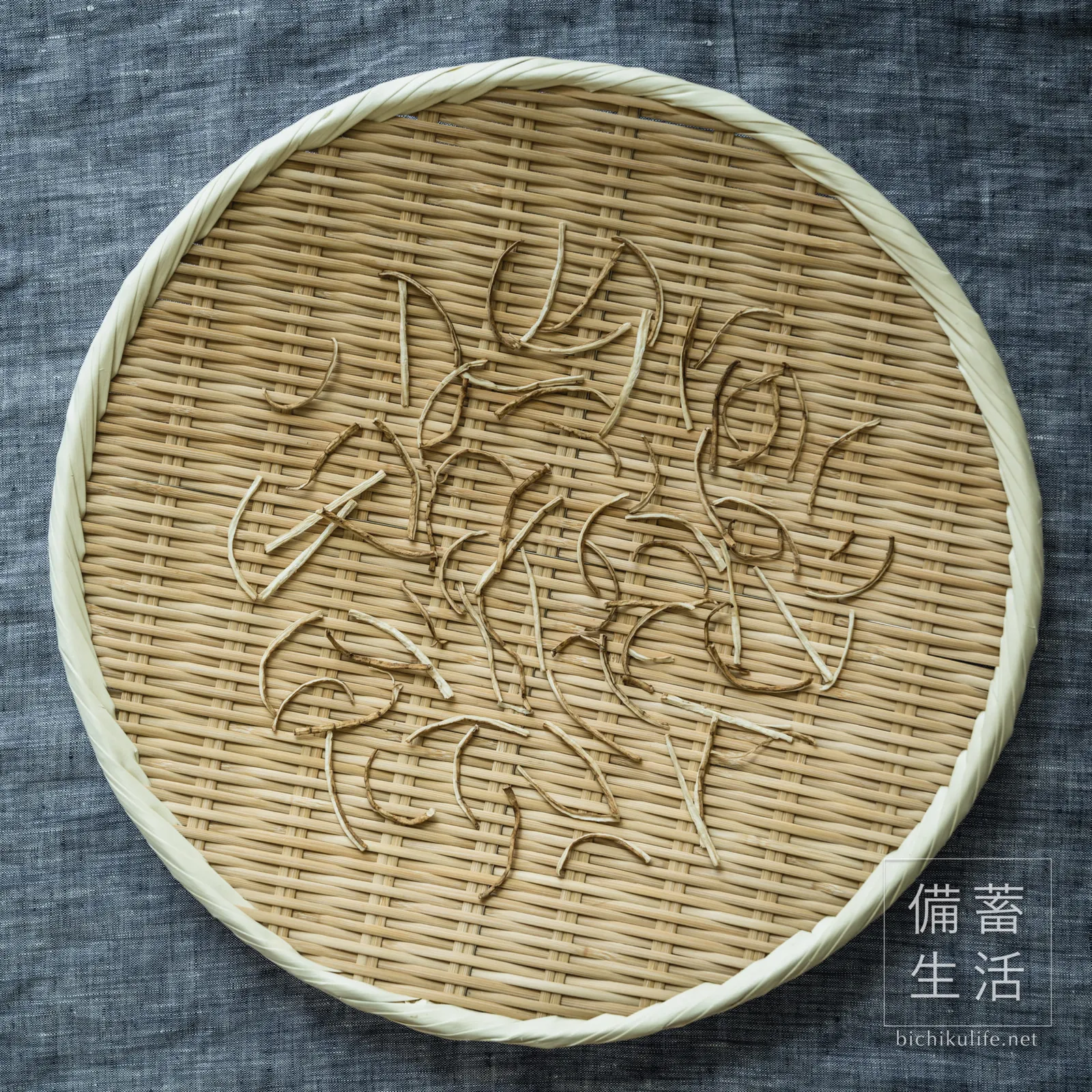
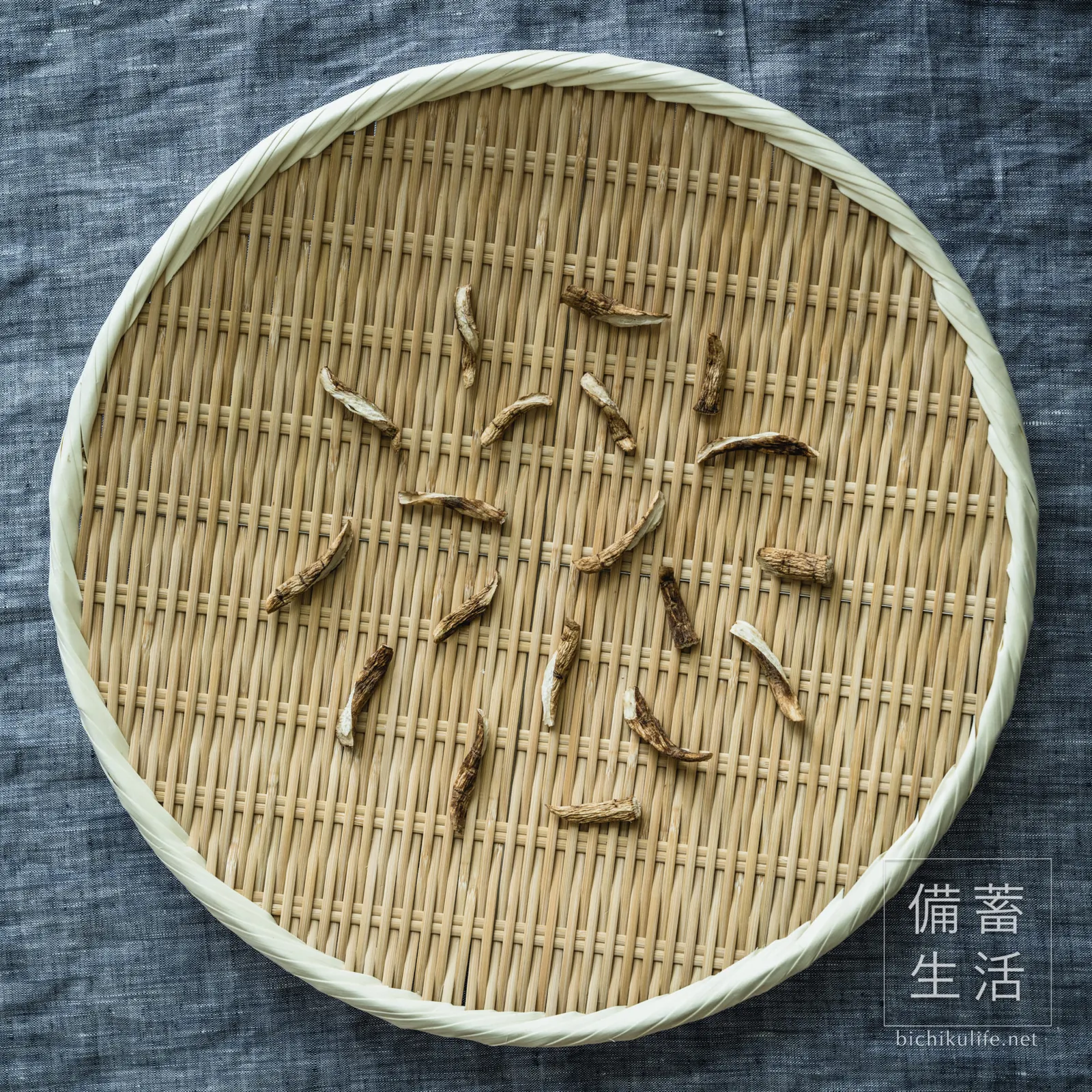
Dried in thin strips, it’s ready to use in mixed rice, kinpira, salads and dressed side dishes. Strips dry faster than chunks.
Semi-dried
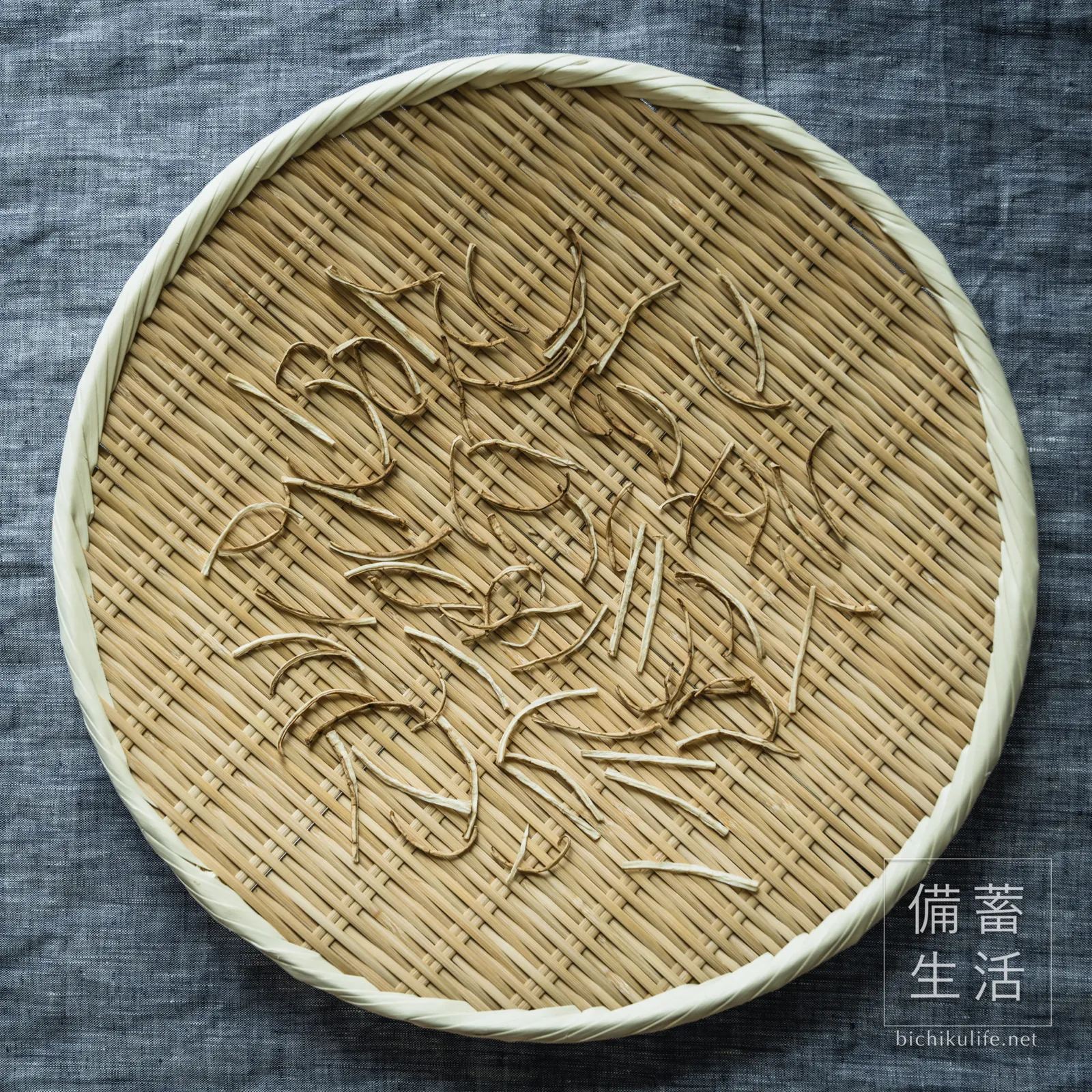
Day by day
Before drying
Day 1
Day 2
Storage
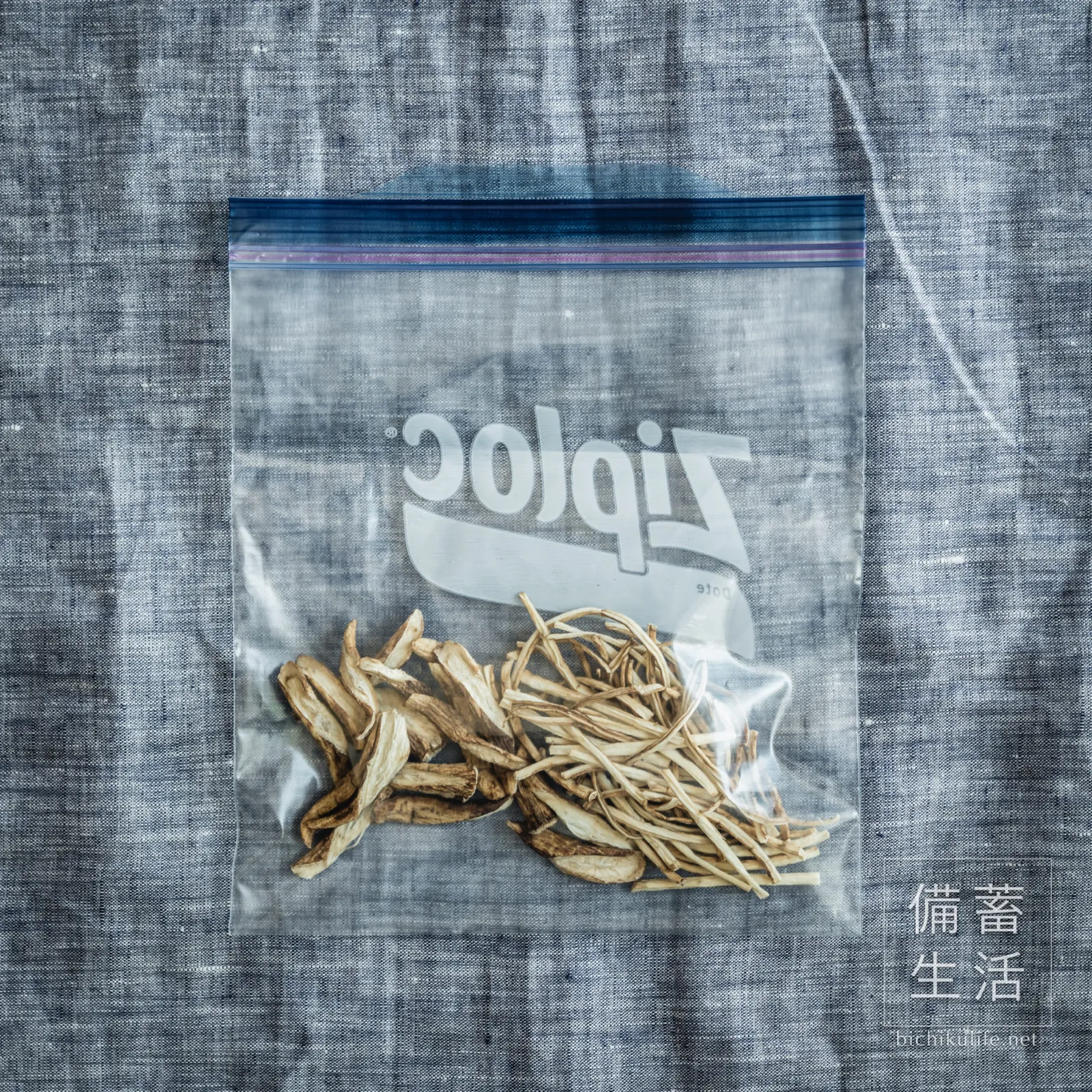
- Dry: Put completely dry burdock in a bag or airtight container with a desiccant, and keep somewhere cool and out of direct sun for about 1 month. In humid summer weather, keep it in the fridge.
- Semi-dried: Keep in a bag in the fridge and use within 4–5 days.
- Frozen: Both dry and semi-dried can be frozen for 2–3 months.
Fuzzy white or green growth, black spots or a bad smell are signs of mold or spoilage. Don’t eat it; throw it away. More in How to Store Dried Vegetables.
Rehydrating and using it
- Rehydrate: Rinse dry burdock quickly and soak in water: 3–5 minutes for strips, about 10 minutes for chunks.
- Use it dry: Rinse and add straight to tonjiru (pork miso soup), miso soup and simmered dishes.
- Good in: Kinpira, chikuzenni (simmered chicken and root vegetables), mixed rice, burdock salad, kakiage (vegetable tempura fritters).
- Burdock tea: Dry thin strips or slices until crisp, then toast them in a dry frying pan over low heat for a toasty burdock tea.
Recipe
Mixed rice with dried burdock and dried carrot
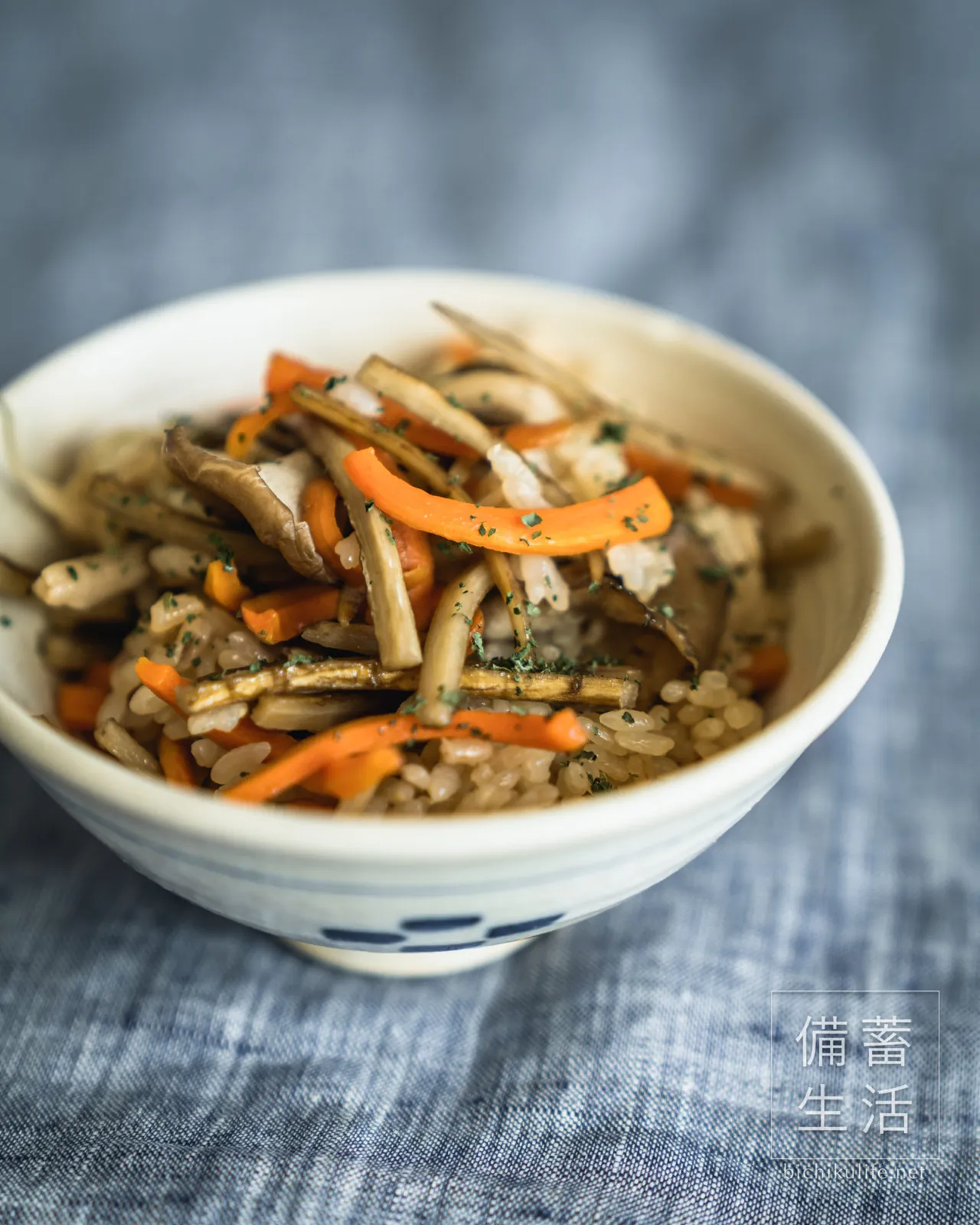
- Dried burdock strips from ½ root
- Dried carrot strips from ¼ carrot
- 180 ml (¾ cup) Japanese short-grain rice
- 200 ml (about ⅘ cup) water
- A: 1 tbsp soy sauce, 2 tbsp sake
- Rinse the dried burdock quickly and soak in separate water for 3 minutes. Discard the soaking water.
- Rinse the dried carrot quickly and soak in the measured 200 ml of water for 3 minutes. Keep this soaking water.
- Wash the rice and drain in a colander.
- Pour A over the rehydrated burdock and carrot and mix.
- Put the rice and step 4 into a rice cooker, add the carrot soaking water from step 2, and cook.
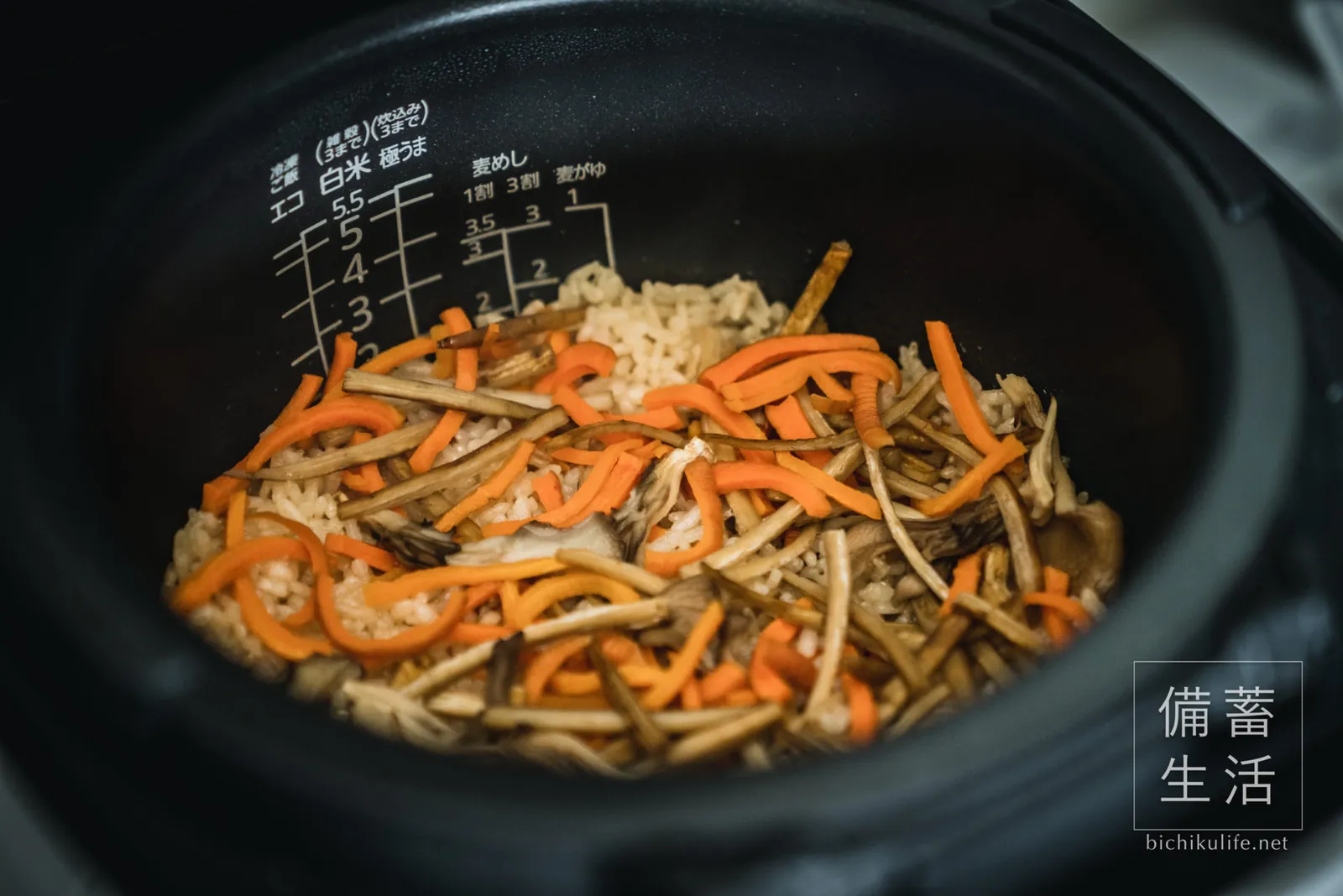
Mixing in dried green shiso after cooking adds a nice aroma. Dried mushrooms work well as the filling too. See also dried carrot.