Root vegetables
Dried TurnipsDrying the Roots and Leaves, Drying Time and Storage
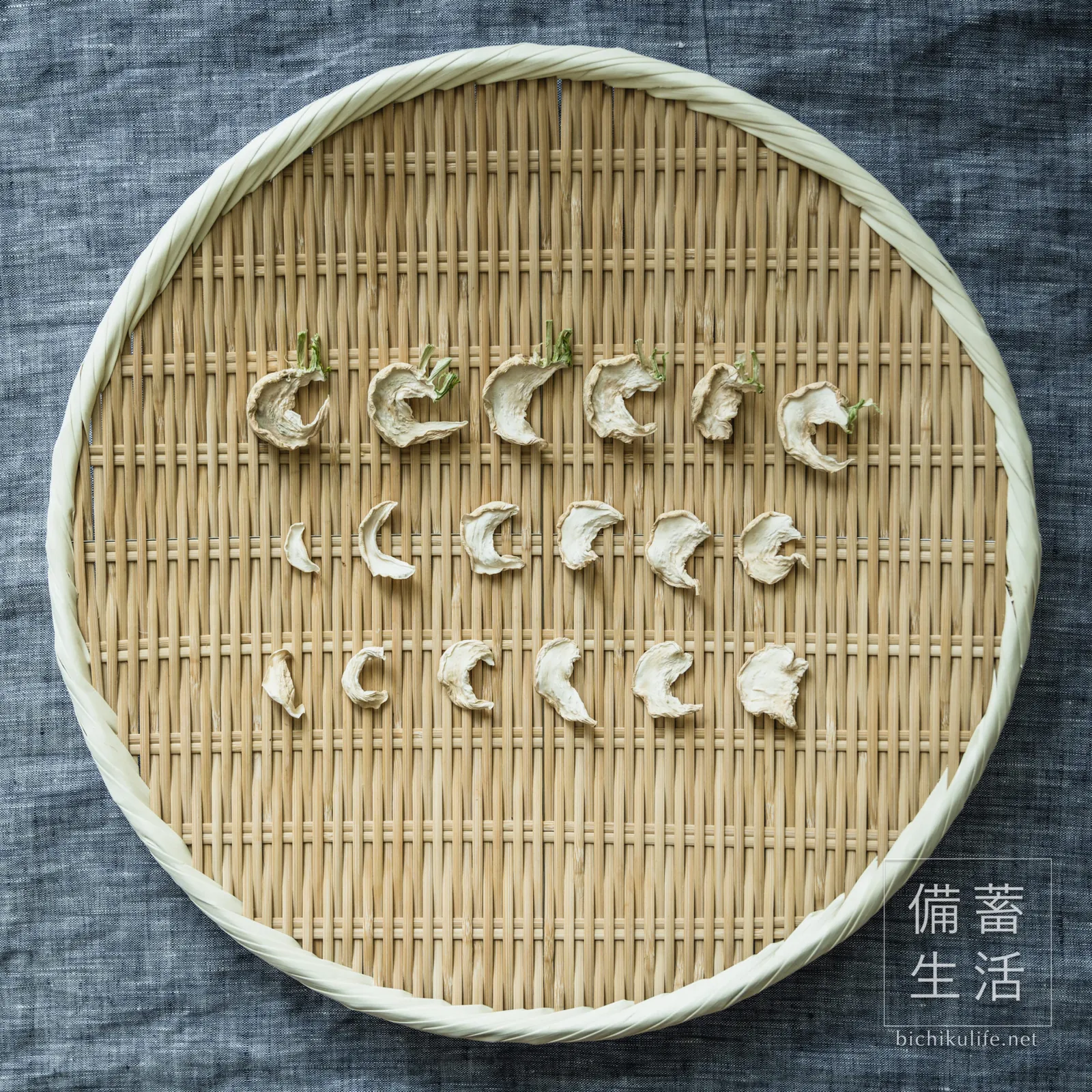
We dried small Japanese white turnips (kabu). Outside Japan, look for small white turnips such as Tokyo or Hakurei turnips. Dried, the white roots lose water and become sweeter and more flavorful. In simmered dishes, they soak up the broth and keep a pleasant bite.
Don’t throw away the leaves. Dry them along with the roots and they’re handy for mixing into rice or adding to miso soup.
| Drying time | Storage | |
|---|---|---|
| Roots (dry) | 2–4 days | 2 weeks at room temperature (fridge in humid summer) |
| Roots (semi-dried) | 3 hours–half a day | 3 days in the fridge |
| Leaves (dry) | 1 day | 1 month at room temperature |
Drying times assume drying during the day in sunny weather and bringing them in at night.
How to dry turnips
- Cut off the leaves: Cut off the leaves, leaving a little of the stems. Dry the leaves as described under “Turnip leaves” below.
- Wash: Soil tends to stay where the stems meet the root, so scrape it out with a skewer as you wash.
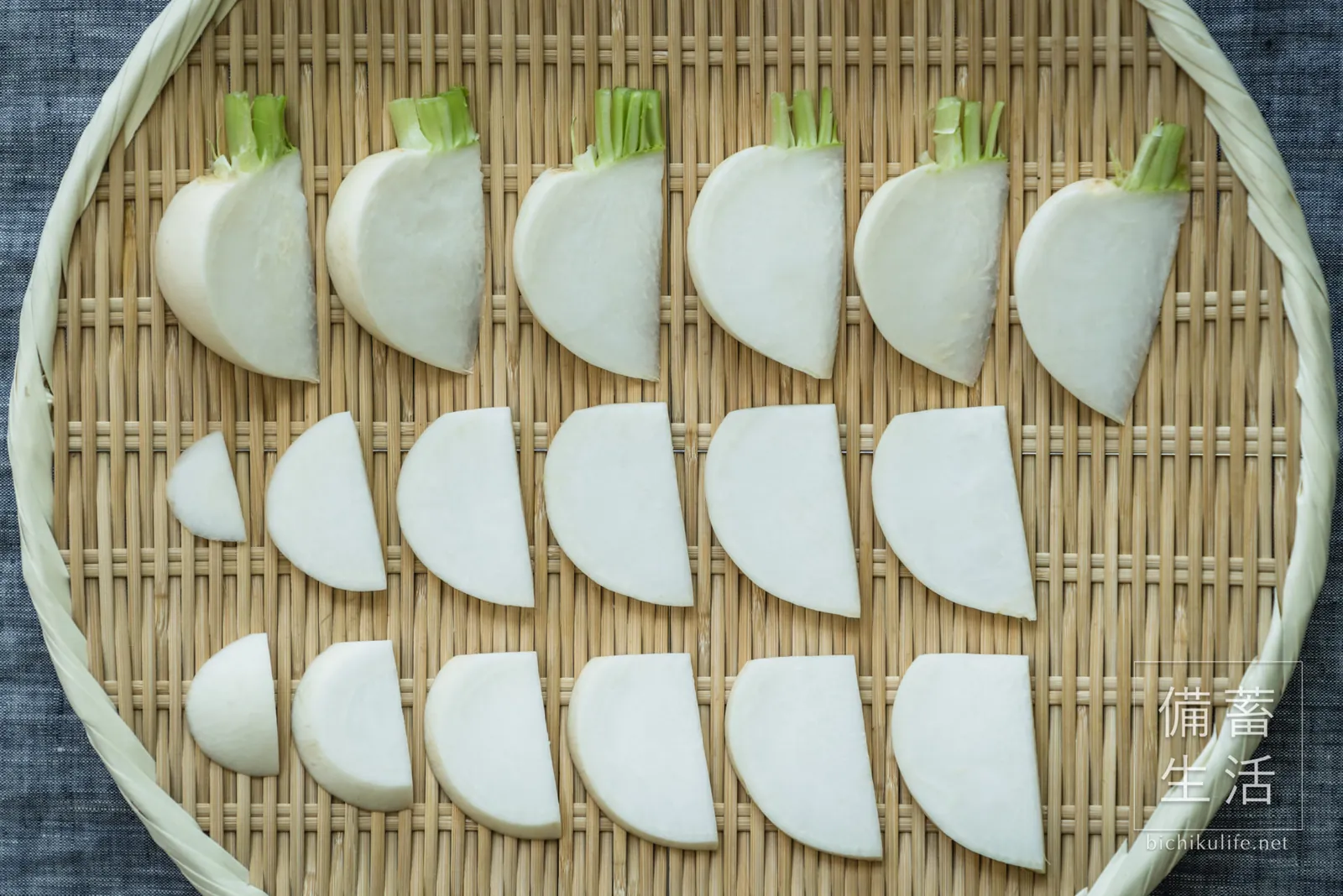
- Cut: Don’t peel. Cut into 4–6 wedges, or for slices, quarter the turnip and cut about 6 mm (¼ in) thick.
- Lay out and dry: Spread on a basket without overlapping, somewhere sunny and breezy. Turn about once a day and bring in by evening.
Where and when to dry is covered in How to Dry Vegetables, and tools in Tools for Drying Vegetables.
When they’re done
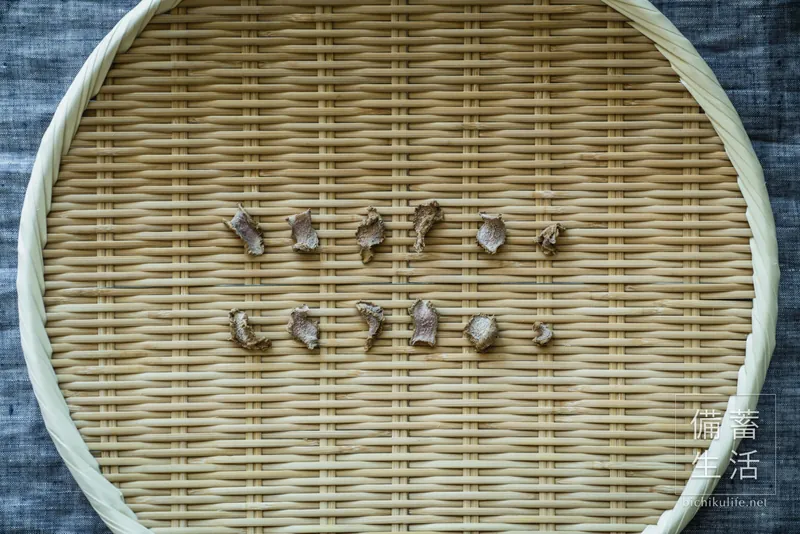
Dry (2–4 days)
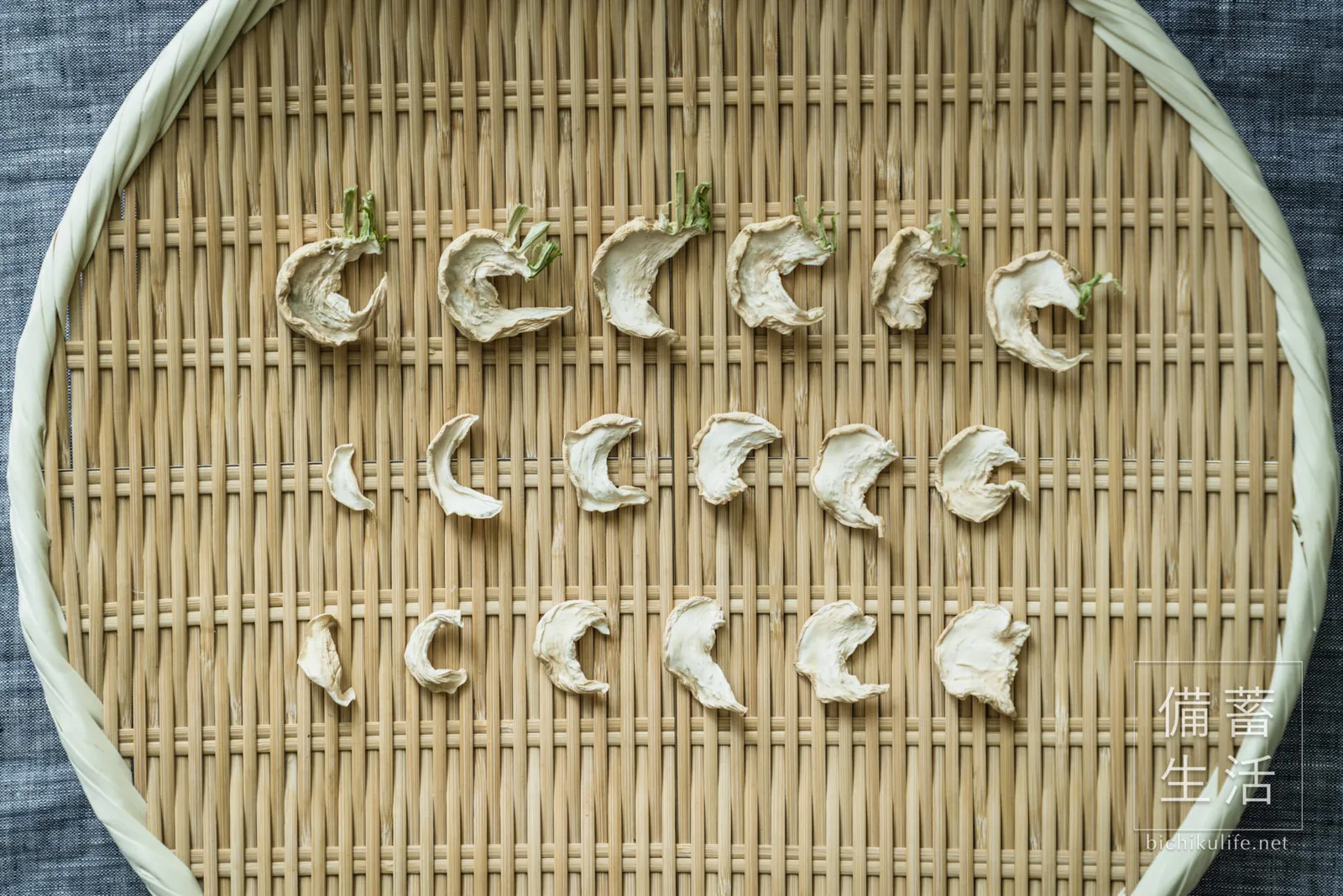
They’re done when the wedges have shrunk and wrinkled and have no give when pressed. The thick parts dry last, so check there.
Semi-dried (3 hours–half a day)
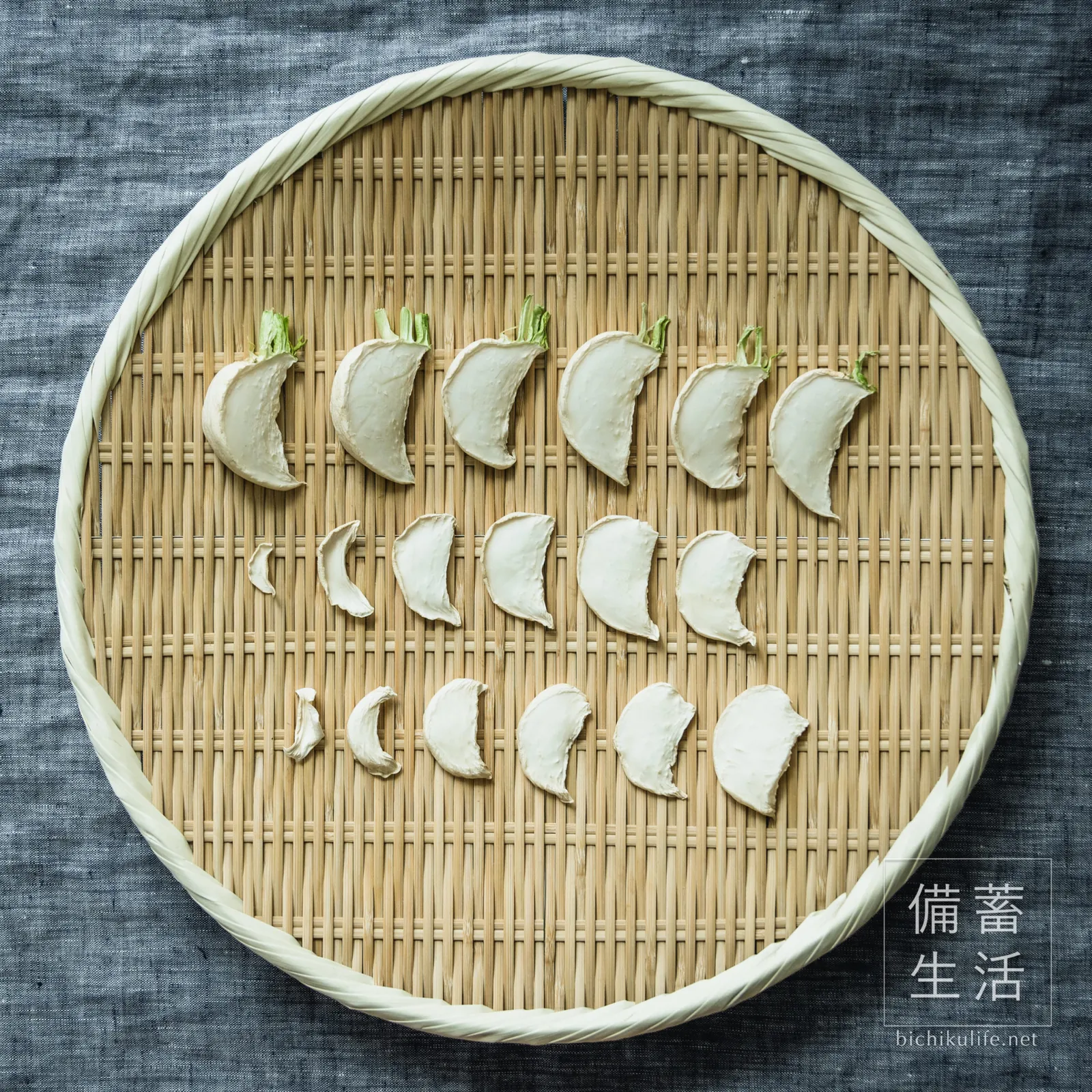
The surface is dry and the wedges are limp. Used for quick pickles, they release less water and absorb the flavor well.
Day by day
Before drying
Day 1
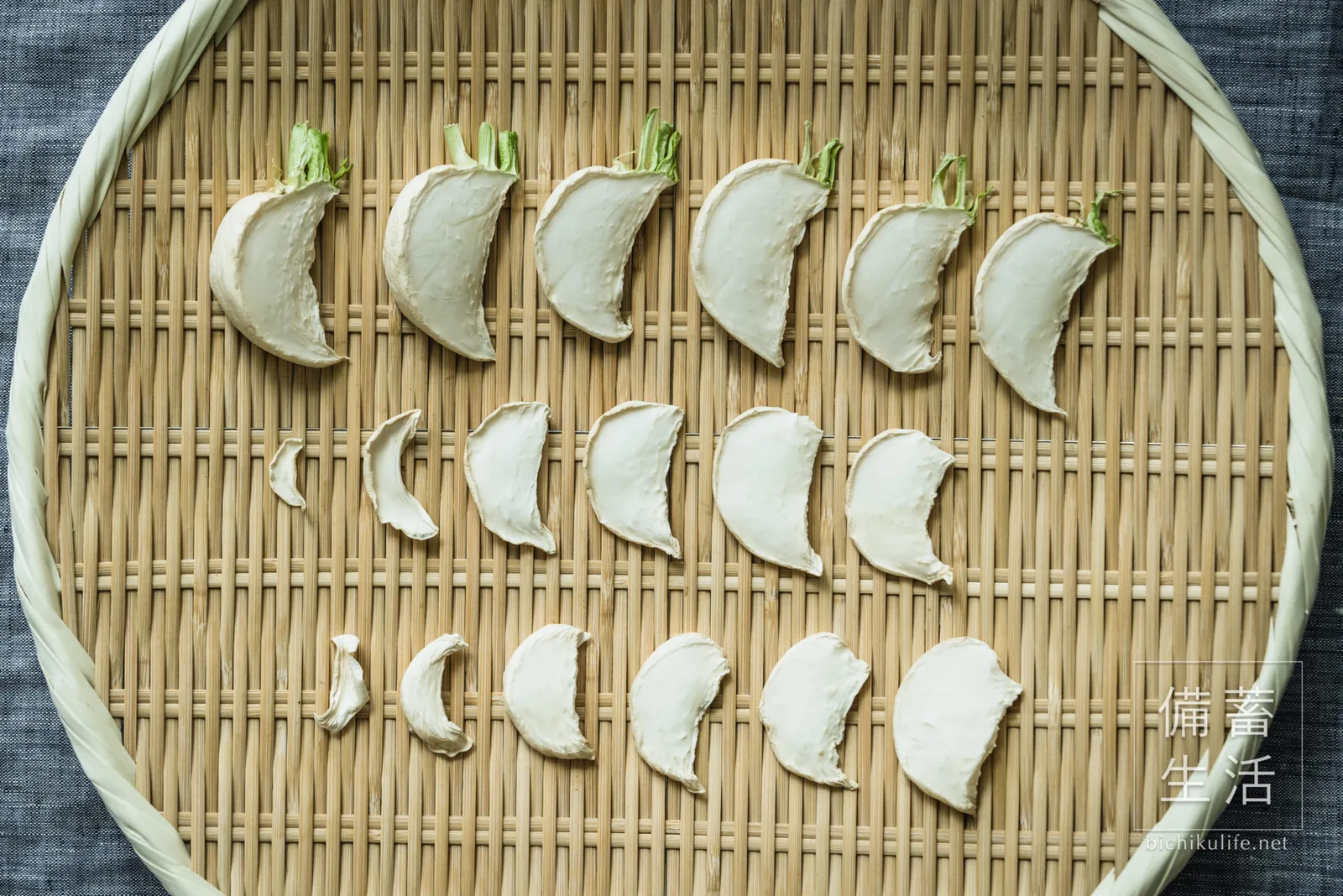
Day 2
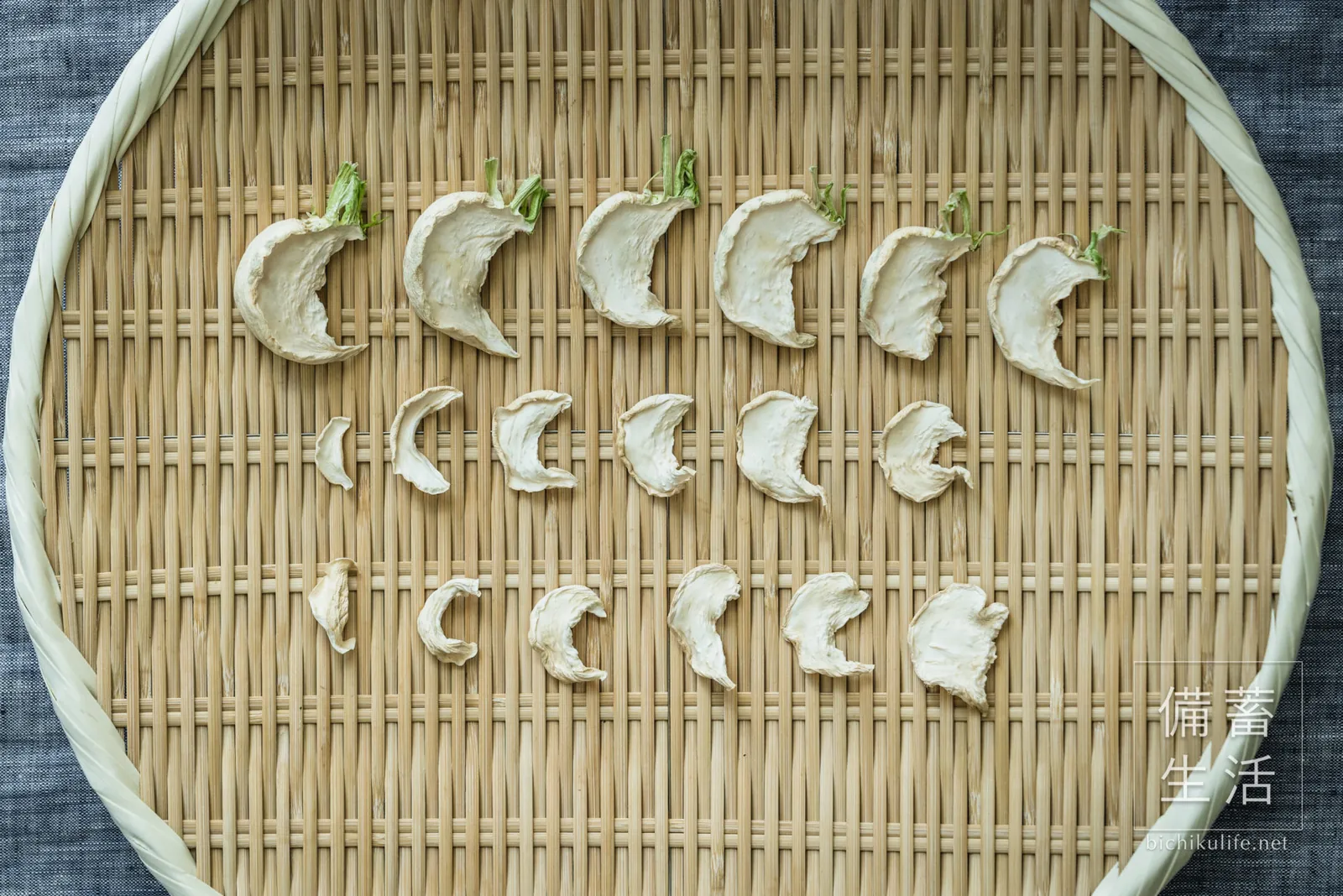
Day 3
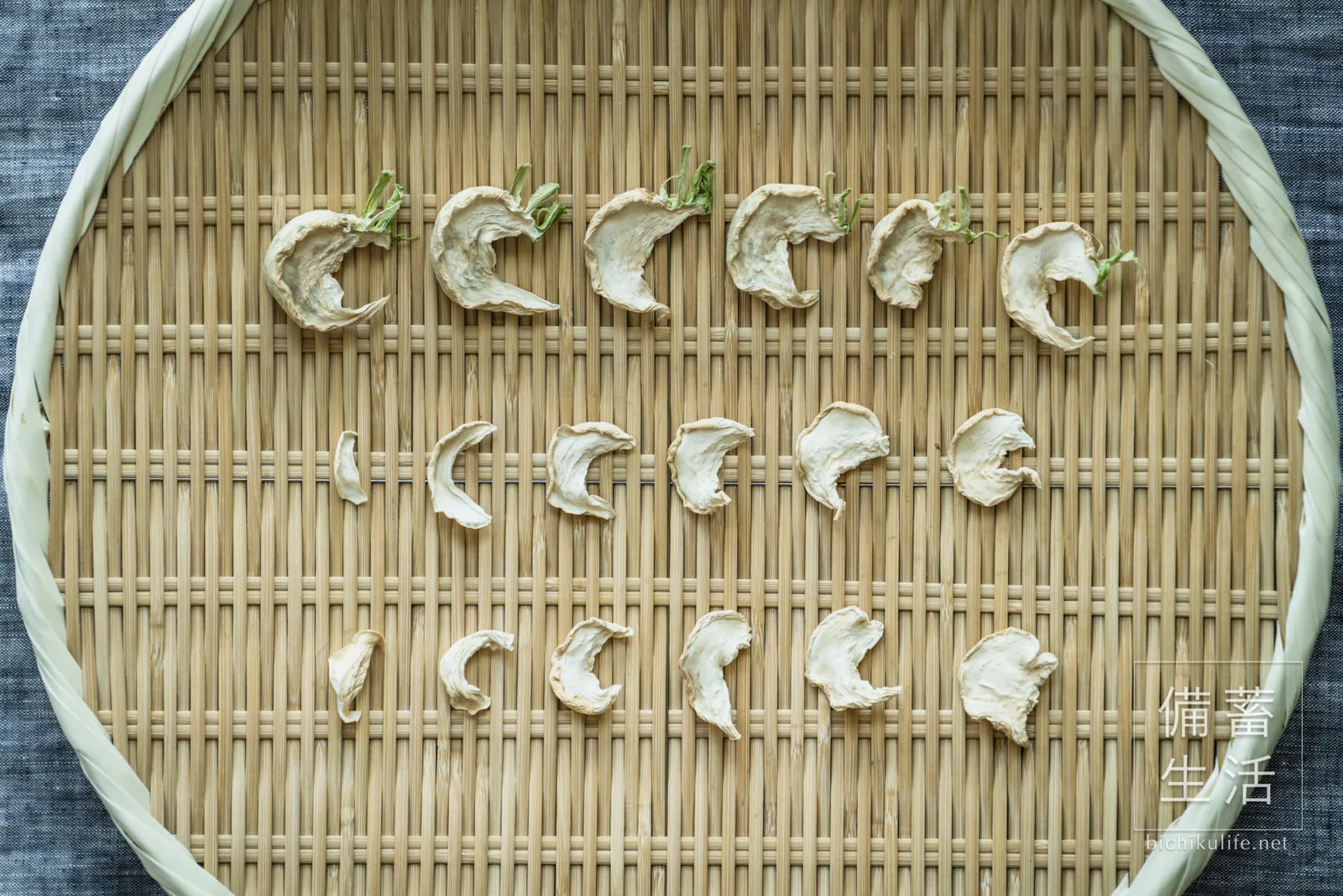
Day 4
Turnip leaves
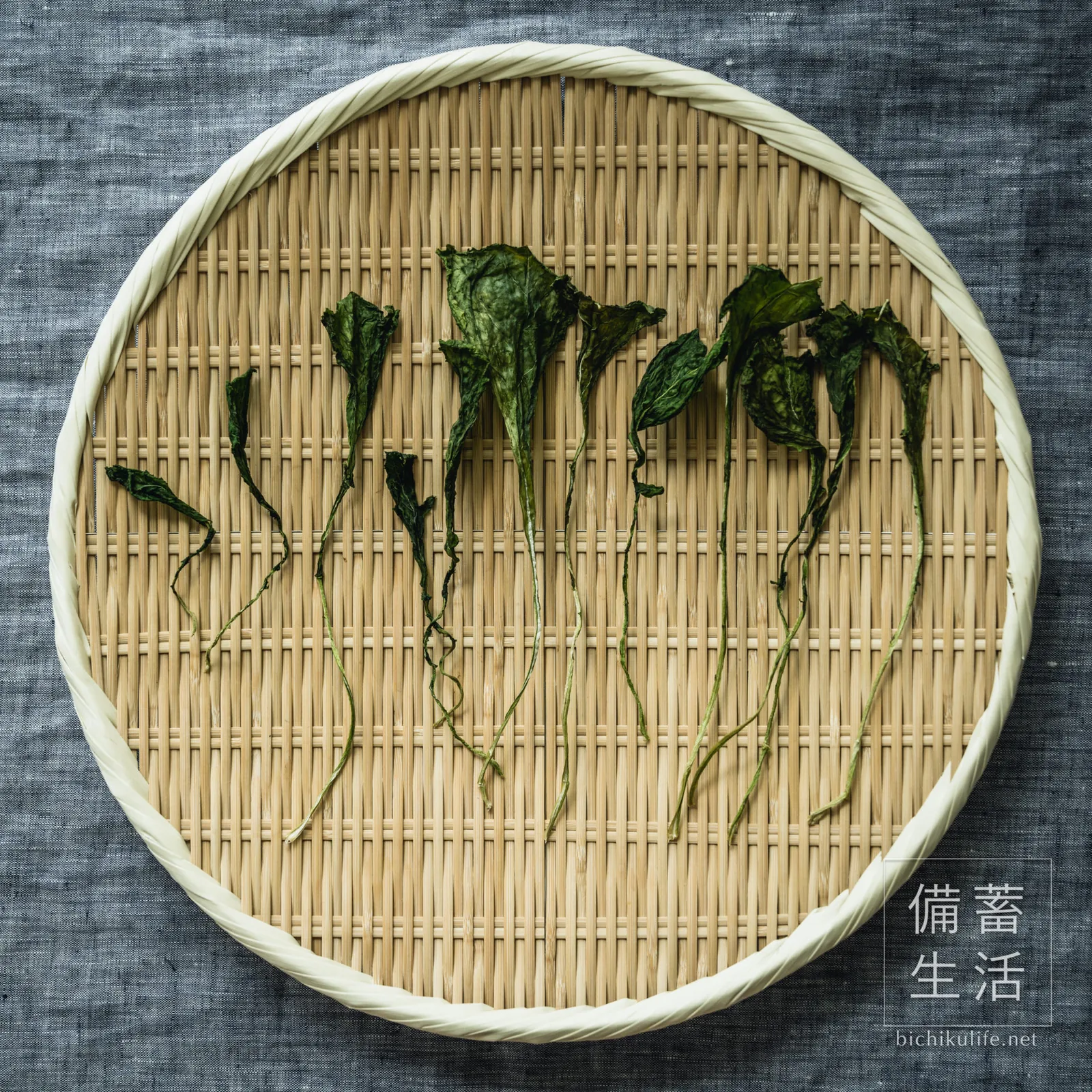
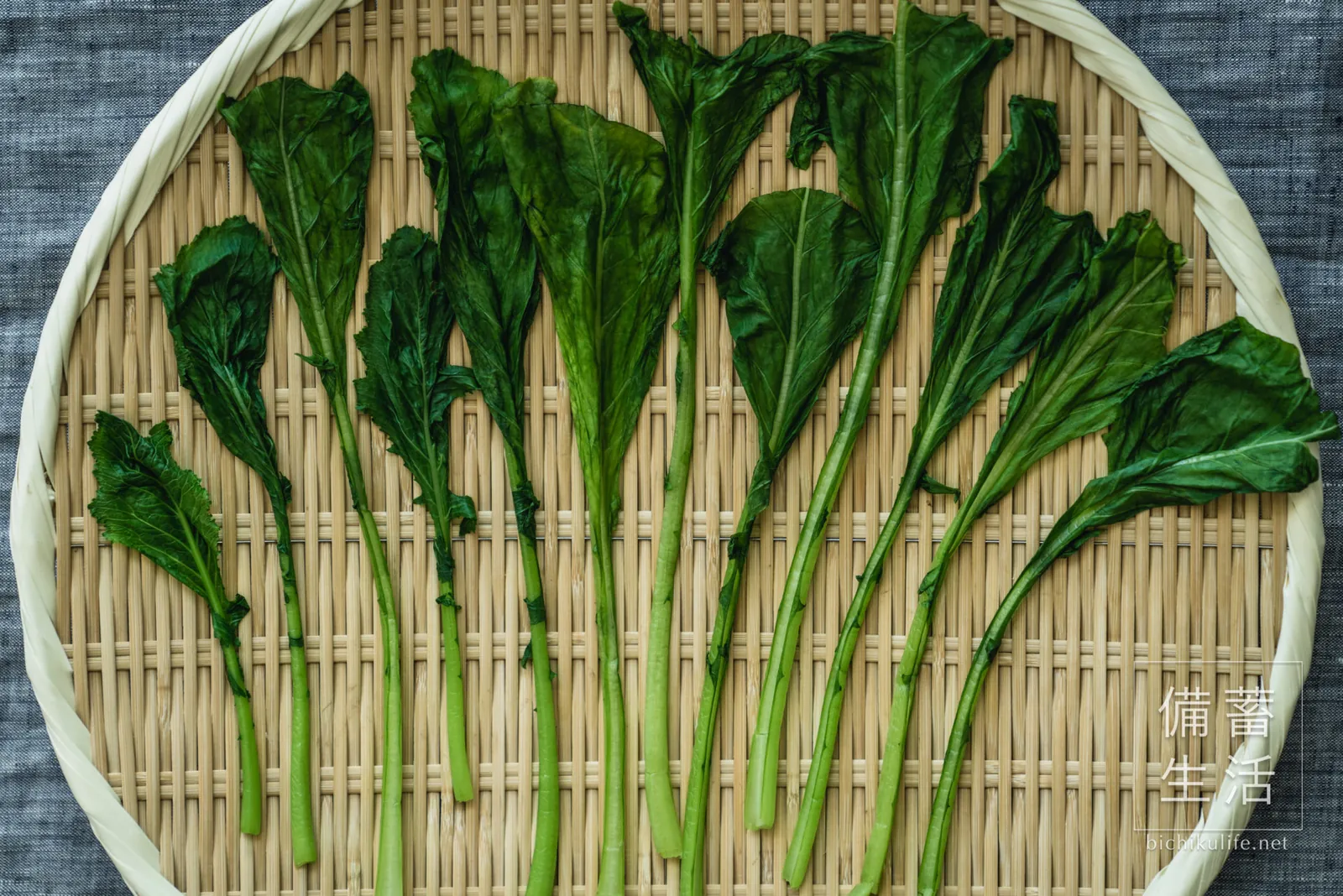
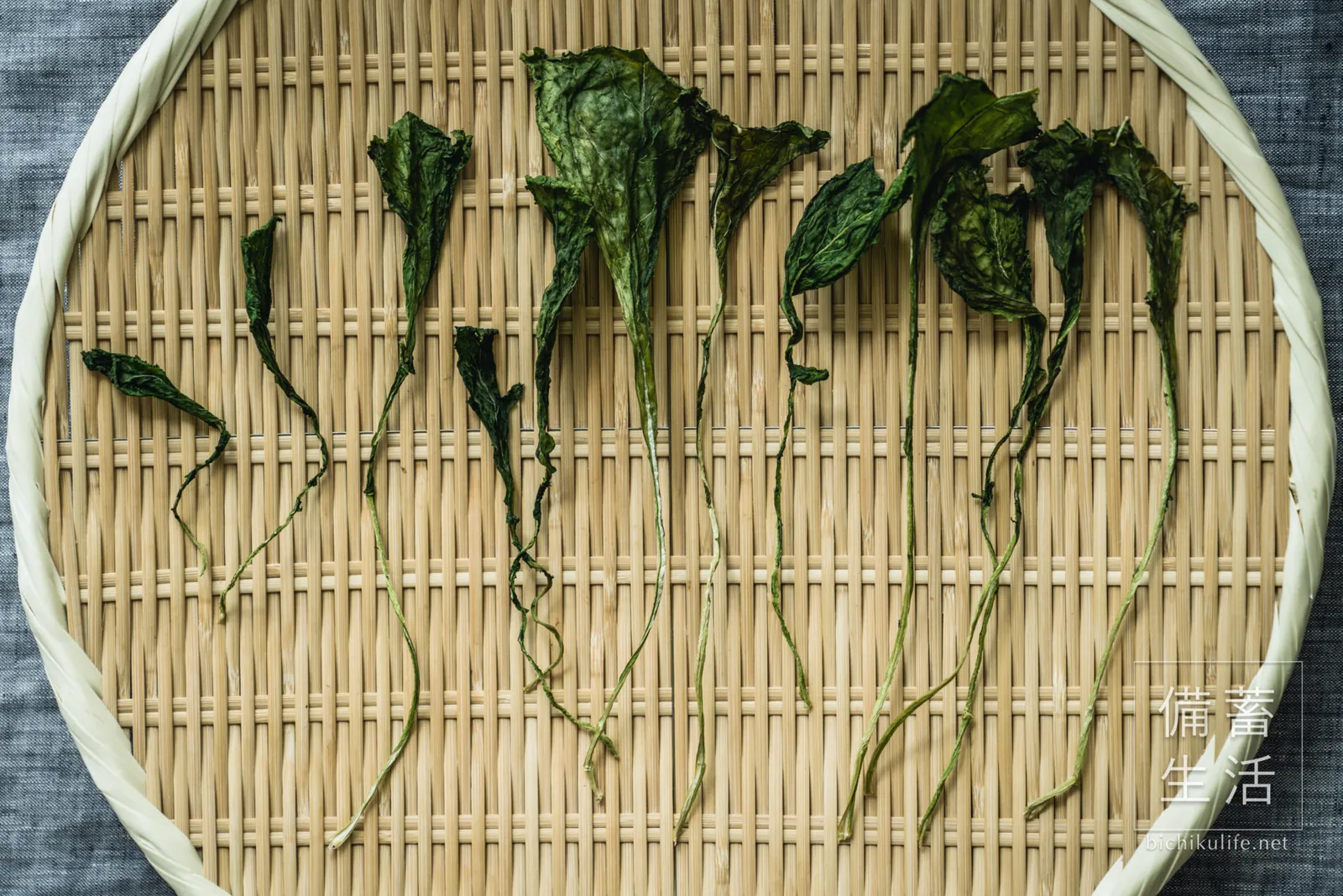
Like other leafy greens, turnip leaves are blanched briefly in salted water before drying. On a sunny day, ours were crisp in one day.
- Blanch in salted water: Add salt to boiling water and blanch for about 30 seconds.
- Dry well: Cool in cold water, squeeze out the water, then pat thoroughly dry with paper towels.
- Spread out and dry: Spreading out the leafy parts on the basket helps them dry faster.
Before drying
Day 1
Storage
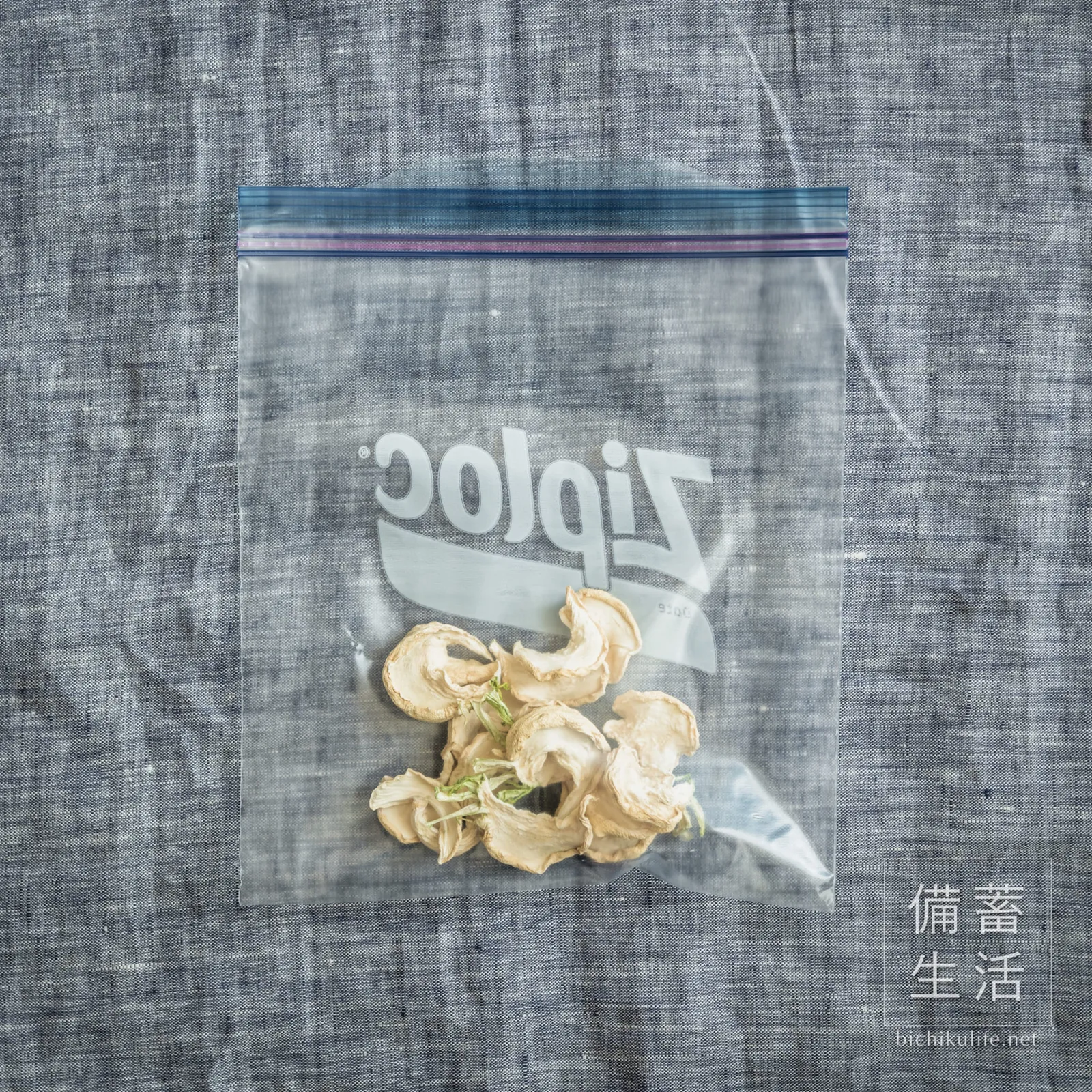
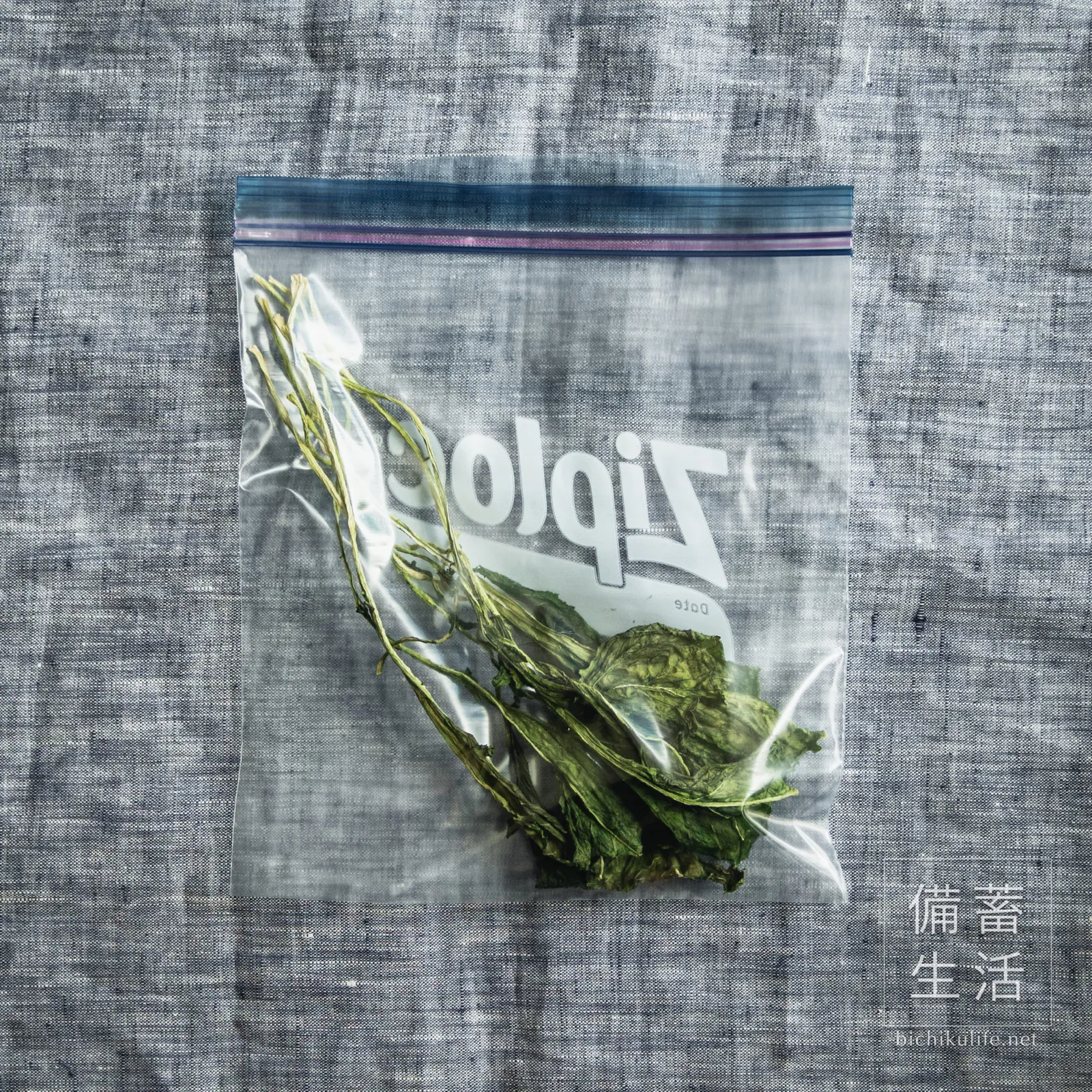
- Roots (dry): Put completely dry wedges in a bag or airtight container with a desiccant, and keep somewhere cool and out of direct sun for about 2 weeks. In humid summer weather, keep them in the fridge.
- Roots (semi-dried): Keep in a bag in the fridge and use within about 3 days.
- Leaves: Put completely crisp leaves in a bag with a desiccant. About 1 month at room temperature.
- Frozen: Both roots and leaves can be frozen for 1–2 months.
Fuzzy white or green growth, black spots or a bad smell are signs of mold or spoilage. Don’t eat them; throw them away. More in How to Store Dried Vegetables.
Rehydrating and using them
- Rehydrate the roots: Soak dry wedges in water for 15–20 minutes.
- Use the roots dry: Add straight to simmered dishes, soups, pot-au-feu and miso soup. They hold their shape and soak up the broth.
- Leaves: Crumble by hand and mix into rice, or add to miso soup or rolled omelets. Mixed with small dried fish (jako) and sesame, they make a rice seasoning.