Herbs
Dried SageDrying Time, Storage and Using It with Meat
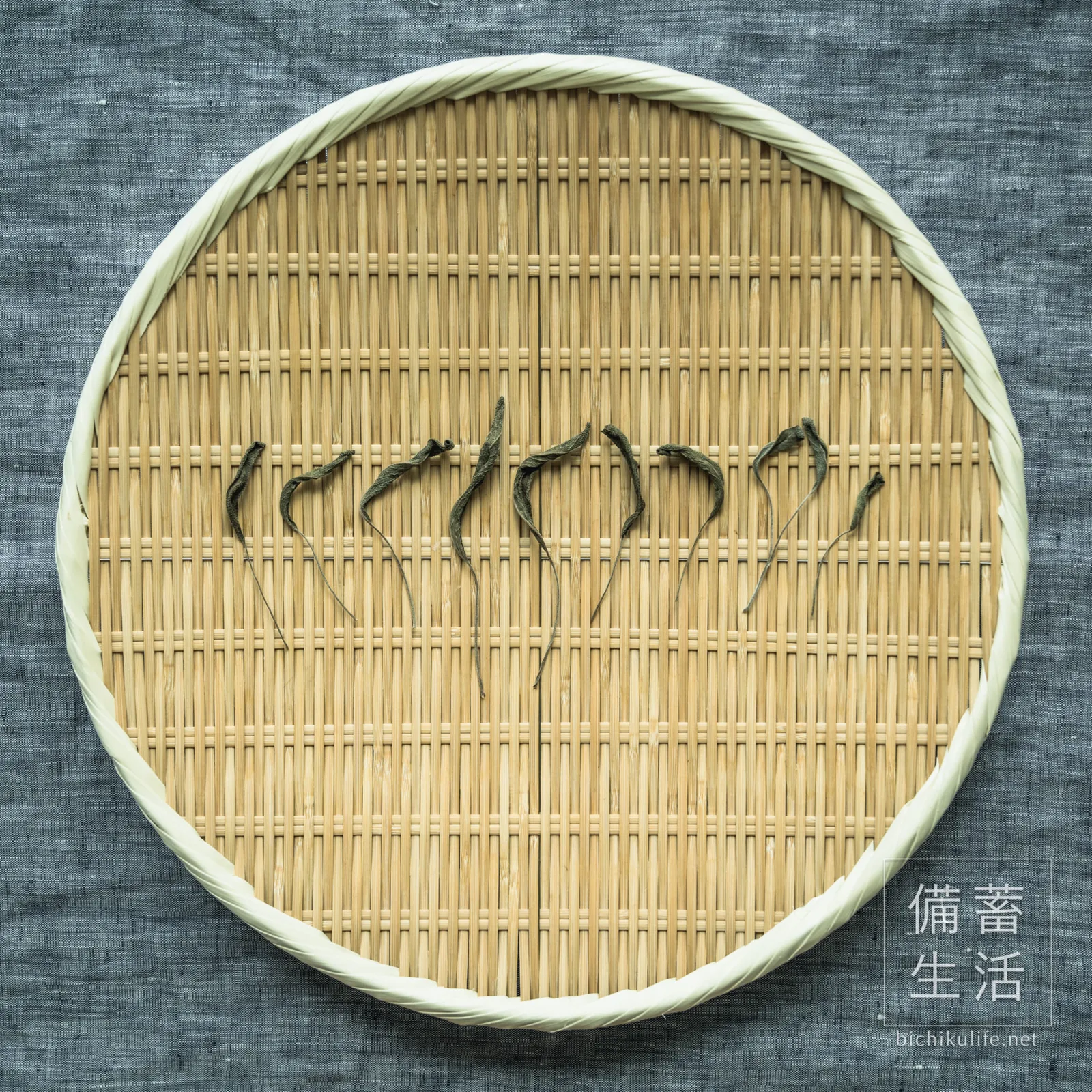
Sage is an herb with a distinctive cool, slightly bitter aroma. It’s said to be the origin of the word “sausage”, and it’s a perfect match for fatty meats like pork and liver.
It’s widely used in Italian cooking, as in the Roman dish saltimbocca (veal sautéed with prosciutto and sage). Fresh herbs don’t keep long, so dry any you have left over.
| Drying time | Storage | |
|---|---|---|
| Dry | 5–7 days | 6 months at room temperature |
Drying times assume drying during the day in sunny weather and bringing them in at night.
How to dry sage
- Wash and pat dry: Wash the leaves gently and dry them thoroughly between paper towels.
- Lay out: Lay the whole leaves on a basket without overlapping. Sage leaves are thick and take a while to dry.
- Dry: To keep the color and aroma, avoid strong direct sun and dry it in a breezy spot in shade or part shade. Bring it in by evening.
Where and when to dry is covered in How to Dry Vegetables, and tools in Tools for Drying Vegetables.
When it’s done
Dry (5–7 days)
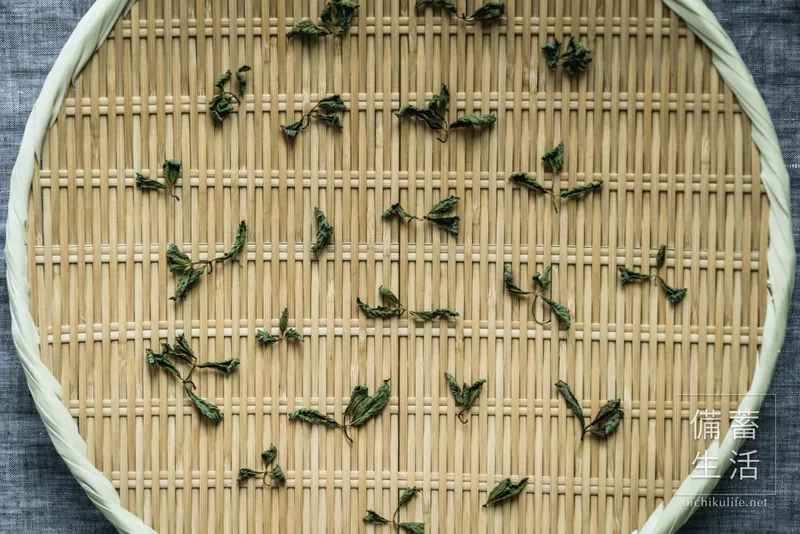
It’s done when the leaves have curled and crumble when rubbed between your fingers. The thick central vein dries last, so snap a leaf to check.
Day by day
Before drying
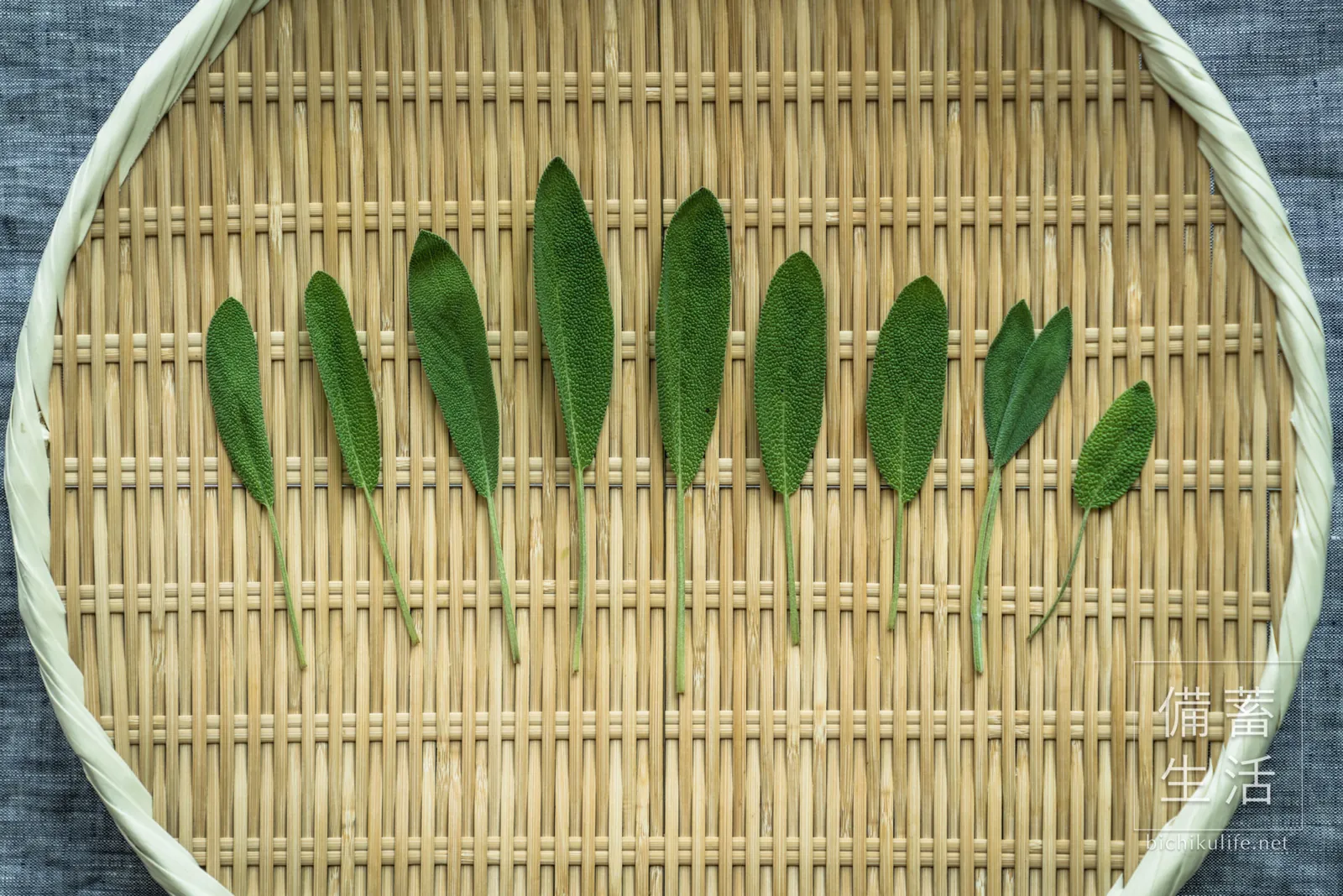
Day 1
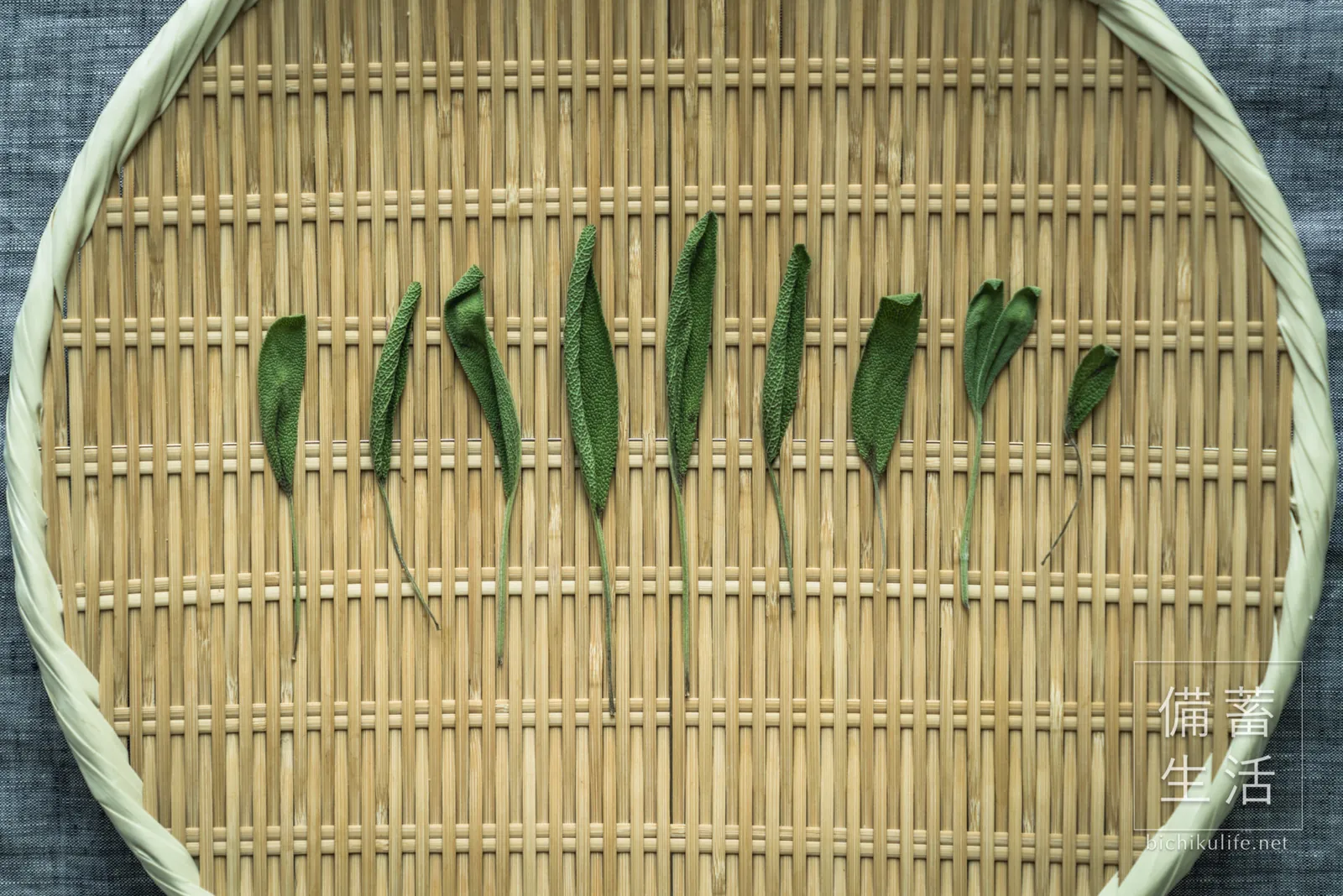
Day 2
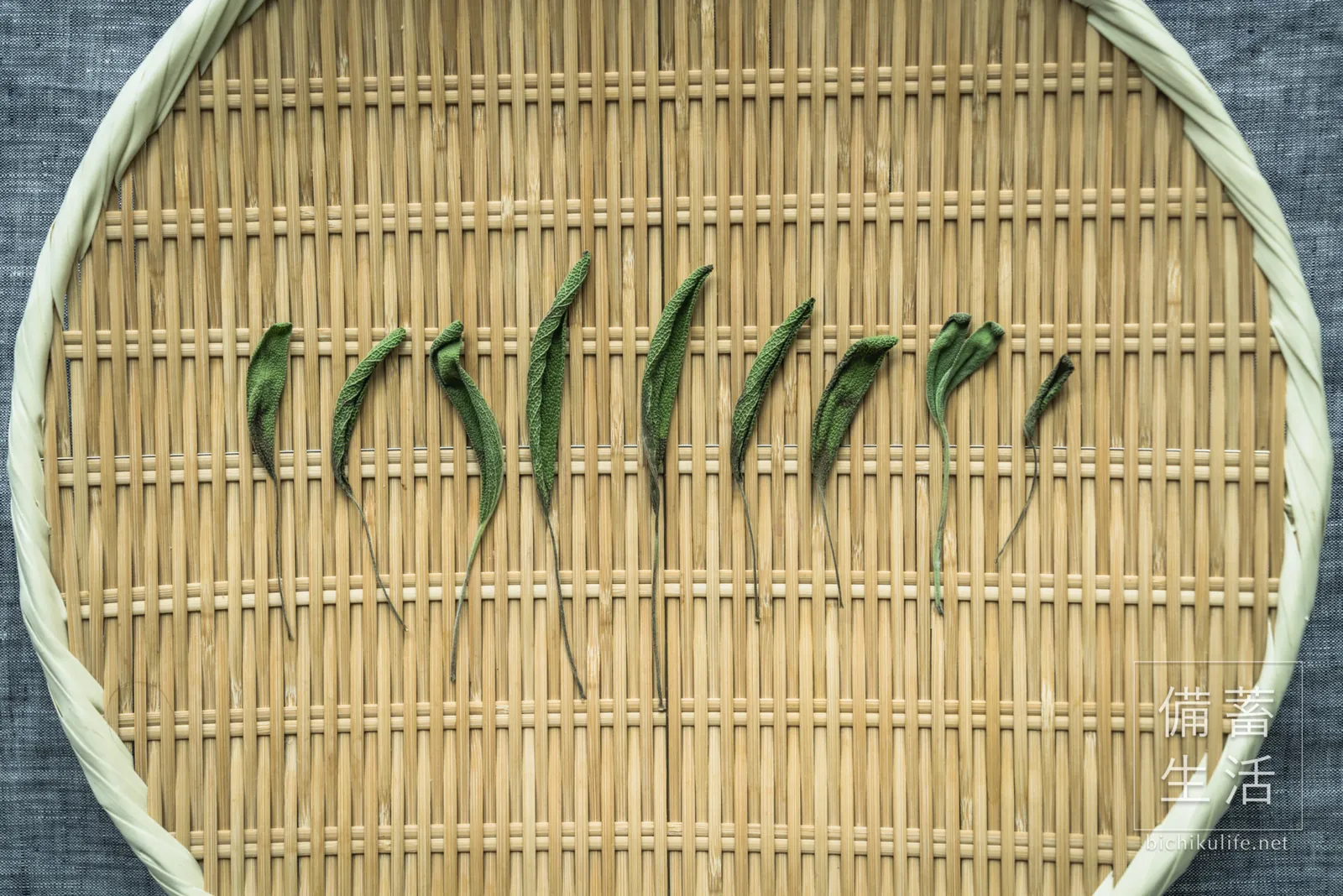
Day 3
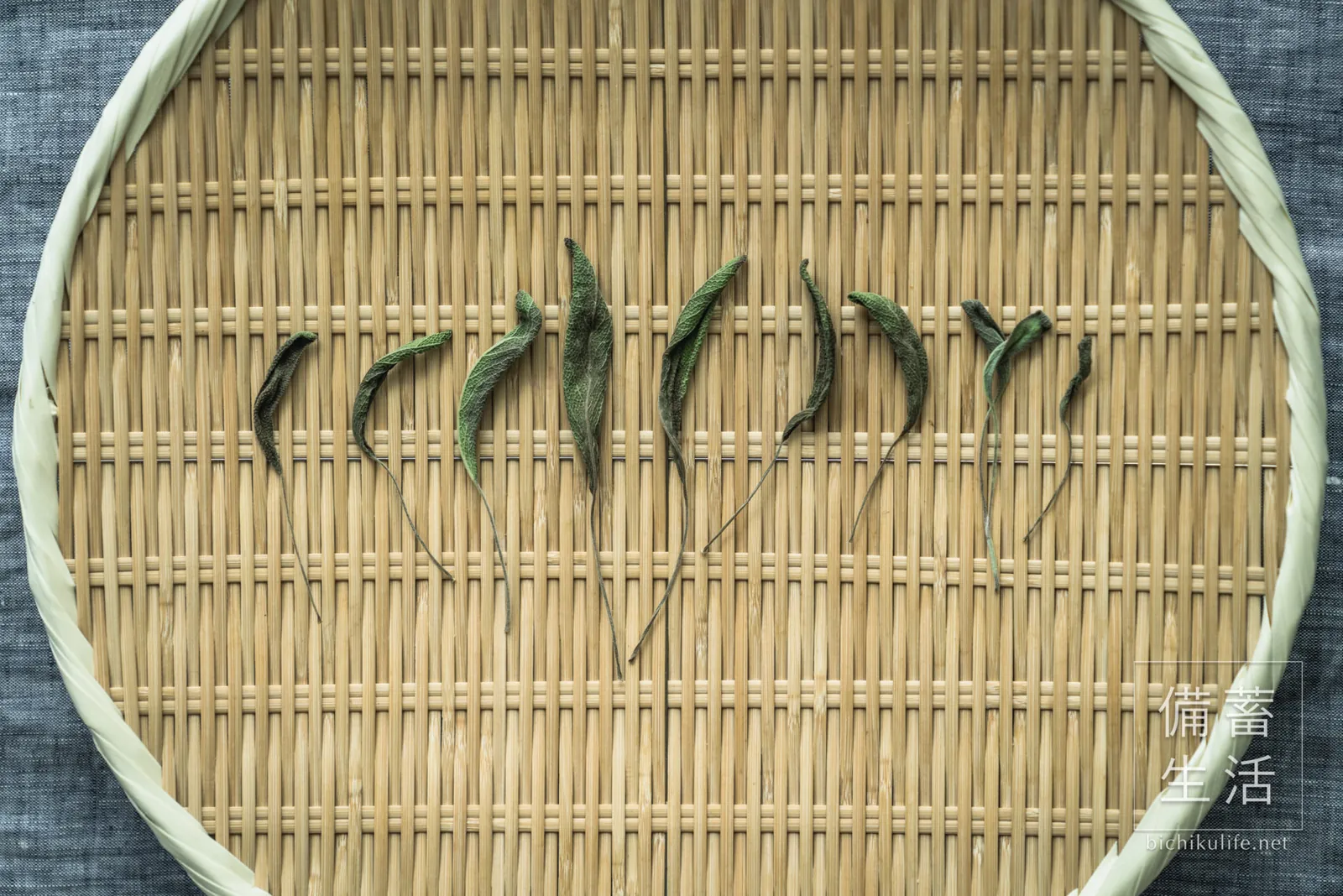
Day 4
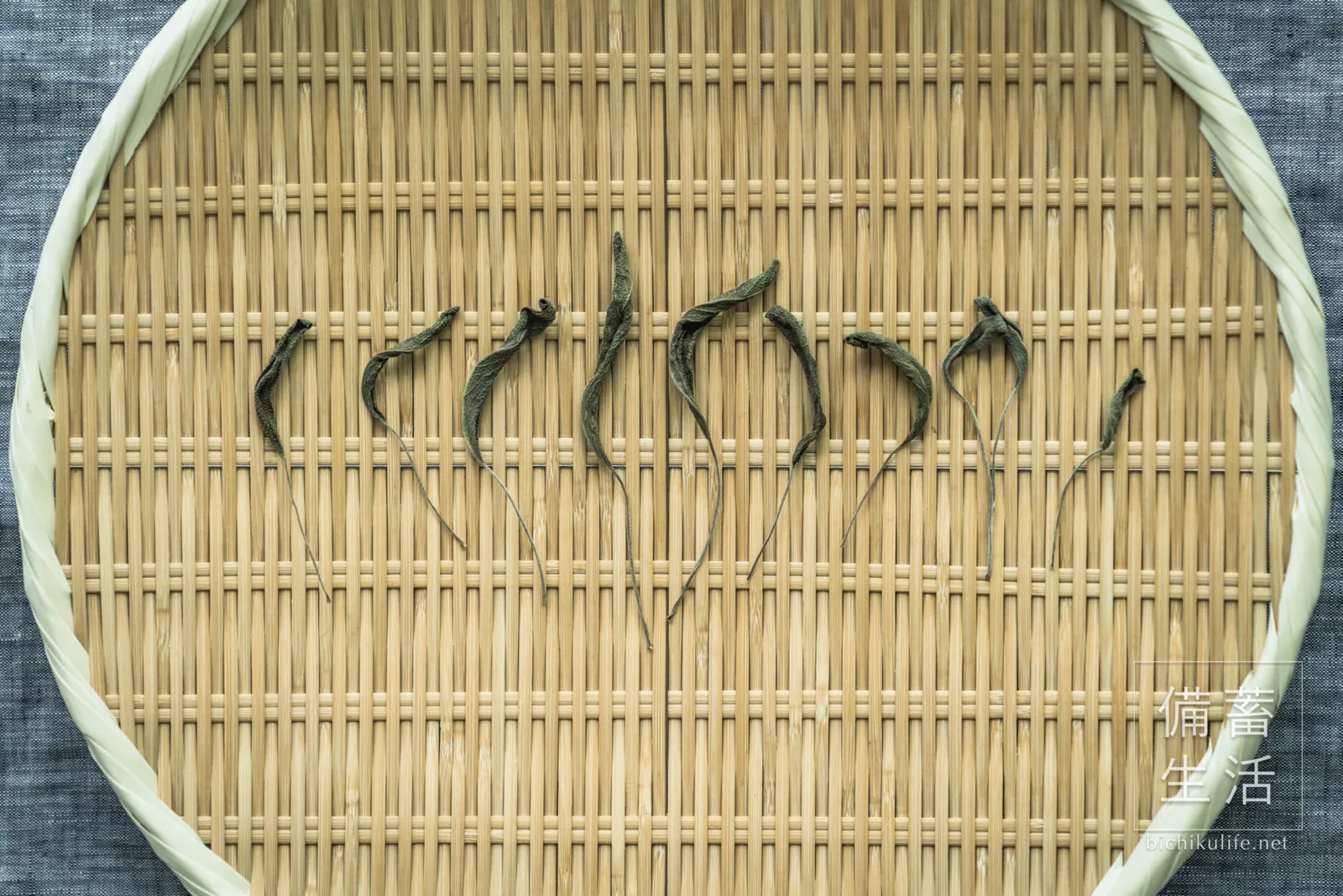
Day 5
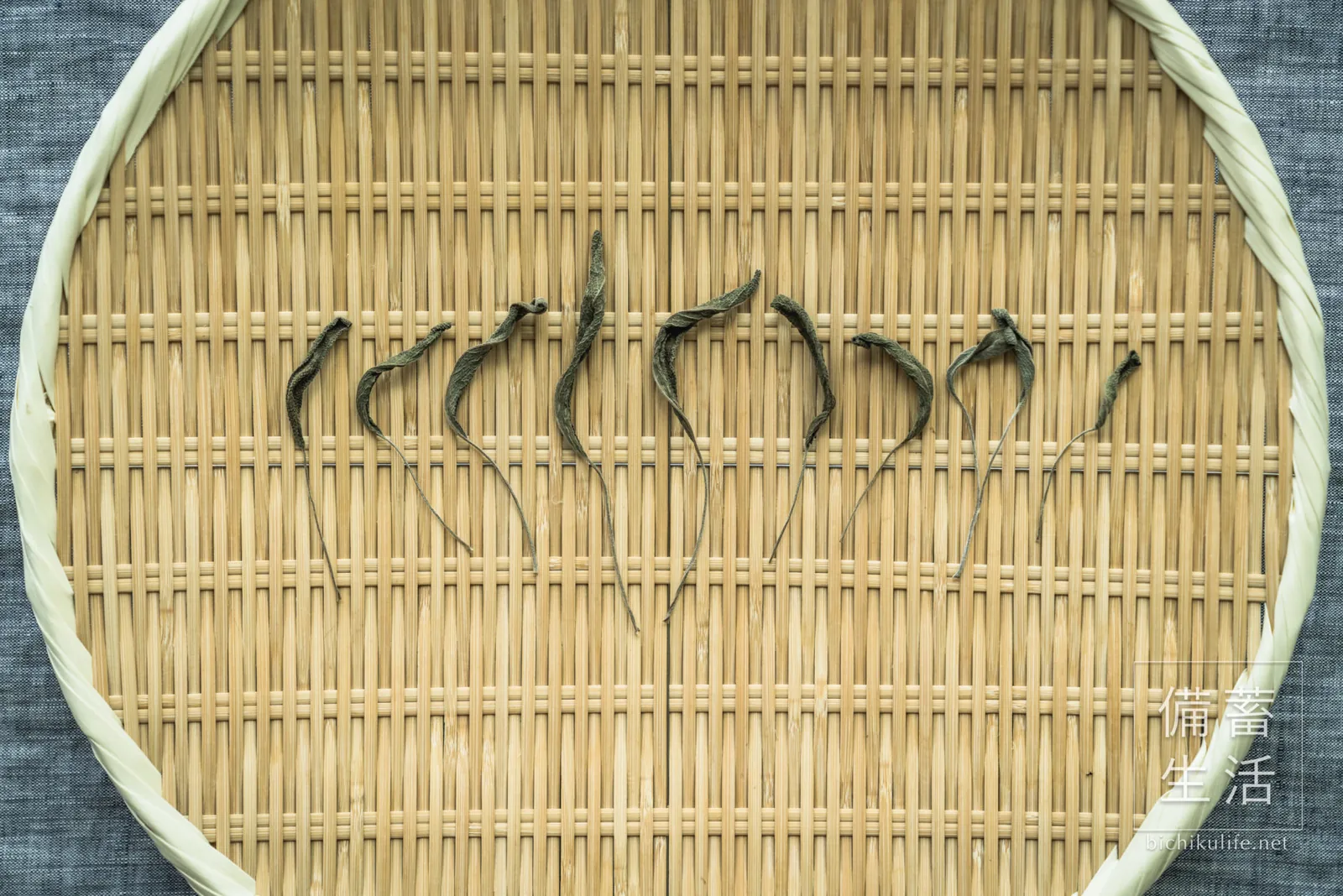
Day 6
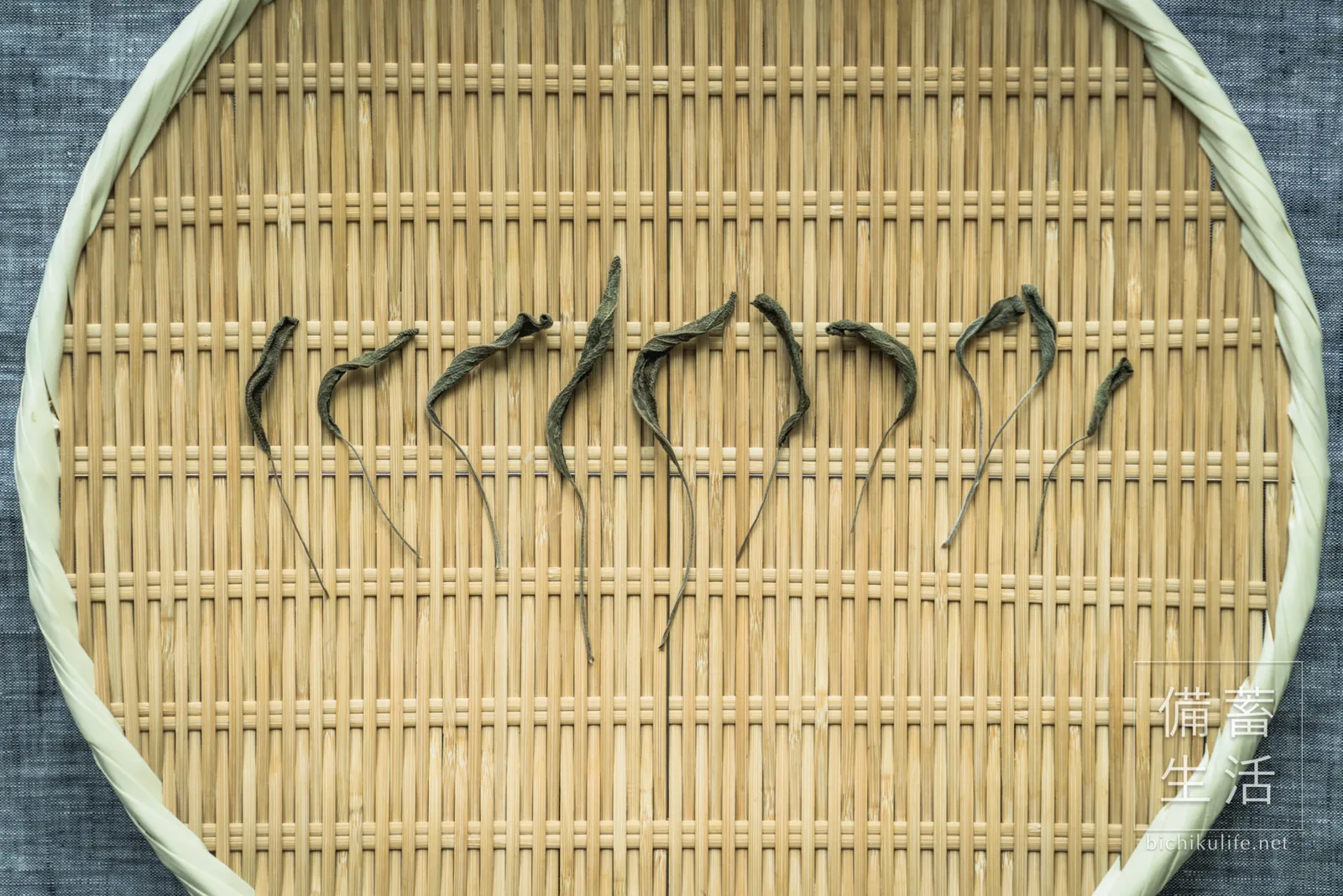
Storage
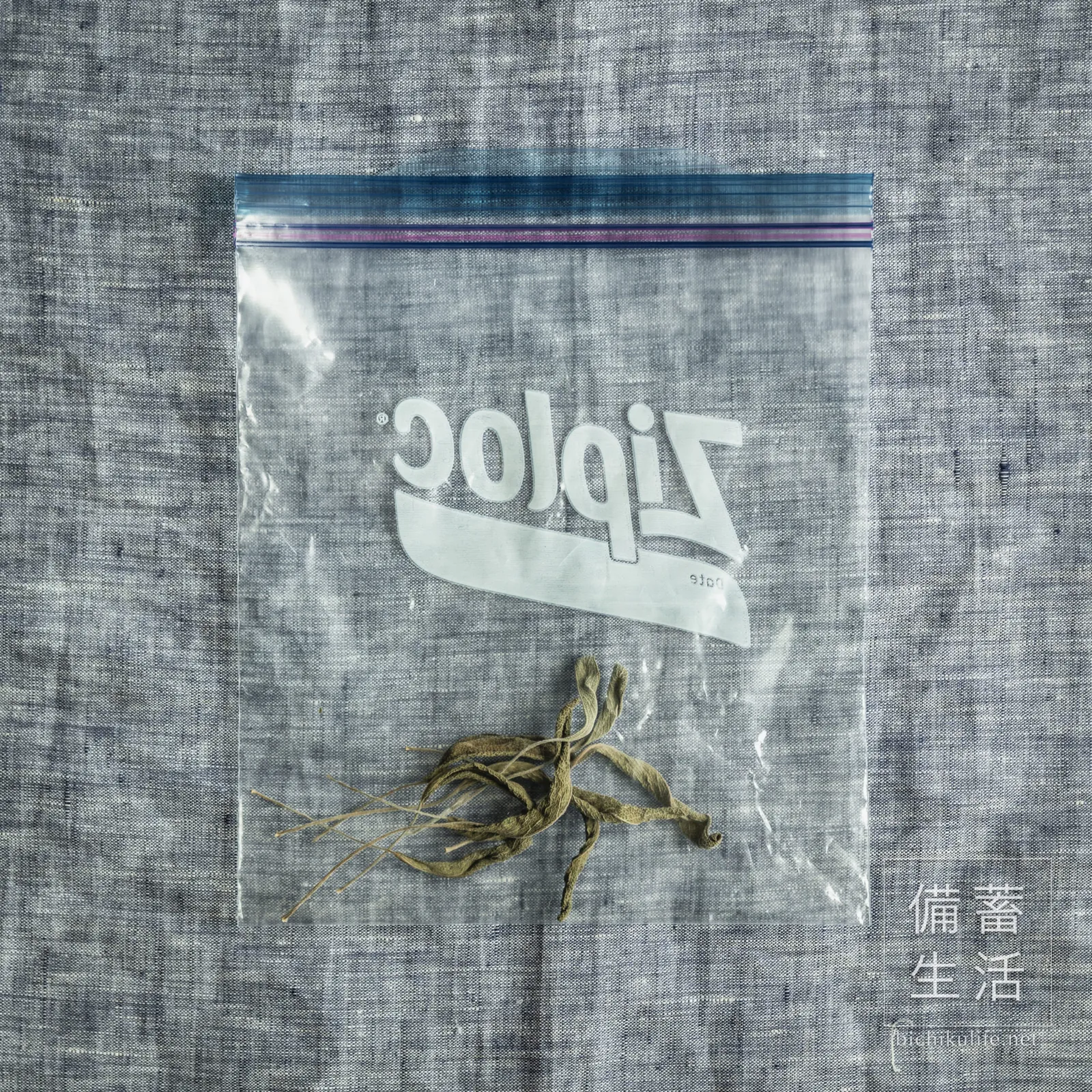
- Room temperature: Put completely crisp leaves in a jar or bag with a desiccant, and keep somewhere cool and out of direct sun for about 6 months.
The aroma fades over time, so for the best flavor, use it within about 3 months. More in How to Store Dried Vegetables.
How to use it
- With meat: Pork chops, sausage or burger mixtures, stuffing for roast chicken. Crumble it by hand and mix it in.
- In butter sauce: Warm sage gently in melted butter to infuse it, then toss with pasta or gnocchi.
- In stews: Bean stews and white bean soup.
Sage has a strong aroma, so the trick is to start with a little. It can be made into tea, but some compounds in sage are considered harmful in large amounts, so don’t drink a lot every day. If you’re pregnant or breastfeeding, avoid drinking it as tea.