Fruiting vegetables
Dried Bell PeppersDrying Time, Storage, and Omelet and Sesame Recipes
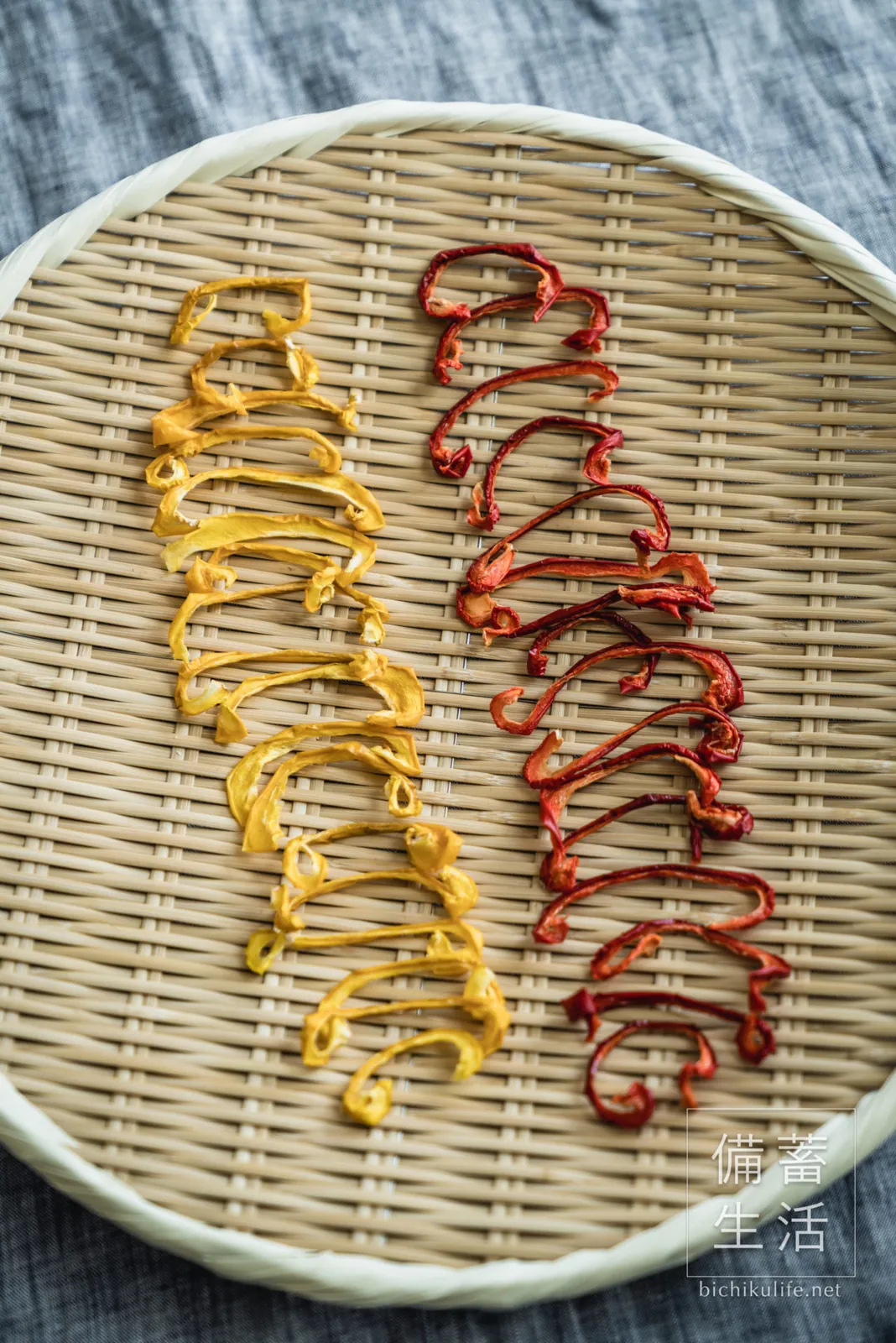
Red and yellow bell peppers brighten up any meal. They’re harvested fully ripe, so they’re sweeter and less bitter than green peppers.
Dried, they stay mild and get sweeter. Add them to omelets and stews, or blanch them for salads and marinades. They work in Japanese and Western cooking alike.
| Drying time | Storage | |
|---|---|---|
| Dry | 2–4 days | 2 weeks at room temperature (fridge in humid summer) |
| Semi-dried | 3 hours | 3 days in the fridge |
Drying times assume drying during the day in sunny weather and bringing them in at night.
How to dry bell peppers
- Cut: Halve lengthwise, remove the stem, seeds and white ribs, and cut into strips about 1 cm (⅜ in) wide.
- Pat dry: Wipe the inside dry with paper towels.
- Lay out and dry: Spread them on a basket without overlapping, somewhere sunny and breezy. Turn them about once a day and bring them in by evening.
Drying red and yellow together looks pretty. Where and when to dry is covered in How to Dry Vegetables, and tools in Tools for Drying Vegetables.
When they’re done
Dry (2–4 days)
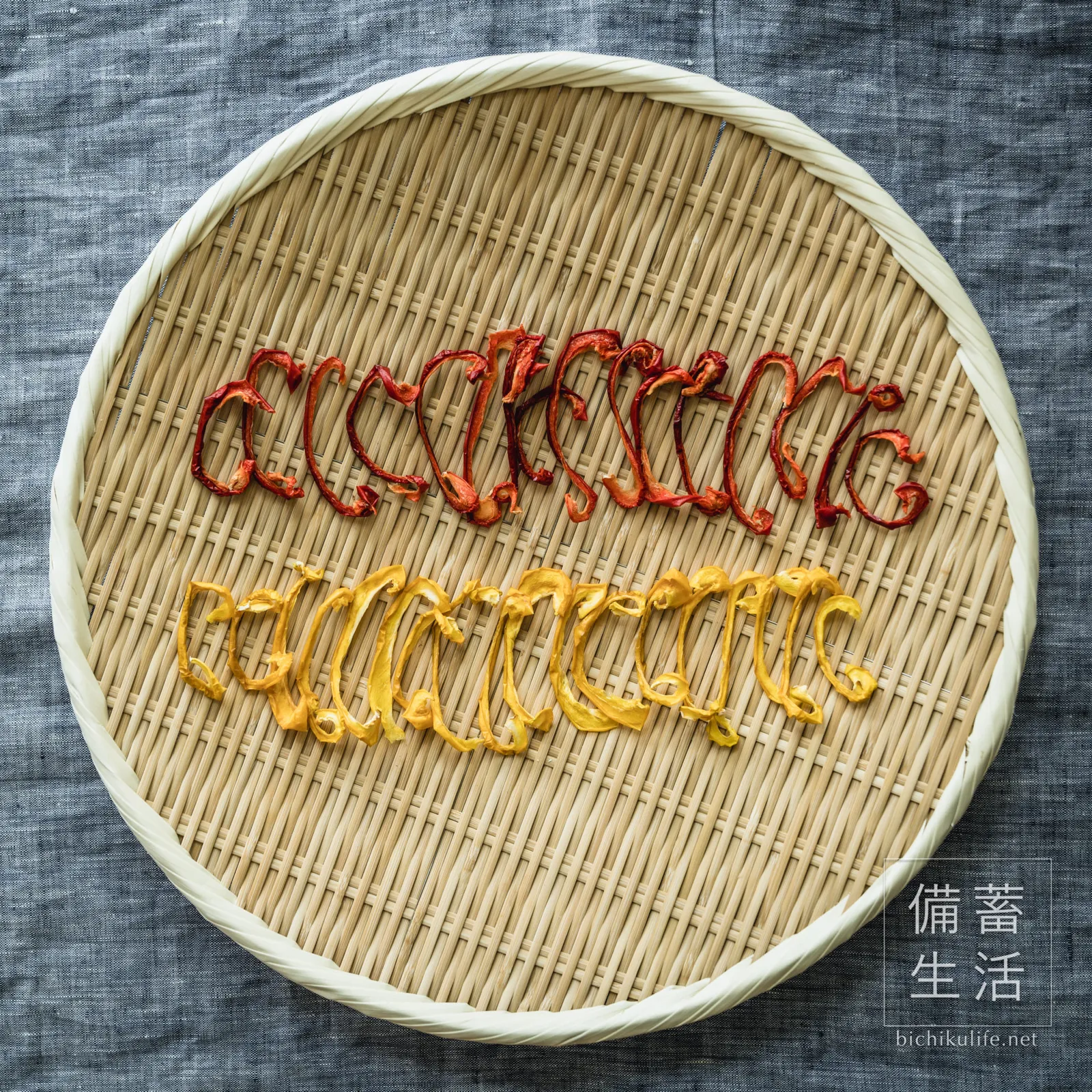
They’re done when they’ve shrunk into thin strips, the color has deepened and the skin has wrinkled. The thick flesh dries last, so pinch to check there’s no springiness left.
Semi-dried (3 hours)
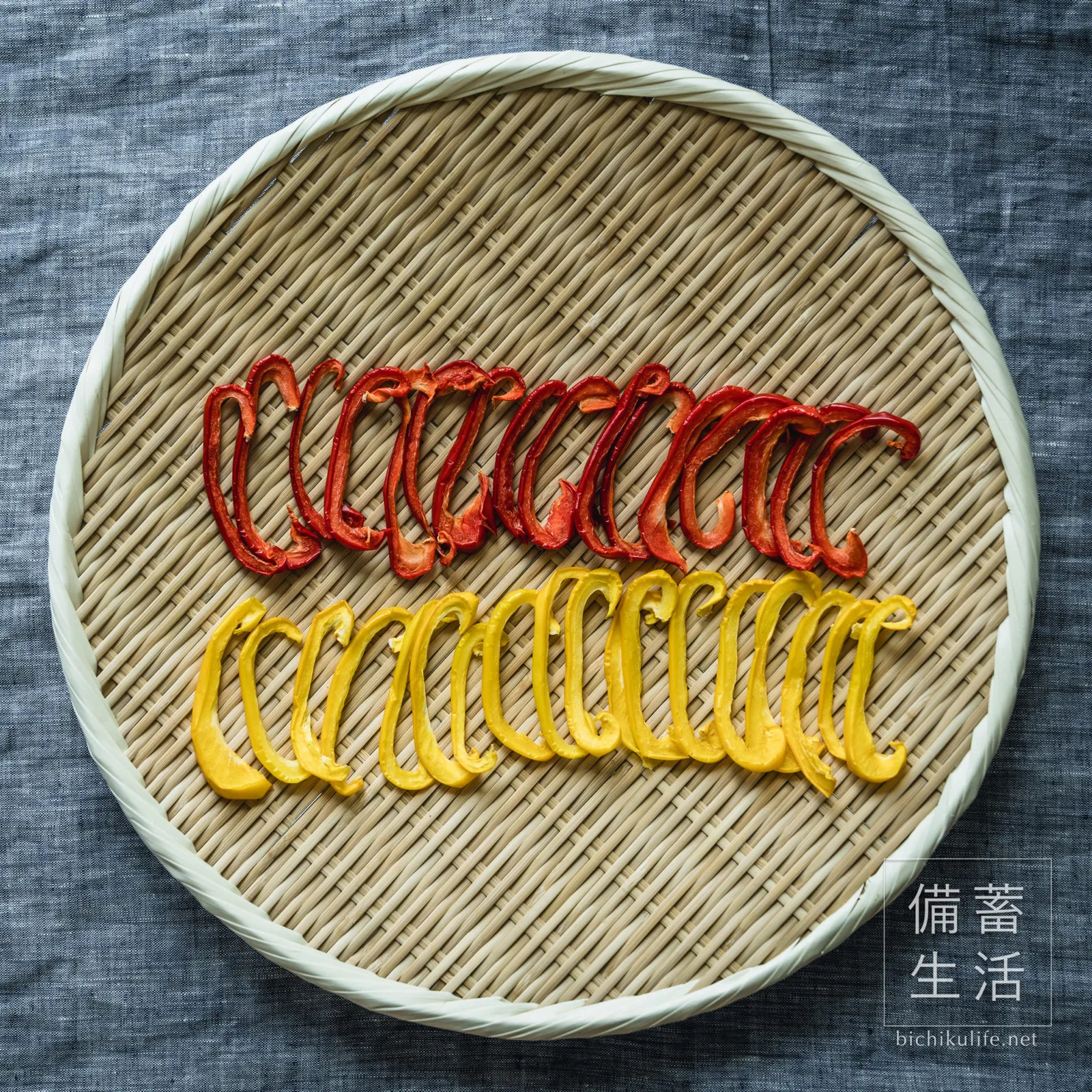
The surface is dry and they’re slightly limp. In stir-fries and marinades, their sweetness stands out.
Day by day
Before drying
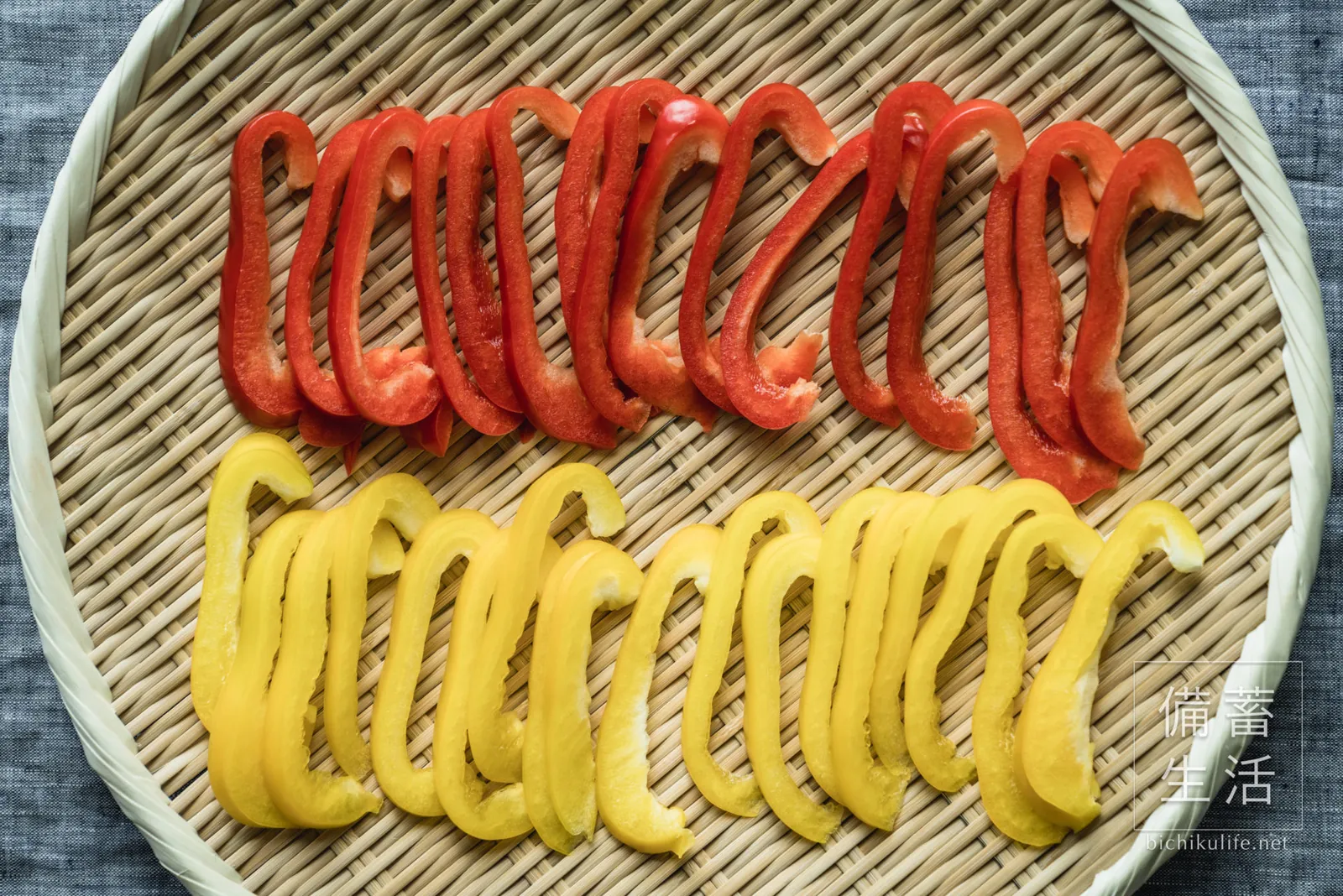
Day 1
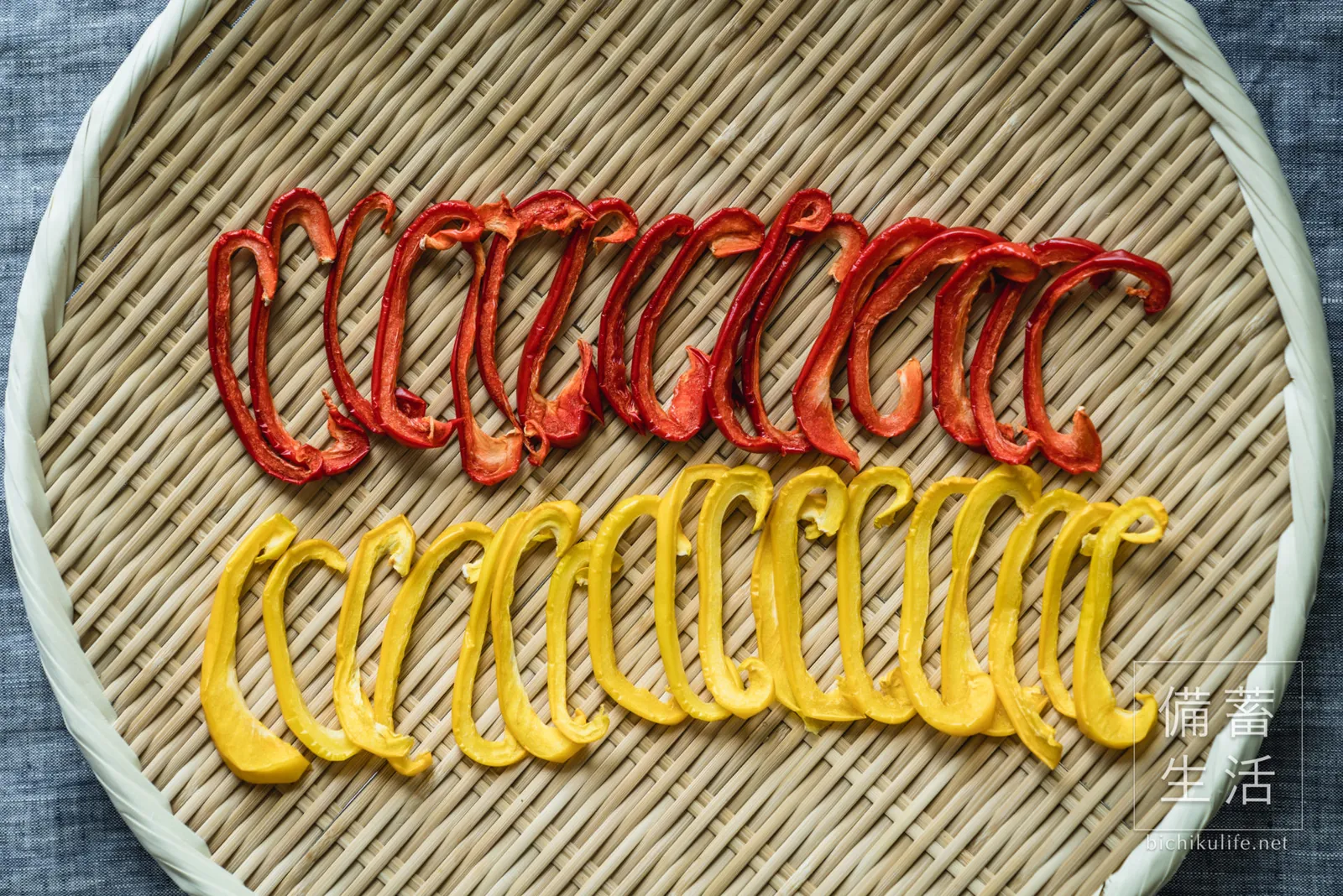
Day 2
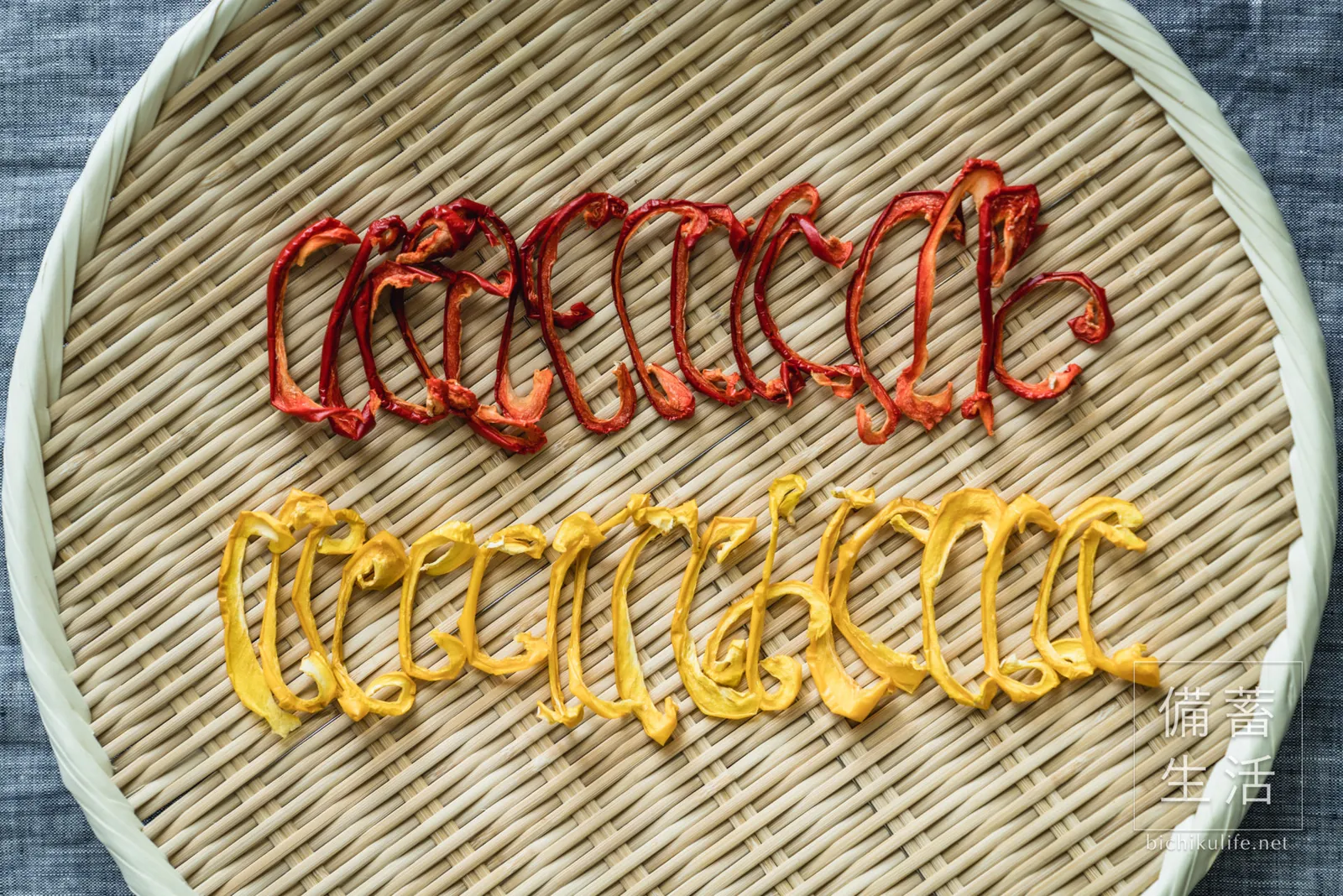
Day 3
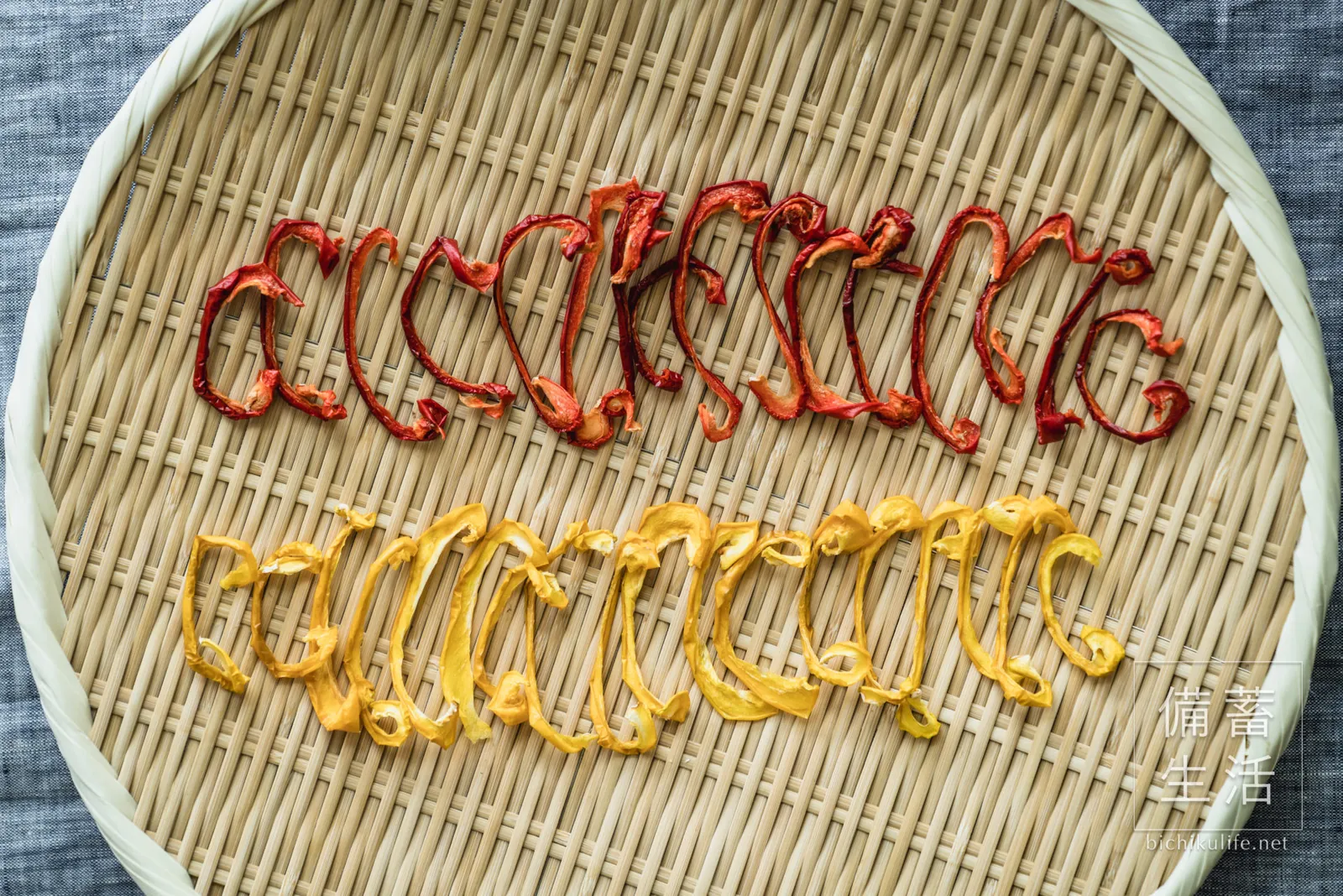
Storage
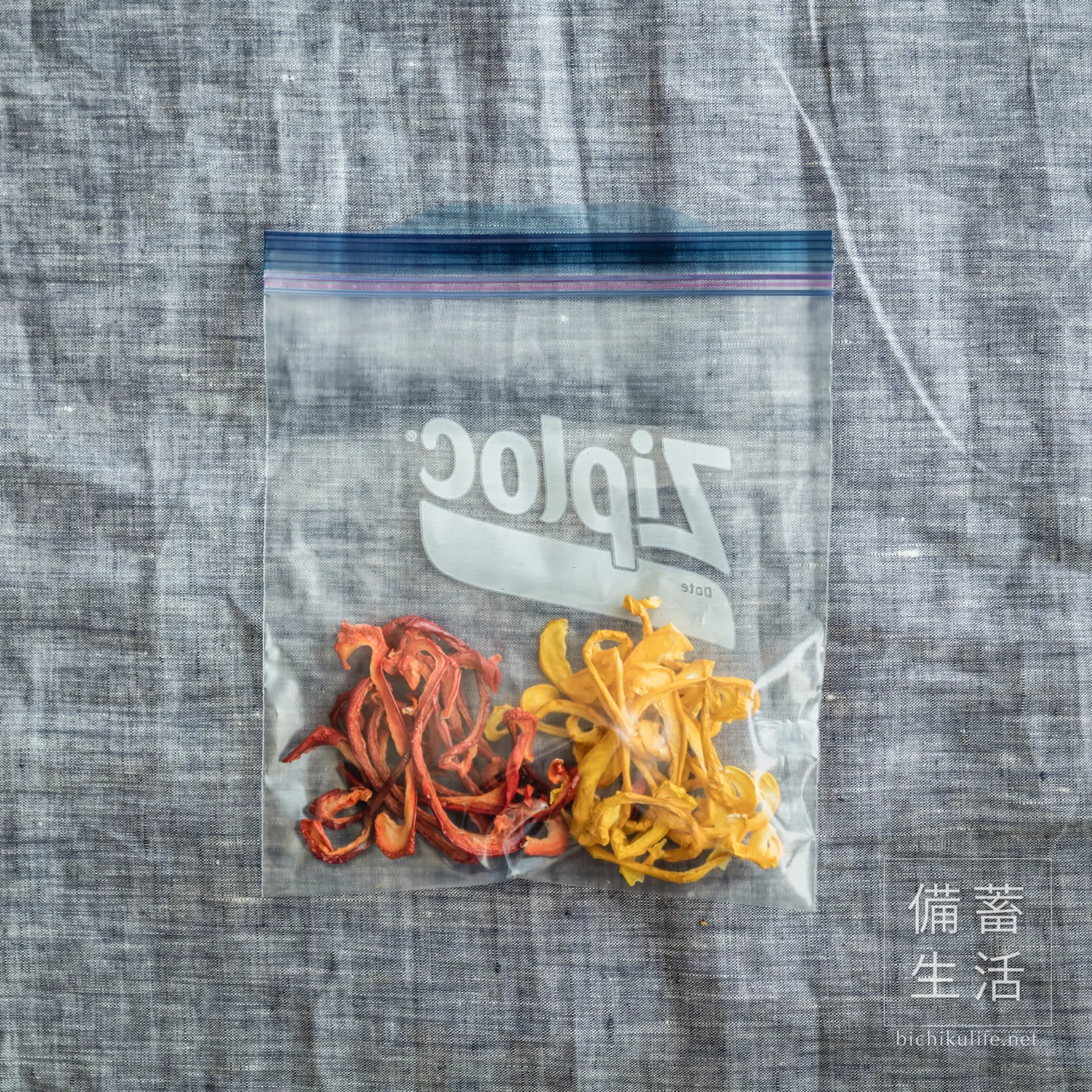
- Dry: Put completely dry peppers in a bag or airtight container with a desiccant, and keep somewhere cool and out of direct sun for about 2 weeks. In humid summer weather, keep them in the fridge.
- Semi-dried: Keep in a bag in the fridge and use within about 3 days.
- Frozen: Both dry and semi-dried can be frozen for about 1 month.
Fuzzy white or green growth, black spots or a bad smell are signs of mold or spoilage. Don’t eat them; throw them away. More in How to Store Dried Vegetables.
Rehydrating and using them
- Rehydrate: Soak dry strips in hot water for about 3 minutes and pat dry.
- Use them dry: Add them straight to soups, ratatouille, curry, and rice cooked paella-style.
- Semi-dried: Use as is in stir-fries, marinades and salads.
Recipes
Dried bell pepper omelet

- Dried bell peppers from ½ red and ½ yellow pepper
- ½ tbsp olive oil
- A pinch of salt
- 2 eggs
- Use semi-dried peppers as is; soak dry ones in hot water for 3 minutes and pat dry.
- Heat the olive oil in a frying pan, stir-fry the peppers over medium heat, and sprinkle with a pinch of salt.
- Beat the eggs with a pinch of salt and pour into the pan.
- Stir over medium heat until set, then roll from the edge into an omelet shape.
Adding dried basil gives it a fresh, fragrant finish.
Dried bell peppers with sesame
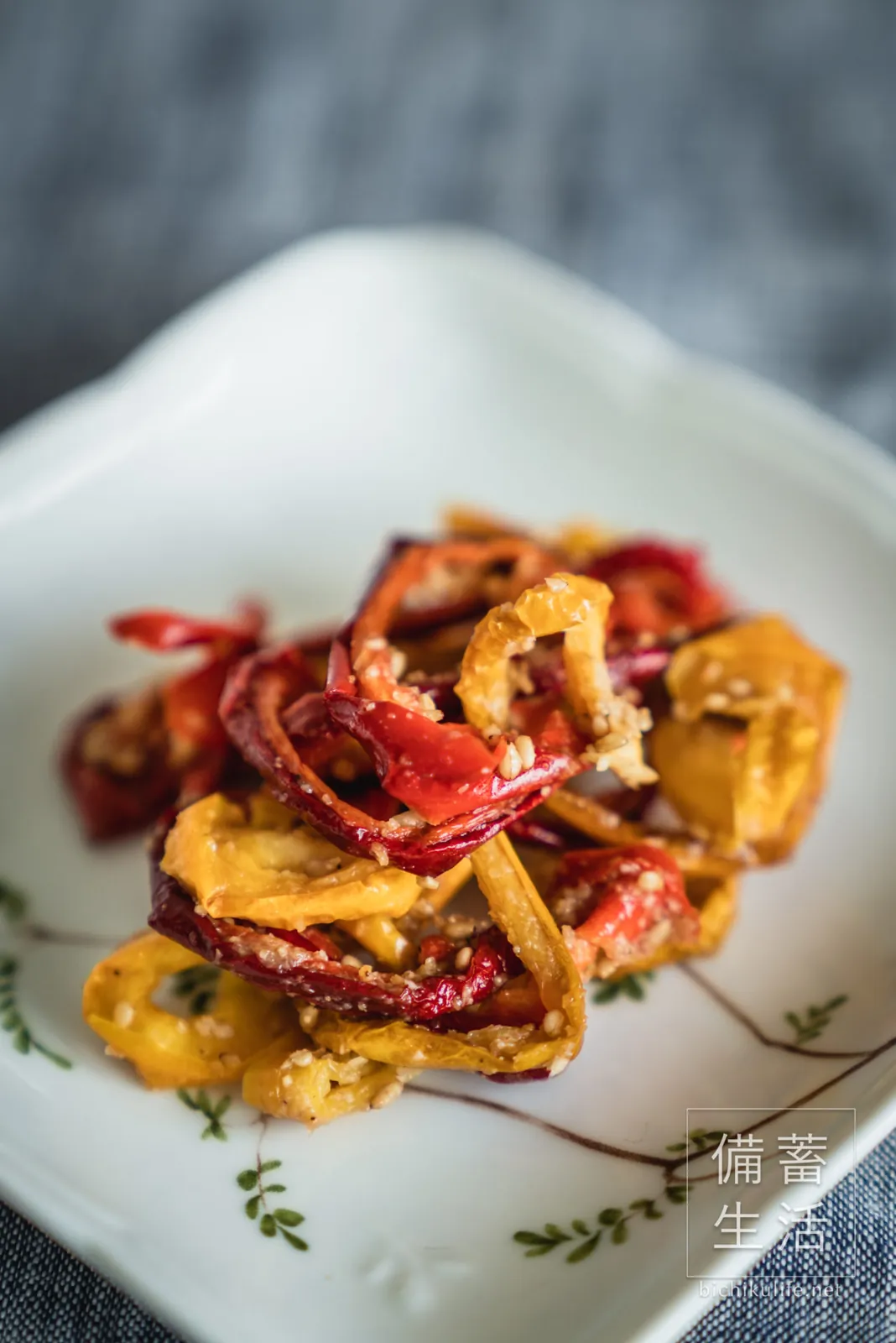
- Dried bell peppers from ½ red and ½ yellow pepper
- A: 1–2 tsp each sesame oil, soy sauce and ground sesame seeds
- Use semi-dried peppers as is; soak dry ones in hot water for 3 minutes and pat dry.
- Toss with A. Adjust the seasoning to taste.