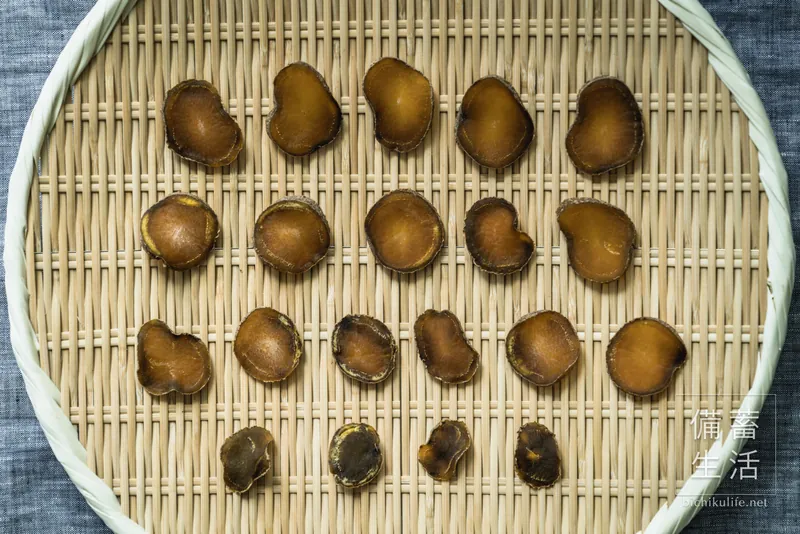
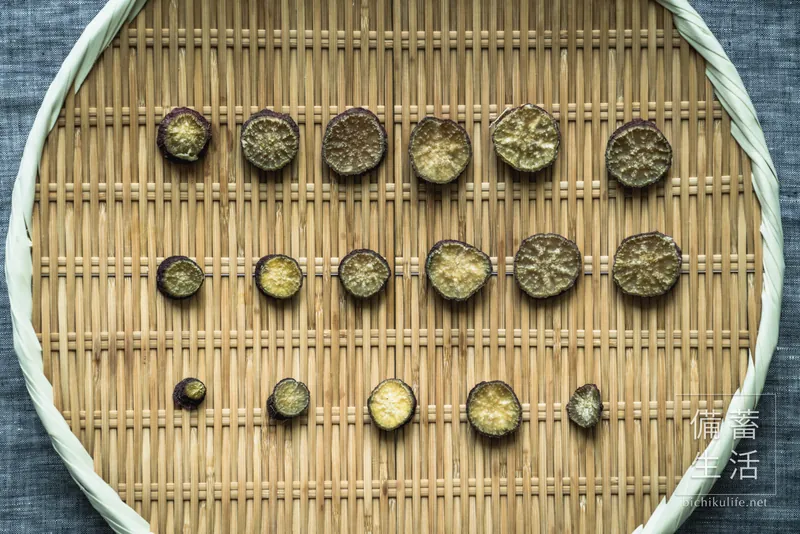
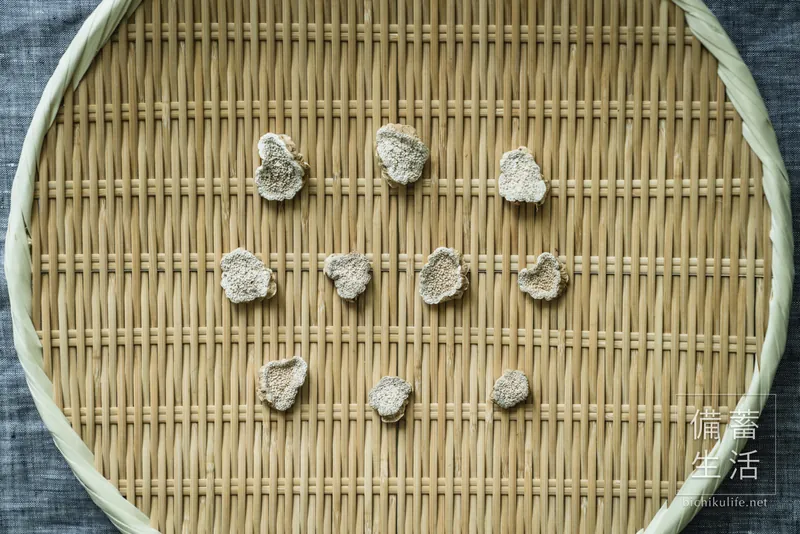
Potatoes and yams
Dried TaroThin Slices with the Skin On: Drying Time and Storage
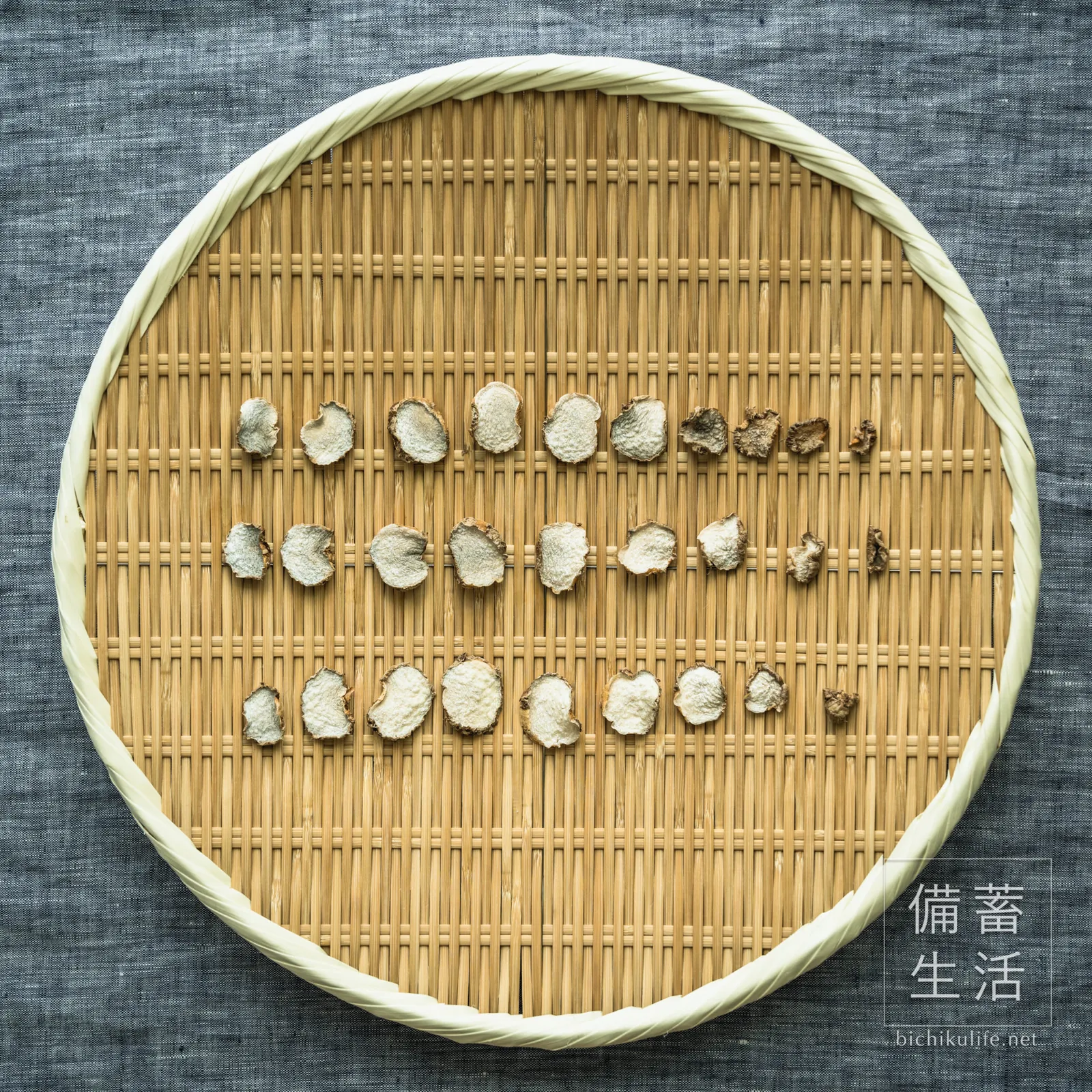
We dried satoimo, the small, round Japanese taro with a distinctively slippery texture. Outside Japan, look for small taro (sometimes labeled “eddo” or “baby taro”) at Asian grocery stores.
Dried, then rehydrated and cooked, taro takes on a pleasantly chewy texture. Taro is fiddly to peel, but if you cut a batch and dry it, it’s ready to drop into simmered dishes and soups whenever you need it. Thinner slices dry faster.
| Drying time | Storage | |
|---|---|---|
| Dry | 3–4 days | 1 month at room temperature (fridge in humid summer) |
Drying times assume drying during the day in sunny weather and bringing them in at night.
How to dry taro
- Clean off the soil: Wash off the soil well and scrub the hairy fibers off the skin with a brush.
- Dry before cutting: Peeling or cutting taro can make your hands itch, from the calcium oxalate in its slime. Pat it thoroughly dry and let the surface dry before cutting, and less slime comes out. Wear rubber gloves if you’re concerned.
- Cut: Slice about 5 mm (¼ in) thick.
- Lay out and dry: Spread on a basket without overlapping, somewhere sunny and breezy. Turn about once a day and bring in by evening.
Where and when to dry is covered in How to Dry Vegetables, and tools in Tools for Drying Vegetables.
When it’s done
Dry (3–4 days)
It’s done when the slices have shrunk, turned whitish, curled at the edges, and are rock hard. If they dent when pressed, dry a little longer.
Day by day
Before drying
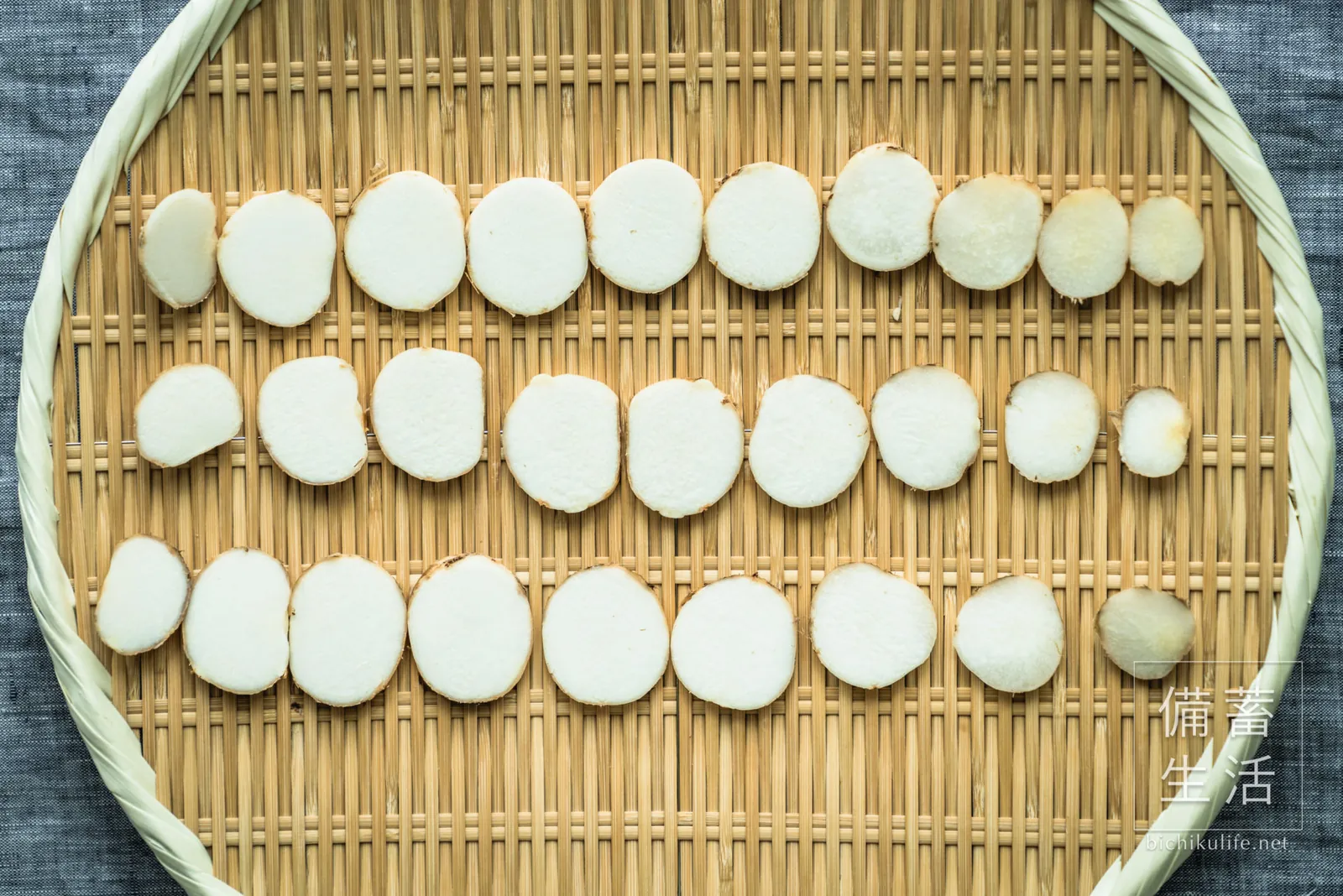
Day 1
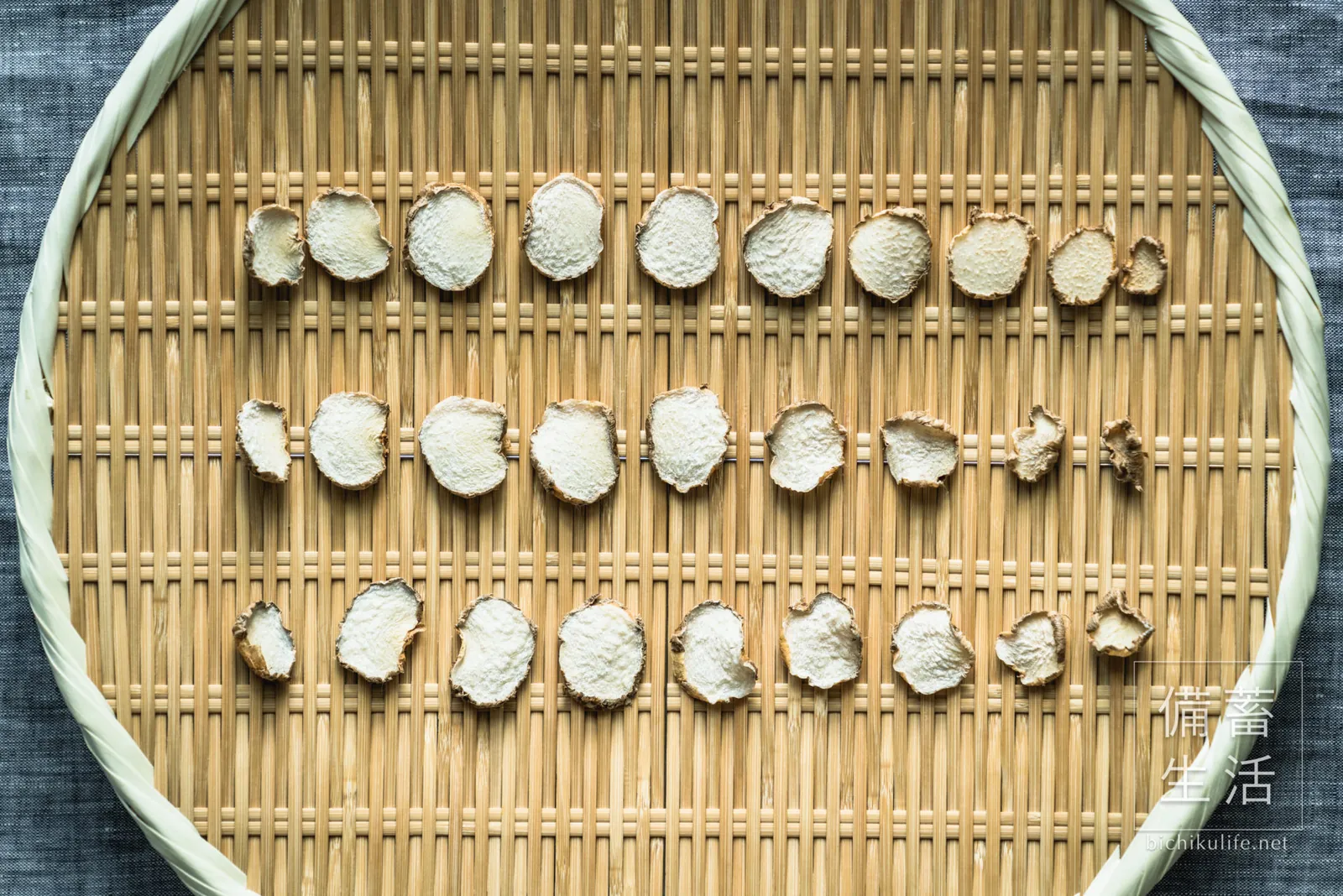
Day 2
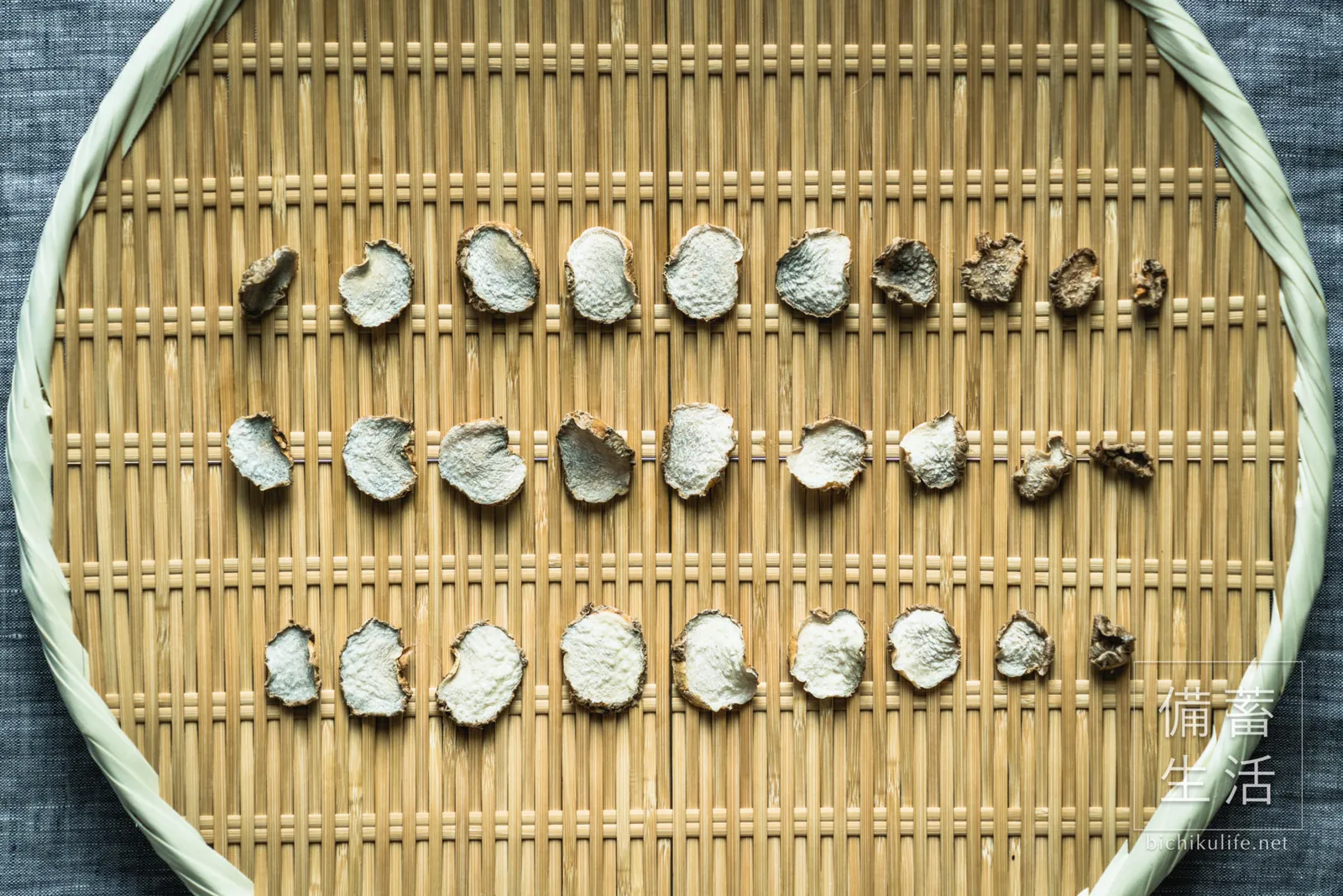
Day 3
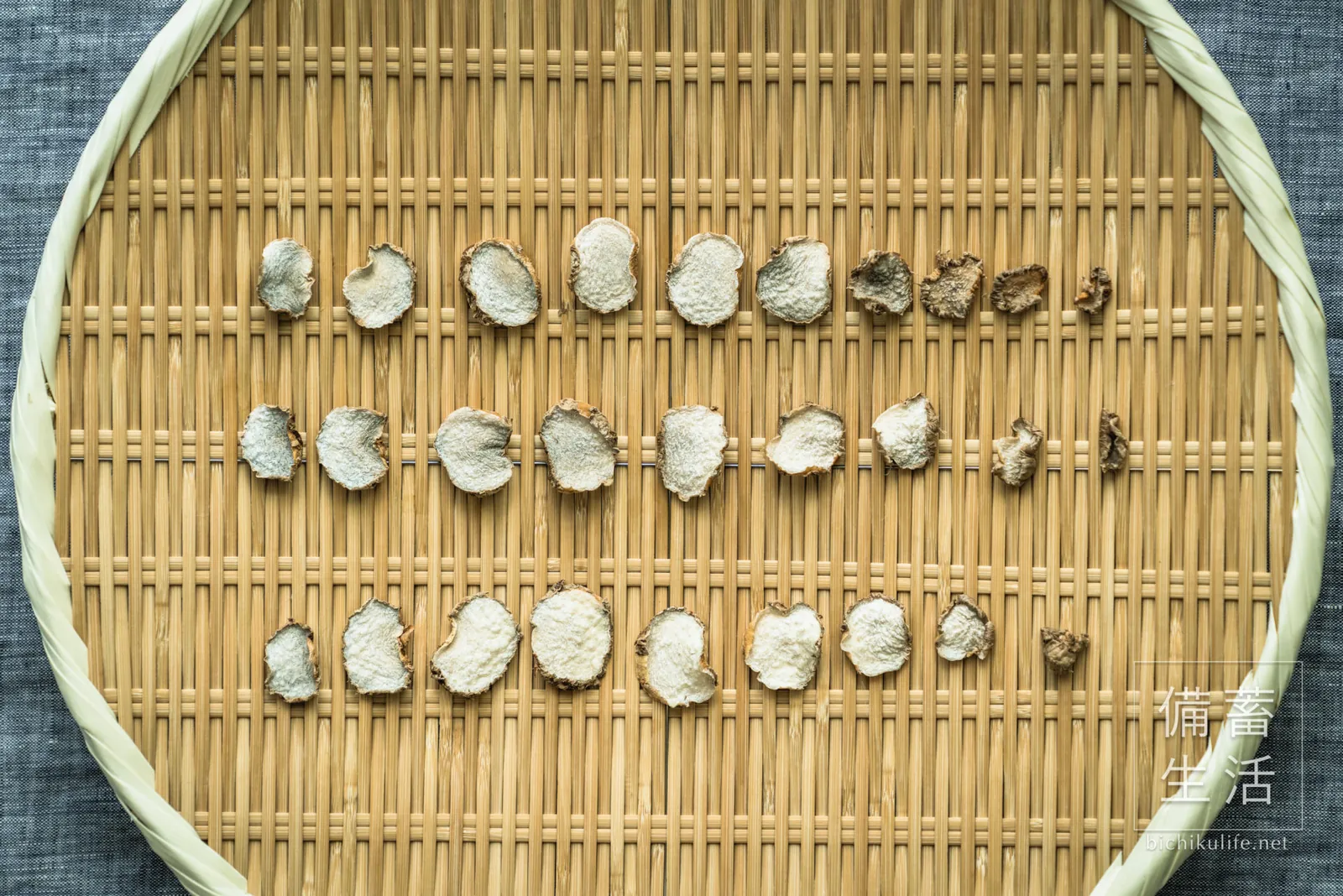
Storage
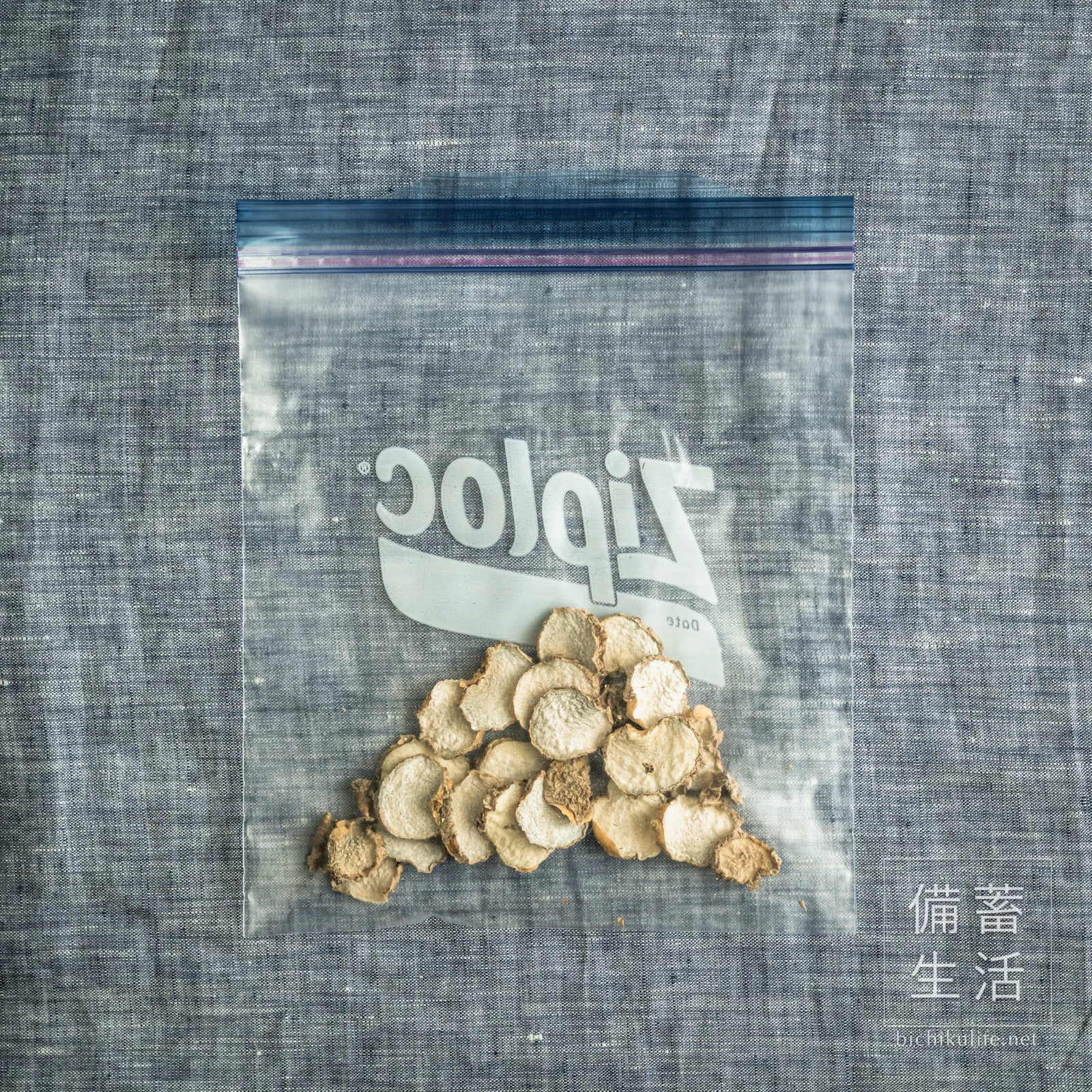
- Dry: Put completely dry slices in a bag or airtight container with a desiccant, and keep somewhere cool and out of direct sun for about 1 month. In humid summer weather, keep them in the fridge.
- Frozen: Frozen, they keep 2–3 months.
Fuzzy white or green growth, black spots or a bad smell are signs of mold or spoilage. Don’t eat it; throw it away. More in How to Store Dried Vegetables.
Rehydrating and using it
- Always cook it: Taro can’t be eaten raw. After rehydrating, cook it through.
- Rehydrate: Soak in water for 15–20 minutes, then simmer until tender.
- Use it dry: Add straight to tonjiru (pork miso soup), kenchin-jiru (vegetable and tofu soup), imoni (taro stew) and simmered dishes, and simmer a little longer. It thickens the broth slightly.
- Good in: Nikkorogashi (taro simmered until glazed), chikuzenni, imoni, miso soup, gratin.