Fruiting vegetables
Dried Fava BeansDrying Time, Storage, Rehydrating, and a Sweet Fava Bean Paste Recipe
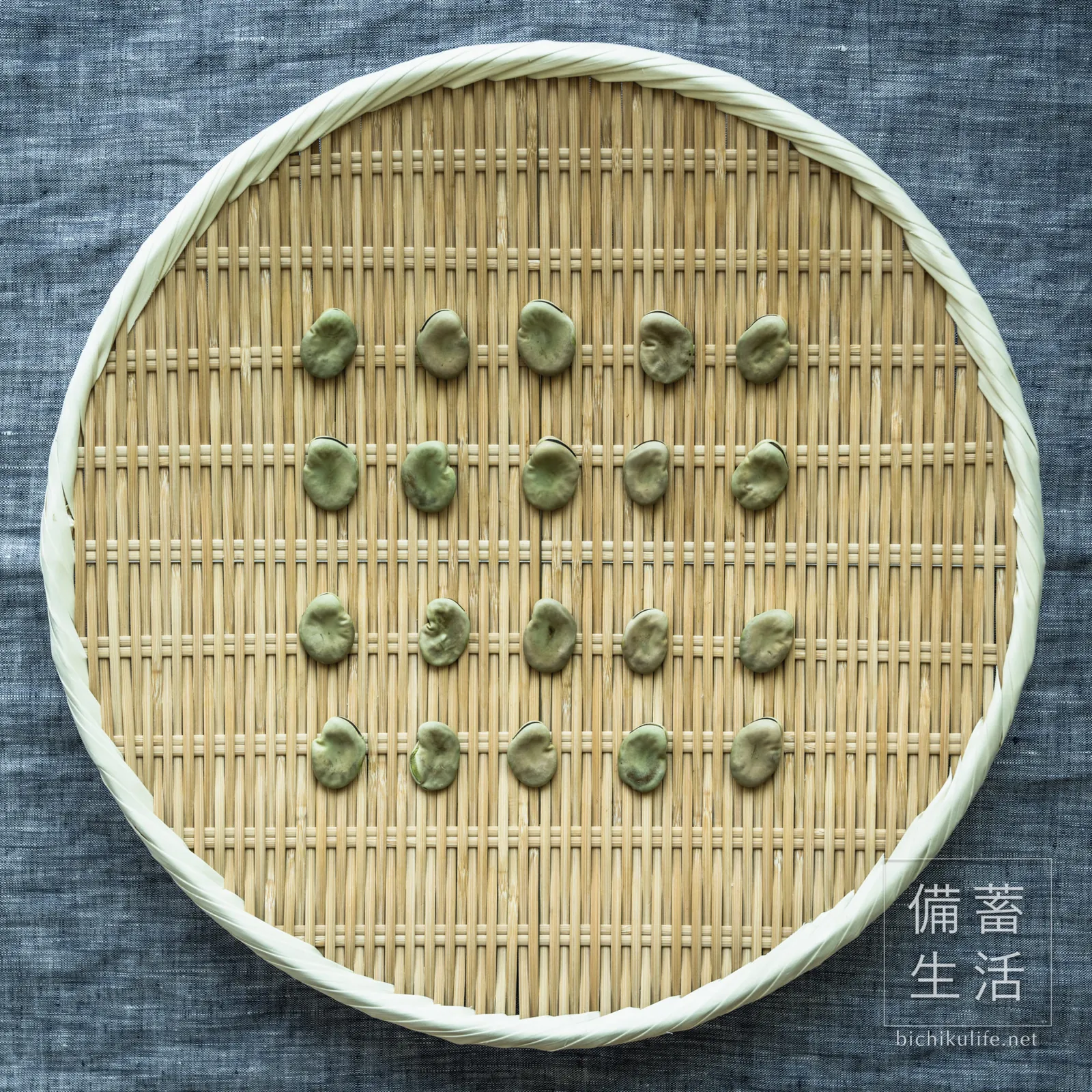
Fava beans (broad beans) are rich in plant protein.
Their season in Japan is short, April to June, and once shelled they lose freshness quickly. Dry some in season and you can enjoy them long after.
| Drying time | Storage | |
|---|---|---|
| Dry | 4–7 days | 1 month at room temperature / 6 months frozen |
Drying times assume drying during the day in sunny weather and bringing them in at night. The beans are large, so they take longer than other beans.
How to dry fava beans
- Shell them: Open the pods and take out the beans. Shelling them just before drying keeps them fresh.
- Leave the skins on: Don’t peel off the thin outer skin of each bean. It protects the bean and prevents discoloring and crumbling while drying.
- Lay out and dry: Spread on a basket without overlapping, somewhere sunny and breezy. Roll them around once or twice a day and bring them in by evening.
Where and when to dry is covered in How to Dry Vegetables, and tools in Tools for Drying Vegetables.
When they’re done
Dry (4–7 days)
They’re done when the skins have wrinkled and turned brownish, and the whole bean is rock hard. Keep drying until a fingernail can’t dent it. If the center isn’t dry, it can mold, so when in doubt, give it an extra day.
Day by day
Before drying
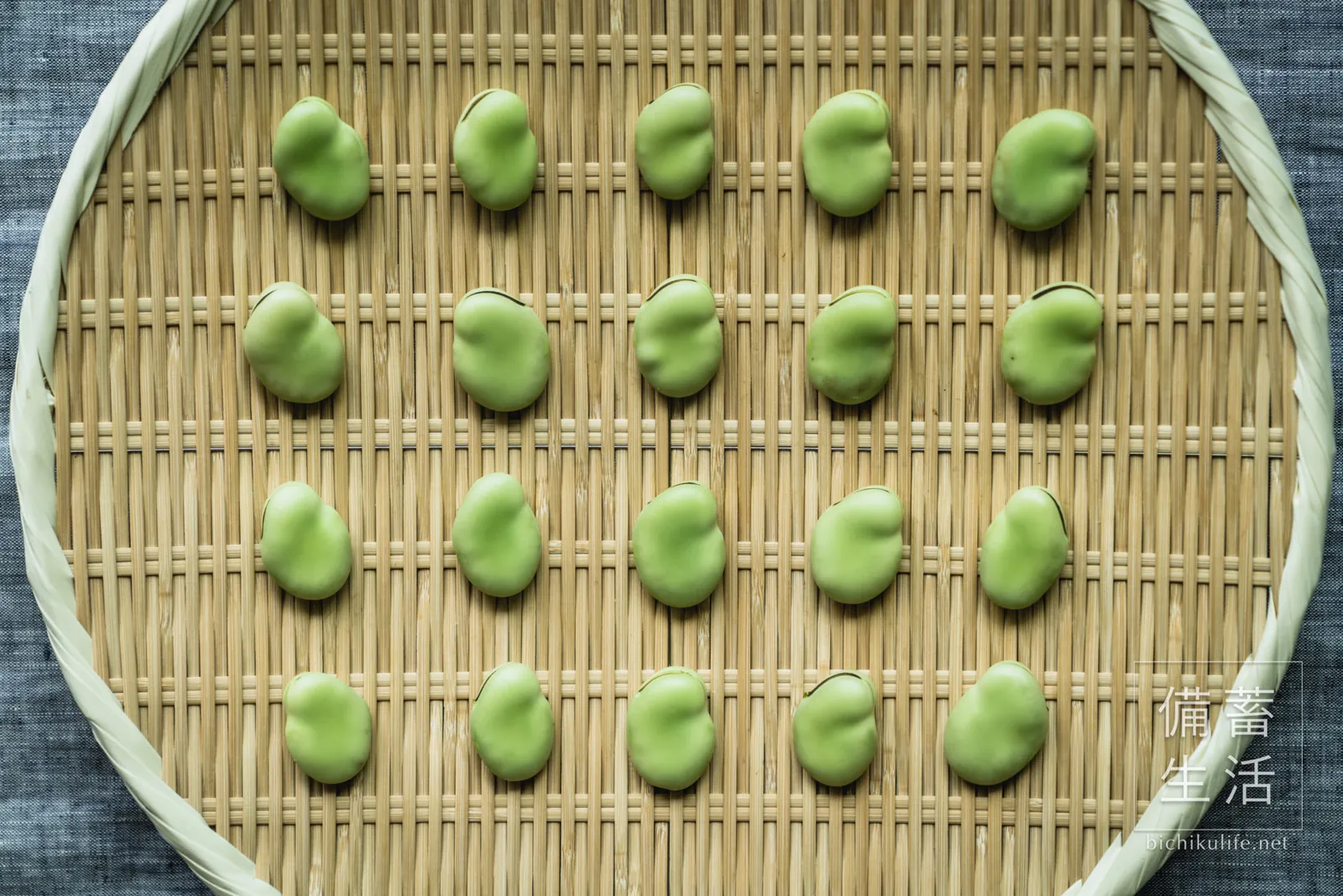
Day 1
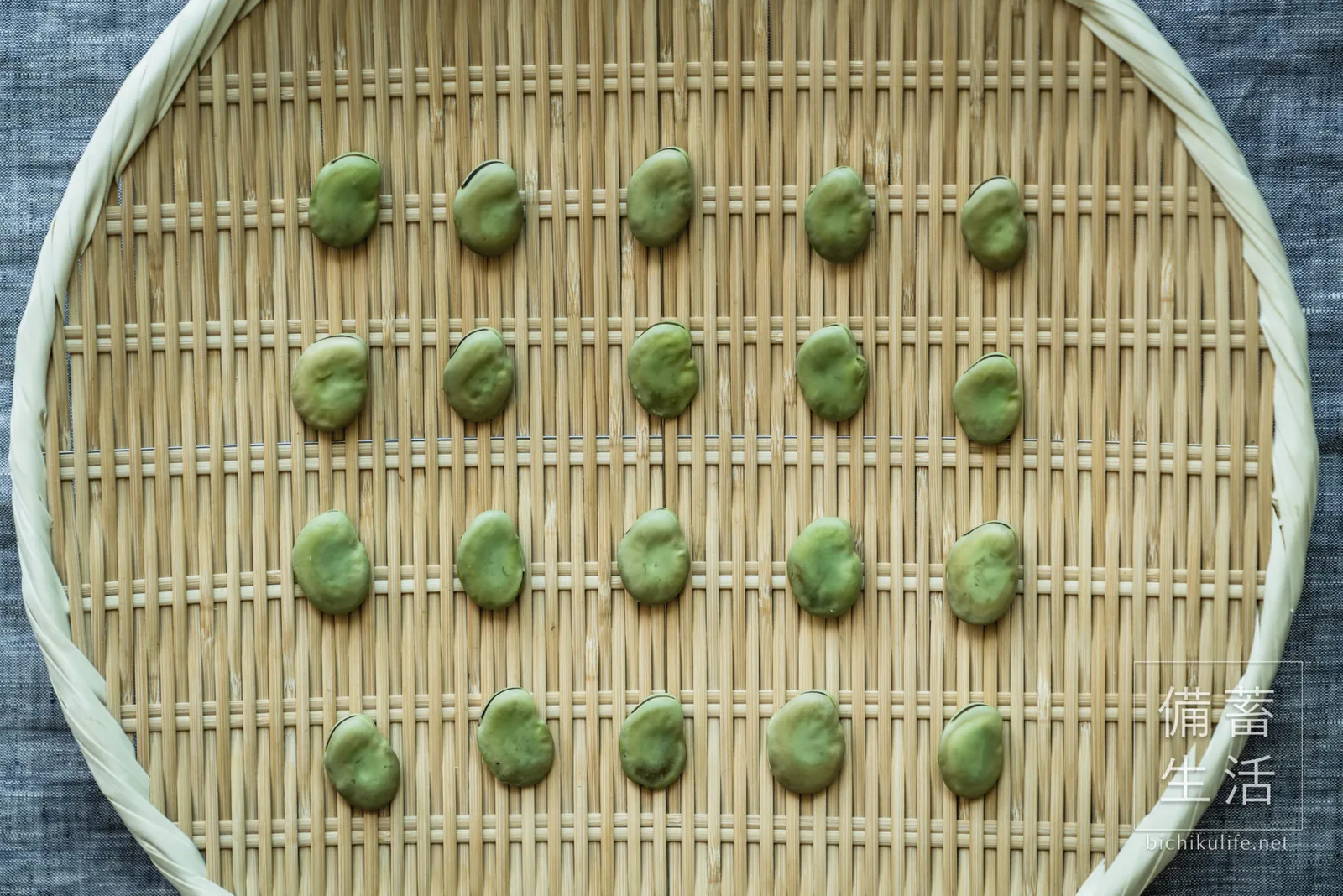
Day 2
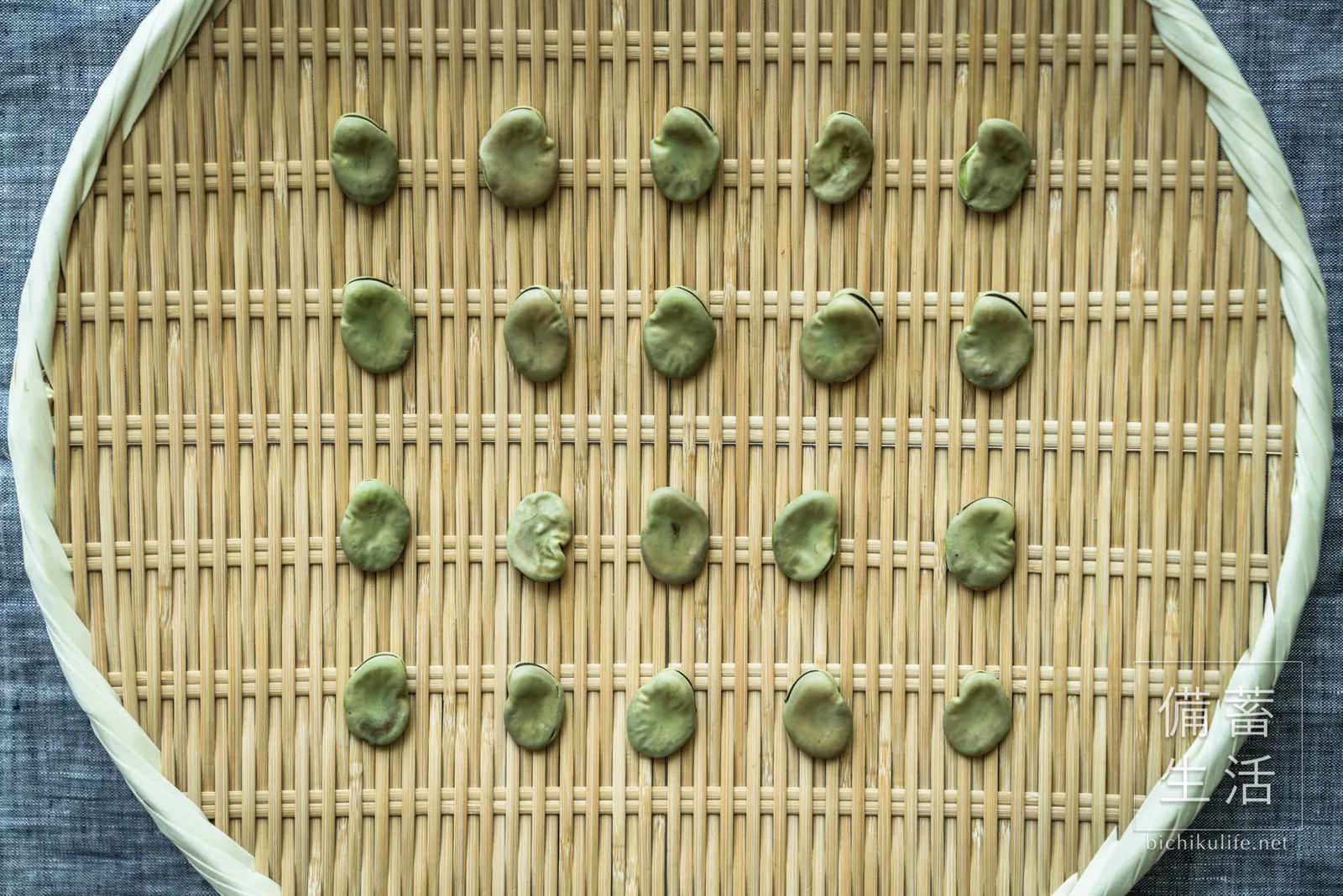
Day 3
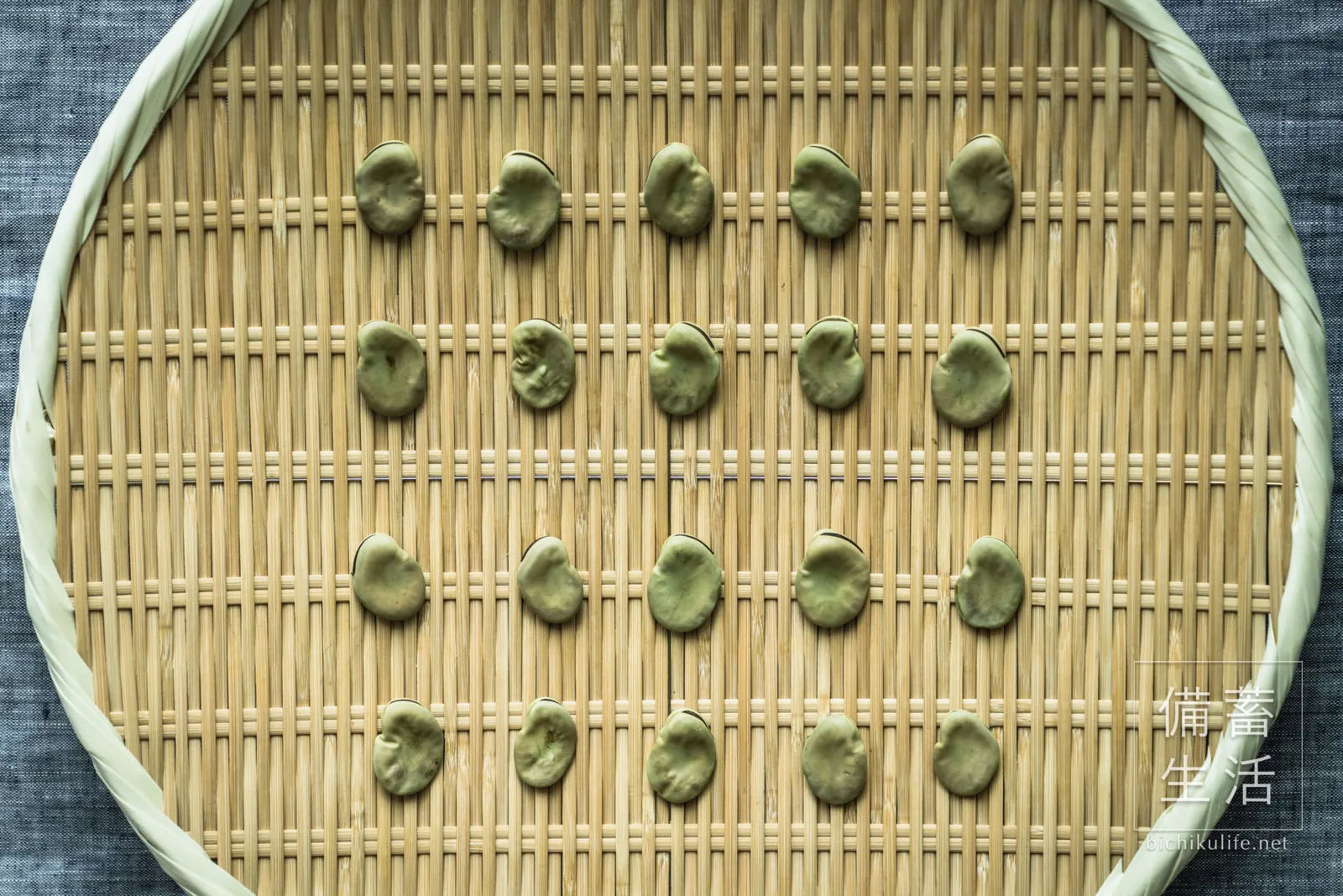
Day 4
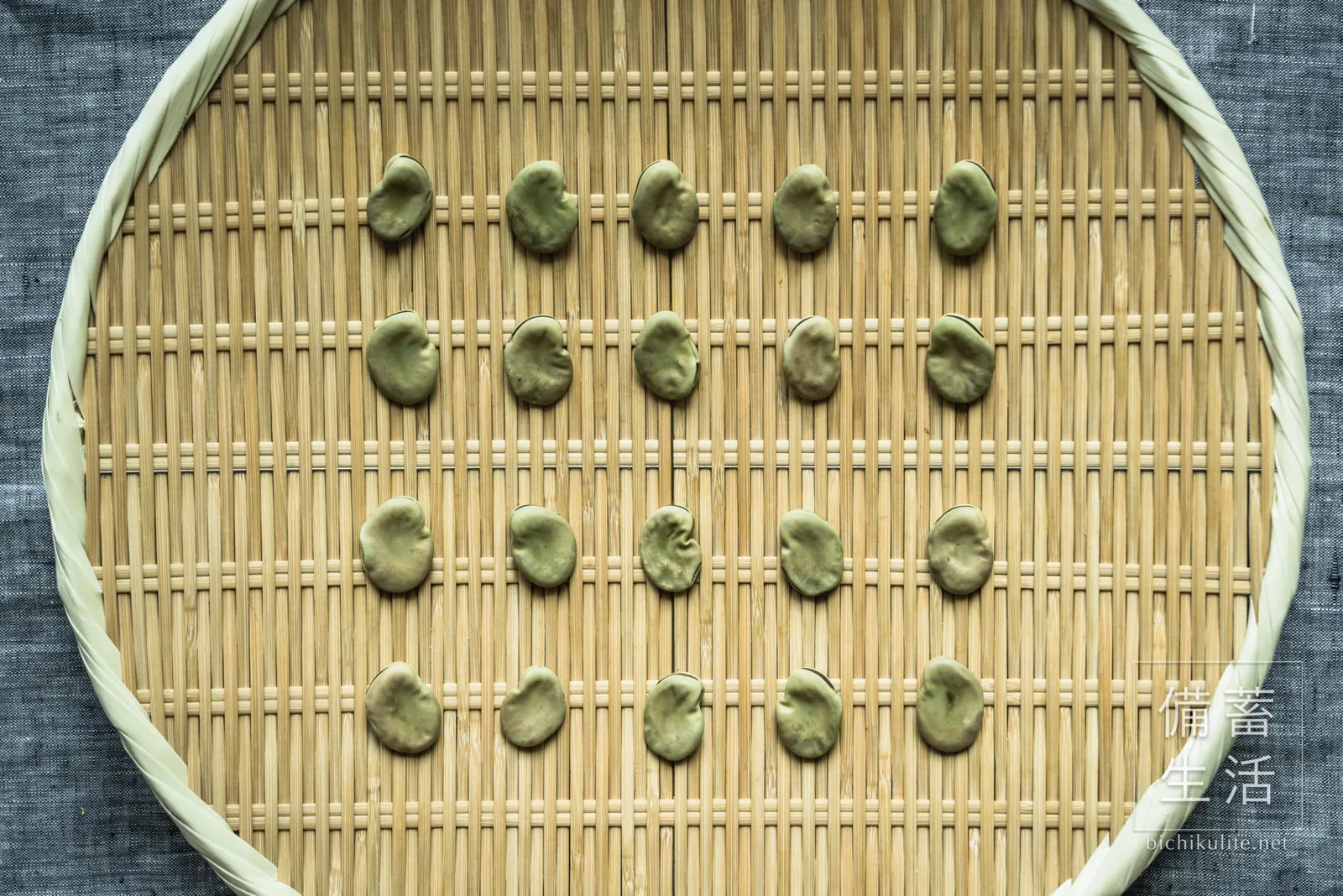
Day 5
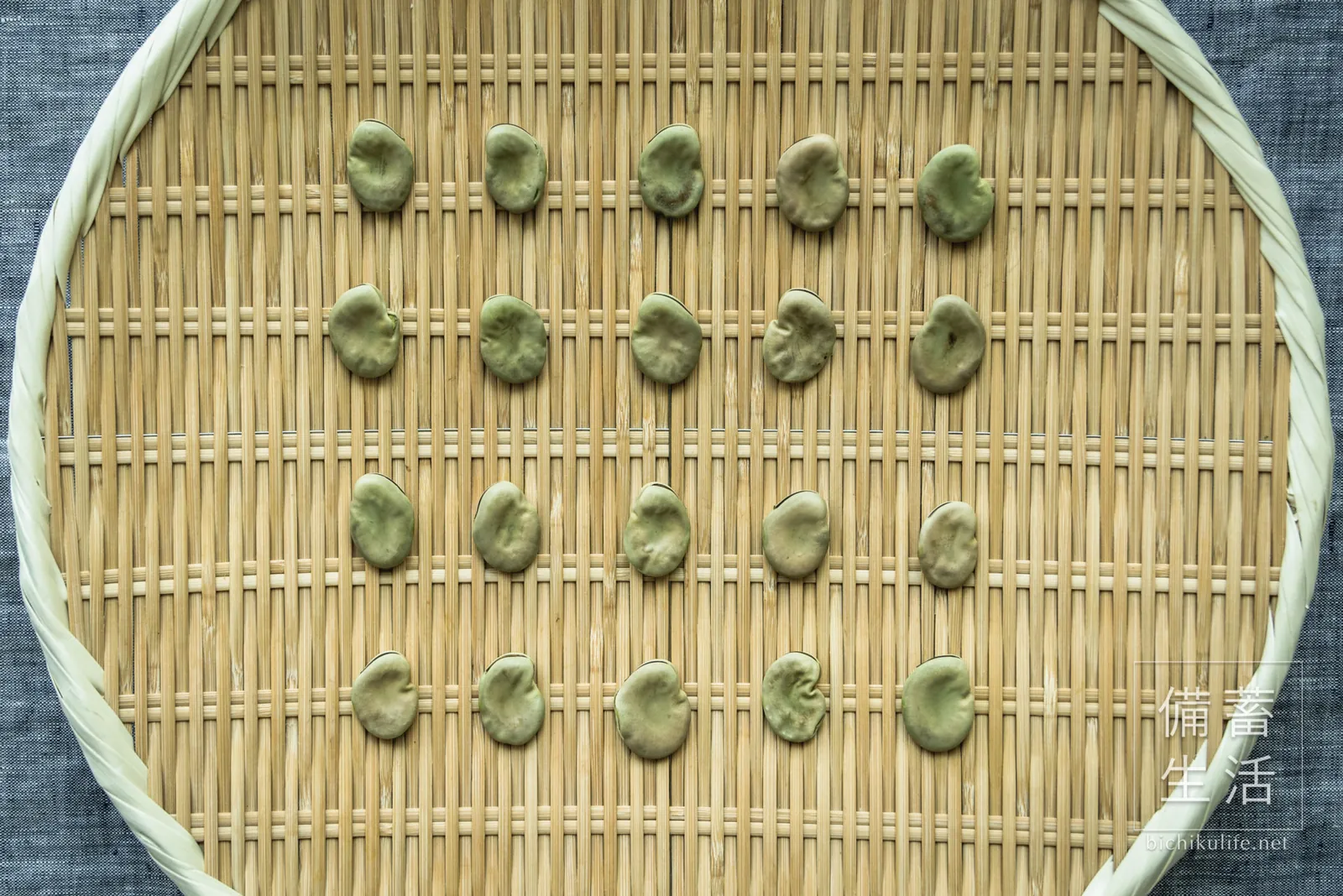
Day 6
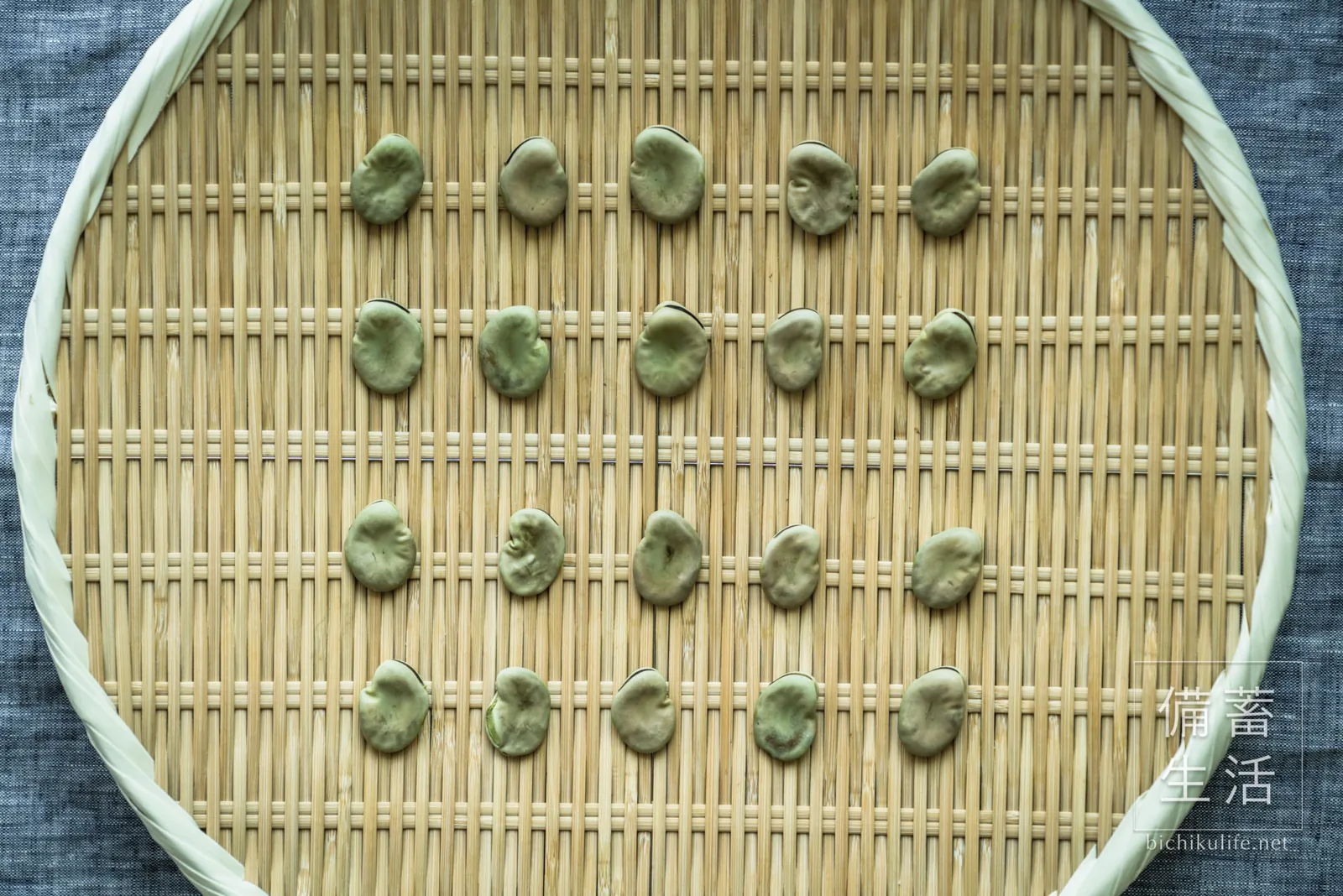
Storage
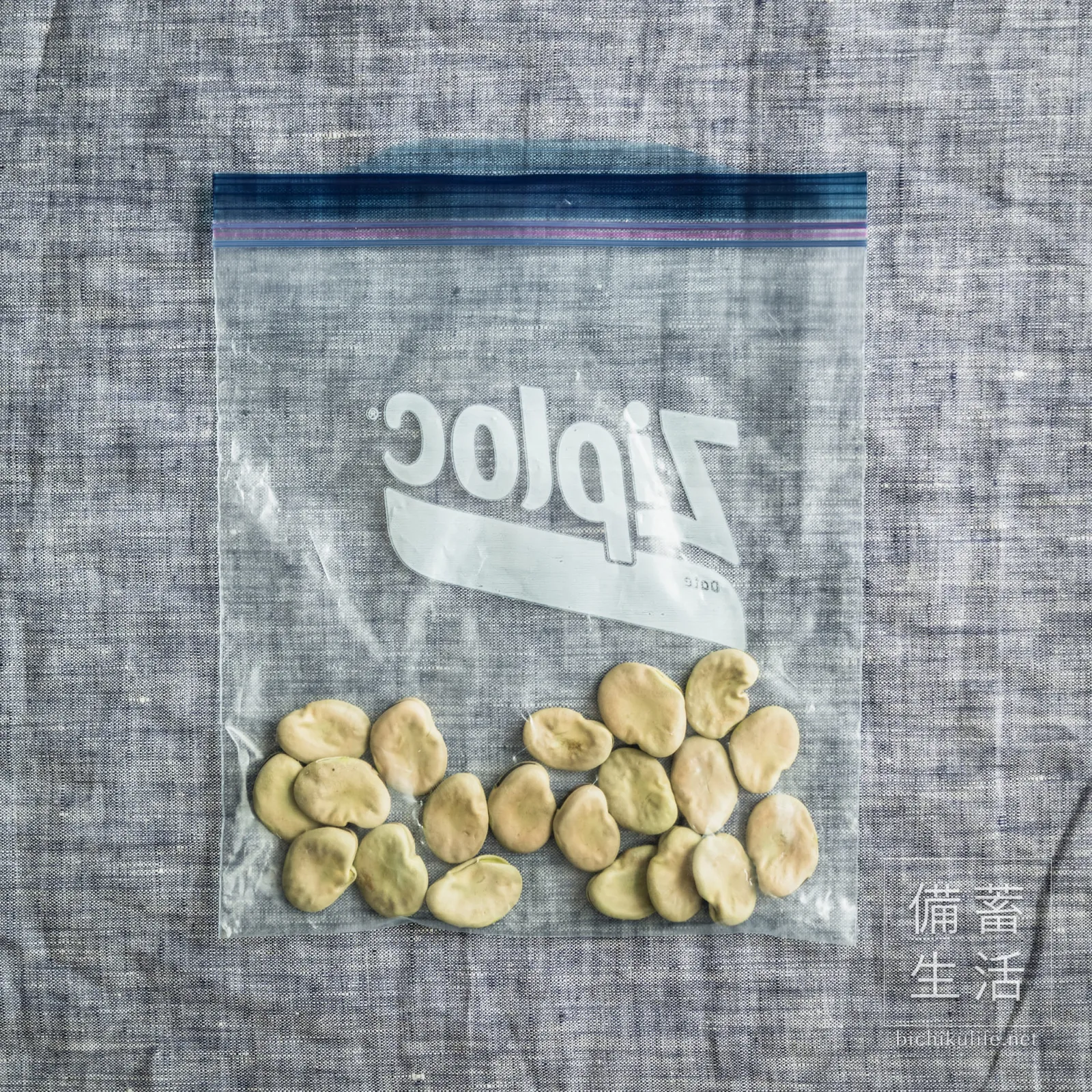
- Room temperature: Put rock-hard beans in a bag or airtight container with a desiccant, and keep somewhere cool and out of direct sun for about 1 month.
- Frozen: To keep them longer, freeze them. They keep about 6 months.
Fuzzy white or green growth, black spots or a bad smell are signs of mold or spoilage. Don’t eat them; throw them away. More in How to Store Dried Vegetables.
Rehydrating and using them
- Rehydrate: Soak in plenty of water for 2 hours to overnight, then boil until tender. Peel off the skins after boiling.
- Good in: Simmered beans, potage, rice with beans, sweet bean paste, croquettes.
- Roasted beans: Toast completely dry beans slowly over low heat for crunchy roasted beans. They’re hard, so be careful when eating them.
Recipe
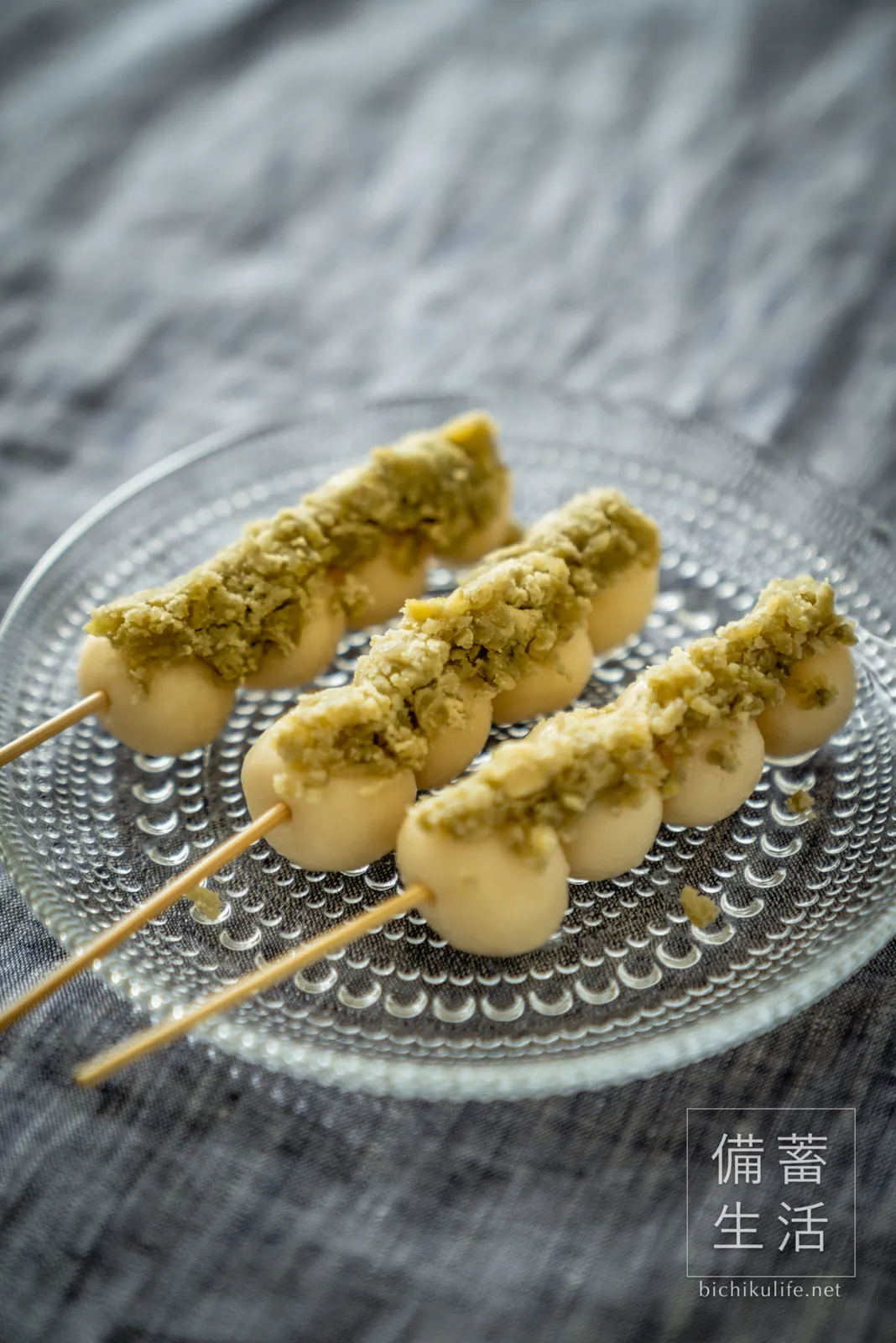
Tofu shiratama dumplings with sweet fava bean paste
- 20 dried fava beans
- 2 tbsp granulated sugar
- A pinch of salt
- 50 ml (3½ tbsp) water
- 100 g (3½ oz) shiratamako (glutinous rice flour)
- 150 g (5⅓ oz) silken tofu
- Soak the dried fava beans in water for about 2 hours, then boil in plenty of water until tender.
- Peel off the skins and mash in a mortar. For a smoother paste, press through a sieve.
- Put the measured water and sugar in a pot and heat.
- Add step 2 to step 3 and stir with a wooden spatula over medium heat for about 5 minutes. Finish with a pinch of salt.
- Knead the shiratamako into the silken tofu until it’s about as soft as an earlobe. Roll into 20 balls and boil. When they float, cool them in cold water and thread 4 onto each skewer.
- Top the dumplings with the fava bean paste.