Herbs
Dried ThymeDrying Time, Storage and How to Use It
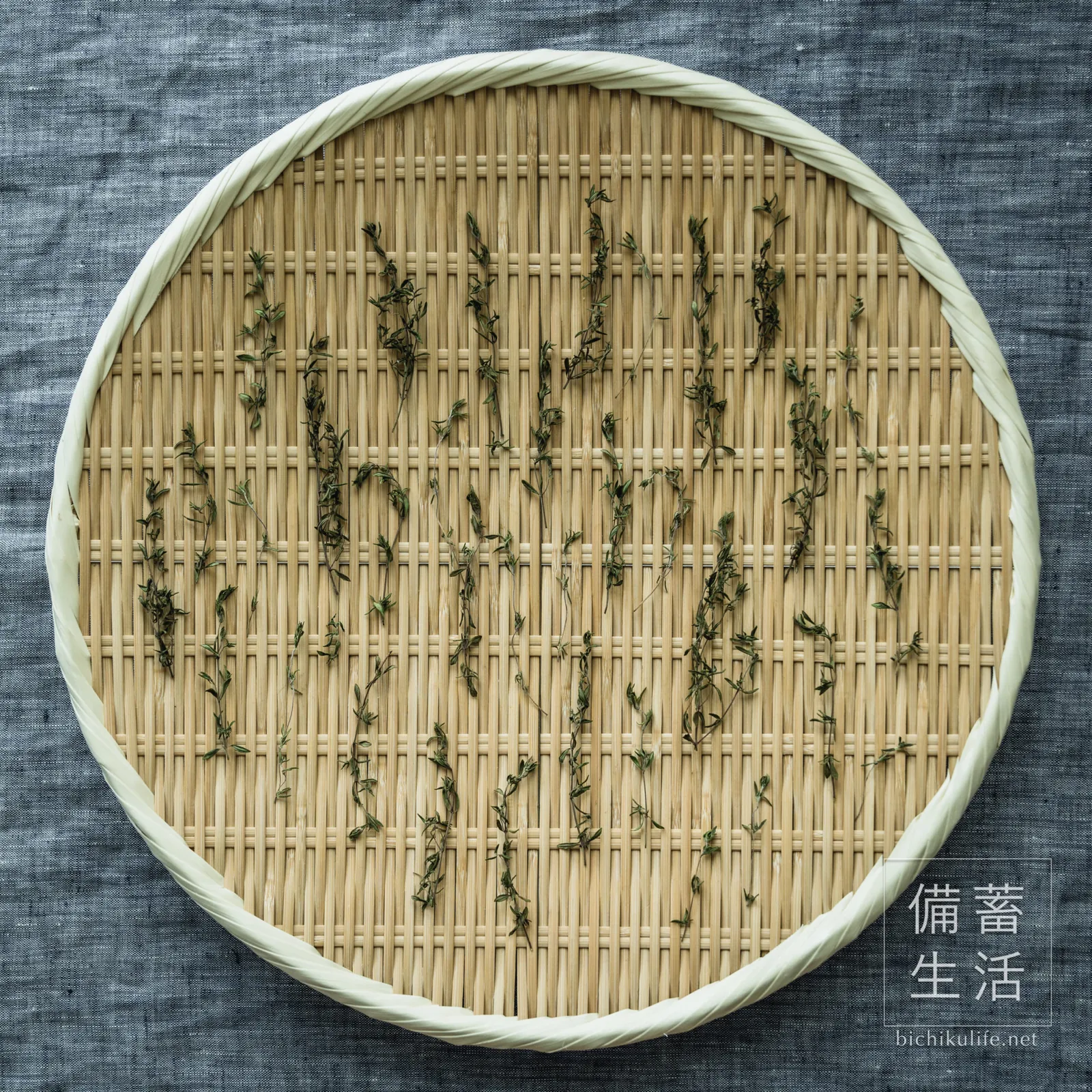
Thyme is an herb with a fresh, strong aroma, familiar for seasoning meat and fish.
Thyme is naturally low in moisture, so it’s an herb that keeps its aroma well when dried. Drying mellows its strong fresh aroma just enough, making it easy to use in stews, soups and herbal tea.
| Drying time | Storage | |
|---|---|---|
| Dry | 4 days–1 week | 6 months at room temperature |
Drying times assume drying during the day in sunny weather and bringing them in at night.
How to dry thyme
- Wash and pat dry: Swish the sprigs in water and dry them thoroughly with paper towels.
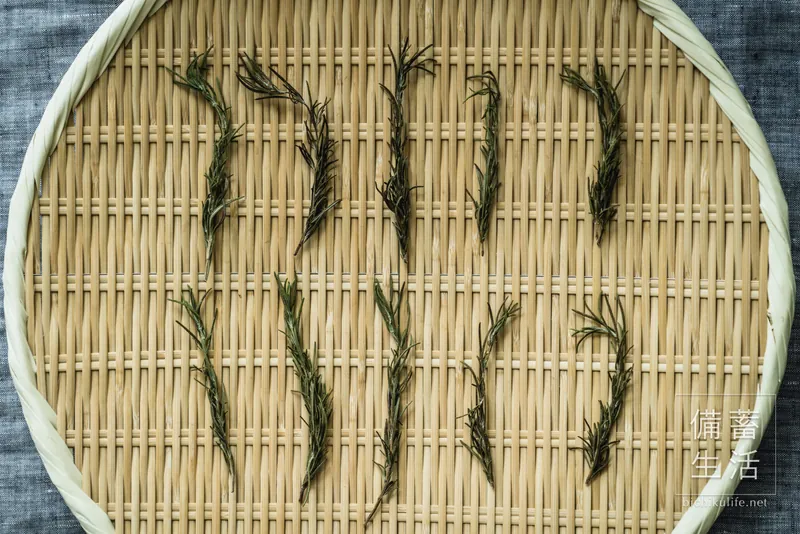
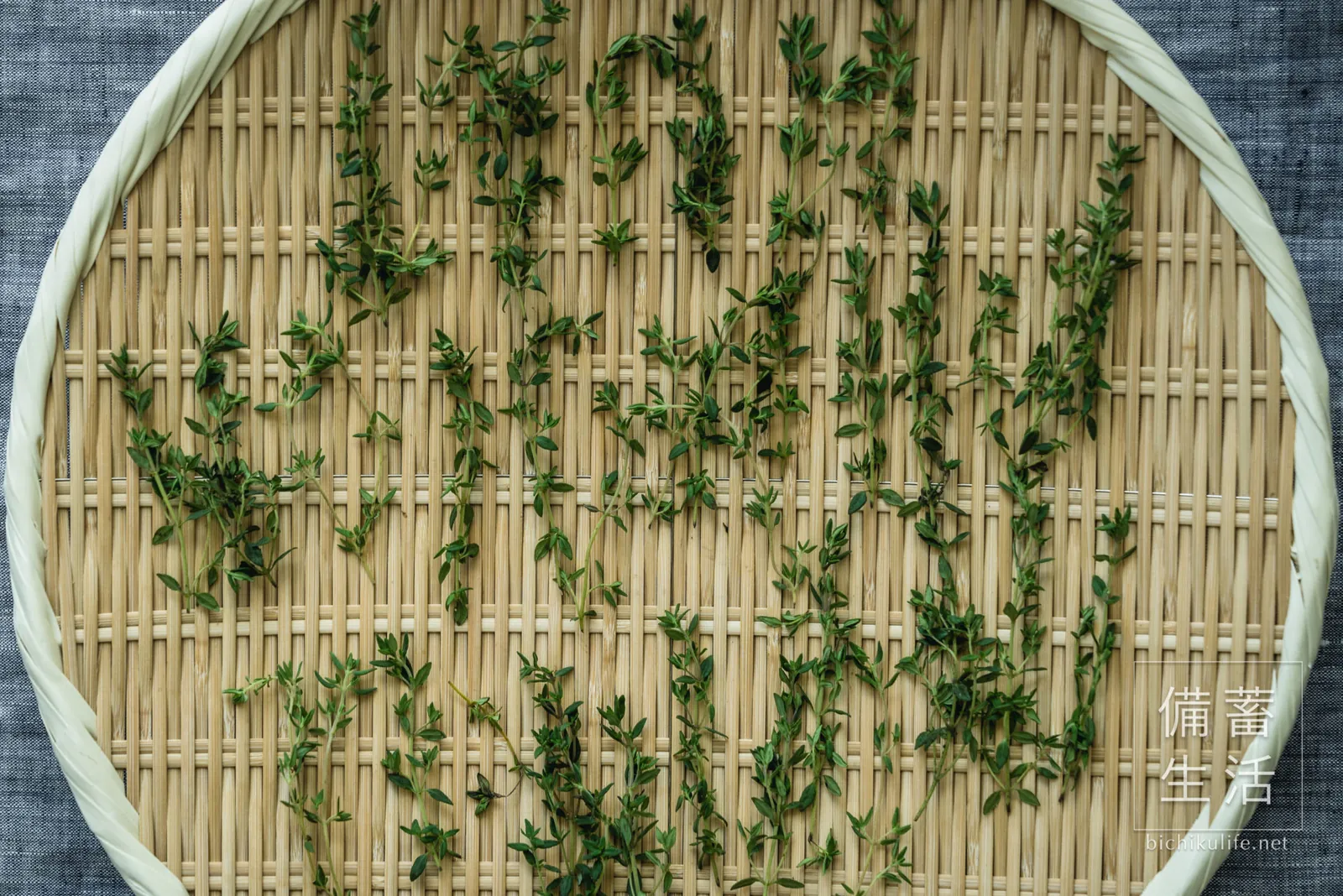
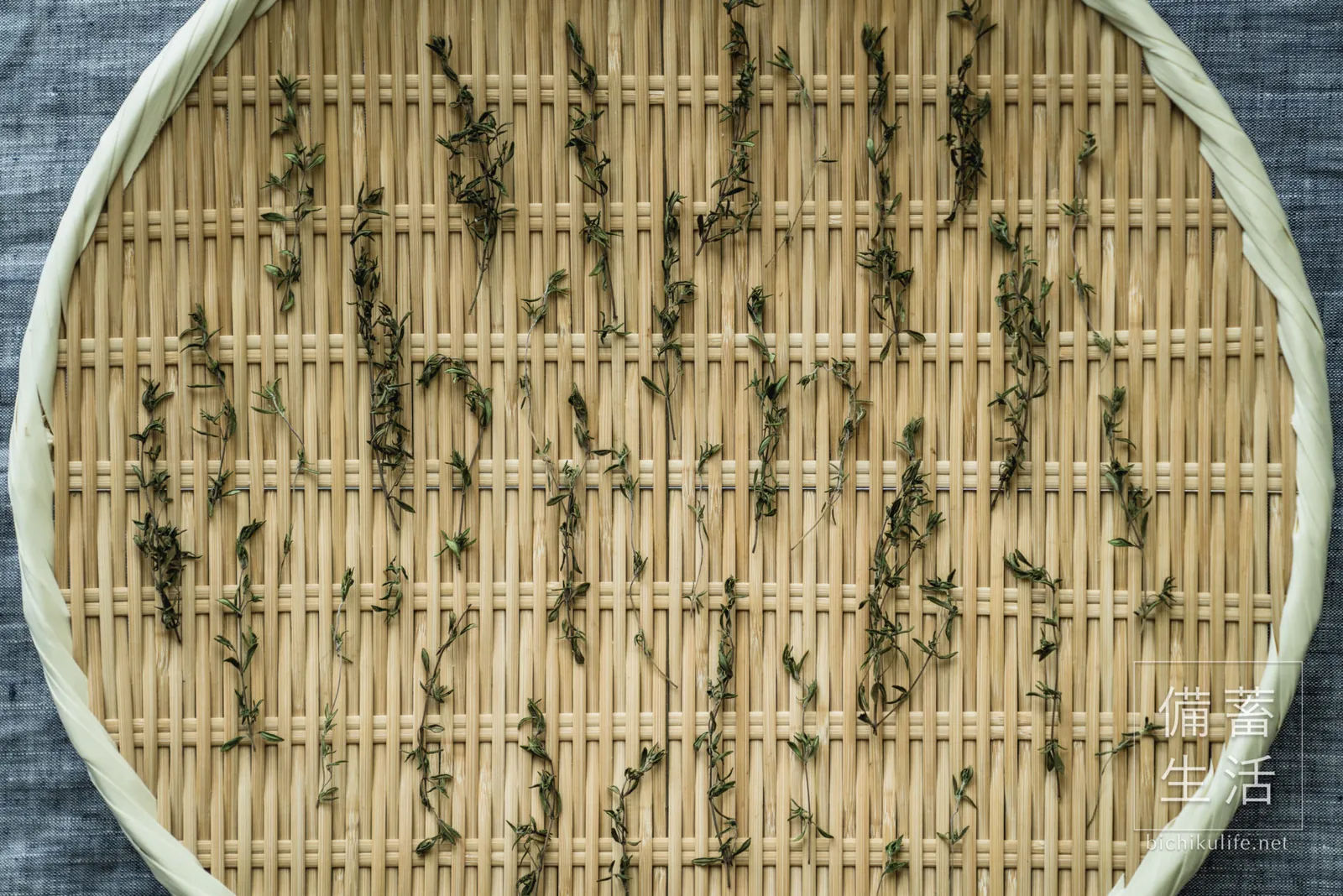
- Lay out: Lay the whole sprigs on a basket without overlapping.
- Dry: To keep the aroma, avoid strong direct sun and dry it in a breezy spot in shade or part shade. Bring it in by evening.
Where and when to dry is covered in How to Dry Vegetables, and tools in Tools for Drying Vegetables.
When it’s done
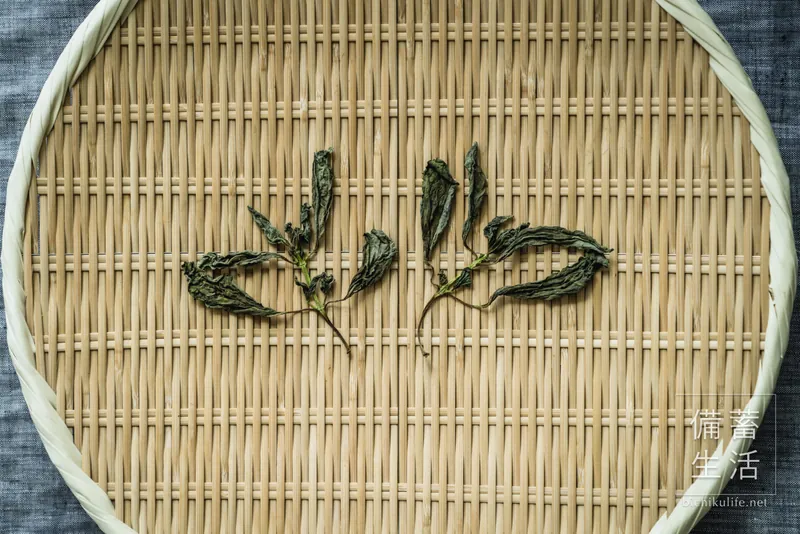
Dry (4 days–1 week)
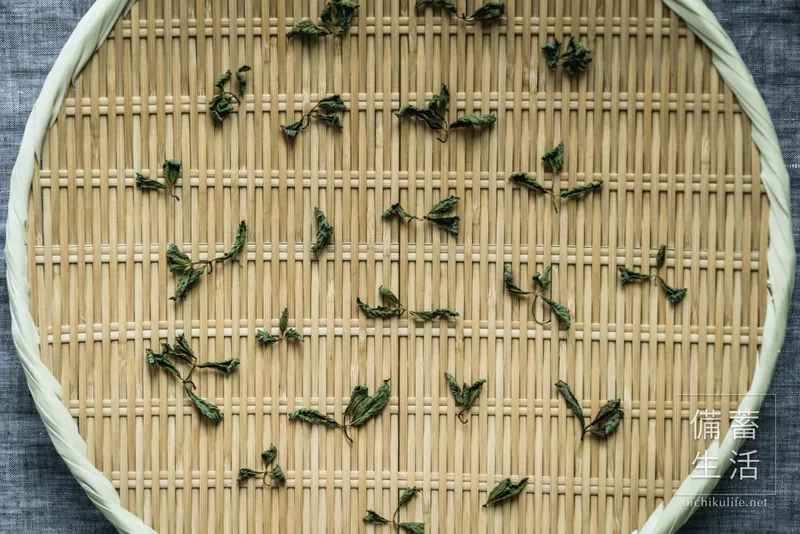
It’s done when the leaves have shrunk and fall off when you run your fingers down the sprig.
Day by day
Before drying
Day 1
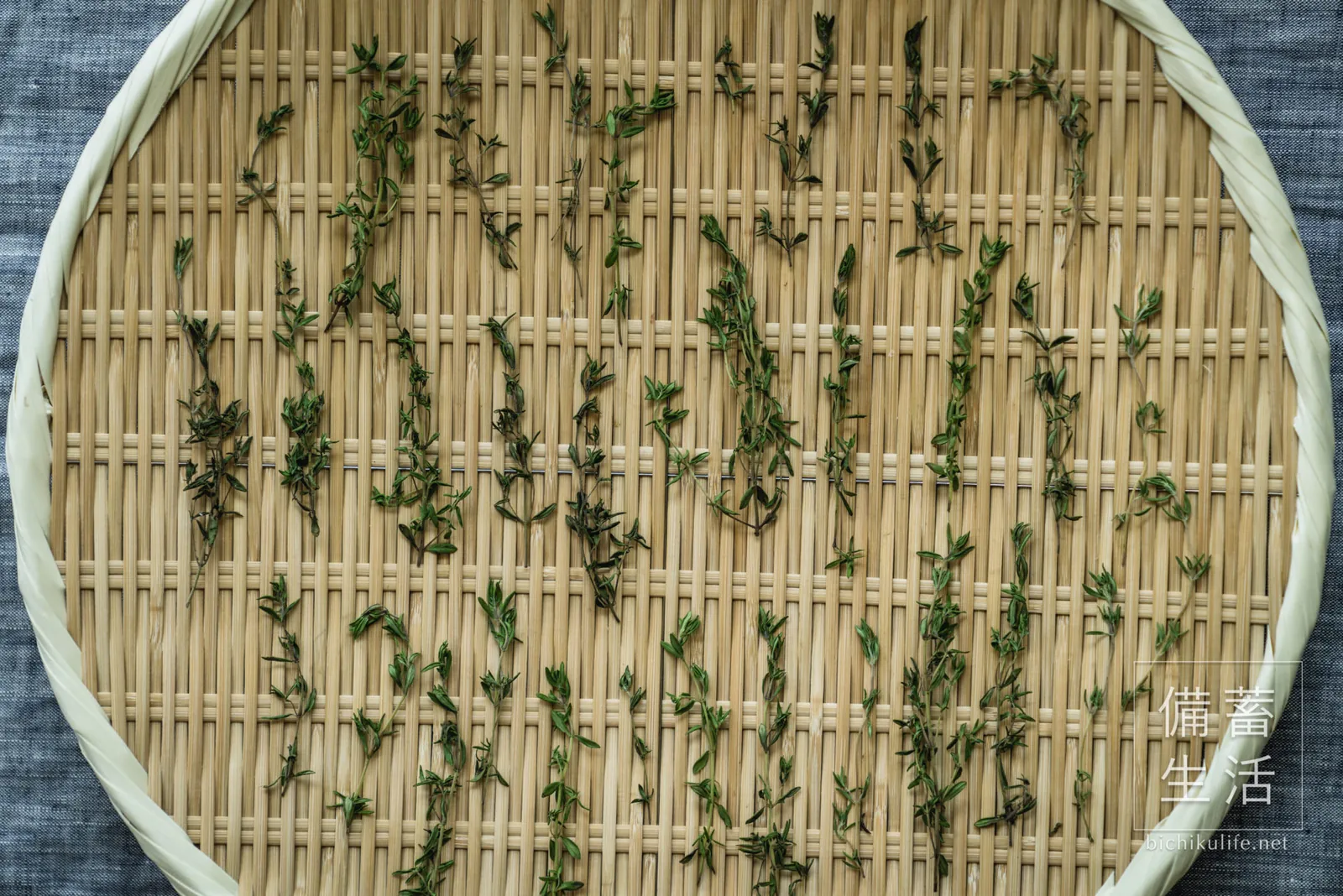
Day 2
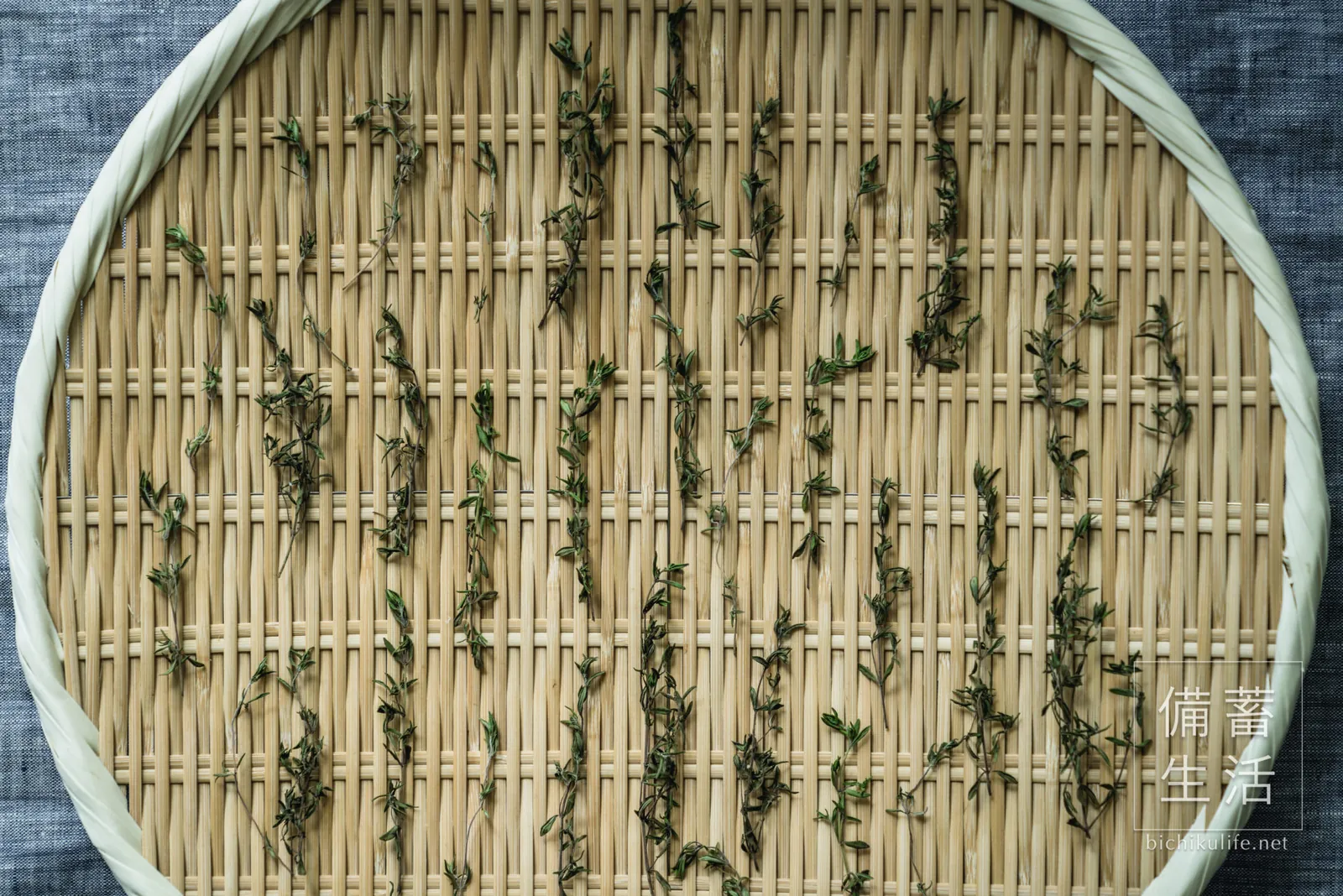
Day 3
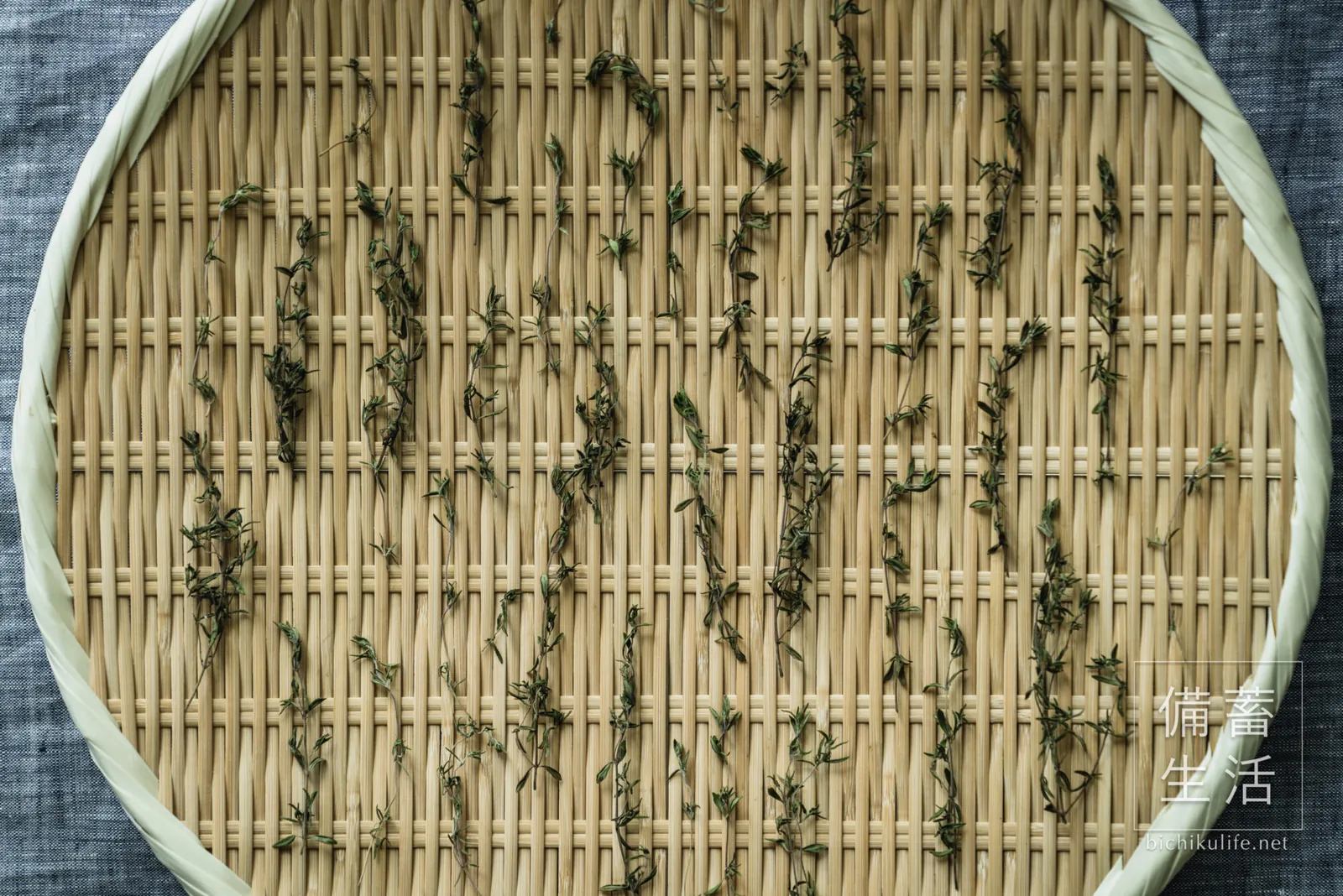
Day 4
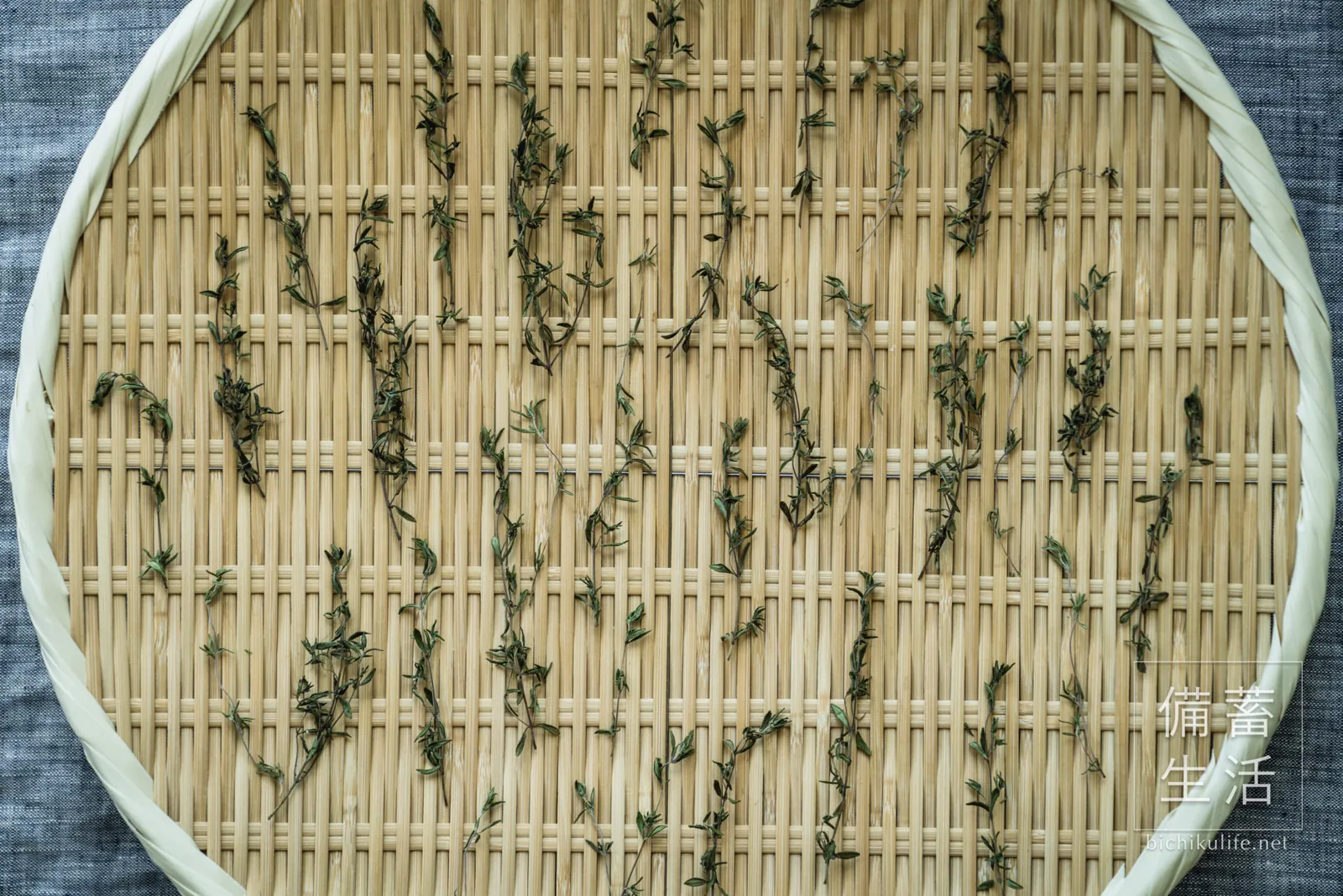
Day 5
Storage
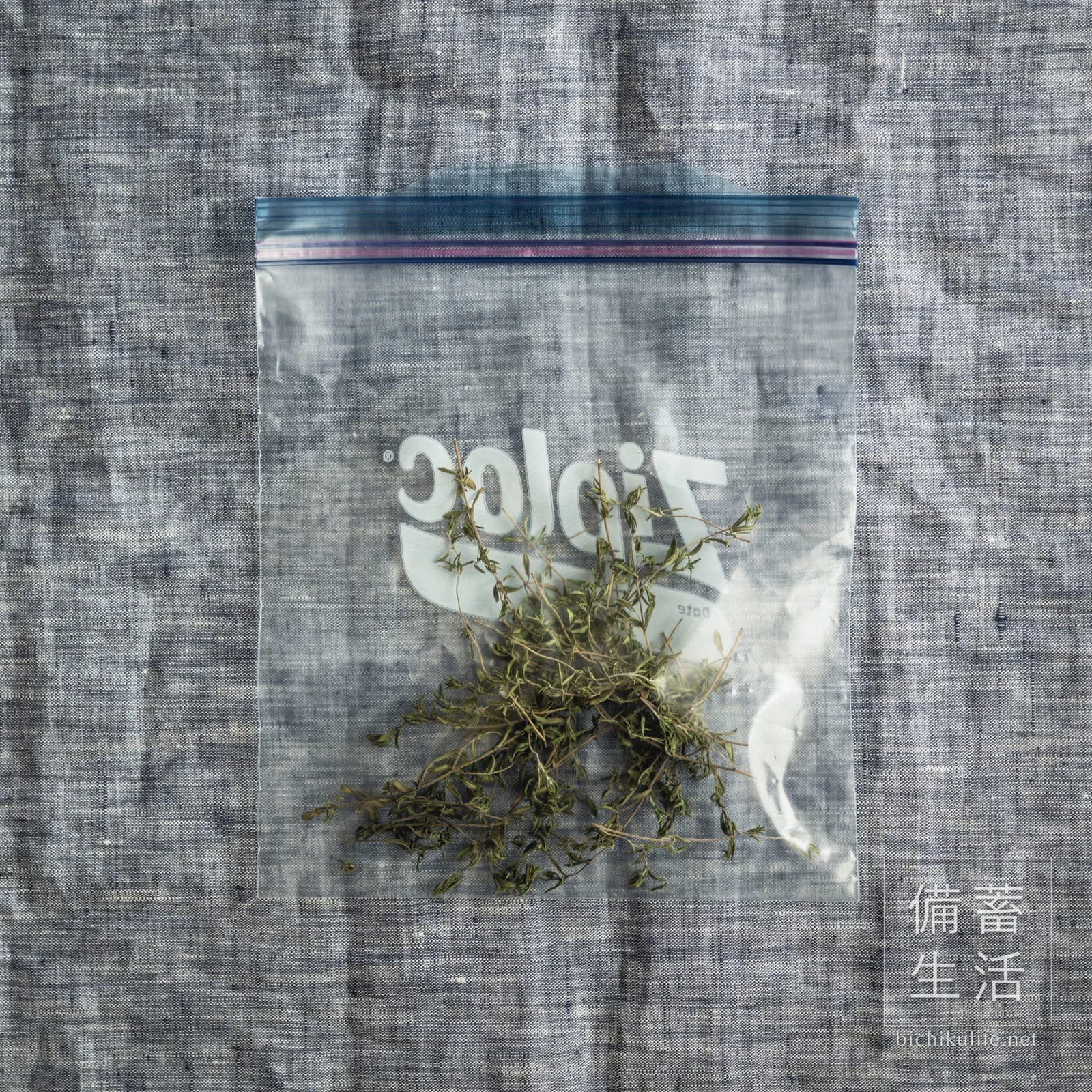
- Room temperature: Keep the sprigs whole, or strip the leaves by running your fingers down them, and store in a jar or bag with a desiccant, somewhere cool and out of direct sun, for about 6 months.
The aroma fades over time, so for the best flavor, use it within about 3 months. More in How to Store Dried Vegetables.
How to use it
- In stews: Pot-au-feu, stew, tomato stews, curry. Add whole sprigs and remove them before serving.
- With meat and fish: Season roast chicken, hamburger steaks or sautéed white fish by rubbing it in with olive oil and salt.
- Herbal tea: Put a pinch in a teapot, pour boiling water over, and steep for 3–5 minutes. Try blending it with spearmint or rosemary.
If you’re pregnant, breastfeeding or have a medical condition, check with your doctor before drinking it regularly as tea. The amounts used in cooking are normally nothing to worry about.