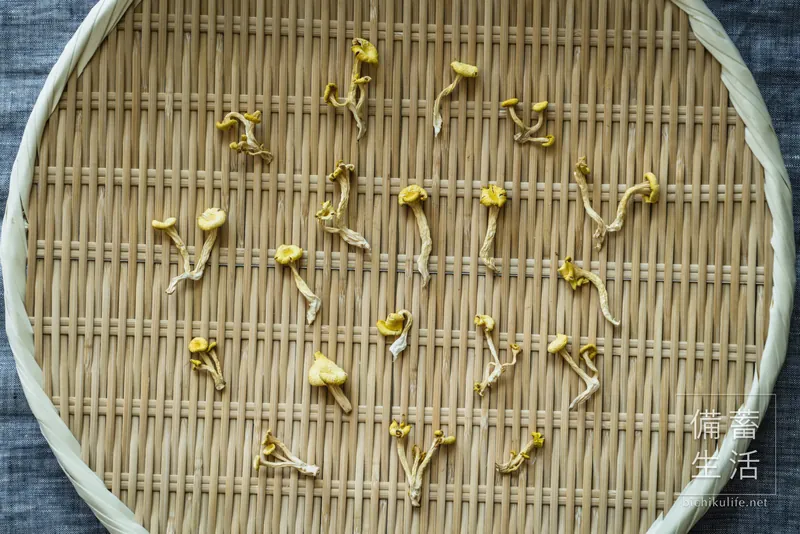
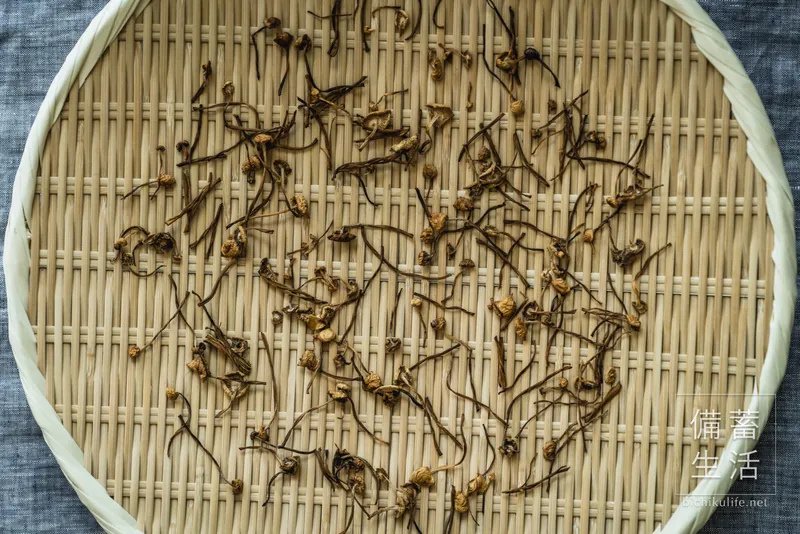
Mushrooms
Dried ShimejiDrying Time, Storage and Making the Most of Its Flavor
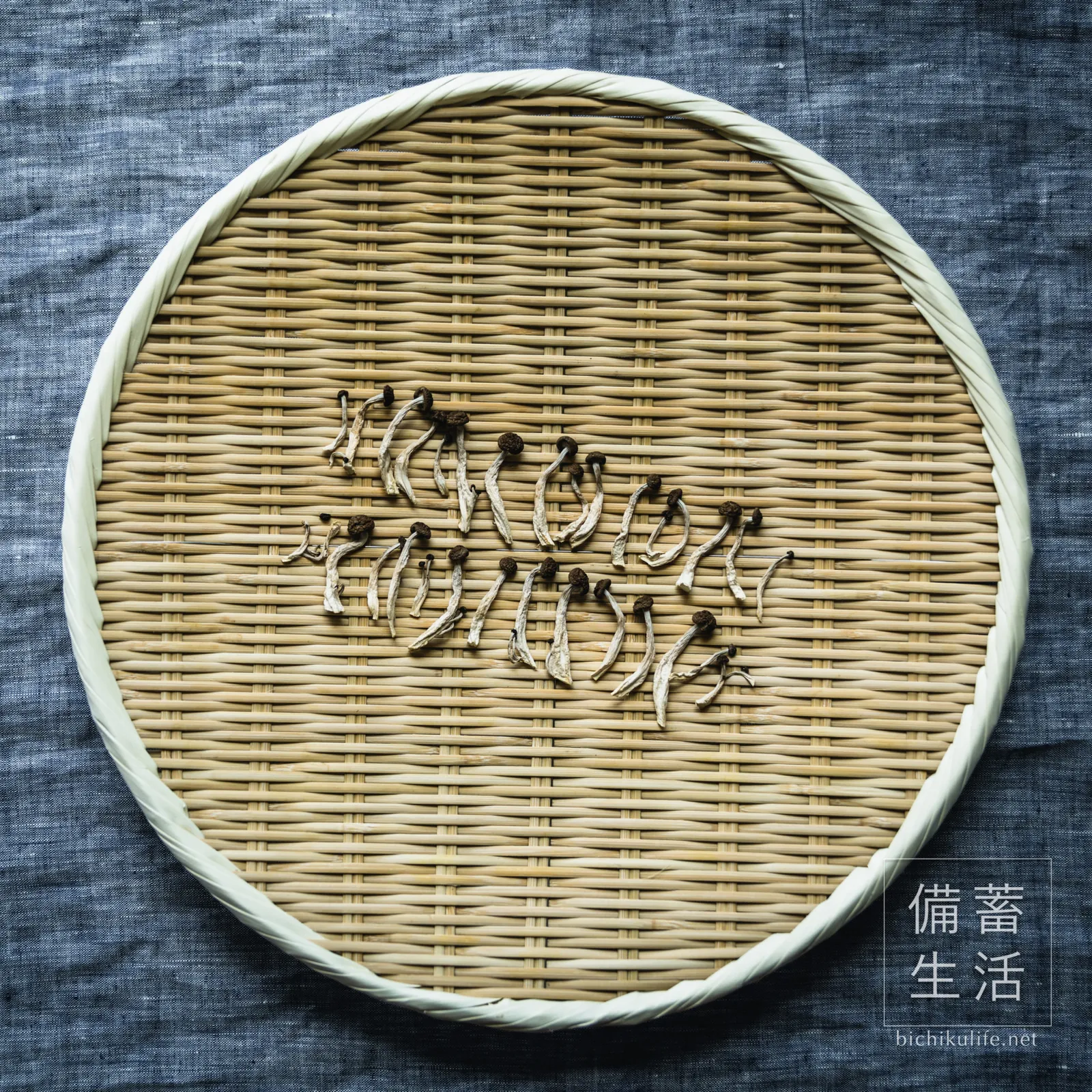
Shimeji (brown beech mushrooms) are available all year at reasonable prices, and their mild taste suits any dish. Outside Japan, they’re sold in many supermarkets and Asian grocery stores, sometimes as “beech mushrooms”.
Drying concentrates their savory flavor, and drying them in the sun also increases their vitamin D. In mixed rice or soups, they make a good mushroom broth.
| Drying time | Storage | |
|---|---|---|
| Dry | 2–5 days | 3 weeks at room temperature |
| Semi-dried | Half a day–1 day | 4 days in the fridge |
Drying times assume drying during the day in sunny weather and bringing them in at night.
How to dry shimeji
- Trim the base: Cut off the spongy base. Don’t wash them; wipe off any dirt with a paper towel.
- Separate: Break into single mushrooms or small clusters of 2–3.
- Lay out and dry: Spread on a basket without overlapping, somewhere sunny and breezy. Bring in by evening.
Where and when to dry is covered in How to Dry Vegetables, and tools in Tools for Drying Vegetables.
When they’re done
Dry (2–5 days)
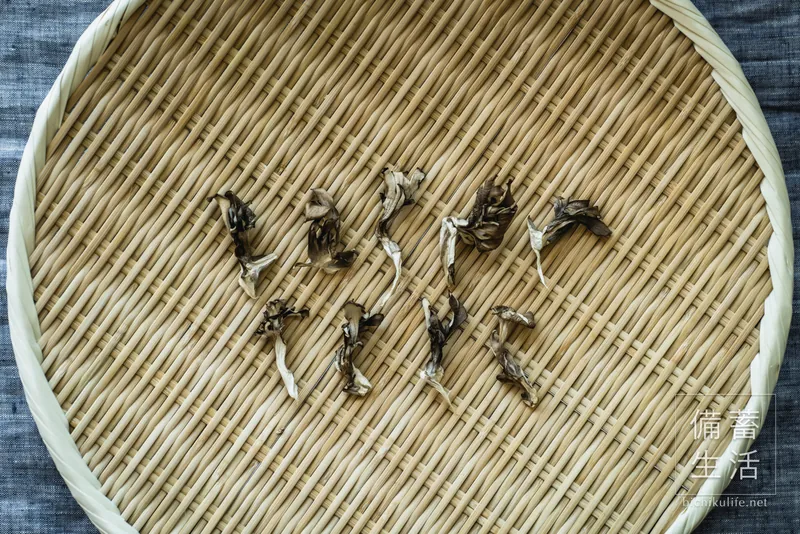
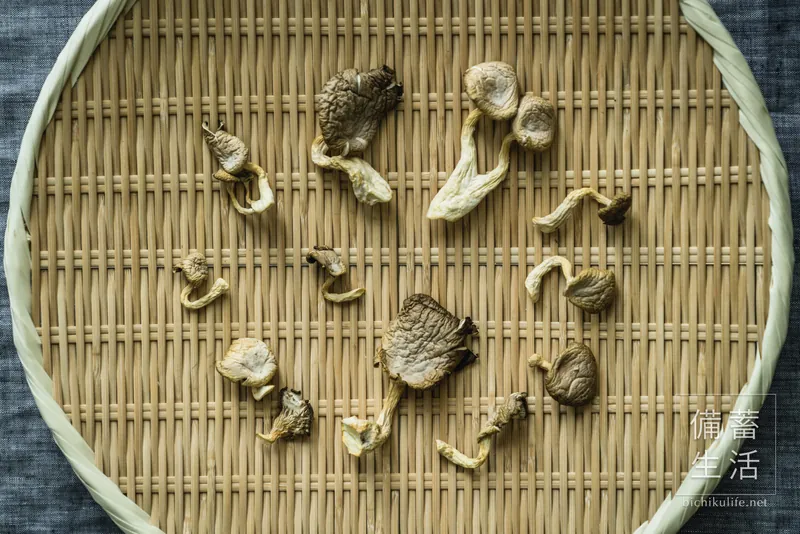
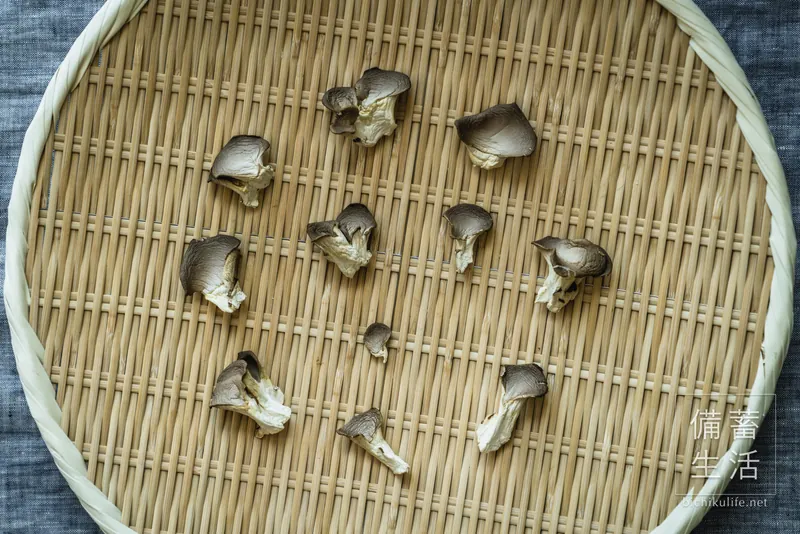
They’re done when the stems have shrunk thin, the caps have hardened, and they snap. Ours were completely dry in 3 days.
Semi-dried (half a day–1 day)
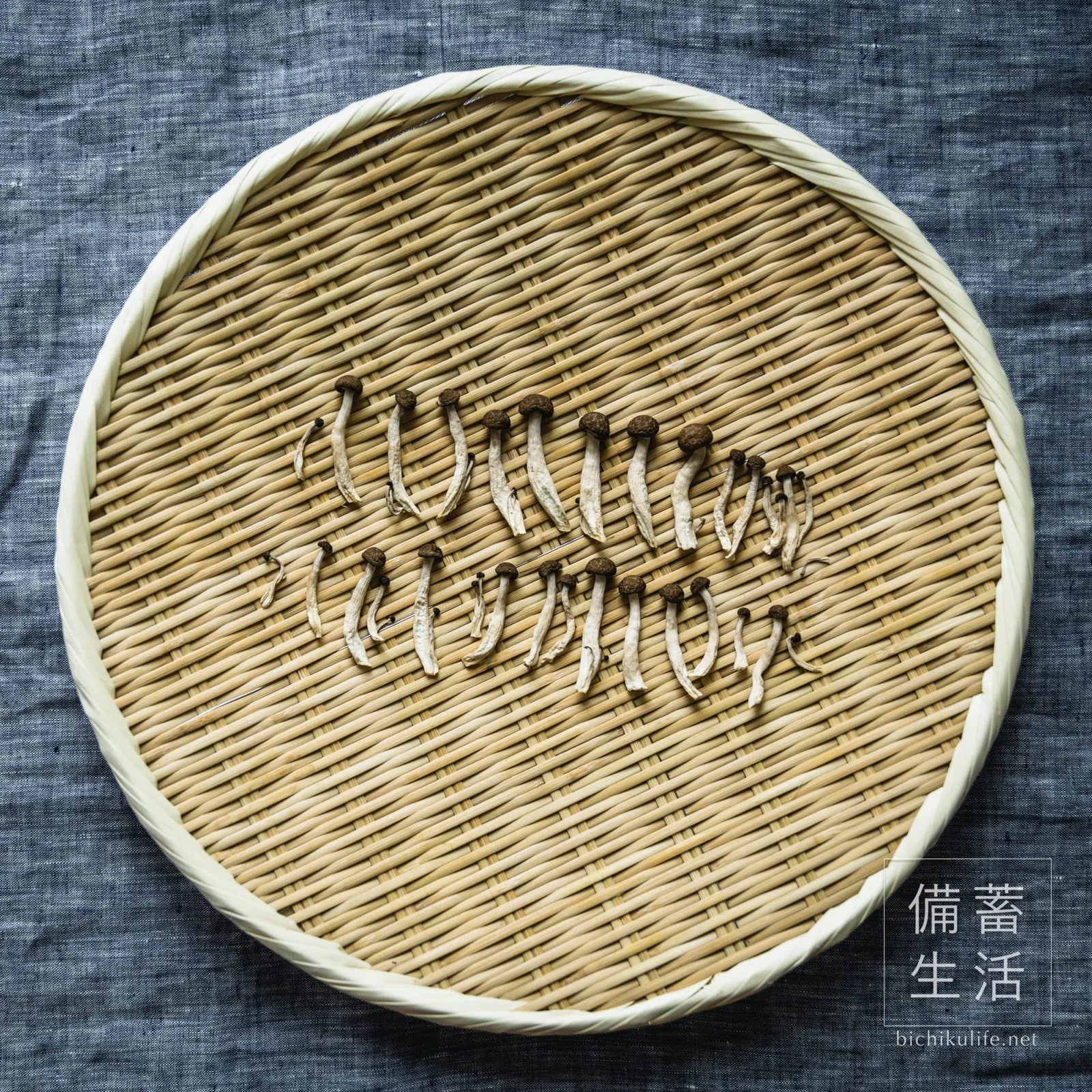
The surface is dry. In stir-fries or pasta, they don’t get watery and taste richer.
Day by day
Before drying
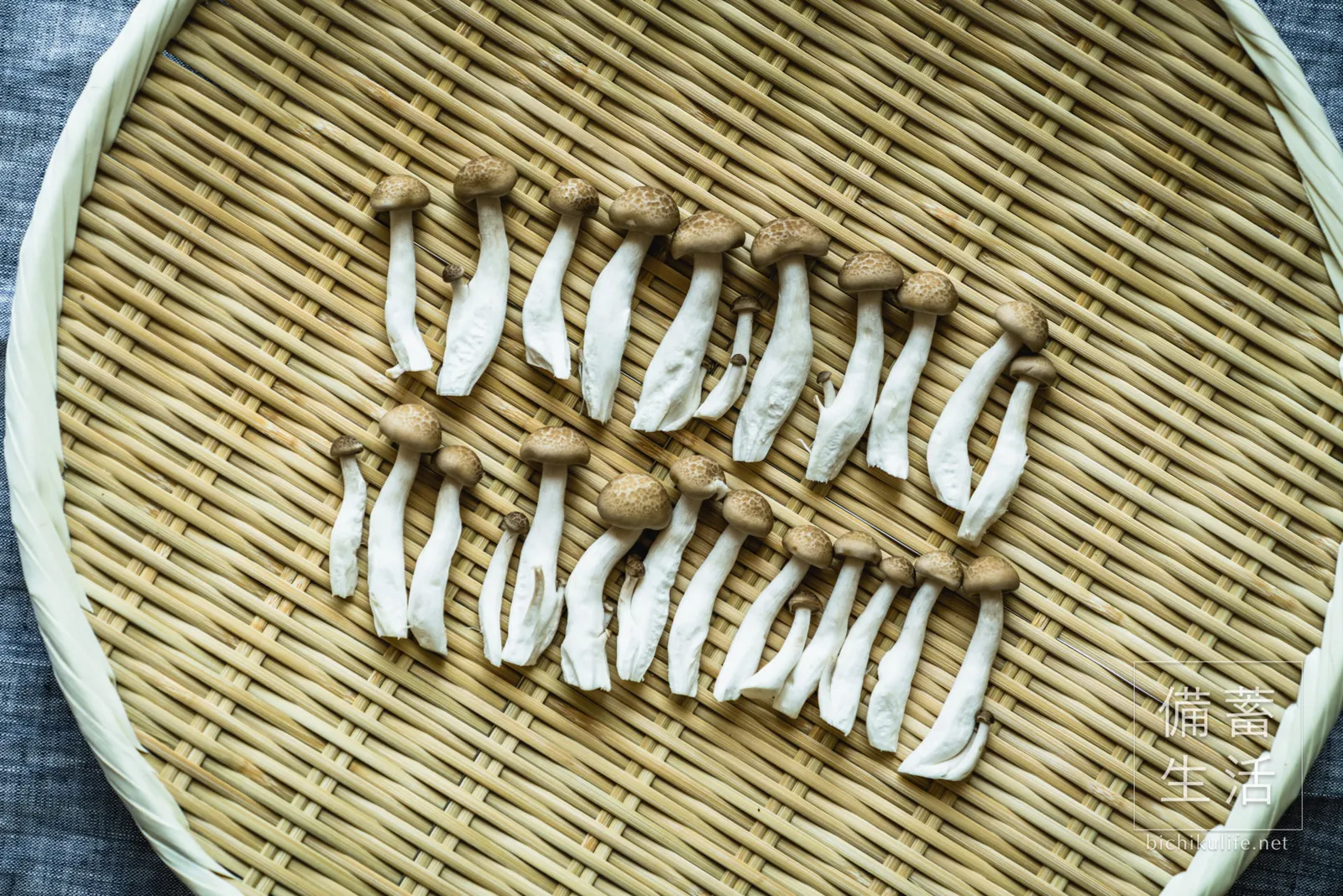
Day 1
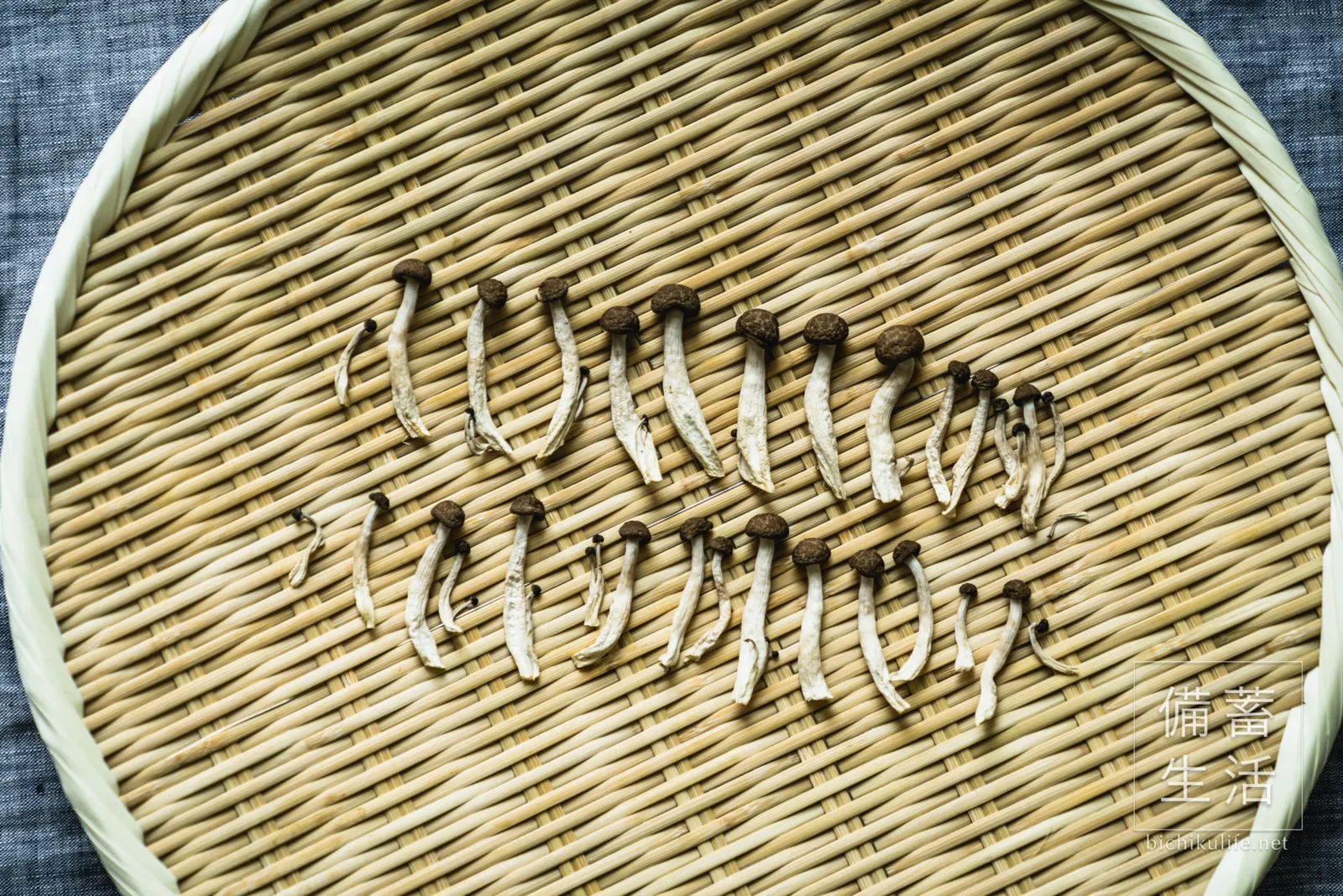
Day 2
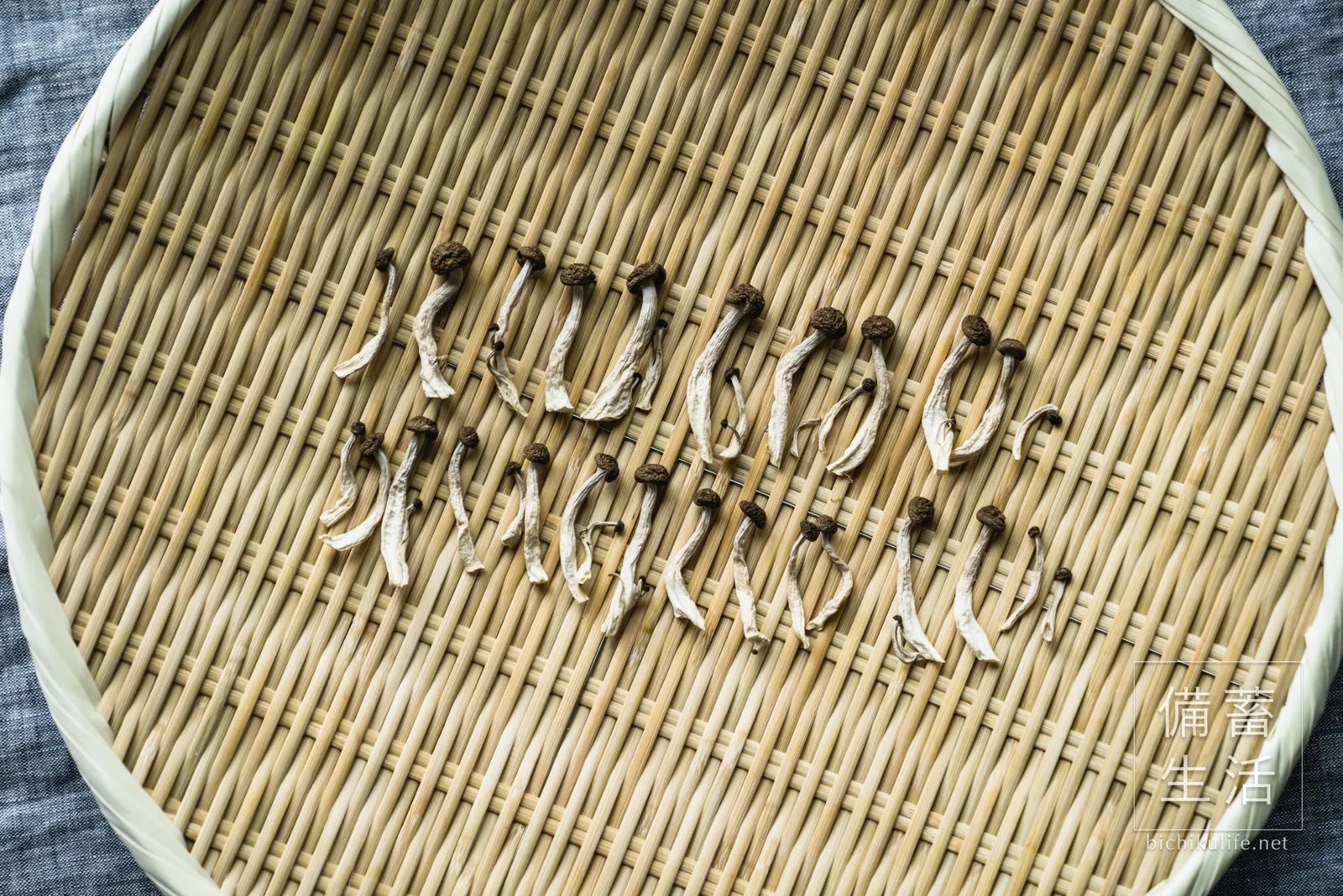
Day 3
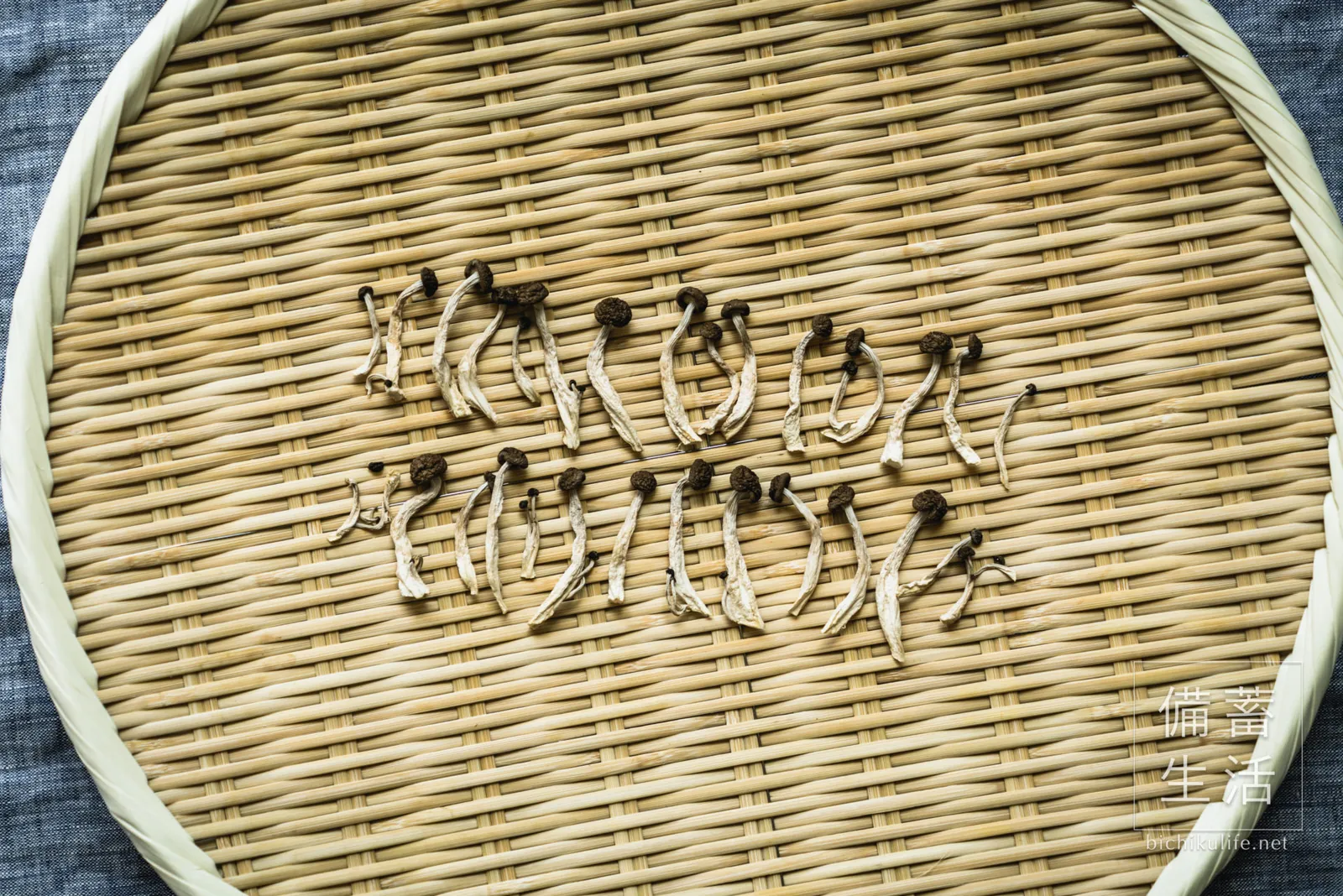
Storage
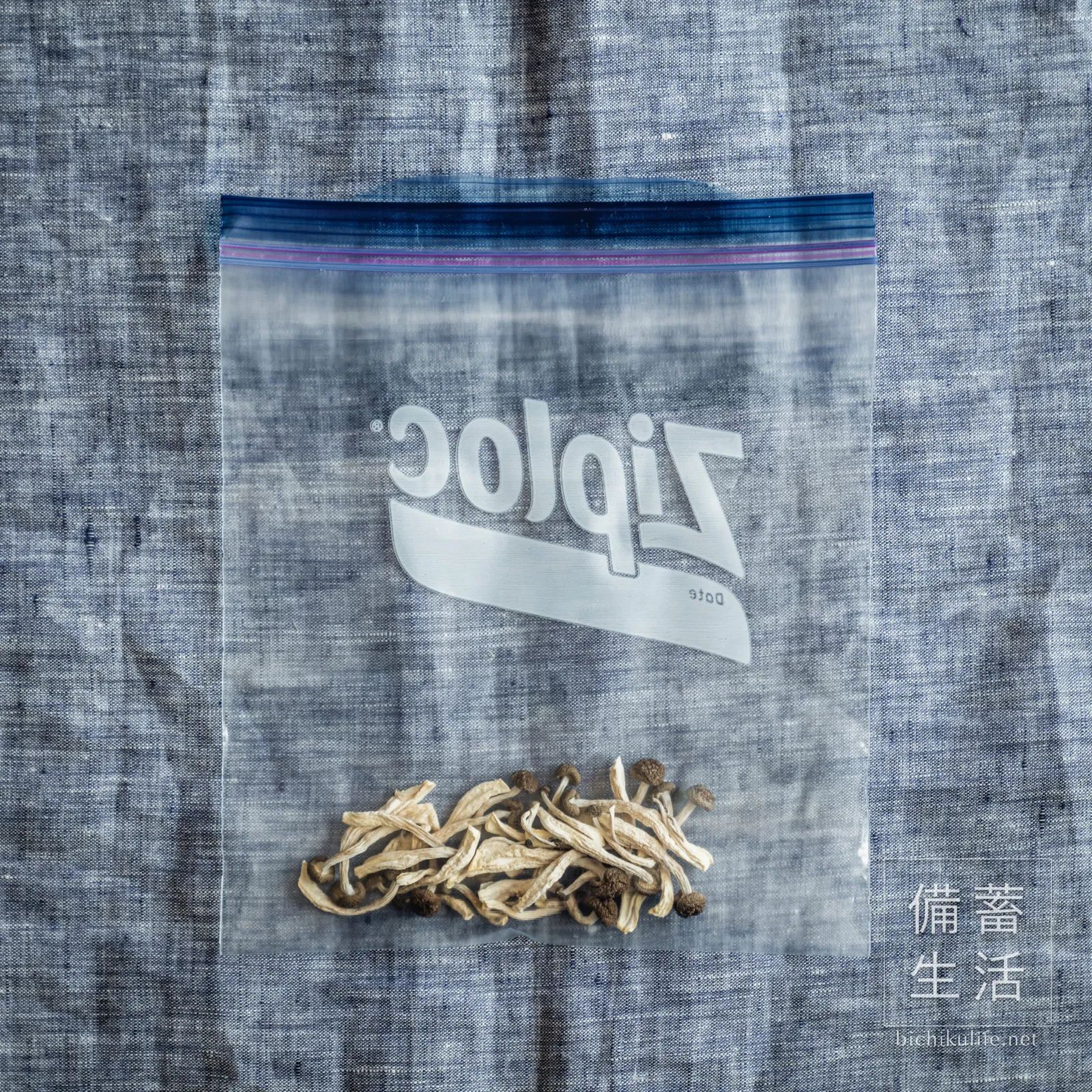
- Dry: Put completely dry shimeji in a bag or airtight container with a desiccant, and keep somewhere cool and out of direct sun for about 3 weeks. In humid summer weather, keep them in the fridge.
- Semi-dried: Keep in a bag in the fridge and use within about 4 days.
- Frozen: Both dry and semi-dried can be frozen for 2–3 months.
Fuzzy white or green growth, black spots or a bad smell are signs of mold or spoilage. Don’t eat them; throw them away. More in How to Store Dried Vegetables.
Rehydrating and using them
- Always cook them: Never eat mushrooms raw. Always cook them first.
- Use them dry: Rinse quickly and add straight to miso soup, soups, hot pot and mixed rice.
- Rehydrate: For stir-fries and dressed side dishes, soak in water for about 10 minutes. Use the soaking water in your cooking too.
- Good in: Mixed rice, mushroom pasta, foil-baked dishes, nametake (simmered in soy sauce), mushroom tsukudani.
Mixed rice recipes are on the dried shiitake and dried king oyster mushroom pages. The same recipe works with dried shimeji.