8 Dried Vegetables to Start WithEasy to Make and Useful in the Kitchen
Out of the more than 60 vegetables, mushrooms, herbs and fruits we’ve dried, here are eight that are easy to make and easy to cook with.
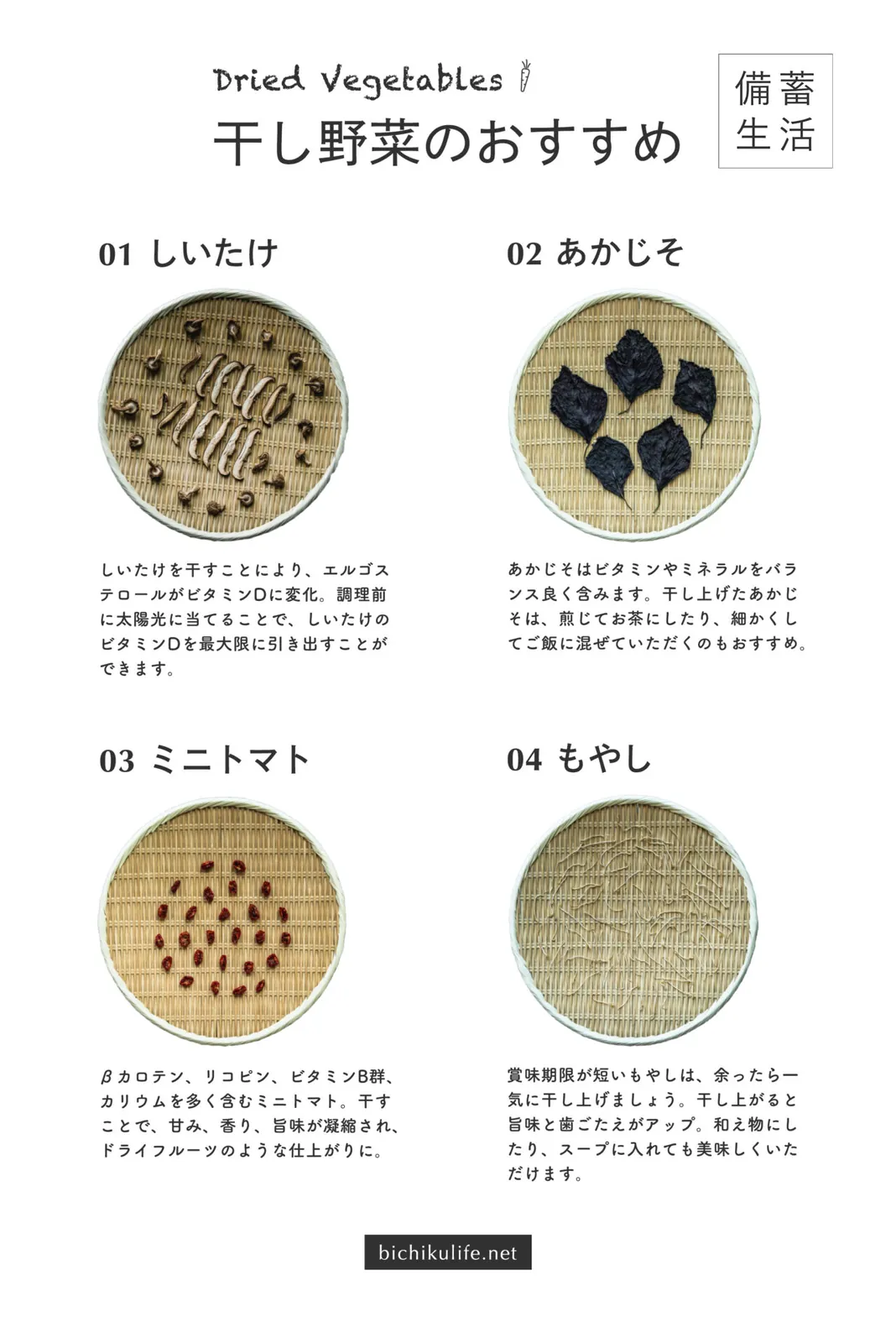
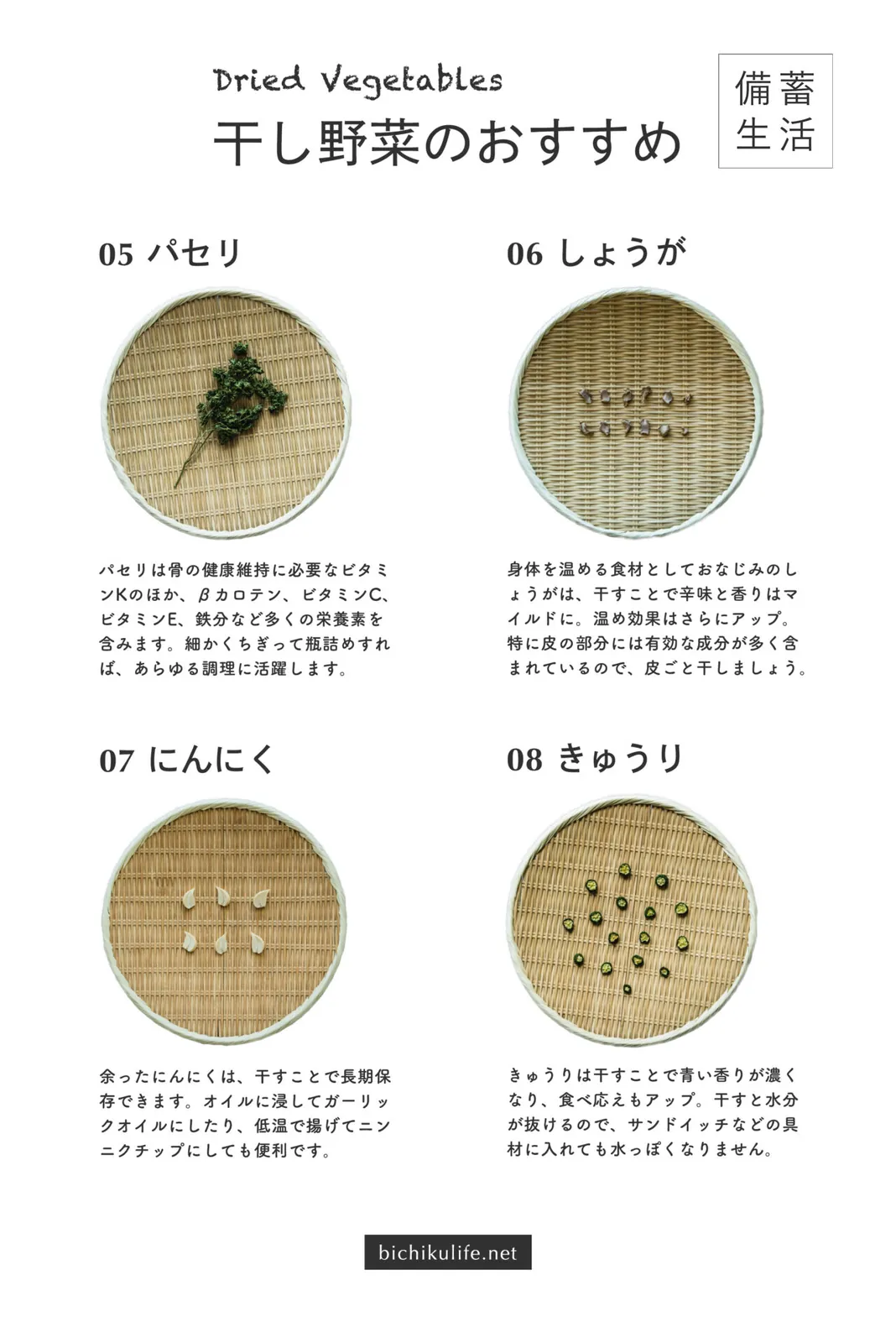
1. Dried shiitake
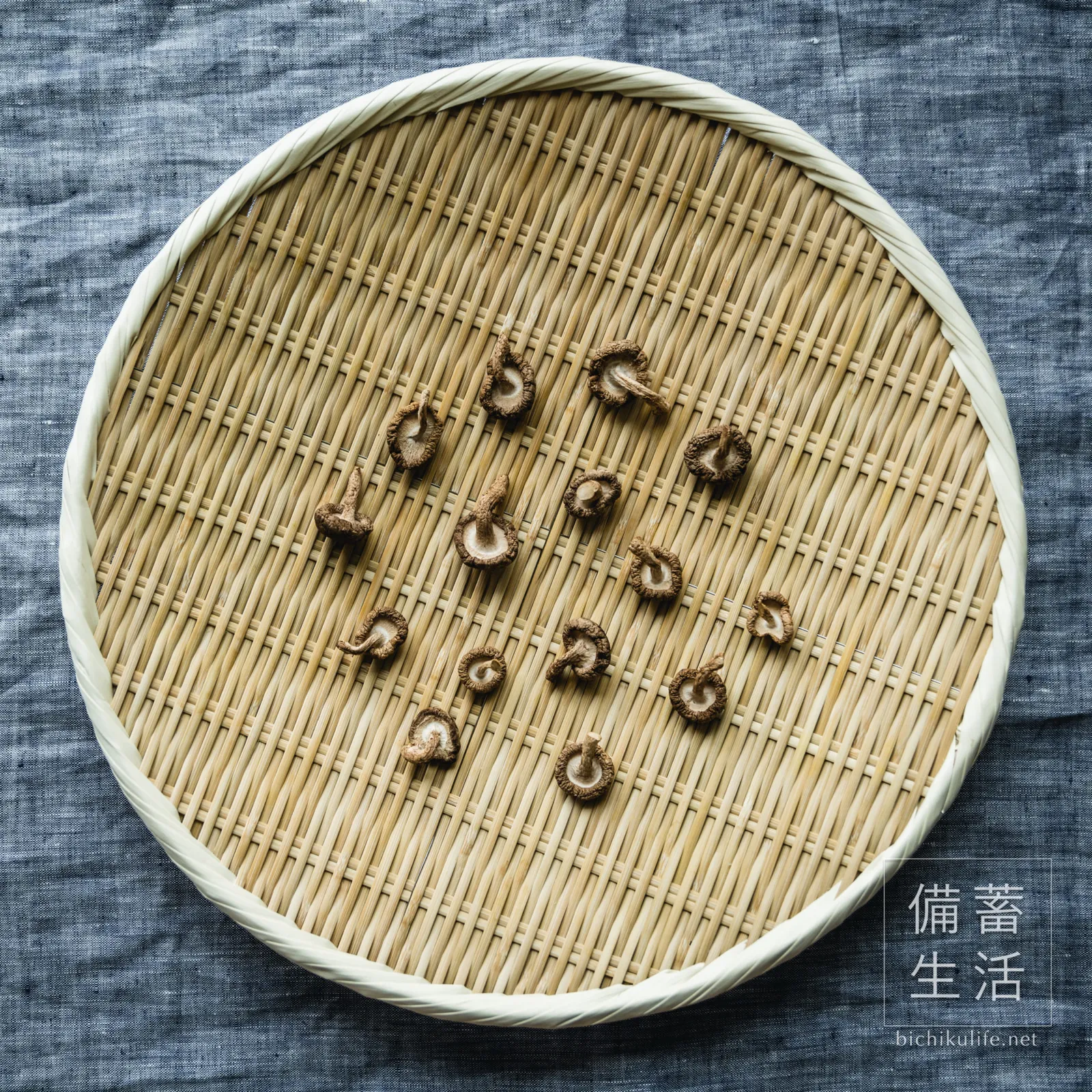
Our top pick is dried shiitake. Shiitake contain ergosterol, which turns into vitamin D in sunlight. Most store-bought dried shiitake are machine-dried, so sun-drying them at home makes a difference. Putting them in the sun again before cooking adds even more vitamin D.
They keep well, too: about 3 months at room temperature.
2. Dried red shiso
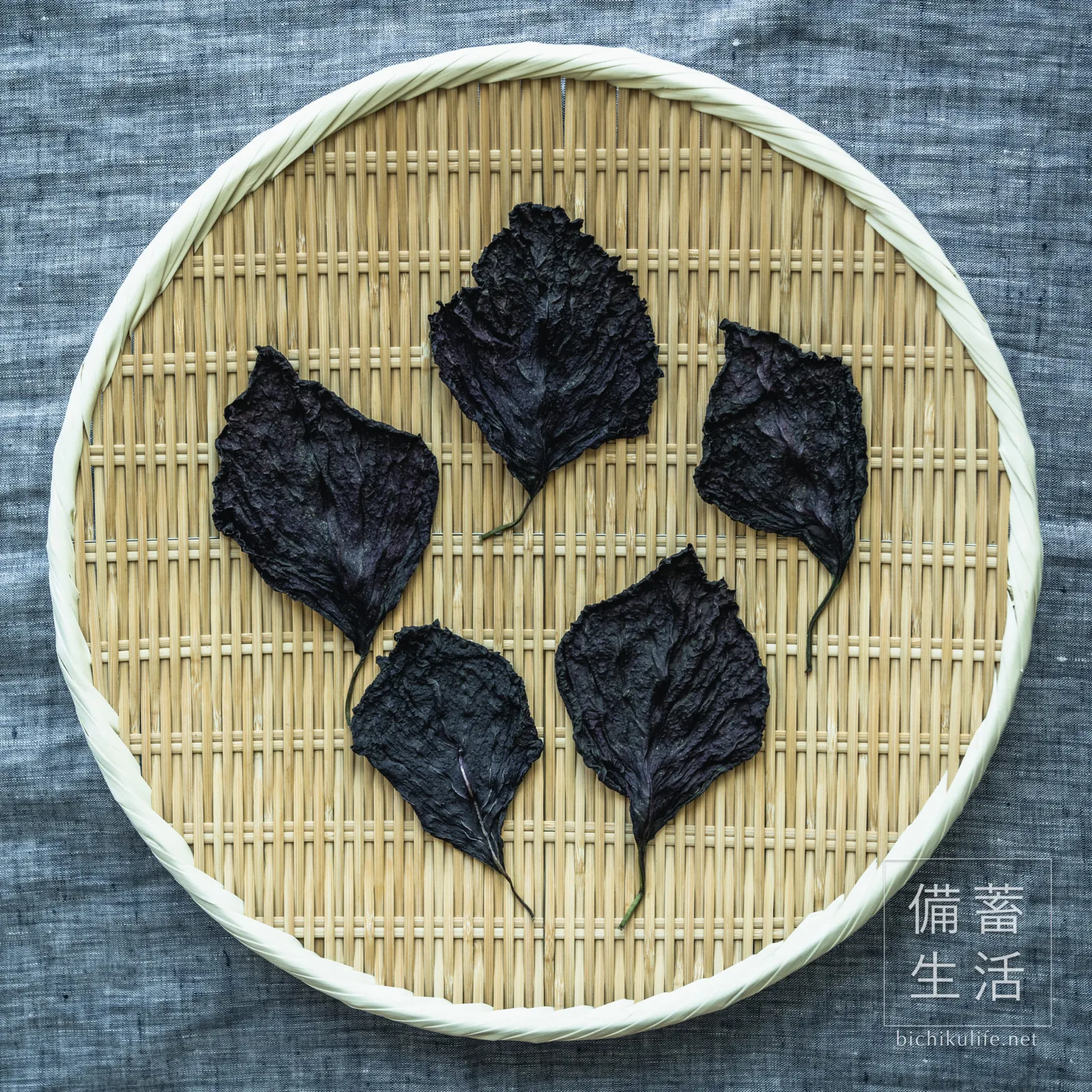
Red shiso, a Japanese herb in the mint family, is only in season for a short time, so drying it lets you enjoy it all year. Simmer it for shiso tea, or crumble it and mix it into rice. Drying the leaves left over after making red shiso juice works well too.
3. Dried cherry tomatoes
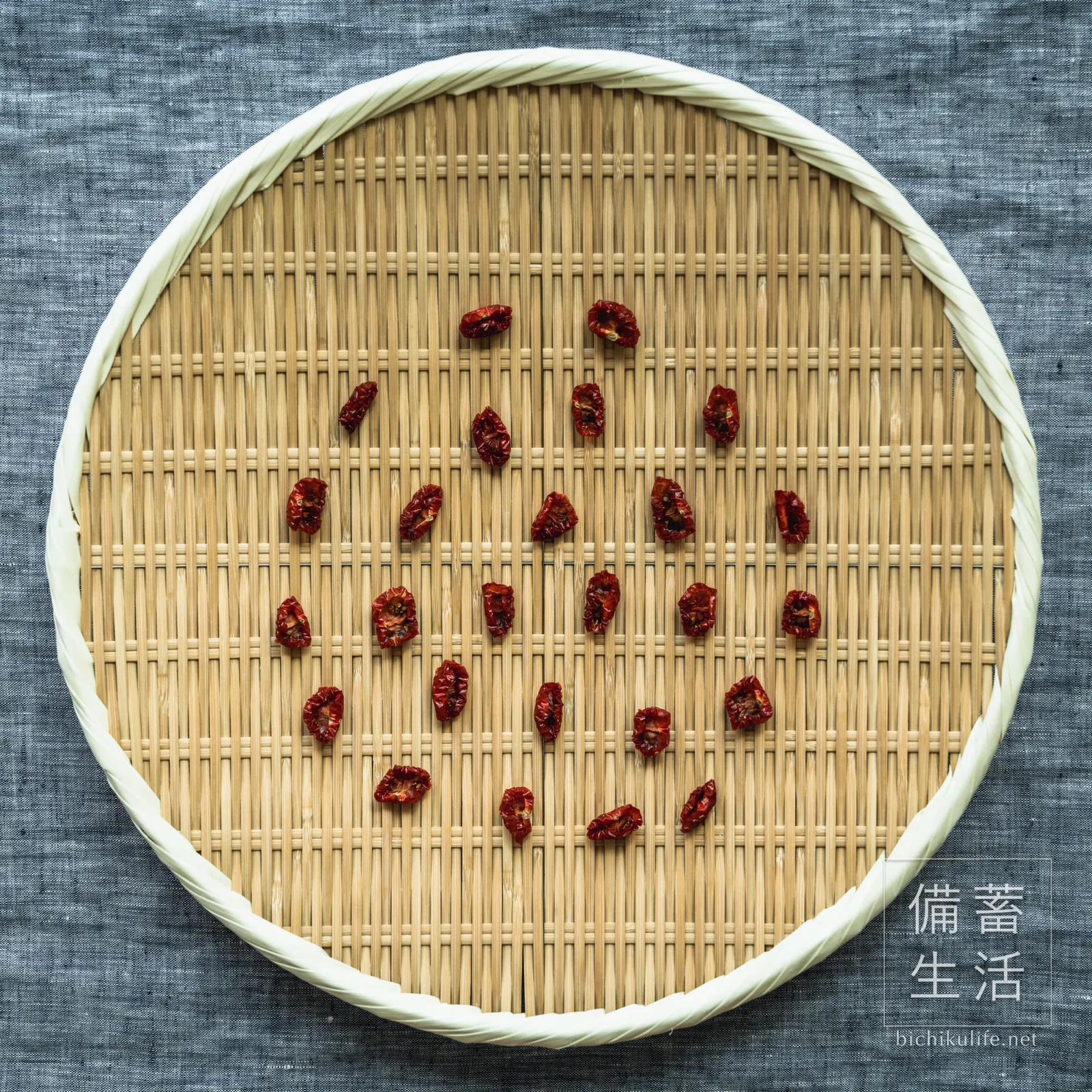
Drying concentrates the sweetness, aroma and savory flavor of cherry tomatoes, and they turn out like dried fruit. They’re juicy and mold easily, so the trick is to pick a run of sunny days.
4. Dried bean sprouts
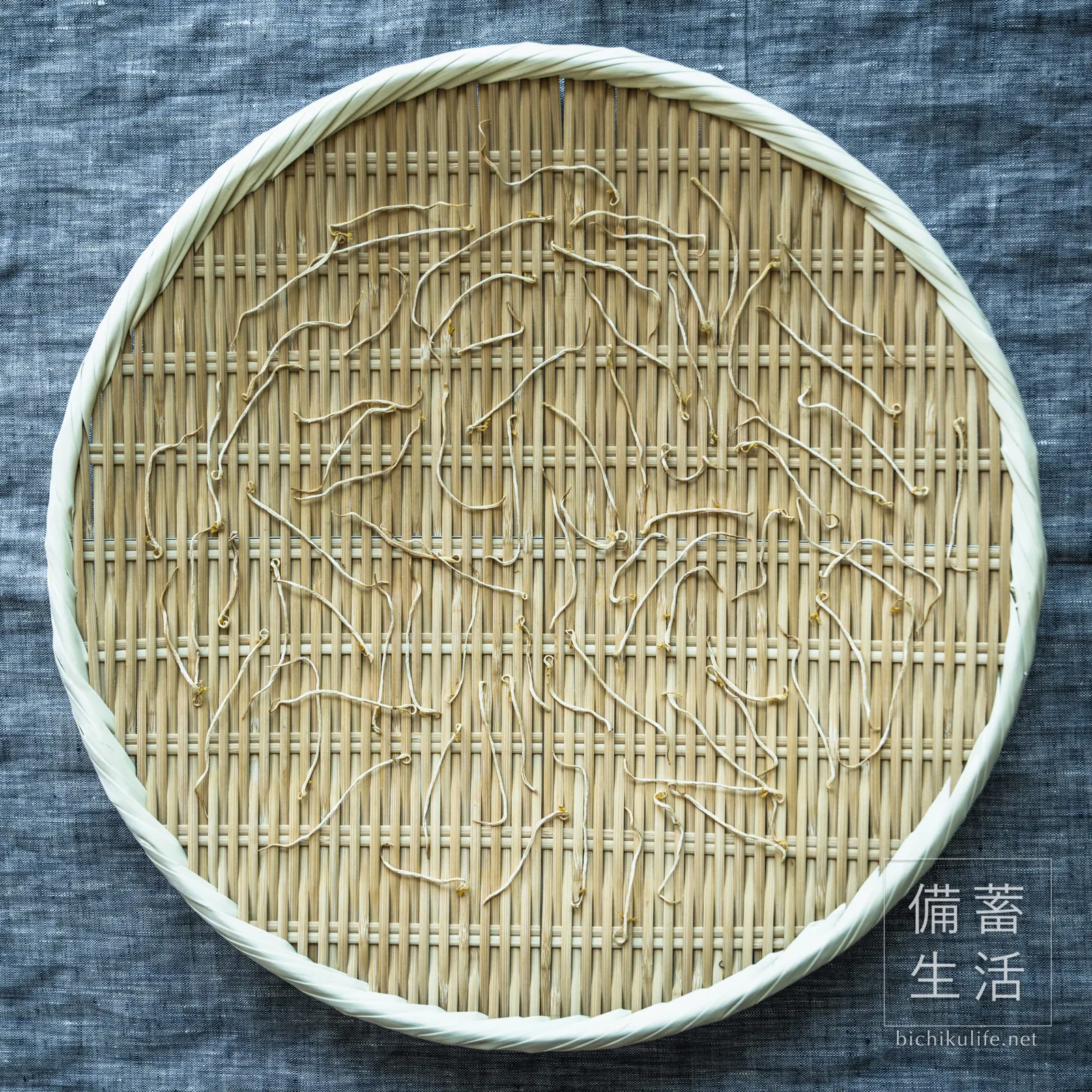
Bean sprouts don’t keep, so if you have some left over, dry them all at once. On a sunny day they’re done in one day, which makes them perfect for your first try. They gain savory flavor and crunch, and work in side dishes and soups.
5. Dried parsley
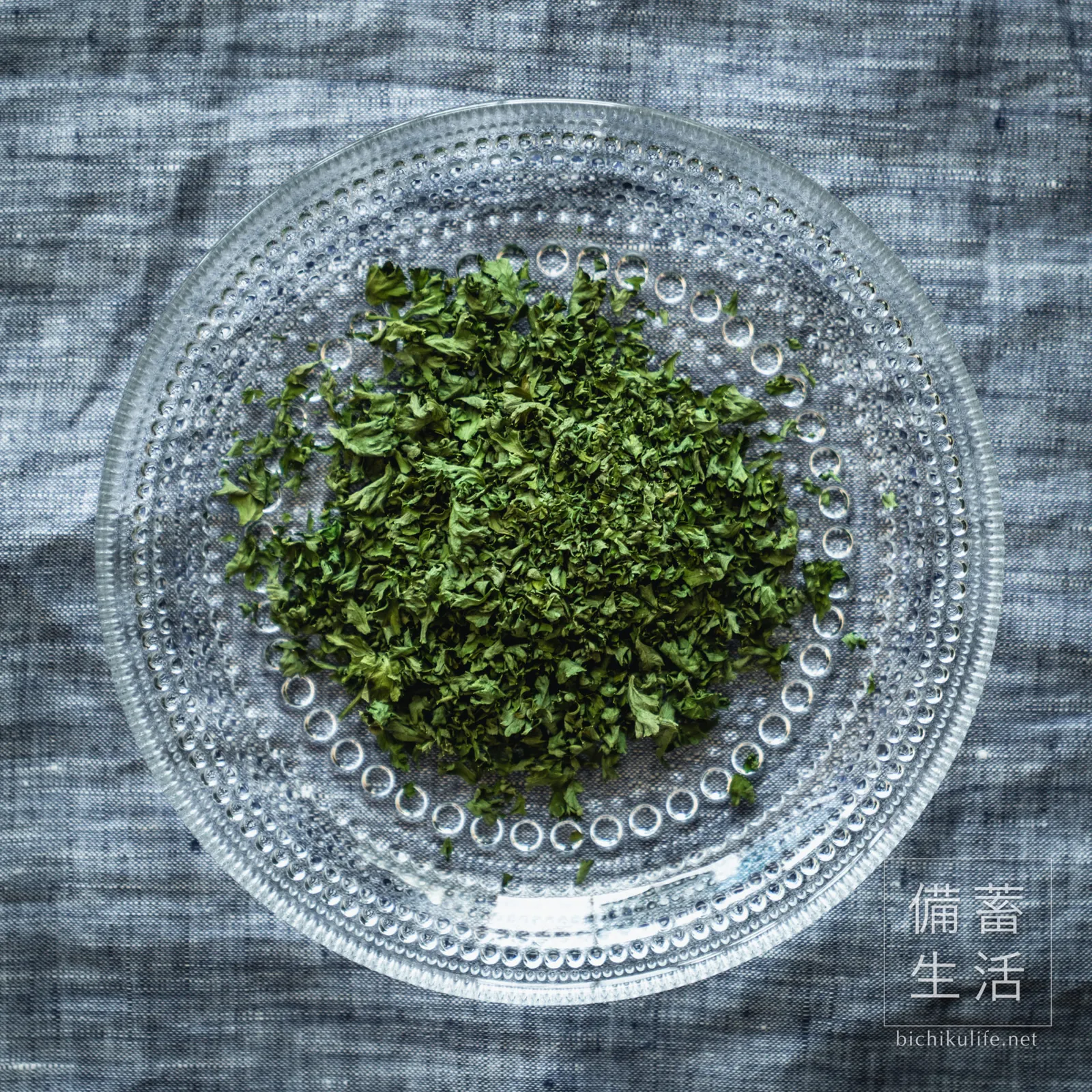
Parsley often gets left on the plate as a garnish. Dry it, crumble it and keep it in a jar, and you can use it in soups, pasta, omelets and just about anything else.
6. Dried ginger
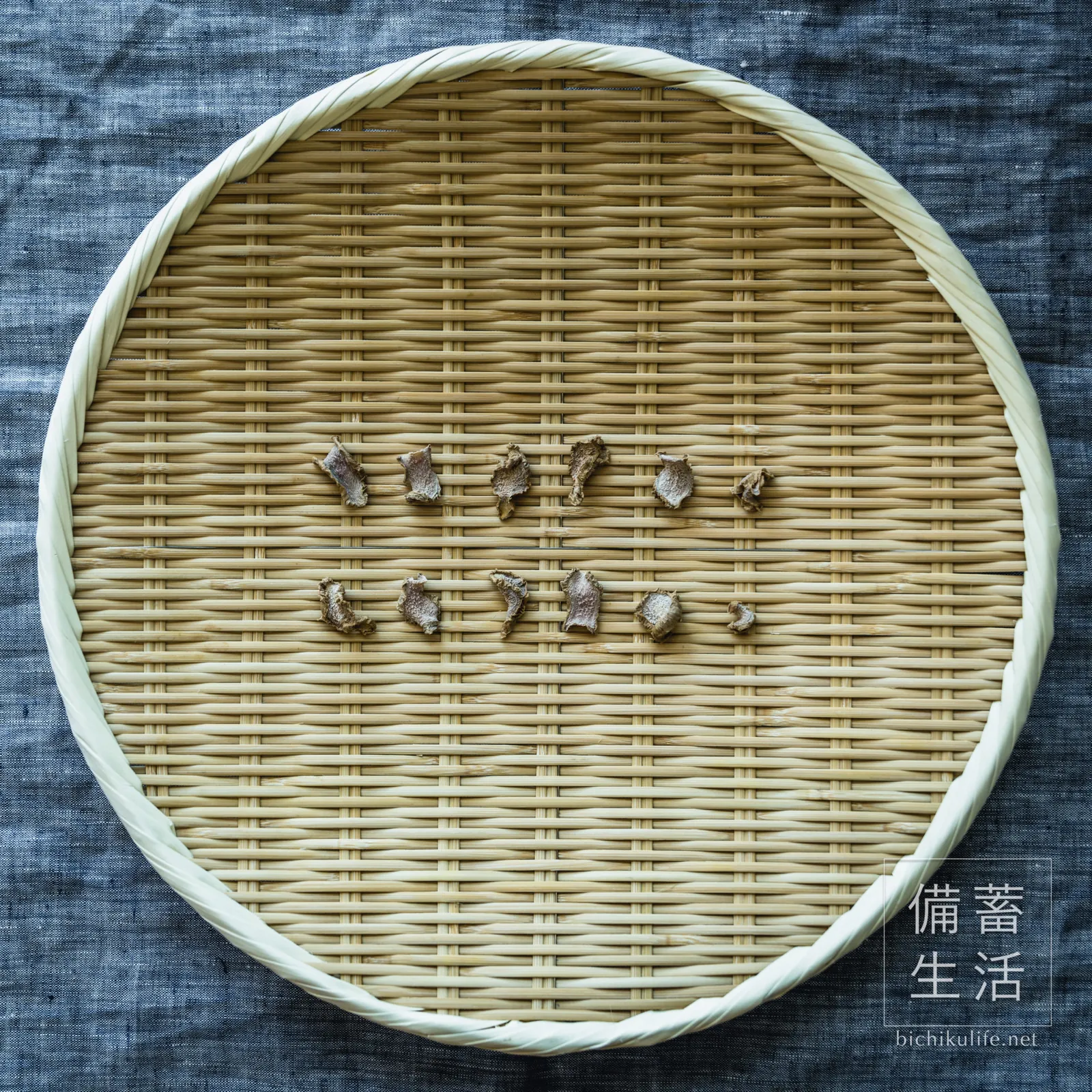
Drying mellows ginger’s heat and aroma. Much of the aroma is just under the skin, so dry it unpeeled. You can also dry the peels left over from cooking. Grind it in a mill for homemade ginger powder.
7. Dried garlic
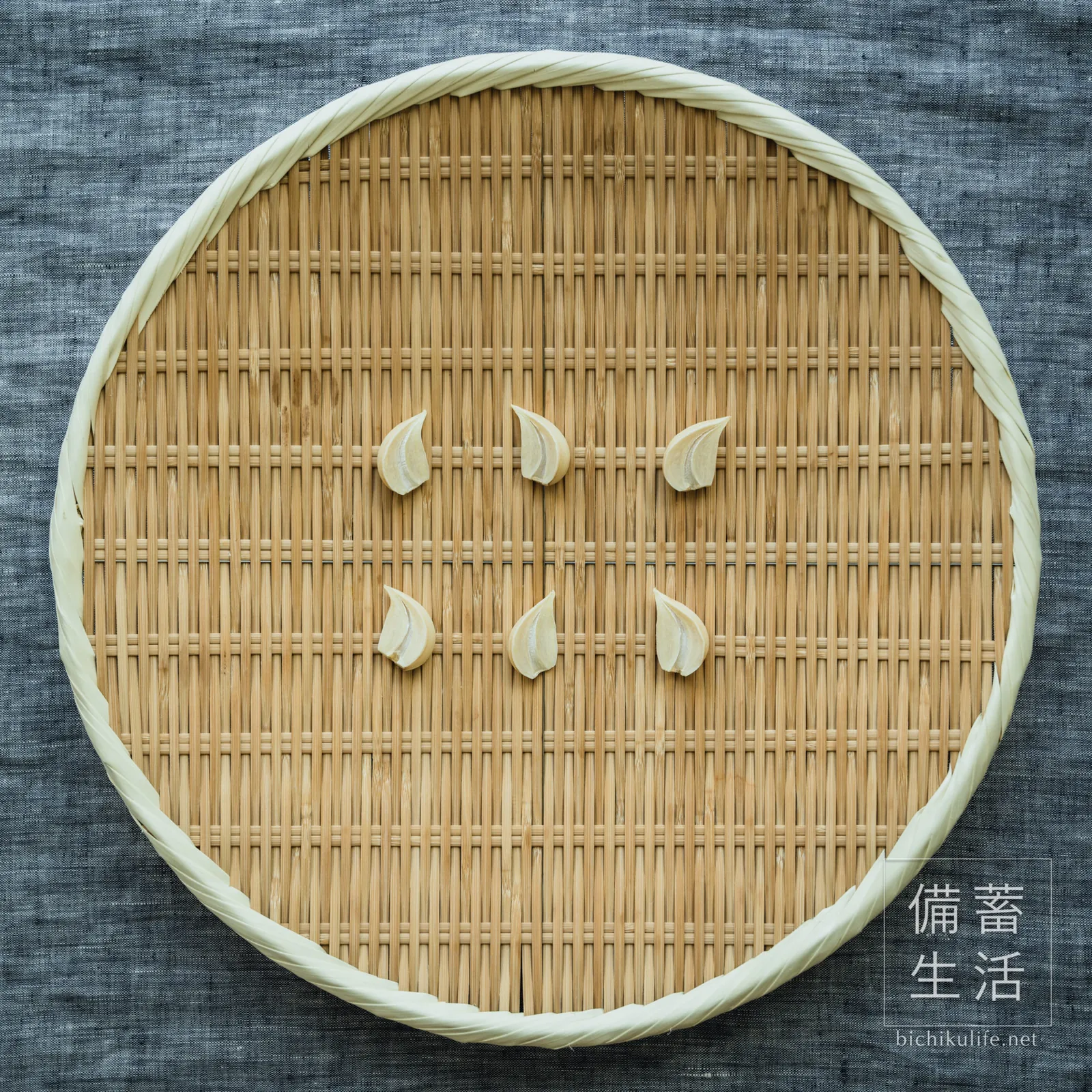
Dry leftover garlic before it sprouts, and it keeps about 2 months at room temperature. Fry it slowly in oil for garlic chips, or chop it into stir-fries. If you store it in oil, keep it in the fridge and use it up within about a week.
8. Dried cucumber
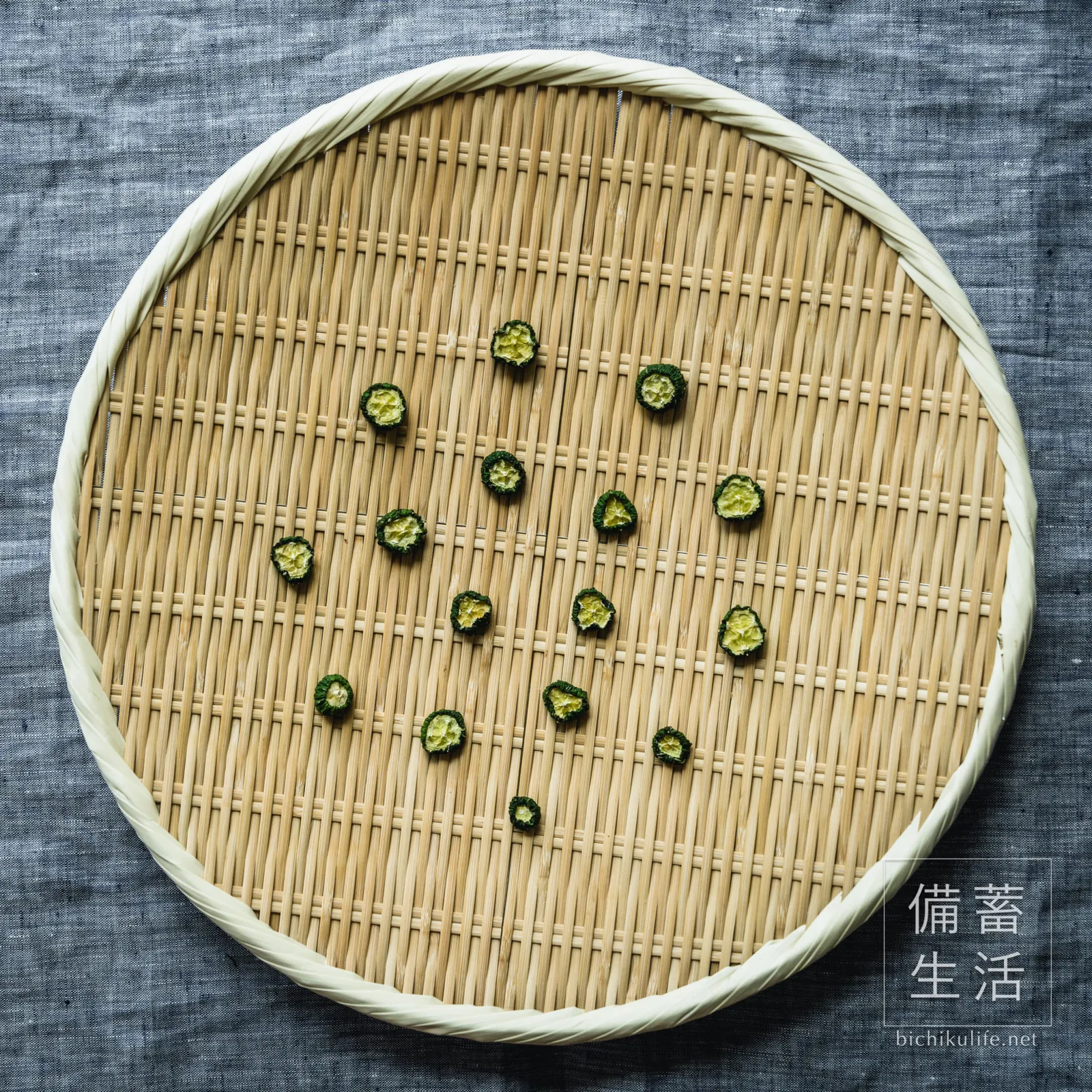
Dried cucumber has a stronger fresh-green aroma and a crunchy bite. With the water gone, it doesn’t make sandwiches or salads soggy.
The basics of drying are in How to Dry Vegetables, and storage in How to Store Dried Vegetables.